Artwork
Pont de Batignies in the Forest of Compiègne
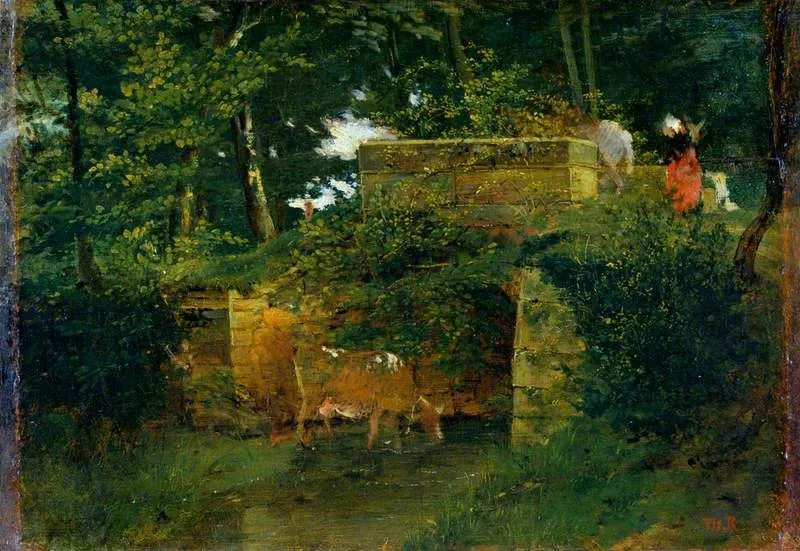
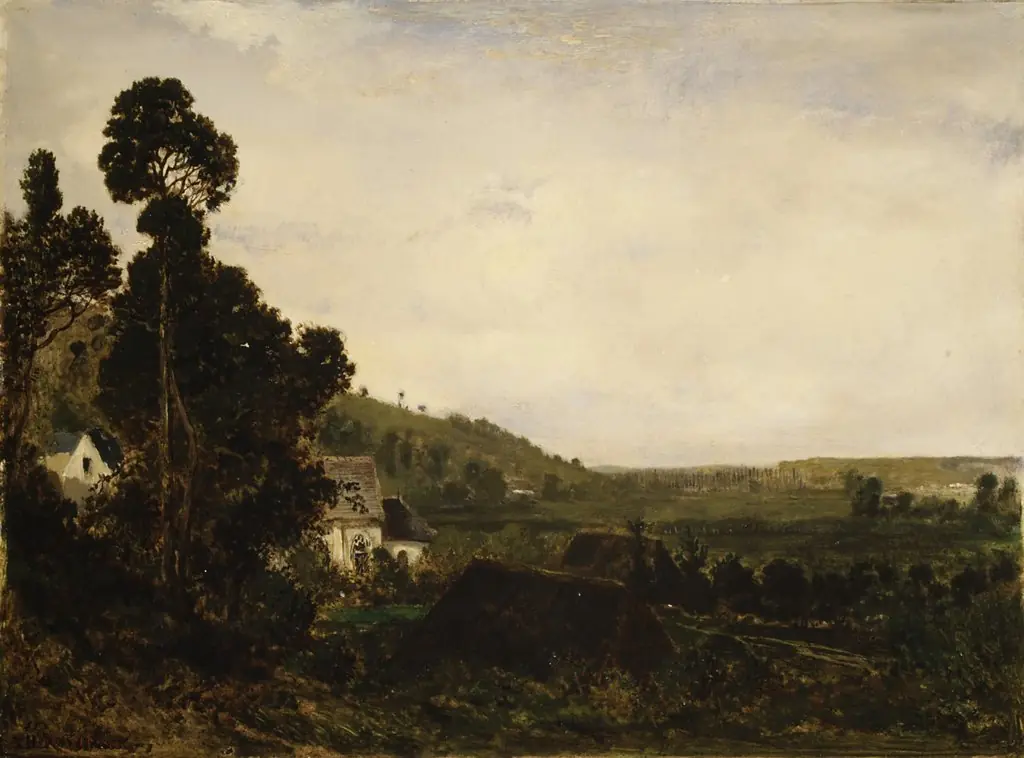
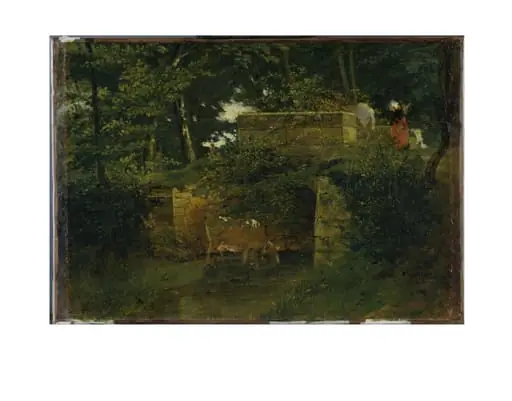
Pont de Batignies in the Forest of Compiègne is an oil painting by the Barbizon school artist Théodore Rousseau. It dates from 1828 and is held in the collection of the Victoria and Albert Museum.
About this work
Overview
As an early example of Rousseau’s landscape studies, it aligns with the emerging Barbizon school’s commitment to observing nature directly.
Painted in 1828 by Théodore Rousseau, this oil-on-canvas work captures a quiet corner of the Forest of Compiègne, featuring a stone bridge arching over a narrow stream. As an early example of Rousseau’s landscape studies, it aligns with the emerging Barbizon school’s commitment to observing nature directly. The scene is rendered with careful attention to atmospheric detail, avoiding idealization in favor of a grounded, observational approach.
Subject & Meaning
The painting centers on a modest rural bridge, framed by dense foliage and inhabited by grazing animals. Rather than dramatizing the scene, Rousseau emphasizes quiet coexistence between nature and human infrastructure. The presence of livestock suggests pastoral use of the forest, reinforcing the Barbizon ethos of valuing unembellished rural life. The composition invites contemplation, not narrative.
Technique & Style
Rousseau employed oil paint to build subtle gradations of tone, using layered brushwork to convey the texture of bark, moss, and water. Greens and browns dominate, with muted blues in the sky suggesting overcast conditions. Light is diffused rather than sharply contrasted, avoiding dramatic chiaroscuro in favor of a soft, naturalistic illumination that enhances the scene’s quiet realism.
History & Provenance
Created early in Rousseau’s career, the painting was likely made during his formative years sketching in the Forest of Compiègne. It entered the Victoria and Albert Museum’s collection in the 19th century, part of a broader British interest in French landscape painting. Its preservation reflects its significance as an early example of the Barbizon movement’s departure from academic conventions.
Context
In the 1820s, French art was dominated by historical and mythological subjects. Rousseau and his peers rejected this in favor of painting en plein air, focusing on ordinary woodland scenes. The Forest of Compiègne, a royal hunting ground, offered accessible wilderness. This work exemplifies a shift toward valuing nature as worthy subject matter, independent of symbolism or grandeur.
Legacy
Though less known than Rousseau’s later works, this painting anticipates his lifelong dedication to naturalism. It helped lay groundwork for the Barbizon school’s influence on Impressionism, particularly in its emphasis on direct observation and atmospheric effects. The work remains a quiet testament to the movement’s foundational principles: patience, fidelity to light, and reverence for the unaltered landscape.
Artist & collection
Artist
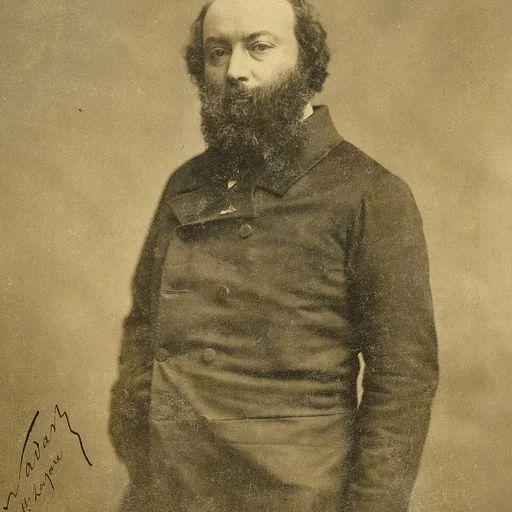
Étienne Pierre Théodore Rousseau (French pronunciation: ; 15 April 1812 – 22 December 1867) was a French painter of the Barbizon school.

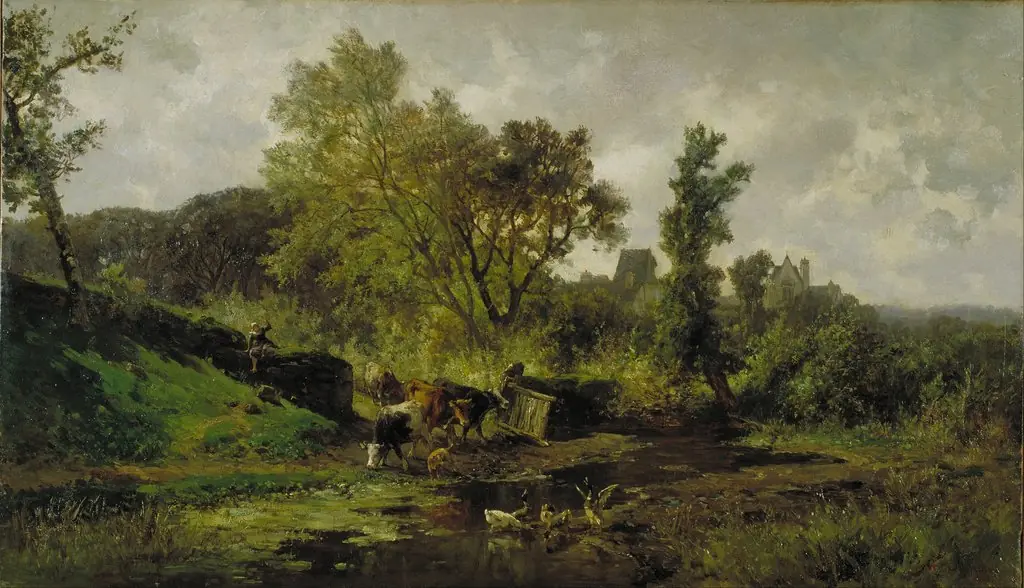 Flemish Landscape
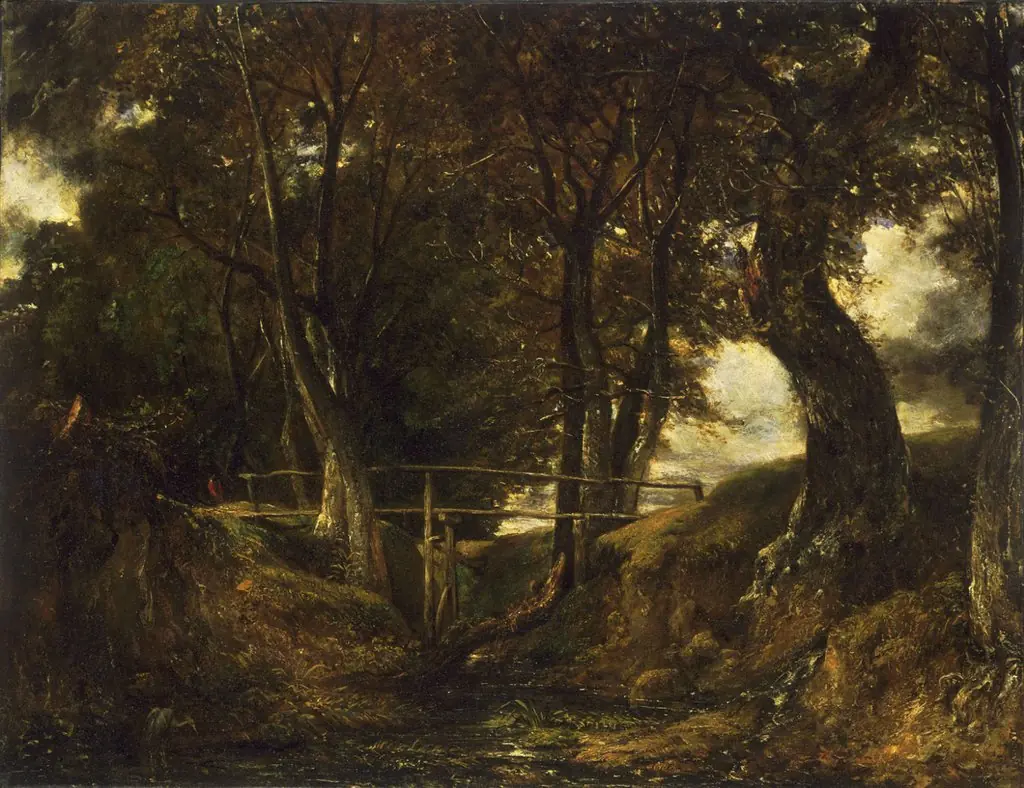 Dell at Helmingham Park (Philadelphia)
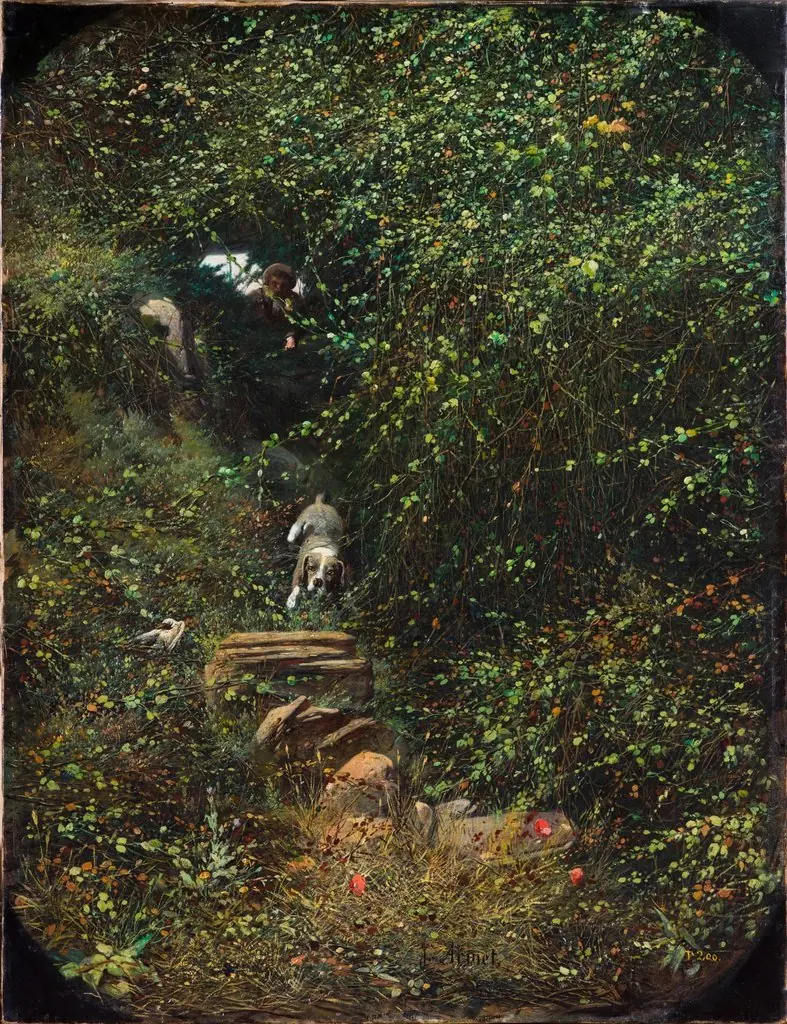 Paisaje con cazador y perro
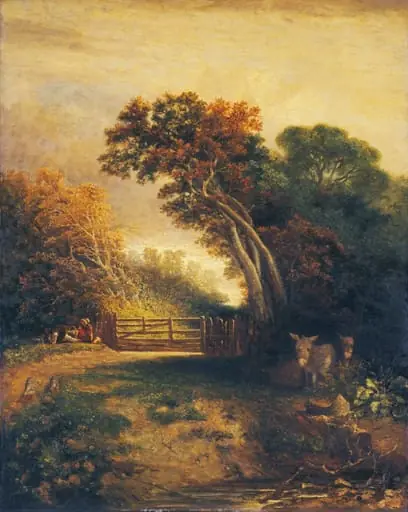 Landscape with Picnickers and Donkeys by a Gate
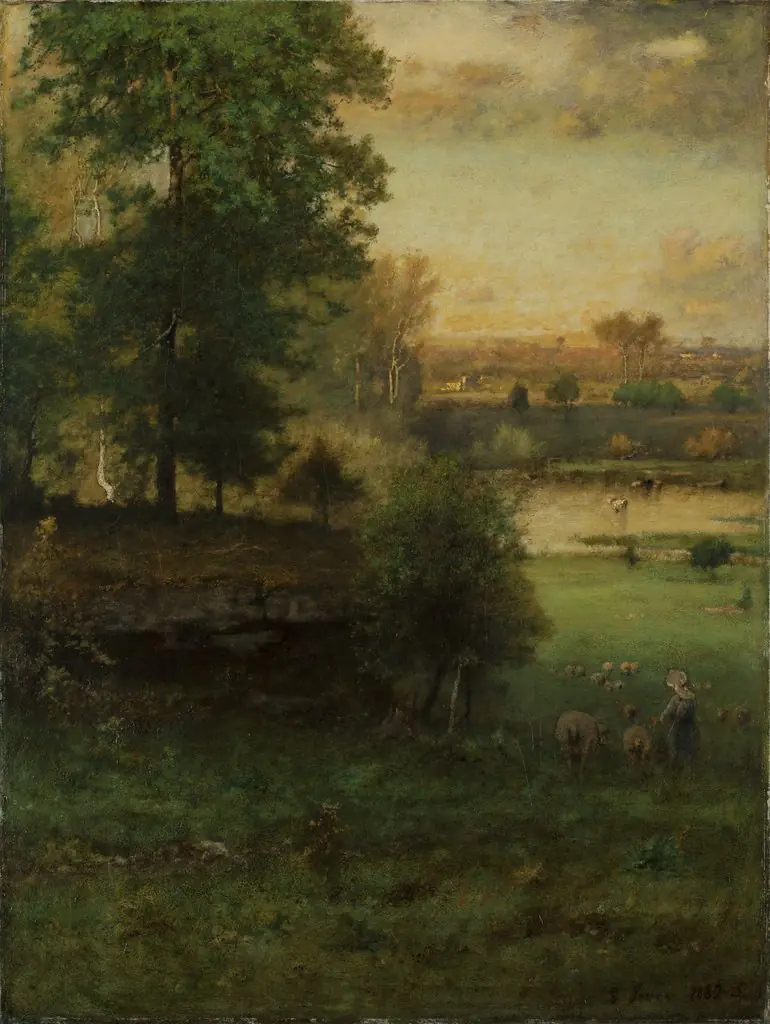 Scene at Durham, an Idyll
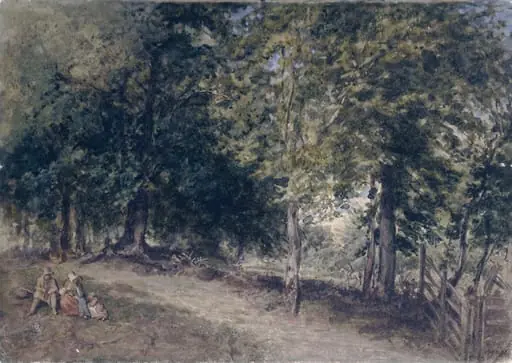 A wood with a group of figures
 Ash Trees in Spring
 A Study from the Roadside
 Fish Ponds, Hastings
 An Old Road in Wales
 An Old English Homestead
 Pont de Batignies in the Forest of Compiègne