Artwork
The Potato Peelers
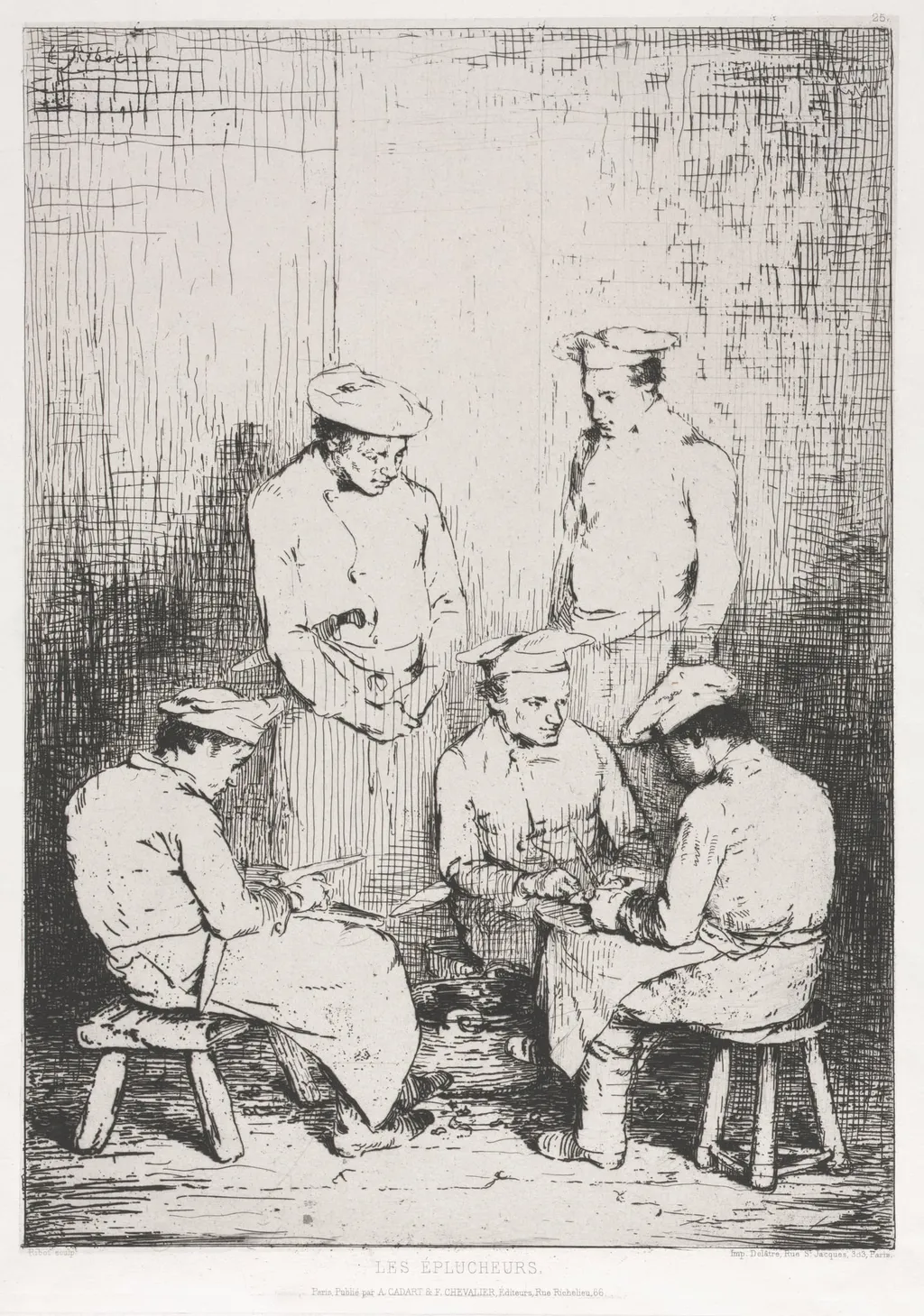
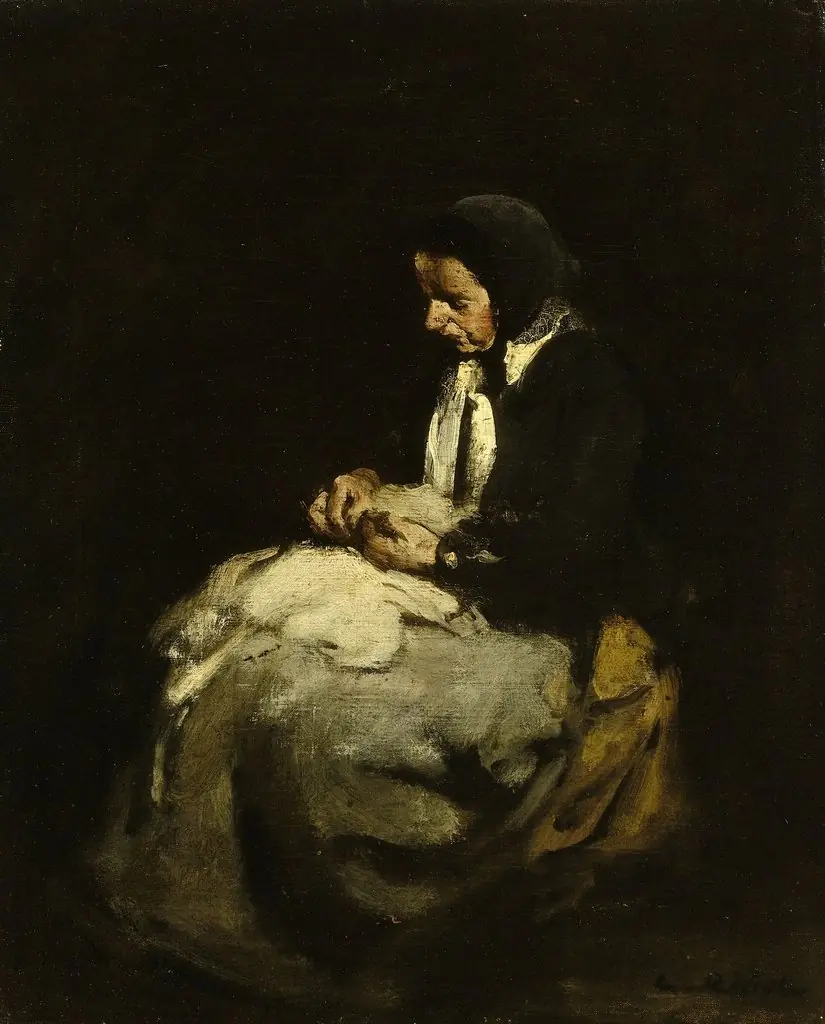
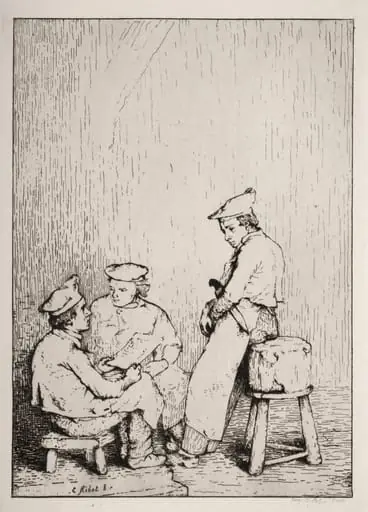
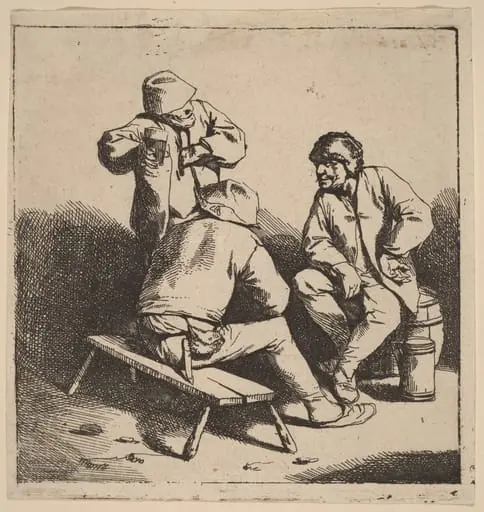
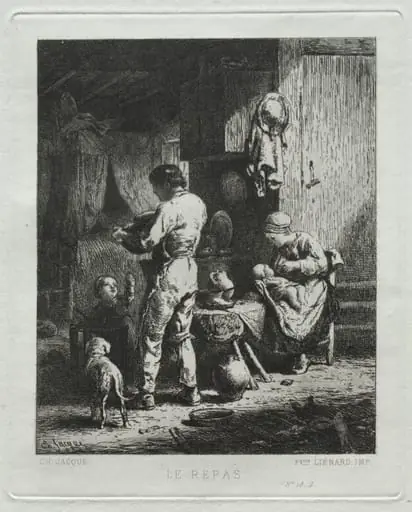
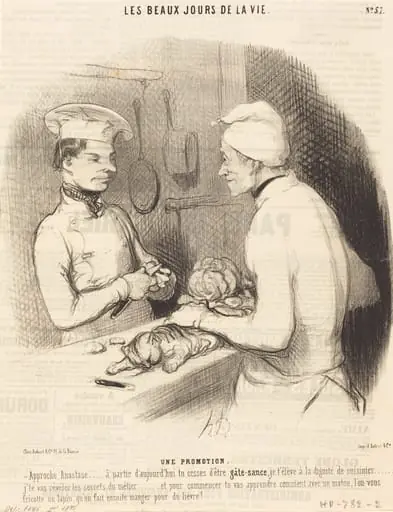
The Potato Peelers is a print by the Impressionist artist Augustin Théodule Ribot. It dates from 1863 and is held in the collection of the Cleveland Museum of Art.
About this work
Overview
The work is part of the Cleveland Museum of Art’s collection, where it stands as an example of 19th-century French Realism.
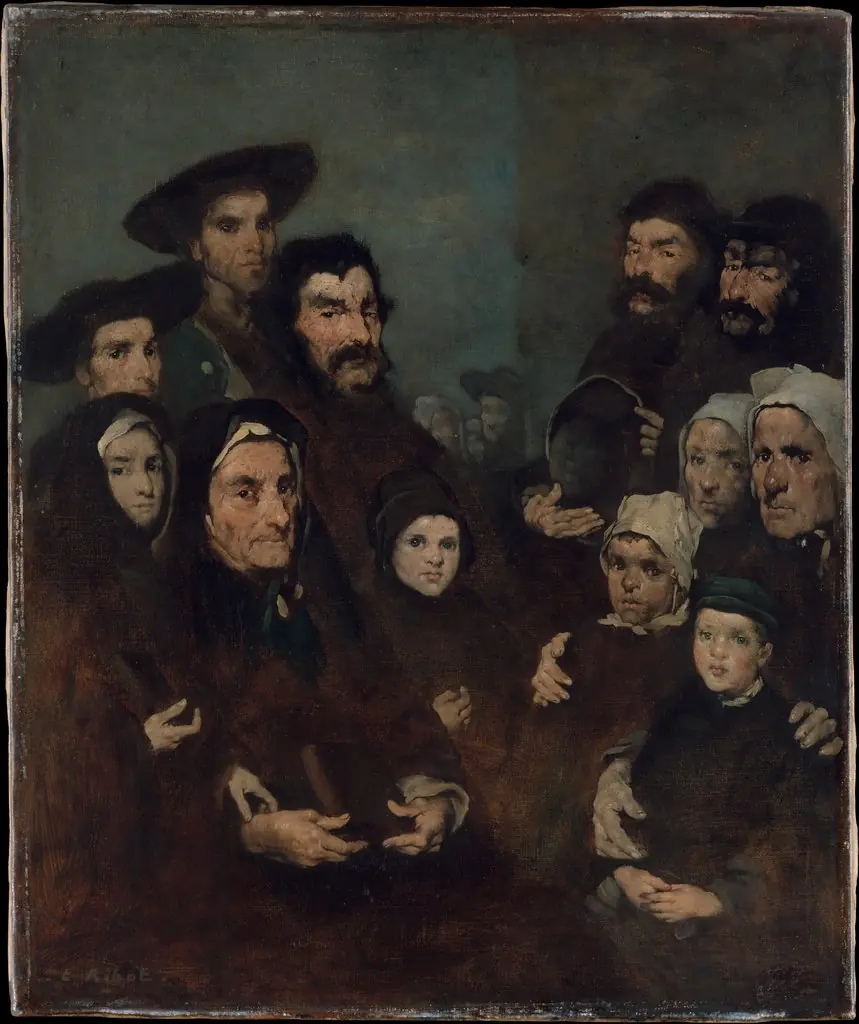
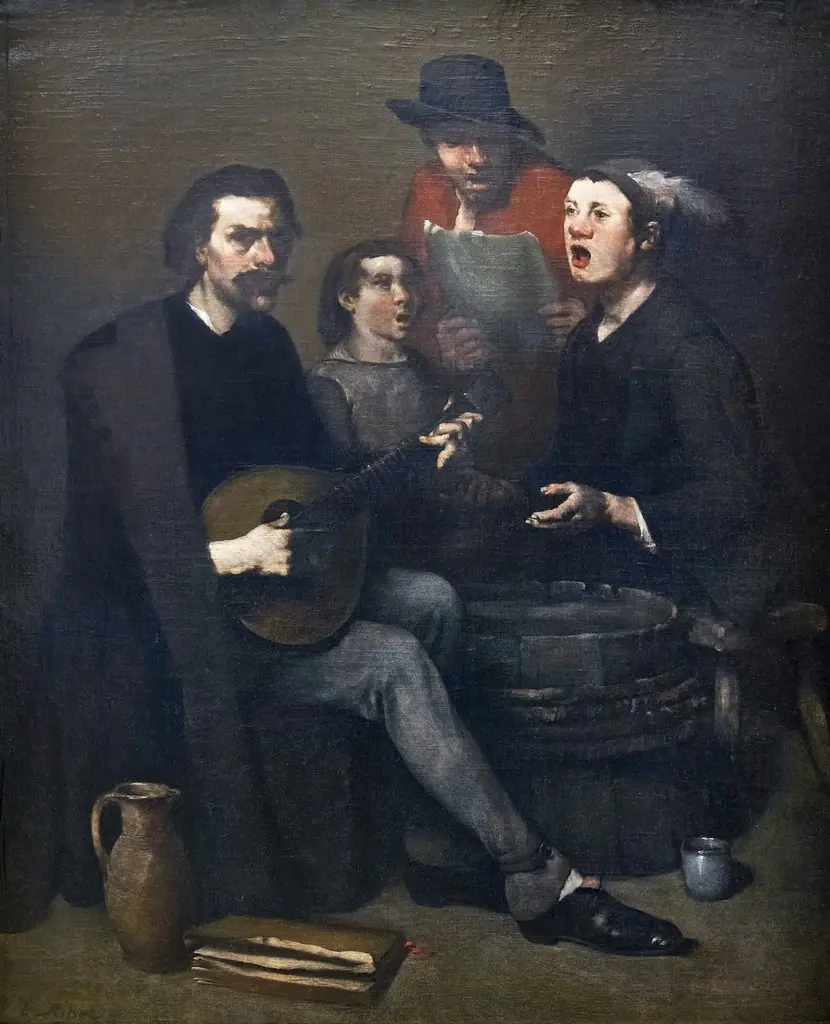
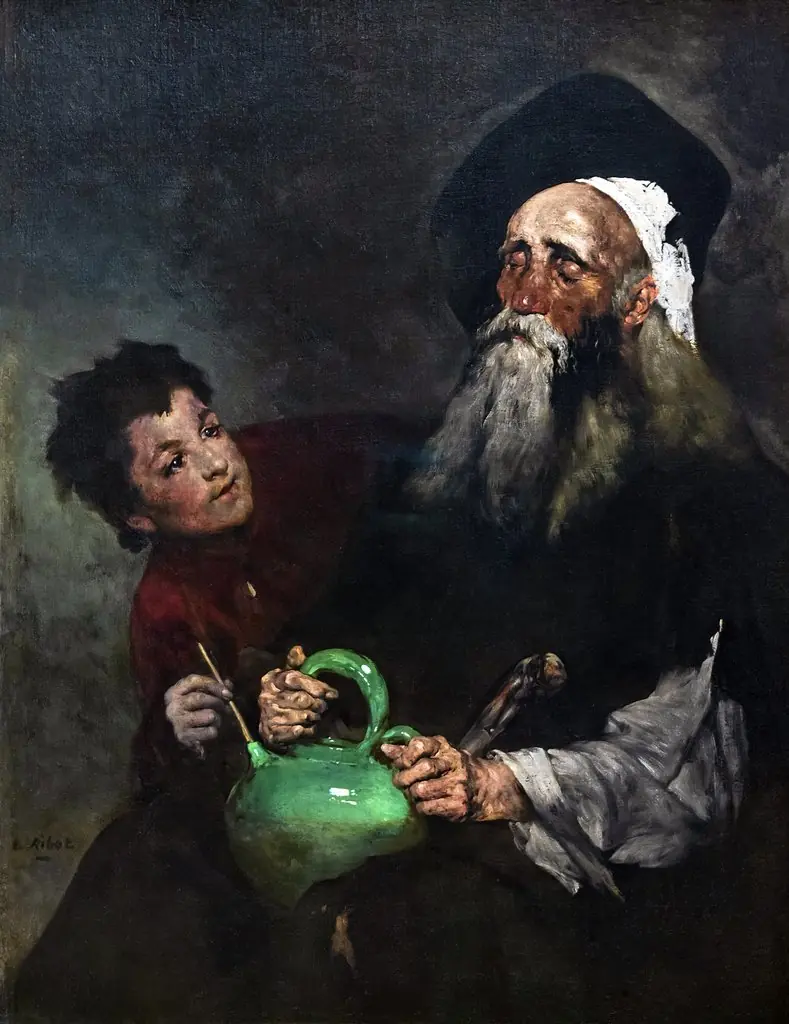
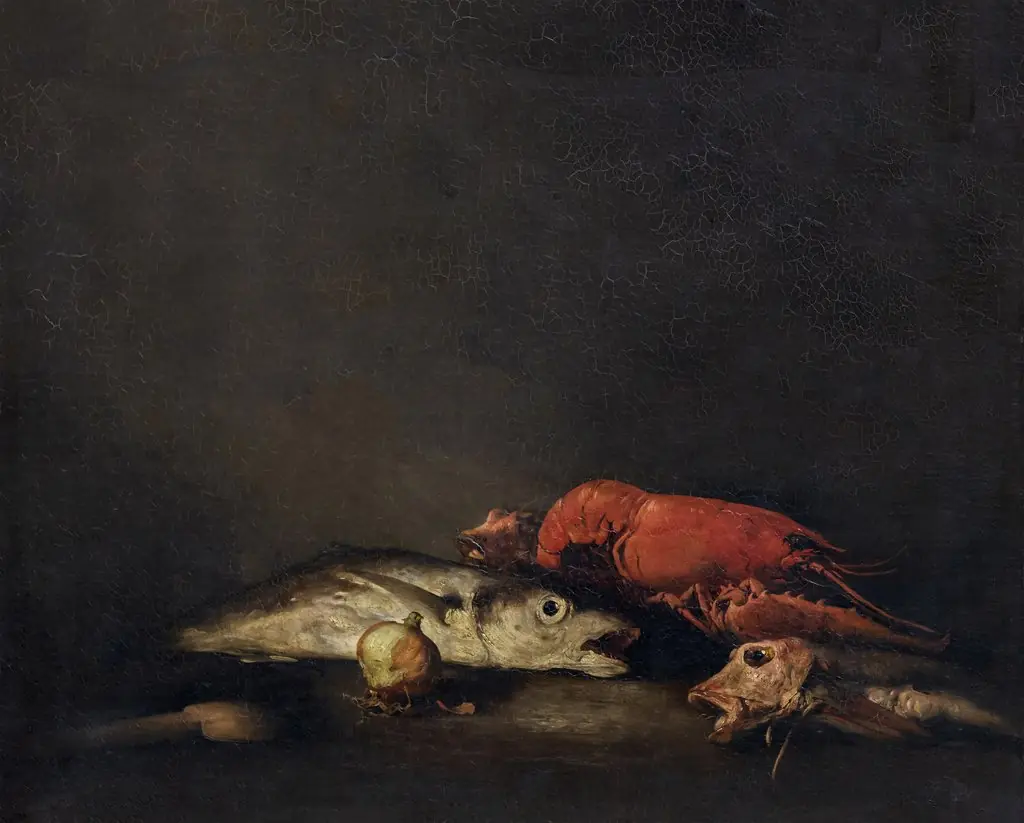
Théodule Ribot painted The Potato Peelers in 1863, a quiet scene of rural labor rendered in oil. The work is part of the Cleveland Museum of Art’s collection, where it stands as an example of 19th-century French Realism. Unlike grand historical narratives, Ribot focused on the unadorned routines of working-class life, capturing a moment of communal effort with restrained emotion and careful observation.
Subject & Meaning
The painting depicts several figures gathered around a wooden table, engaged in the mundane task of peeling potatoes. Their simple attire and hunched postures suggest rural poverty and the physical toll of daily toil. There is no narrative drama—only the quiet persistence of labor. The absence of facial detail emphasizes anonymity, reinforcing the universality of their condition rather than individual identity.
Technique & Style
Ribot employed chiaroscuro to model forms with strong contrasts between light and shadow, giving the figures a sculptural presence. The palette is muted, dominated by earth tones, with light falling from a single source to define the contours of hands, faces, and clothing. Brushwork is precise yet unobtrusive, avoiding theatricality in favor of tactile realism that grounds the scene in physical truth.
History & Provenance
Created in 1863, the painting entered the Cleveland Museum of Art’s collection in the 20th century, where it remains today. Its journey from a French studio to an American institution reflects broader patterns of collecting European Realist works during the early modern period. No significant alterations or documented restorations are known, preserving its original tonal balance and surface integrity.
Context
In mid-19th-century France, artists increasingly turned to everyday subjects as social consciousness grew. Ribot’s work aligns with the Realist movement’s rejection of idealized history painting, favoring instead the dignity of laborers. While not as politically charged as Courbet’s works, The Potato Peelers shares a commitment to depicting ordinary life without sentimentality or embellishment.
Legacy
The painting endures as a quiet testament to the aesthetic value found in unremarkable moments. Though Ribot is less widely known than his contemporaries, this work exemplifies a strand of French Realism that prioritized observation over rhetoric. It continues to be studied for its subtle handling of light and its unembellished portrayal of rural existence.
Own this work as a print
Artist & collection
Artist
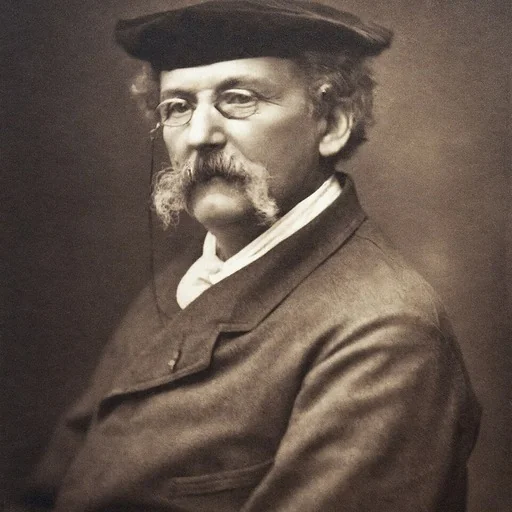
Théodule-Augustin Ribot (French: ; August 8, 1823 – September 11, 1891) was a French realist painter and printmaker.