Artwork
Virgin and Child in the Grotto (Adoration of the Magi)
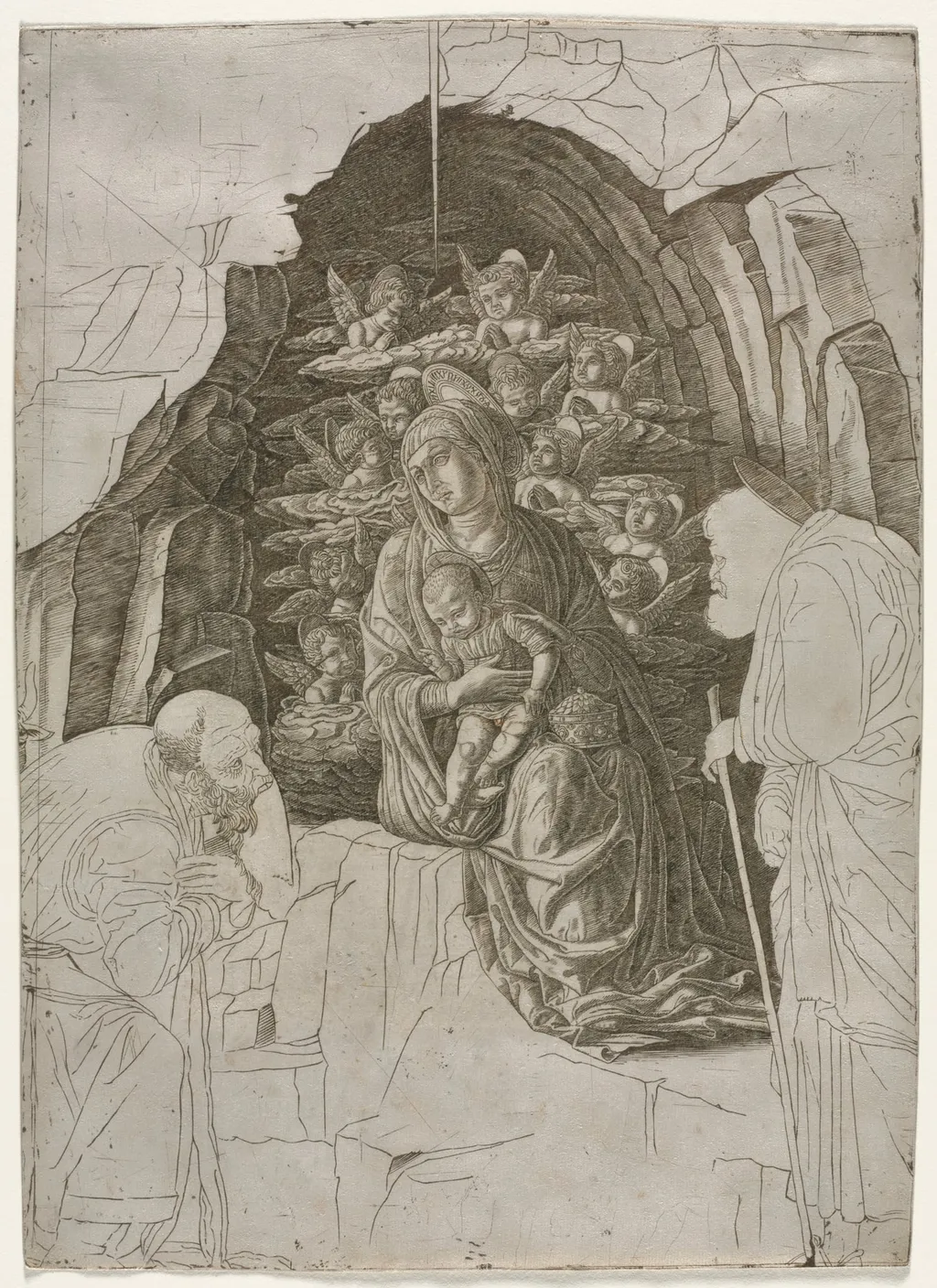
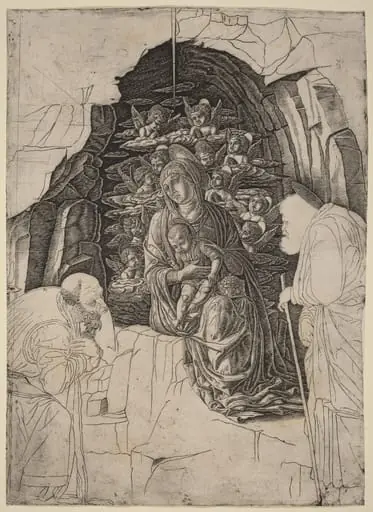
Virgin and Child in the Grotto (Adoration of the Magi) is a print by the Renaissance artist the so-called Premier Engraver. It dates from 1500 and is held in the collection of the Cleveland Museum of Art. This woodcut, dated around 1500, depicts the Virgin Mary and the infant Jesus within a rocky grotto, surrounded by celestial beings.
About this work
Overview
The work is part of the collection at The Cleveland Museum of Art, where its fragile condition and tonal richness reflect its age and handling over centuries.
This woodcut, dated around 1500, depicts the Virgin Mary and the infant Jesus within a rocky grotto, surrounded by celestial beings. Attributed to the artist known as the Premier Engraver, it is one of the few surviving prints from this early Northern Renaissance figure. The work is part of the collection at The Cleveland Museum of Art, where its fragile condition and tonal richness reflect its age and handling over centuries.
Subject & Meaning
The scene illustrates the Adoration of the Magi, though the traditional kings are absent; instead, winged figures—likely angels—gather around the holy pair. The Virgin, composed and seated, holds the Christ child, who reaches upward toward the hovering beings. The grotto setting evokes both the humility of Christ’s birth and the sacred mystery of divine presence, emphasizing spiritual intimacy over grandeur.
Technique & Style
The artist employed deep chiaroscuro, using stark contrasts between shadow and light to model form and create spatial depth. The rough texture of the cave walls and floor is rendered with dense, angular lines, while the figures emerge from darkness with soft gradations. The worn edges and muted tonal range suggest the print’s age and repeated impressions, enhancing its atmospheric gravity.
History & Provenance
The print’s origins lie in the early 16th-century Northern European printmaking tradition, though little is known of its early ownership. It entered the Cleveland Museum of Art’s collection in the 20th century, where its condition—marked by fading and edge wear—indicates it was once widely circulated. Its survival is notable given the fragility of early woodcuts and the common practice of discarding worn impressions.
Context
Created during a period of growing interest in devotional imagery for private use, this print reflects the trend of intimate religious scenes accessible beyond church settings. The absence of the Magi and focus on celestial attendants aligns with regional variations in Nativity iconography, where angelic presence underscored divine revelation rather than earthly homage.
Legacy
Though the artist’s identity remains obscure, this print stands as a rare example of early Northern engraving with pronounced emotional and spatial depth. Its use of chiaroscuro influenced later printmakers exploring light as a vehicle for spiritual expression. The work contributes to understanding how religious narratives were adapted for personal contemplation in the decades before the Reformation.
Artist & collection

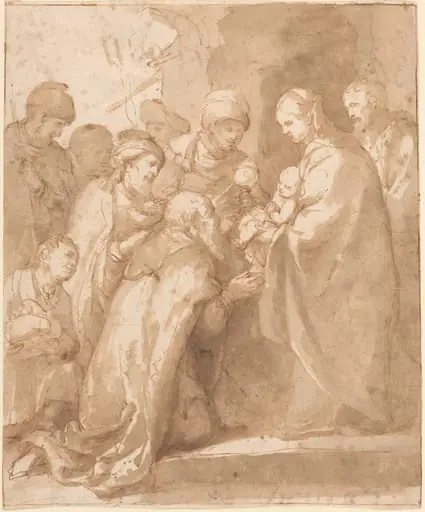 The Adoration of the Magi
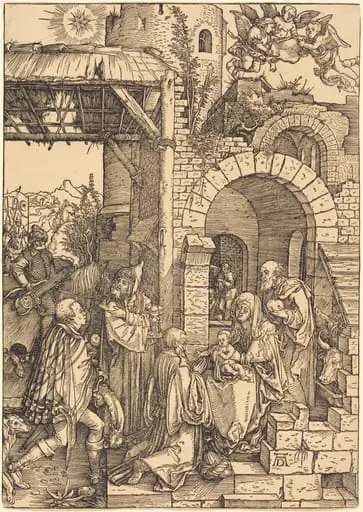 The Adoration of the Magi
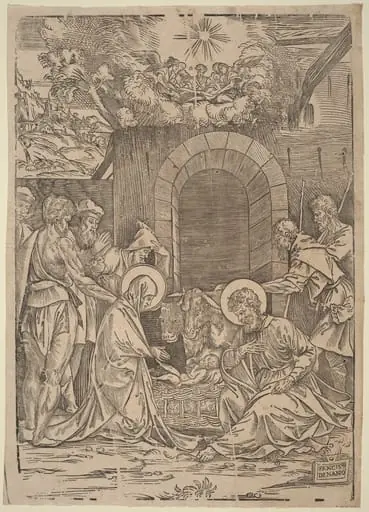 The Adoration of the Shepherds
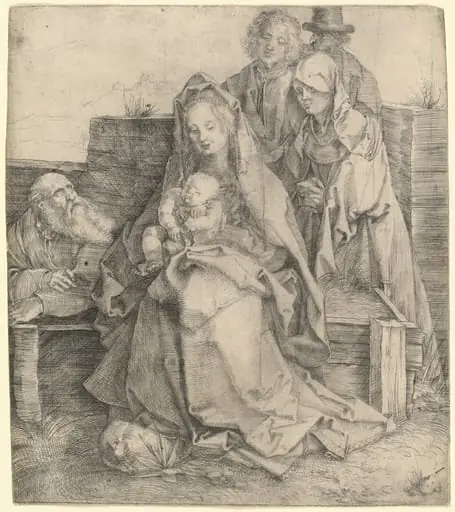 The Holy Family
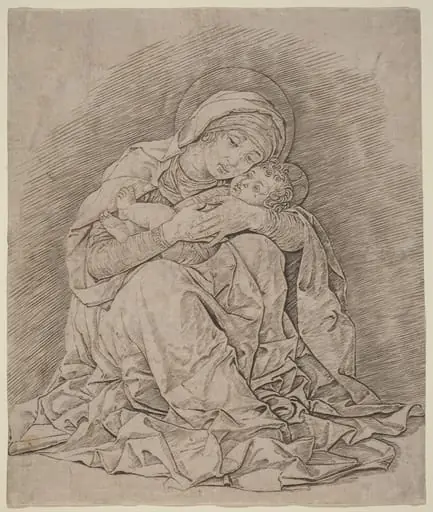 The Virgin and Child
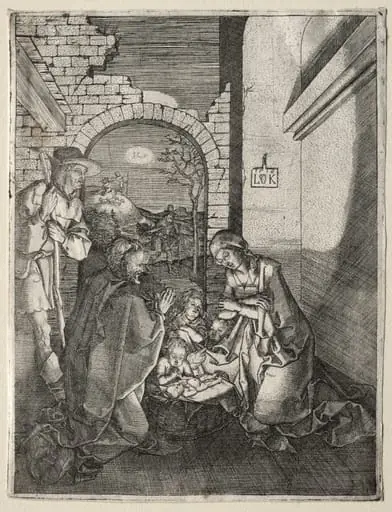 The Nativity
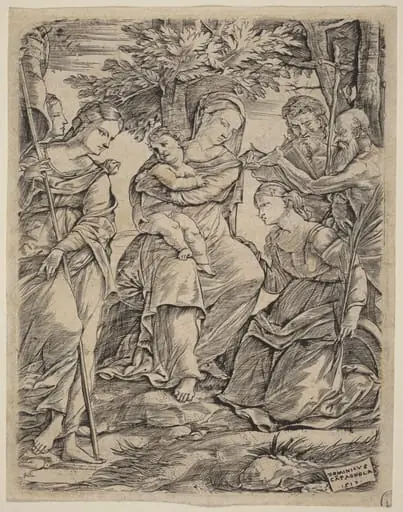 The Virgin and Child with Saints
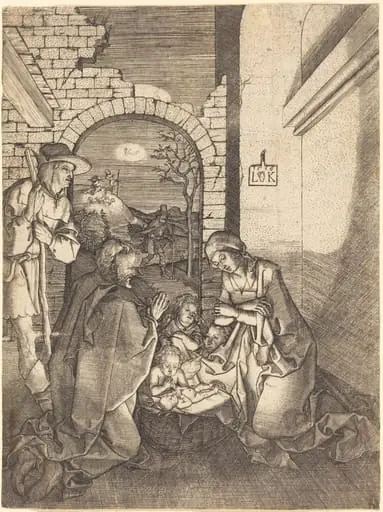 The Nativity
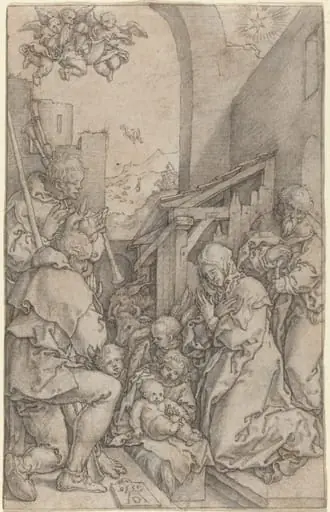 The Nativity
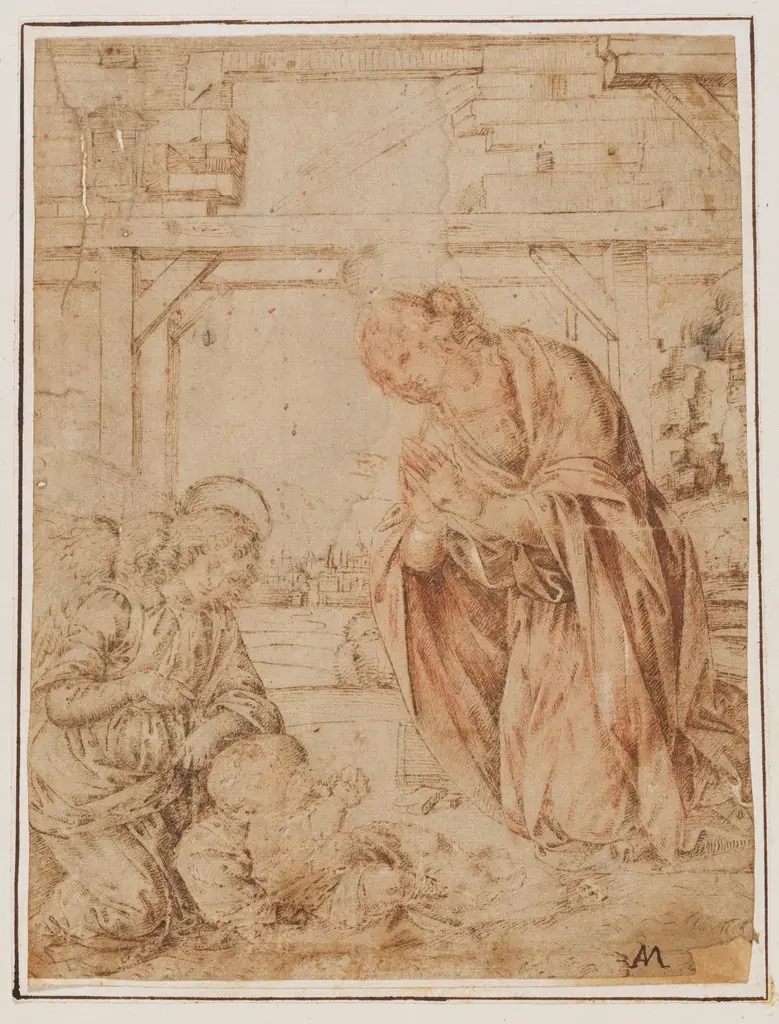 The Madonna Adoring the Child, with an Angel
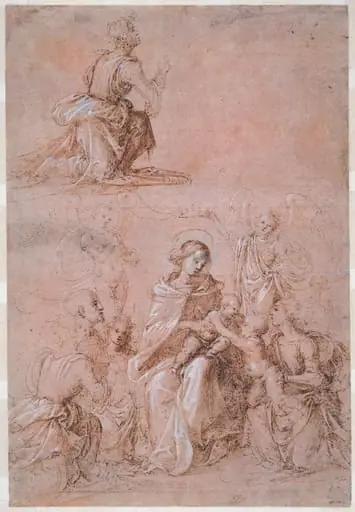 The Virgin and Child Surrounded by Saints and Angels
 The Adoration of the Magi (Virgin in the Grotto)