Artwork
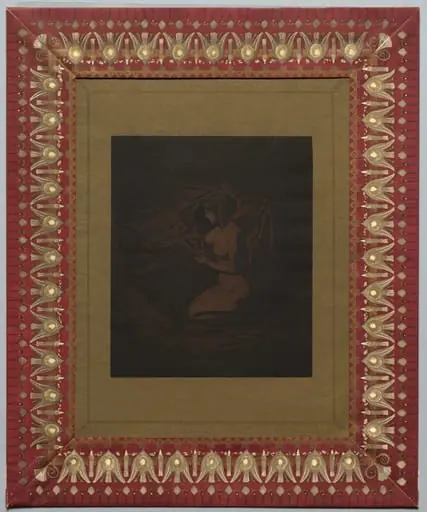
Pierrot en Pied, Portrait of Lady A. C.
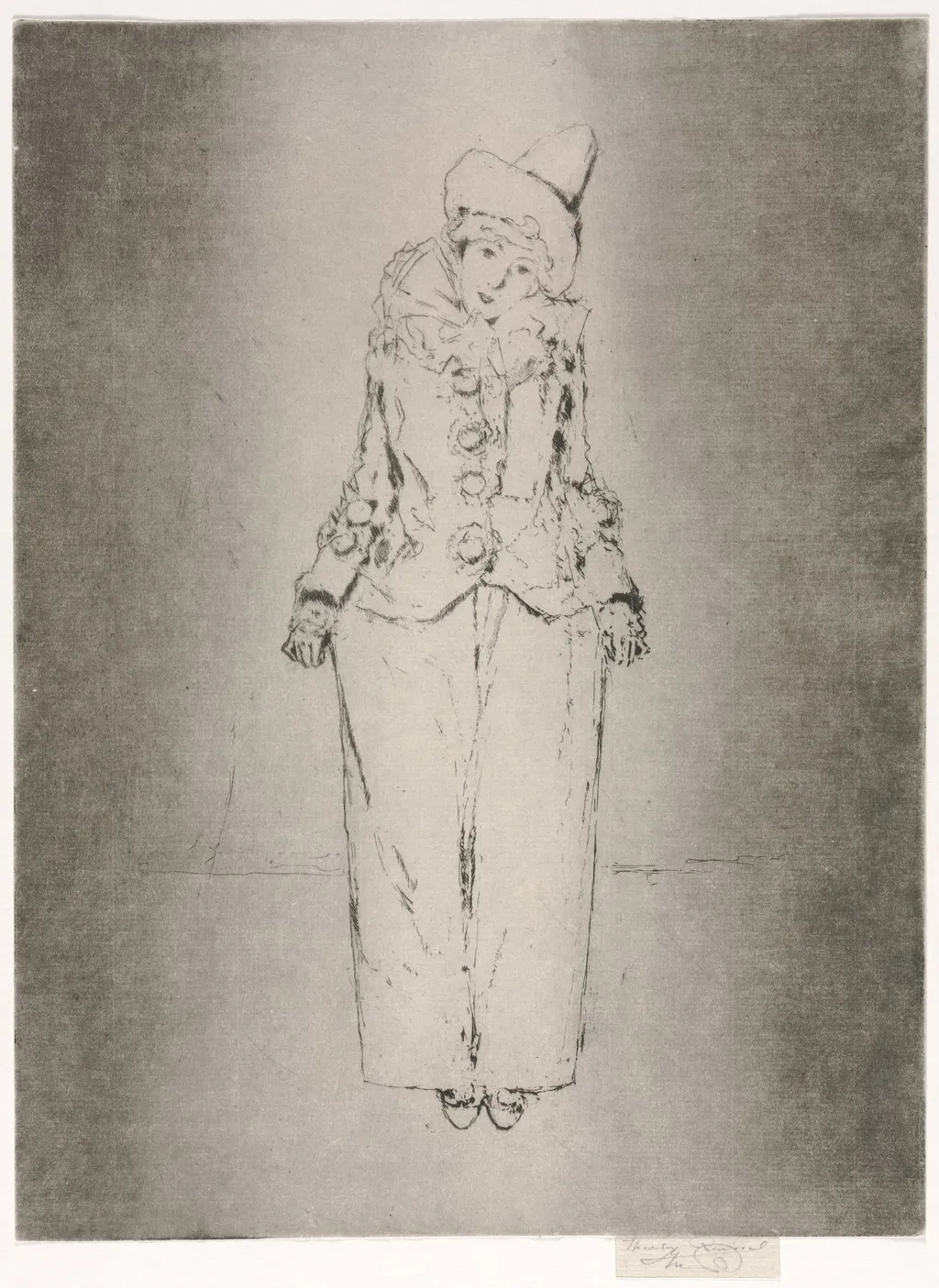
Pierrot en Pied, Portrait of Lady A. C. is a print by the Impressionist artist Théodore Roussel. It dates from 1888 and is held in the collection of the Cleveland Museum of Art. Created in 1888, this print by Theodore Roussel is held in The Cleveland Museum of Art.
About this work
Overview
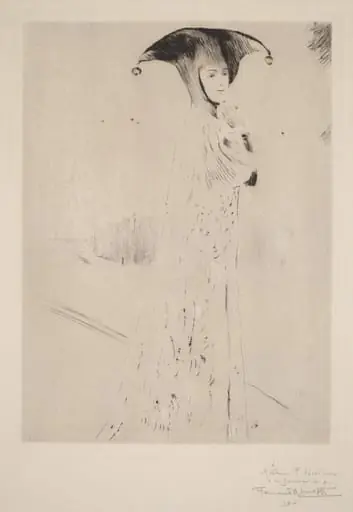
This piece presents a figure in theatrical attire, rendered with loose, expressive lines that emphasize form over precision.
Created in 1888, this print by Theodore Roussel is held in The Cleveland Museum of Art. Roussel, a French-born artist active in England, was known for his graphic work and depictions of everyday life. This piece presents a figure in theatrical attire, rendered with loose, expressive lines that emphasize form over precision. The work belongs to a body of prints where Roussel explored character and costume through minimal, gestural marks.
Subject & Meaning
The figure is dressed as Pierrot, a stock character from European commedia dell’arte, typically portrayed as a melancholic clown in loose white garments. The pose—hands on hips, sleeves rolled—suggests a moment of quiet self-possession rather than performance. The title references Lady A. C., indicating the sitter may have adopted the persona for a private or artistic context, blurring the line between identity and role-playing.
Technique & Style
Roussel employed a drypoint technique, using a sharp tool to incise lines directly into a metal plate. The resulting print features soft, uneven edges and a sense of immediacy. Fabric folds and contours are suggested with swift, overlapping strokes, avoiding fine detail. The absence of shading and background focuses attention on the figure’s silhouette and the texture of the costume’s loose fabric.
History & Provenance
The print entered The Cleveland Museum of Art’s collection as part of a broader acquisition of late 19th-century British and French graphic art. Its provenance traces to Roussel’s personal archive, with early impressions circulated among artists and collectors interested in the revival of etching as a medium. The work was likely made for private distribution rather than public exhibition.
Context
In the 1880s, artists across Europe revisited theatrical archetypes as vehicles for psychological expression. Roussel, influenced by Japanese prints and the Aesthetic Movement, favored subjects that evoked mood over narrative. This portrait reflects a broader trend among printmakers who used costume and gesture to explore identity, distancing themselves from academic realism in favor of intimate, personal expression.
Legacy
Roussel’s Pierrot en Pied exemplifies the quiet innovation of late Victorian printmaking. While not widely reproduced, the work influenced later artists interested in the expressive potential of line and costume. Its preservation in a major public collection underscores its role as a thoughtful, understated contribution to the revival of etching as a medium for personal portraiture.
Own this work as a print
Artist & collection
Artist
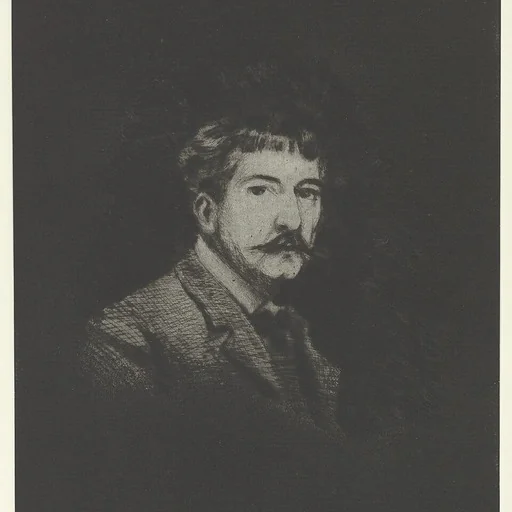
Theodore Casimir Roussel (1847–1926) was a French-born English painter and graphic artist, best known for his landscapes and genre scenes.

 H Beard Print Collection
 The Bells
 Annie Haden
 Annie Haden
 Untitled
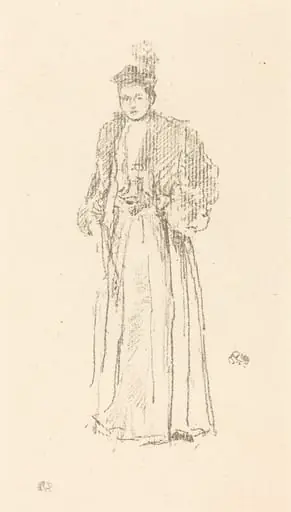 Portrait Study: Miss Charlotte R. Williams
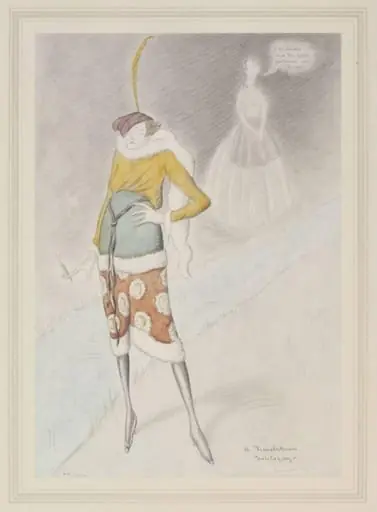 A Translethean soliloquy
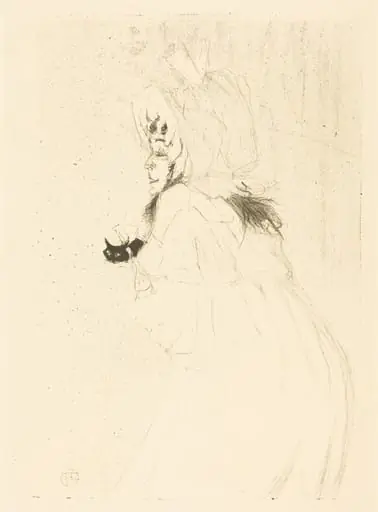 May Belfort Bowing (Miss May Belfort saluant)
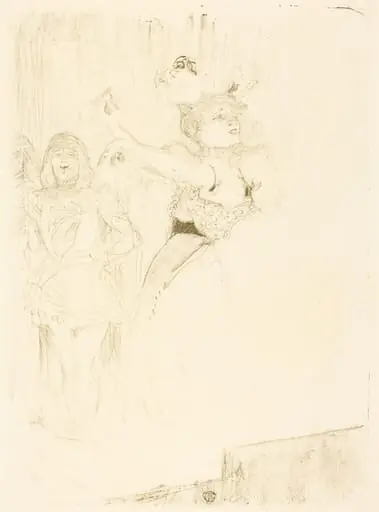 Lender Dancing the Bolero in "Chilperic" (Lender dansant le pas du boléro dans "Chilpéric")
 Lender Full Face in "Chilperic" (Lender de face dans "Chilpéric")
 Moussette
 Woman Standing