Artwork
Self-Portrait VI with Flower
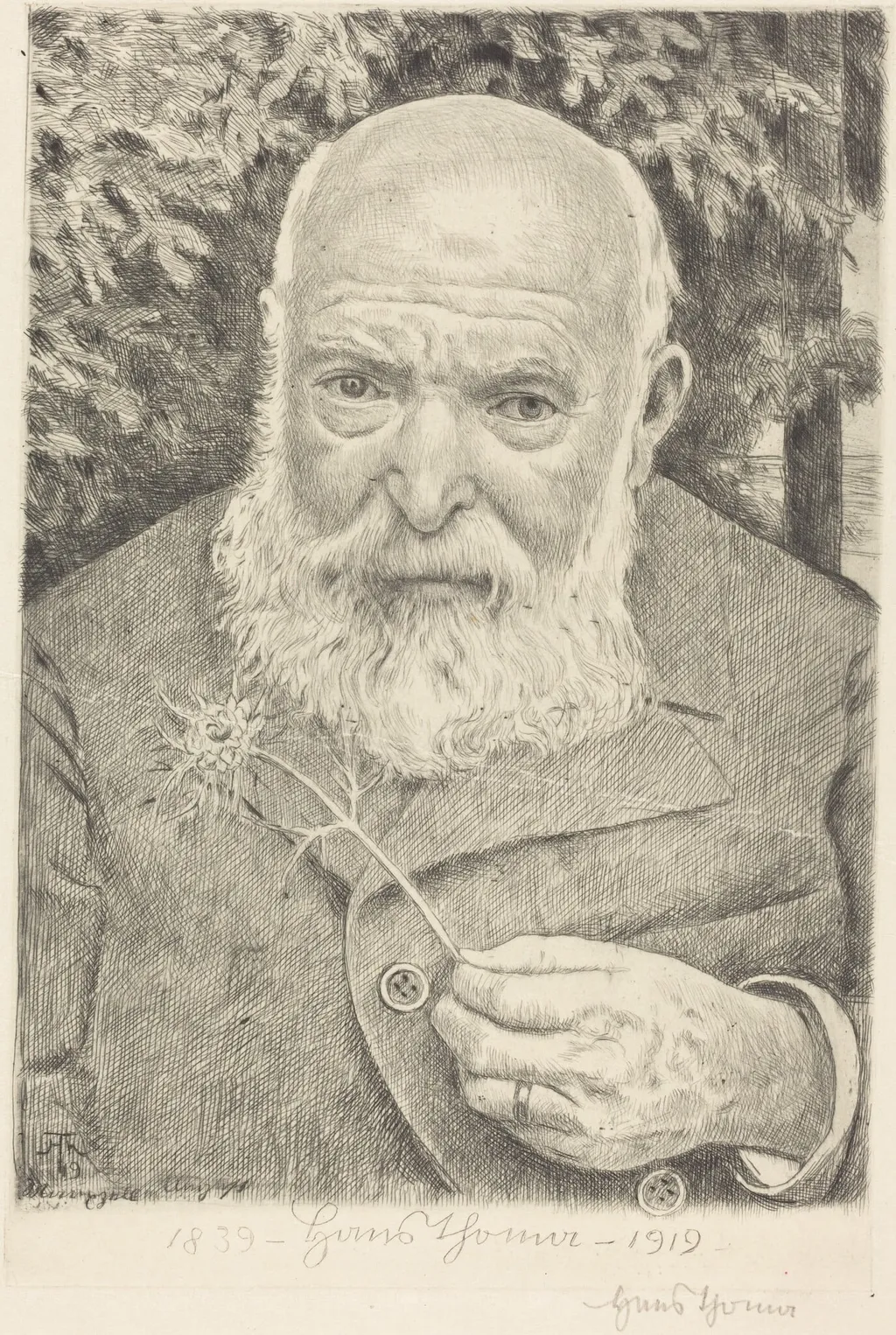
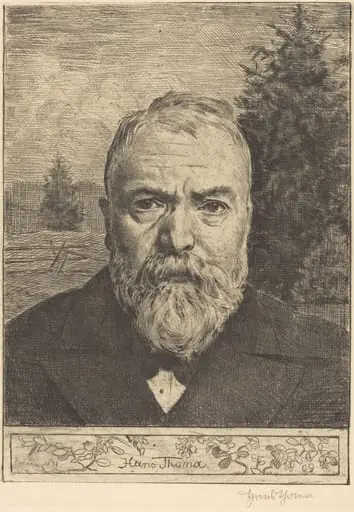
Self-Portrait VI with Flower is an ink print by Hans Thoma. It dates from 1909 and is held in the collection of the National Gallery of Art.
About this work
The artist used a needle to scratch into the metal plate, creating the lines—this is called *etching*.
This sketch shows an older man with a long white beard and deep wrinkles. His eyes are sharp and focused, and he’s holding a small flower near his chest. The background is rough and textured, like a sketchy curtain or fabric.
The date "1839–1919" is written in the corner, but this is actually a 1909 self-portrait. The artist used a needle to scratch into the metal plate, creating the lines—this is called *etching*.
Next, check out technique: etching to see how artists like this make prints.
Overview
Hans Thoma's Self-Portrait VI with Flower is a 1909 etching that depicts the artist in a contemplative pose. The work is a self-portrait created late in Thoma's career.
Subject & Meaning
The etching shows Thoma as an older man with a long white beard, holding a small flower near his chest. His sharp, focused eyes convey a sense of introspection.
Technique & Style
Thoma used the etching technique, scratching lines into a metal plate with a needle to create the image. The resulting print features a rough, textured background and detailed facial features.
History & Provenance
Thoma created this self-portrait in 1909, during a period when he was a professor at Karlsruhe Academy and a member of the Baden State Parliament. The artist lived from 1839 to 1924, as indicated by the date written in the corner of the print.
Artist & collection
Artist
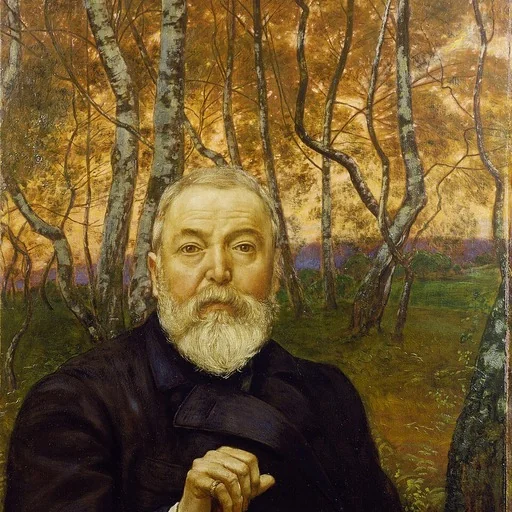
Hans Thoma (2 October 1839 – 7 November 1924) was a German painter. An alumnus and later professor of Karlsruhe Academy, he is known for his landscapes, portraits, and symbolic works rooted in German regional life and…

![Self-Portrait [recto], by Paul Cezanne](https://artifactworldgallery.com/img/paul-cezanne--self-portrait-recto--d76a05e14030ebd2-w320.webp)
![Self-Portrait [recto], by Paul Cezanne](https://artifactworldgallery.com/img/paul-cezanne--self-portrait-recto--800f9cf98766d770-w320.webp)