Artwork
Paralytic (Le paralytique)
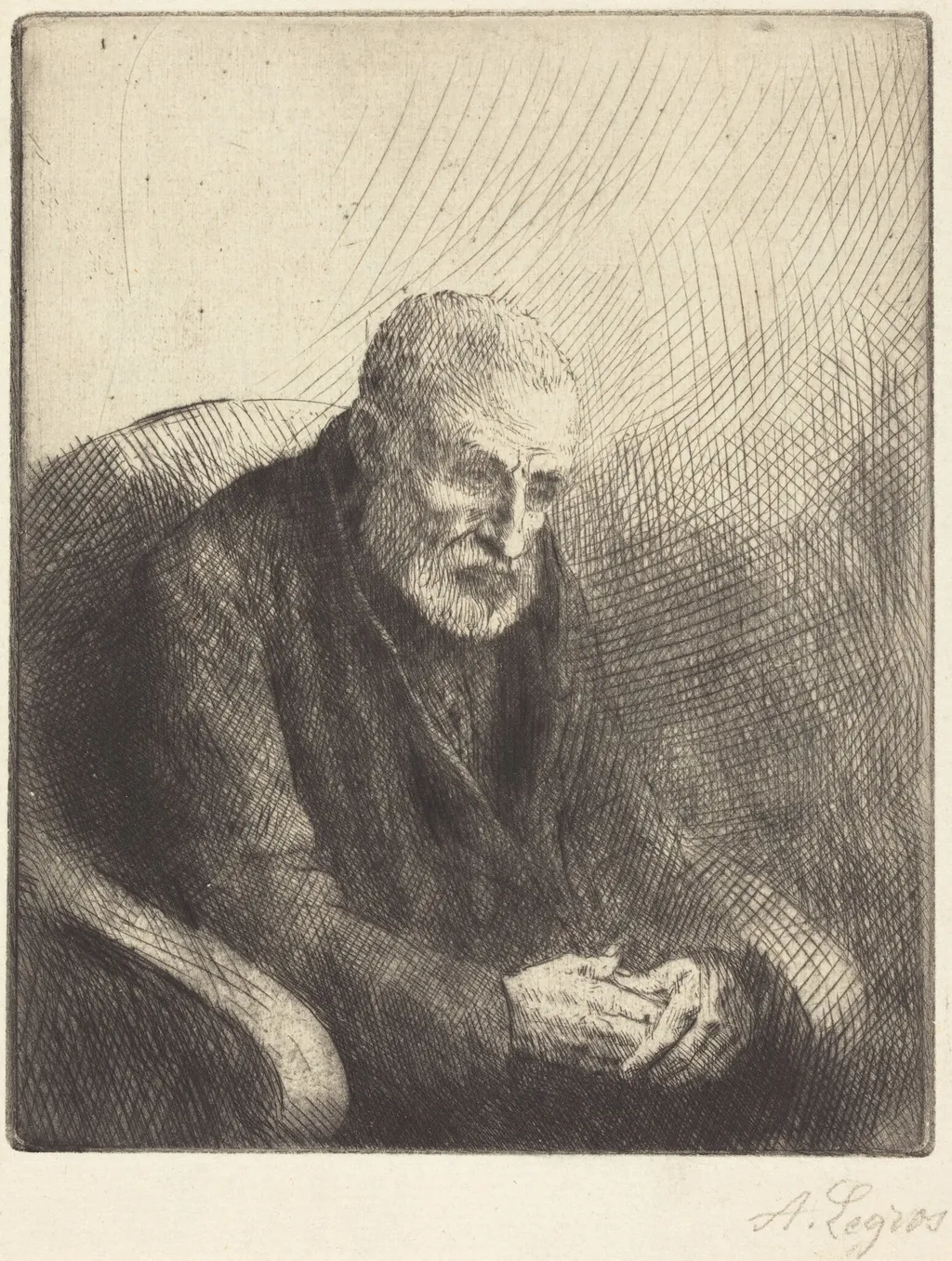
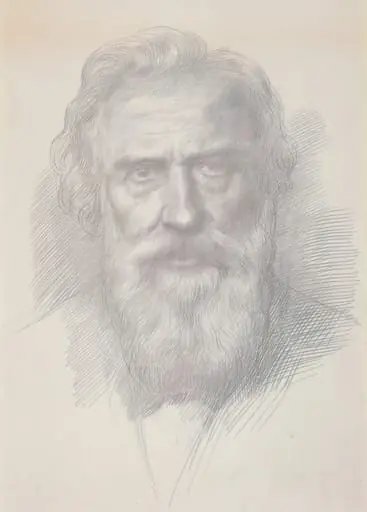
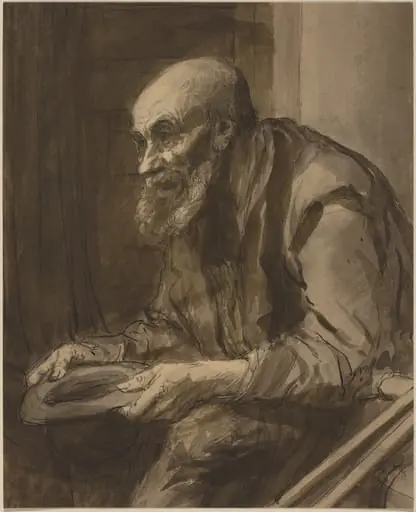
Paralytic (Le paralytique) is an ink print by the Romanticist artist Alphonse Legros. It dates from 1874 and is held in the collection of the National Gallery of Art.
About this work
Overview
Paralytic (Le paralytique) is a print created by Alphonse Legros, a French-born artist who later worked in Britain. The work is an etching with drypoint elements, produced in the 1860s.
Subject & Meaning
The print depicts a man lying on his side, covered by a blanket, with a gaunt face and sunken eyes. The sparse surroundings suggest a scene of poverty or illness, inviting the viewer to contemplate the subject's condition.
Technique & Style
Legros employed etching and drypoint techniques to achieve a range of textures and tonal values. The drypoint needle scratched into the metal plate, creating rich, velvety shadows and a distinctive rough texture.
History & Provenance
Produced in the 1860s, Paralytic (Le paralytique) was part of a printmaking revival in Britain, to which Legros contributed significantly through his work and teaching. Prints like this were affordable and accessible, making art available to a wider audience.
Own this work as a print
Artist & collection

Artist
Alphonse Legros (French pronunciation: ; 8 May 1837 – 8 December 1911) was a French, later British, painter, etcher, sculptor, and medallist.