Artwork
II Penseroso
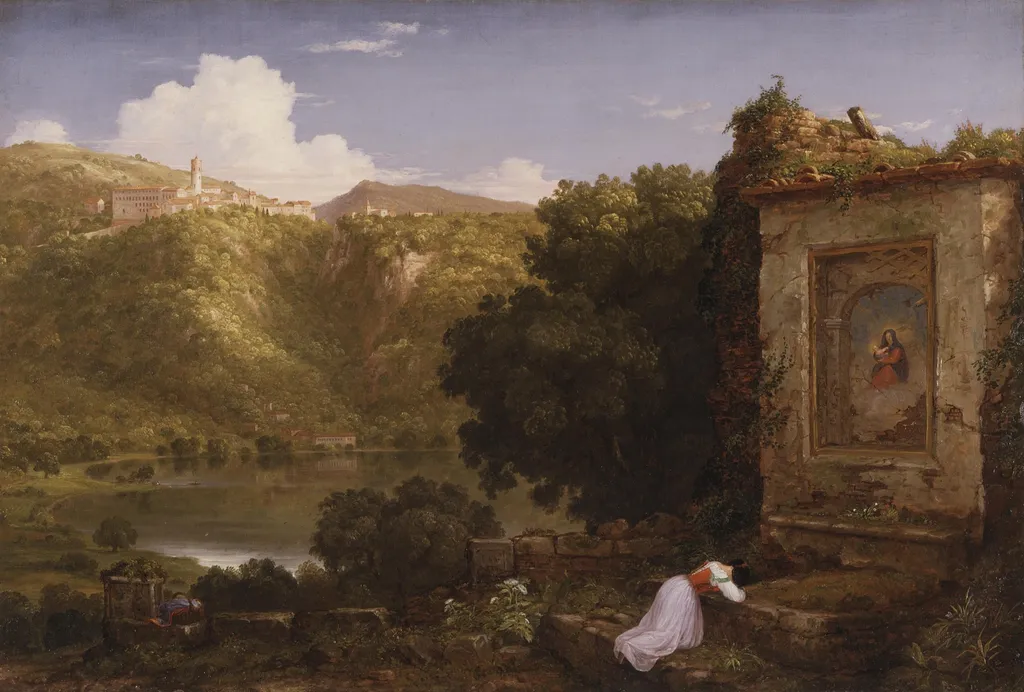
II Penseroso is an oil painting by the Hudson River School artist Thomas Cole. It dates from 1845 and is held in the collection of the Los Angeles County Museum of Art.
About this work
If you're interested in learning more about the artist behind this piece, you can look up Thomas Cole, who created this work in 1845.
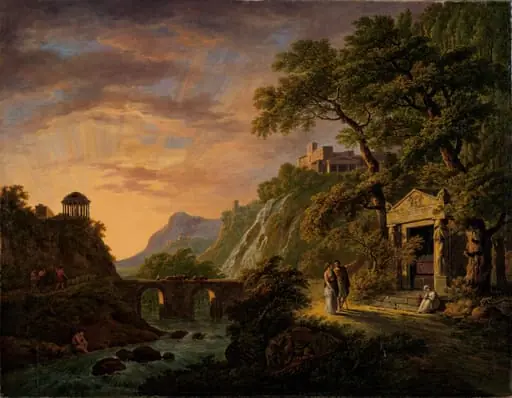
This painting shows a serene landscape with a lake, trees, and hills in the background. In the foreground, a woman in a white dress kneels in front of a stone structure with a painting of the Virgin Mary on it.
The scene is peaceful, with the woman lost in thought, surrounded by nature. The artist's use of light and shadow creates a sense of depth and atmosphere in the painting.
If you're interested in learning more about the artist behind this piece, you can look up Thomas Cole, who created this work in 1845.
Overview
Thomas Cole painted Il Penseroso in 1845 using oil on canvas, marking it as a key work from his later period. As the founder of the Hudson River School, Cole often merged natural landscapes with contemplative themes. This piece reflects his interest in emotional resonance within scenery, moving beyond mere topographical representation toward symbolic quietude. The painting is now held in the collection of the Los Angeles County Museum of Art.
Subject & Meaning
The title, Italian for 'the thoughtful one,' suggests introspection. A solitary woman in white kneels before a stone niche housing an image of the Virgin Mary, her posture and stillness conveying private devotion. The surrounding wilderness—still, quiet, and unspoiled—frames her meditation, implying harmony between spiritual reflection and the natural world. Cole avoids overt narrative, instead inviting viewers to share in the scene’s solemn calm.
Technique & Style
Cole employed subtle gradations of light and shadow to model form and deepen spatial recession. The landscape is rendered with precise yet soft brushwork, blending atmospheric perspective to soften distant hills. The woman’s white dress contrasts gently with the muted greens and browns of the environment, drawing attention without disruption. His approach favors mood over drama, using tonal harmony to evoke stillness rather than motion.
History & Provenance
Painted during Cole’s mature phase, Il Penseroso emerged after his European travels and amid growing interest in Romantic introspection in American art. It remained in private collections until entering LACMA’s holdings, where it has been preserved as part of the museum’s 19th-century American painting collection. No major public exhibitions or documented controversies surround its early history, suggesting it was appreciated quietly within artistic circles.
Context
In the mid-1840s, American artists increasingly turned to nature as a vessel for moral and spiritual inquiry. Cole’s work responded to this trend, aligning with literary ideals of melancholy contemplation found in Milton’s poem of the same name. Unlike grander historical or religious scenes, Il Penseroso elevates solitude and nature as worthy subjects, reflecting a broader cultural shift toward personal, inward experience in art.
Legacy
Il Penseroso exemplifies Cole’s influence on American landscape painting’s emotional dimension. While not as widely reproduced as his allegorical series, it helped establish a precedent for quiet, spiritually inflected scenes in the Hudson River School tradition. Later artists drew from its emphasis on atmosphere and introspection, embedding psychological depth into natural settings without narrative spectacle.
Own this work as a print
Artist & collection
Artist
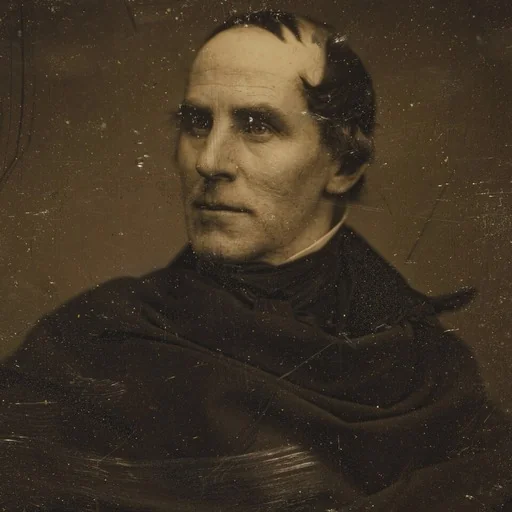
Thomas Cole (February 1, 1801 – February 11, 1848) was an Anglo-American artist who founded the Hudson River School art movement.

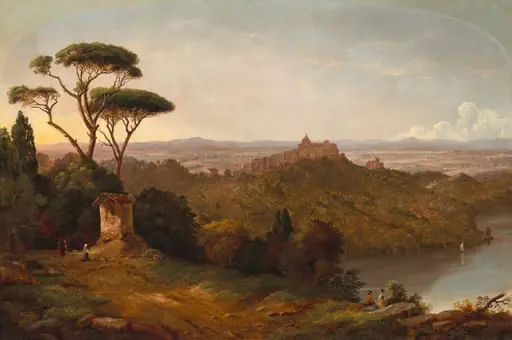 Castle Gondolfo, Lake Albano, Italy
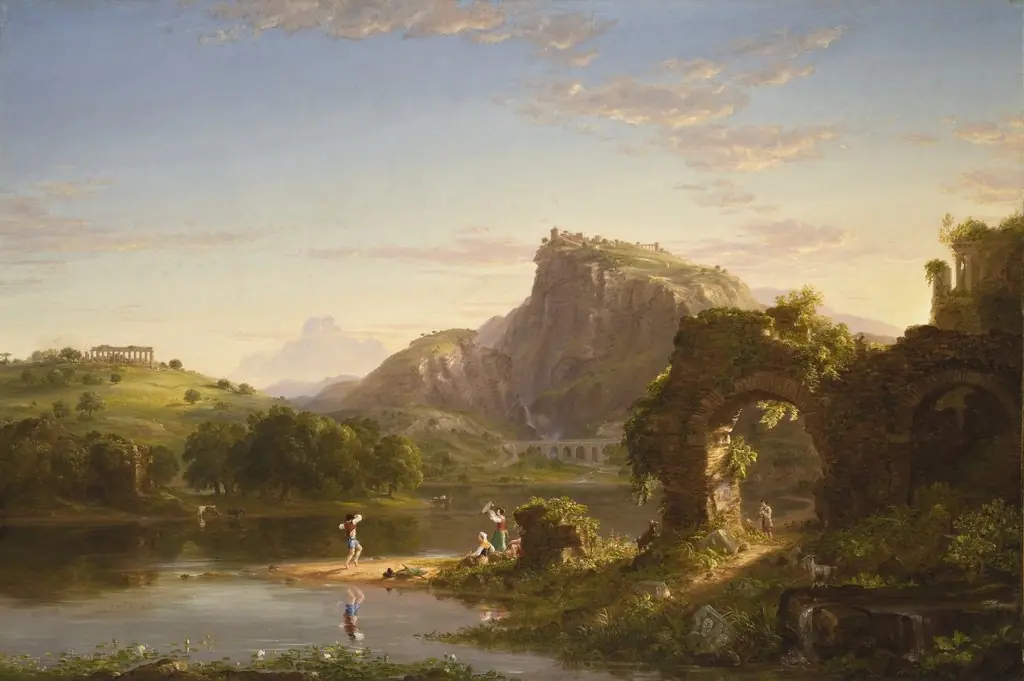 L-Allegro (Italian Sunset)
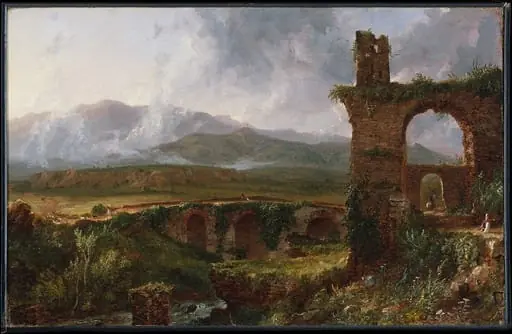 A View near Tivoli (Morning)
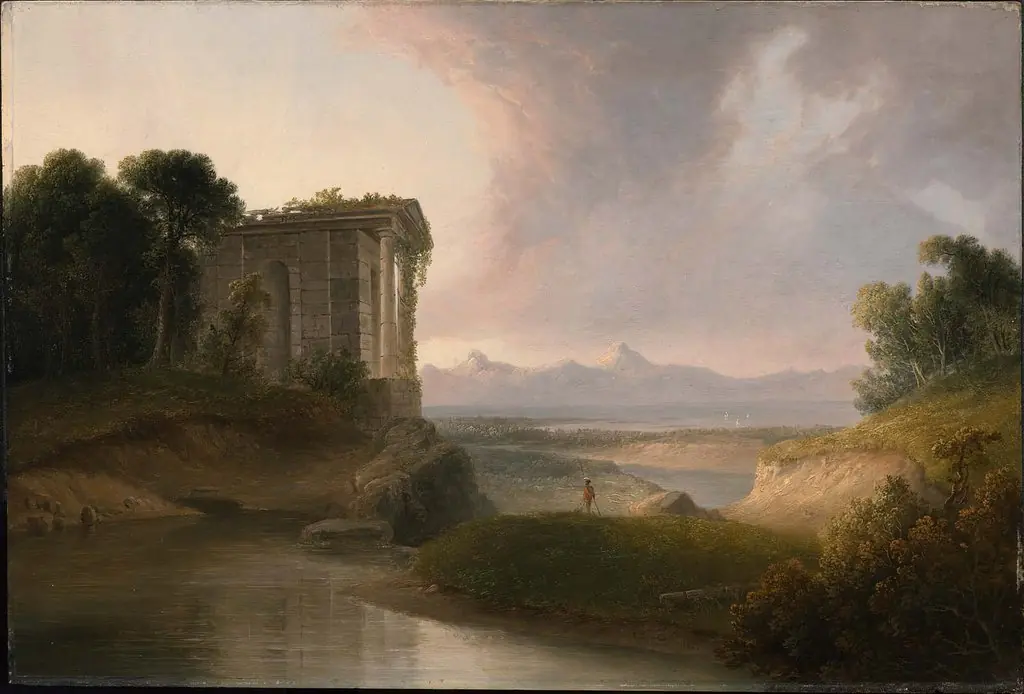 Romantic Landscape with a Temple
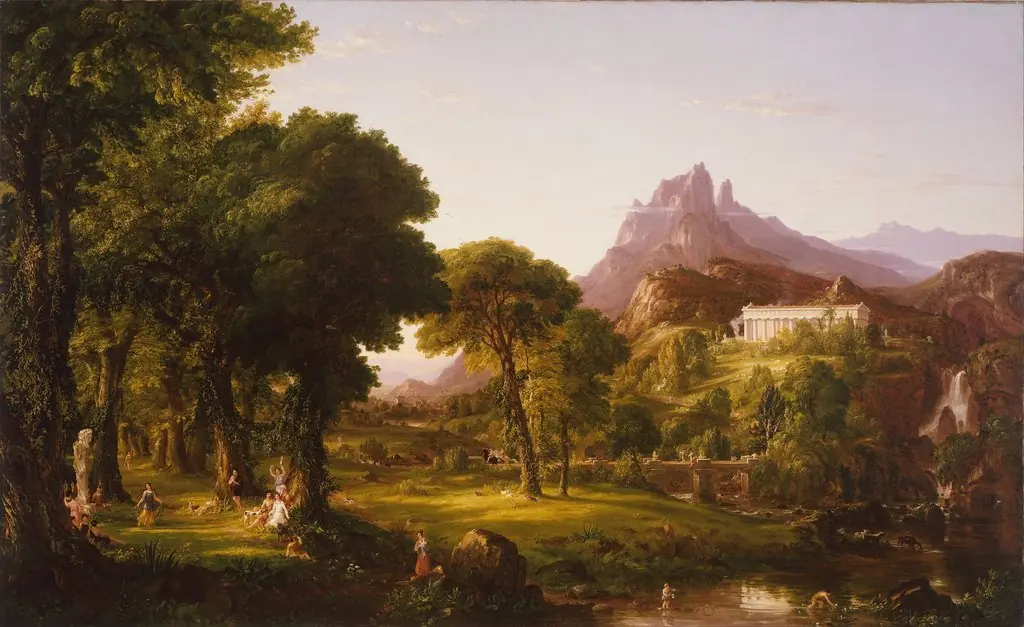 Dream of Arcadia
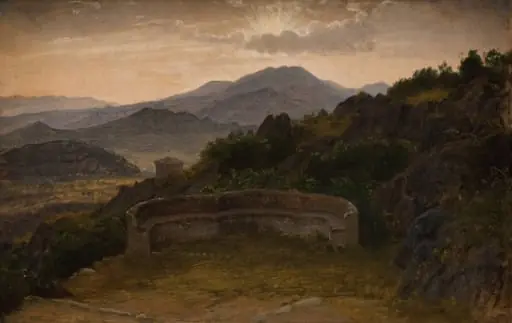 Landscape near Subiaco. Sunset
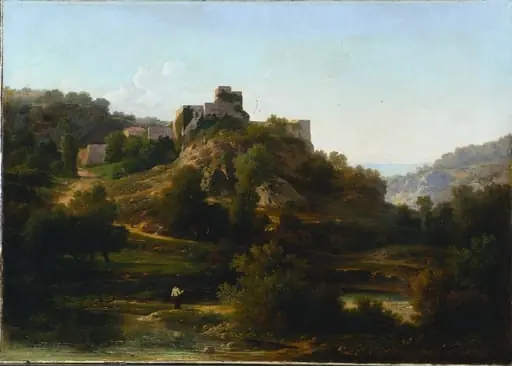 Châteauvieux-sur-Suran
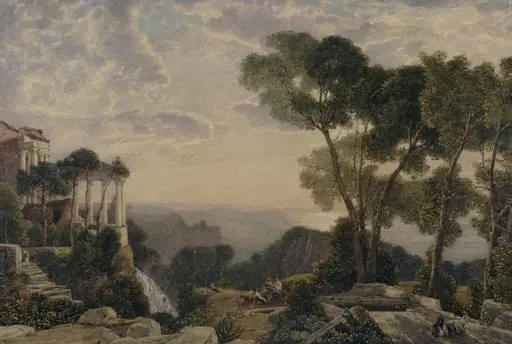 Landscape: A classical composition
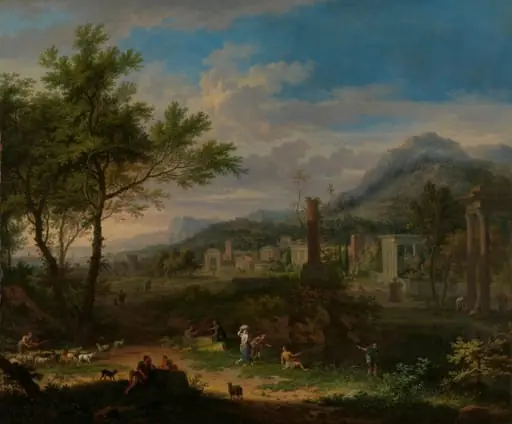 Arcadian Landscape with Fishermen
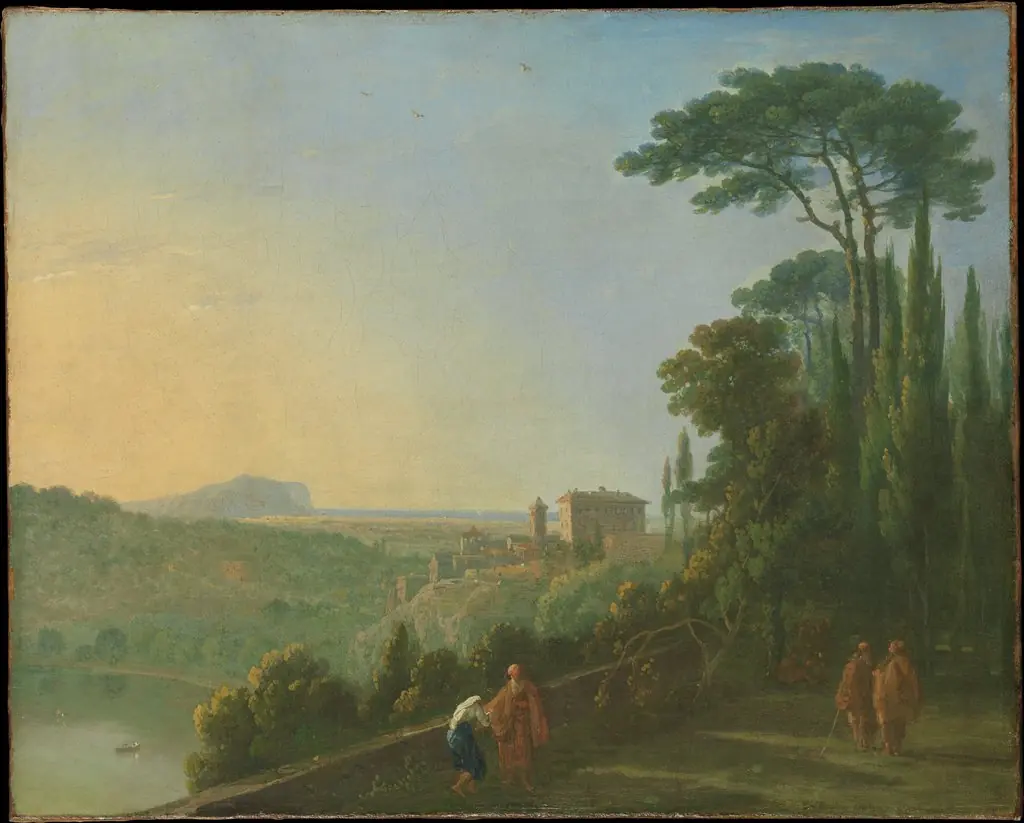 Lake Nemi and Genzano from the Terrace of the Capuchin Monastery
 Arcadian Landscape with Setting Sun