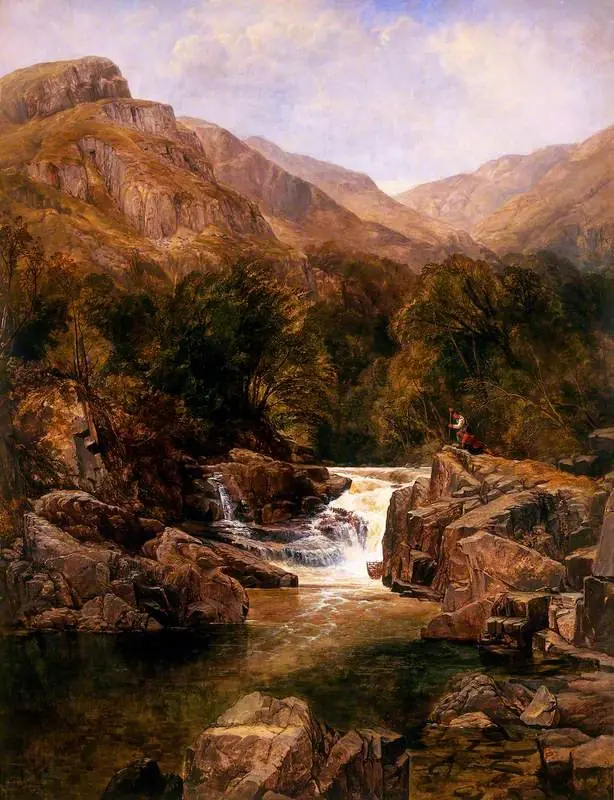
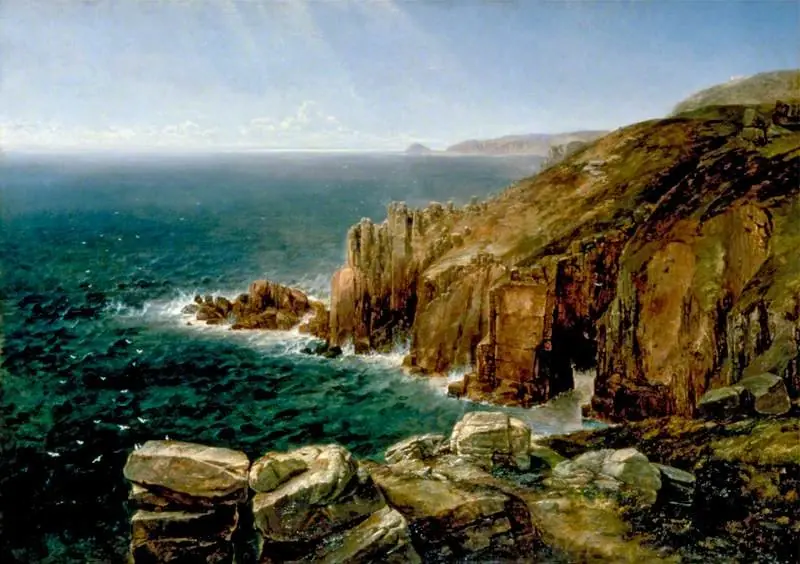
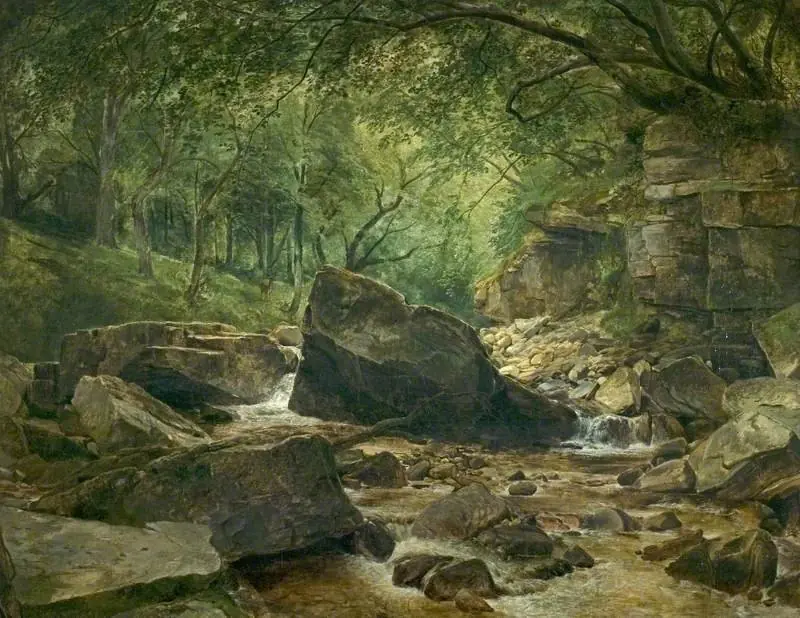
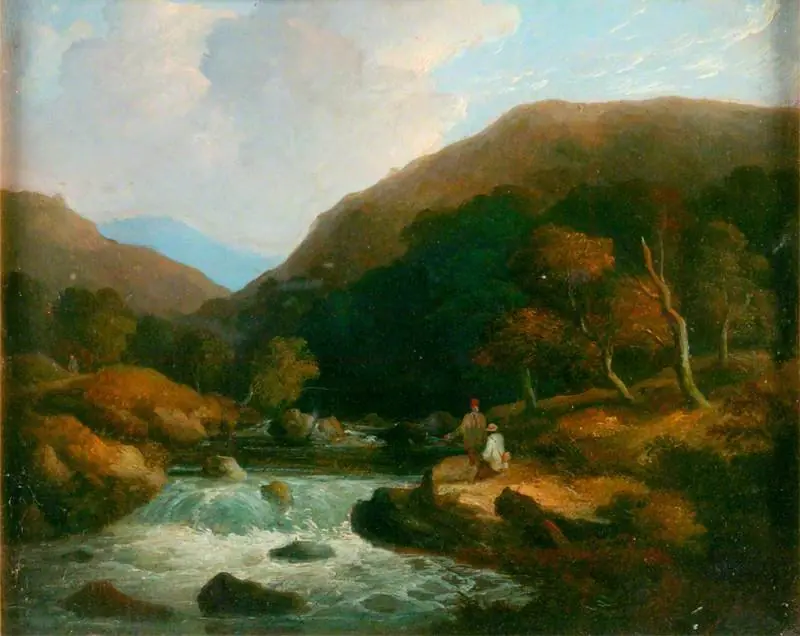
Artwork
A Summer's Afternoon
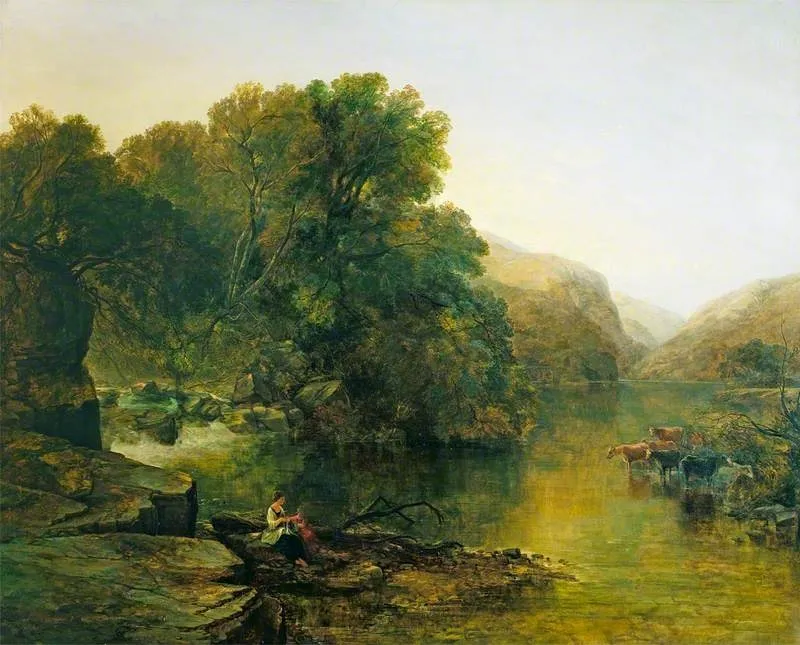
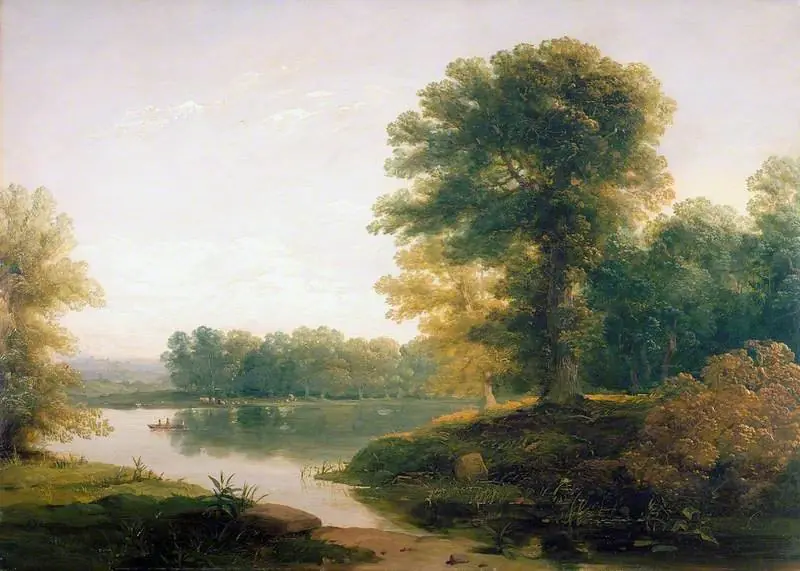
A Summer's Afternoon is an oil painting by Thomas Creswick. It dates from 1844 and is held in the collection of the Victoria and Albert Museum.
About this work
Overview
Thomas Creswick painted *A Summer's Afternoon* in 1844 in oil on canvas, reflecting his engagement with the British landscape tradition.
Thomas Creswick painted *A Summer's Afternoon* in 1844 in oil on canvas, reflecting his engagement with the British landscape tradition. As a member of the Birmingham School, he focused on quiet, naturalistic scenes rather than dramatic vistas. The painting is part of the Victoria and Albert Museum’s collection, where it represents mid-19th-century British rural observation. Its modest scale and intimate mood distinguish it from grander Romantic landscapes of the period.
Subject & Meaning
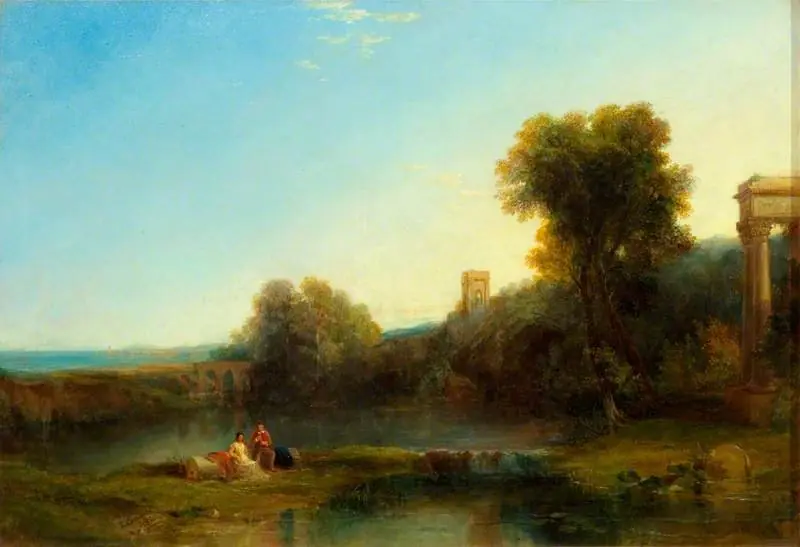
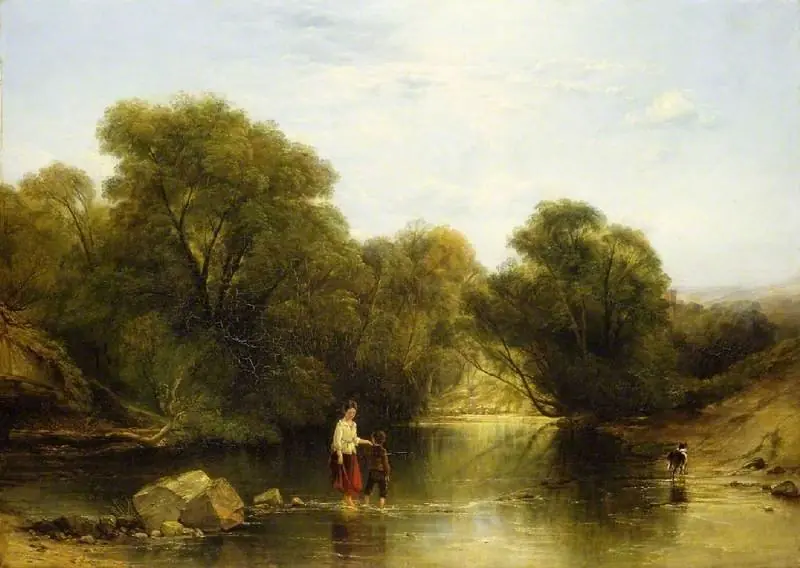
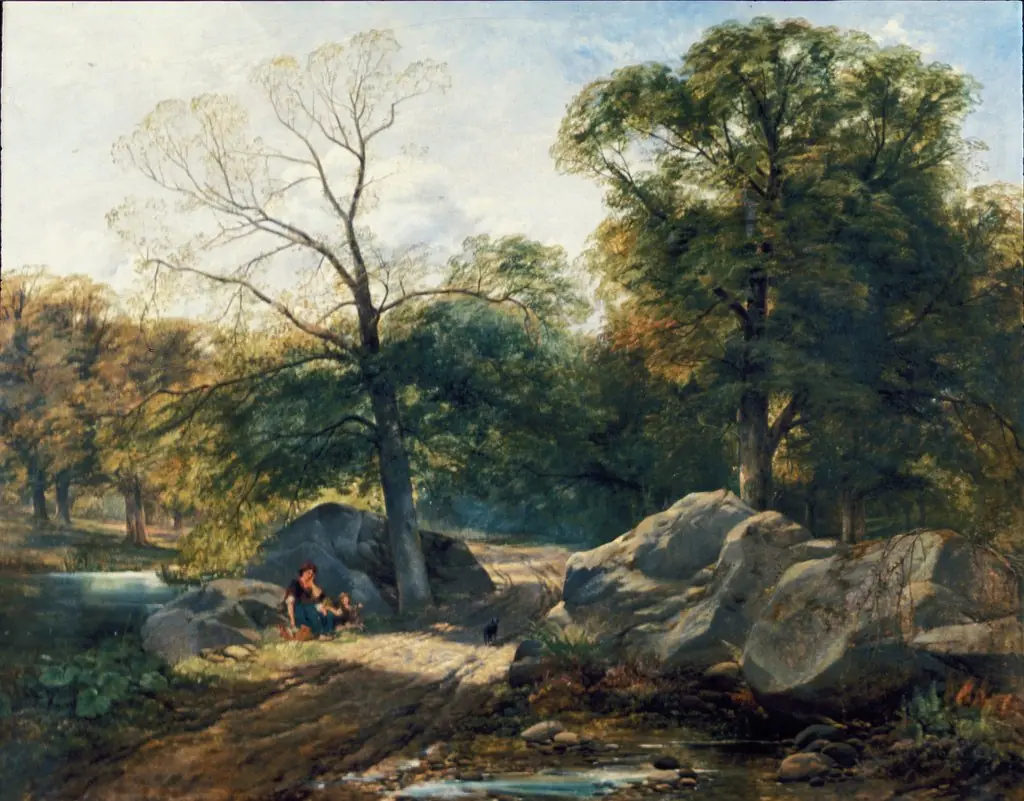
The painting depicts a solitary woman seated on a fallen tree trunk, gazing across a still lake framed by dense woodland. Her stillness and inward focus suggest contemplation rather than narrative action. The absence of other figures or signs of labor emphasizes solitude and quietude. The scene evokes a moment suspended in time, inviting the viewer to share in the calm of a summer afternoon without overt symbolism or moralizing.
Technique & Style
Creswick employed soft, blended brushwork to render foliage and light, avoiding sharp contours in favor of atmospheric transitions. Warm ochres and muted greens dominate the palette, enhancing the sense of dappled sunlight filtering through the trees. The foreground’s textured bark and grasses are rendered with subtle detail, while the distant lake dissolves into hazy tones, creating a gentle recession into depth. His technique prioritizes mood over precision, aligning with the observational ethos of his circle.
History & Provenance
The painting entered the Victoria and Albert Museum’s collection in the 19th century, likely through acquisition or donation linked to the museum’s early focus on decorative and fine arts. Its preservation reflects its status as a representative work of British landscape painting from the 1840s. No significant alterations or reattributions are recorded, and it has remained in public hands since its acquisition, consistently cataloged under Creswick’s name.
Context
In the 1840s, British landscape painting was shifting from idealized compositions toward direct observation of nature, influenced by the rise of plein air studies and the growing middle-class appreciation for domestic scenery. Creswick, aligned with the Birmingham School, contributed to this trend by portraying unembellished rural moments. His work stood apart from the grandeur of Turner or Constable, favoring intimacy and quietude over spectacle.
Legacy
Though not widely known today, Creswick’s work contributed to the broader acceptance of everyday rural scenes in British art. *A Summer's Afternoon* exemplifies a quiet, personal mode of landscape painting that influenced later generations interested in naturalism and emotional restraint. Its presence in a major national collection ensures its continued role as a reference for studies of mid-Victorian artistic sensibilities.
Artist & collection
Artist
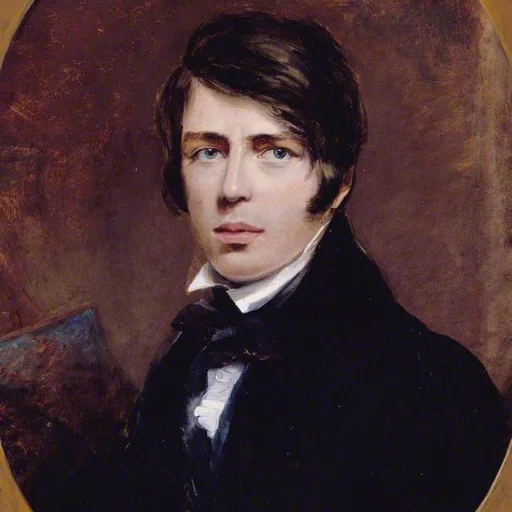
Thomas Creswick (5 February 1811 – 28 December 1869) was a British landscapist and illustrator, and one of the best-known members of the Birmingham School of landscapists.