Artwork
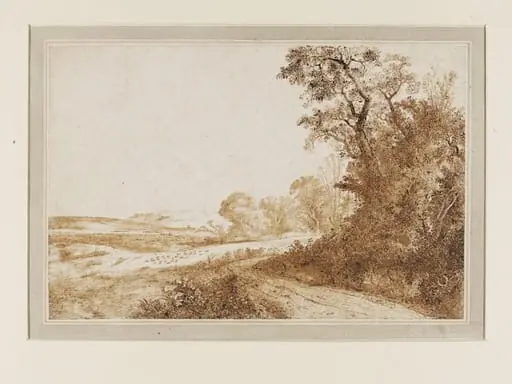
Landscape with Winding Road
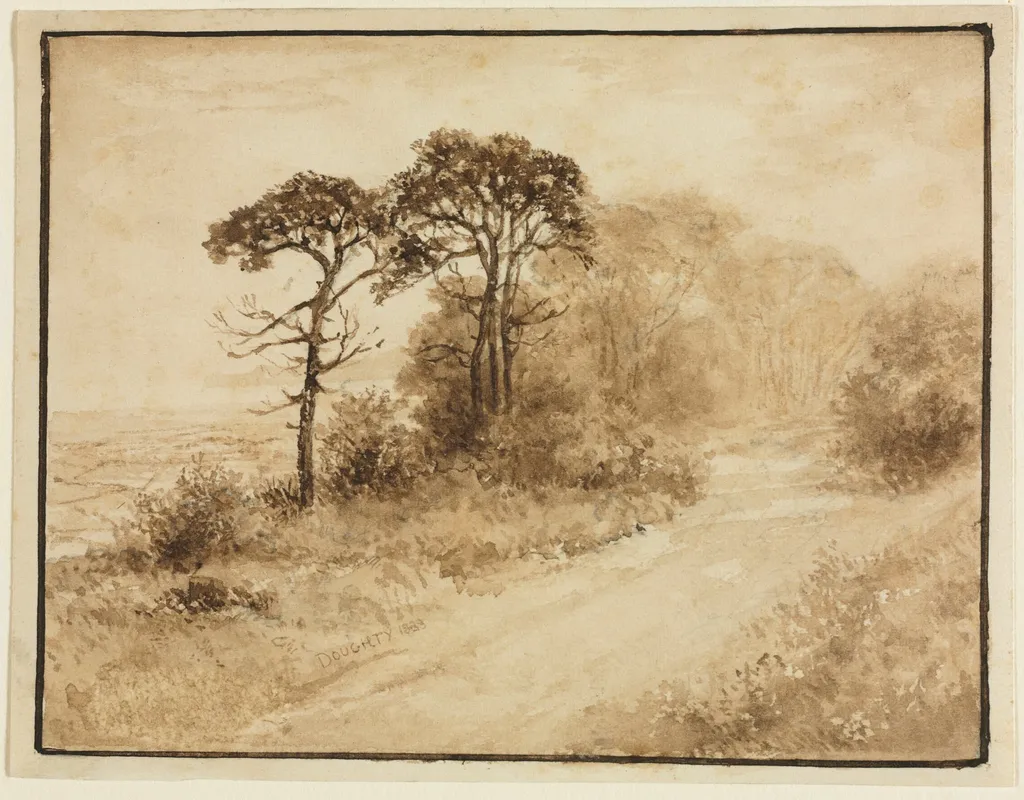
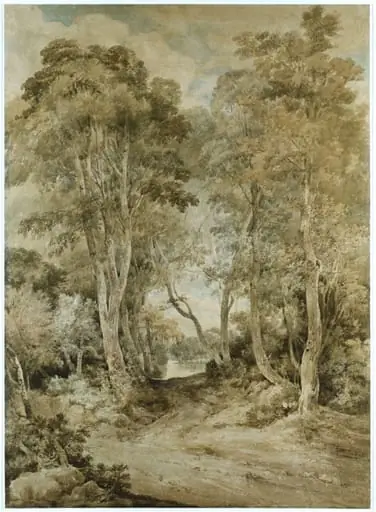
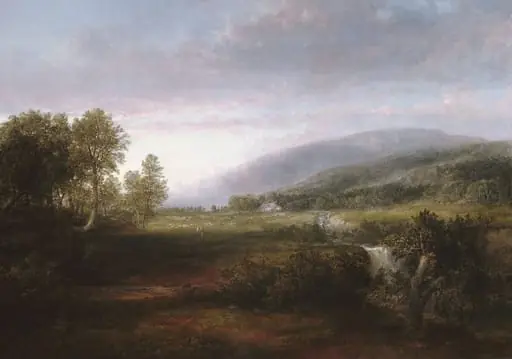
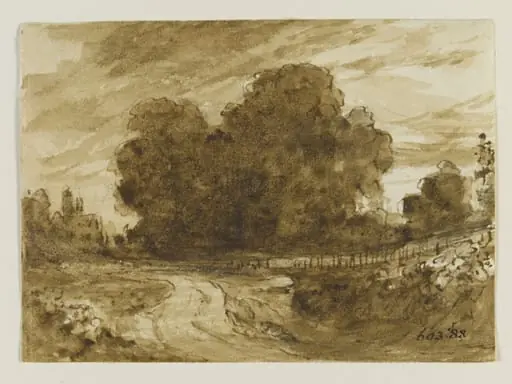
Landscape with Winding Road is a drawing by the Romanticist artist Thomas Doughty. It dates from 1833 and is held in the collection of the Cleveland Museum of Art.
About this work
Overview
This drawing exemplifies his focus on mood over documentation.
Thomas Doughty was an early 19th-century American artist whose landscape drawings helped shape the visual language of American scenery before the rise of the Hudson River School. His work, including Landscape with Winding Road, reflects a deliberate move away from topographical accuracy toward idealized natural settings that evoke tranquility and harmony. This drawing exemplifies his focus on mood over documentation.
Subject & Meaning
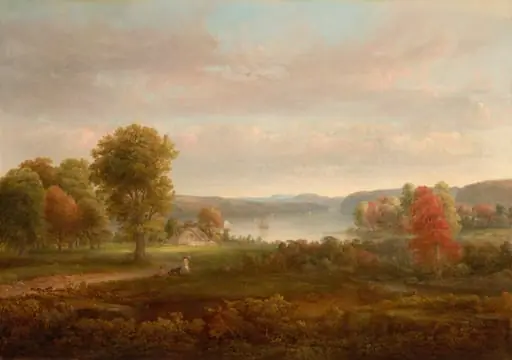
The scene depicts a gentle valley with a winding dirt path, a quiet stream, and softly rendered trees in autumnal hues. No human figures are present, and the atmosphere is serene, devoid of drama or threat. Doughty assembled elements from various real locations to construct a composite vision of nature as peaceful and orderly, reflecting a cultural preference for the picturesque over the sublime.
Technique & Style
Doughty employed delicate pencil and wash techniques to suggest depth and atmosphere, using subtle tonal gradations to model form and light. The composition is carefully balanced, with the road leading the eye into the distance and framing trees creating a sense of enclosure. His handling of foliage and sky avoids sharp detail, favoring soft transitions that enhance the contemplative tone.
History & Provenance
Created in the 1820s, this drawing emerged during a period when American artists were beginning to define a national visual identity through landscape. Doughty’s work was exhibited in Philadelphia and New York, where it found favor among collectors seeking refined, non-threatening depictions of nature. Though less known today, his drawings were influential in establishing landscape as a legitimate subject for fine art in the United States.
Context
At the time, European traditions of the picturesque—emphasizing harmony, balance, and cultivated beauty—strongly influenced American artists. Doughty’s approach contrasted with later Hudson River School works that emphasized grandeur and awe. His landscapes catered to urban audiences seeking refuge in imagined, tranquil nature, reflecting broader societal desires for order and calm amid rapid industrial change.
Legacy
Doughty’s emphasis on mood and idealization paved the way for later American landscape painters, even as his style was eventually overshadowed by more dramatic interpretations. His drawings remain important as early examples of a distinctly American sensibility in landscape art—one that valued quiet beauty and compositional restraint over spectacle or nationalism.
Own this work as a print
Artist & collection


![Grove of Trees [verso], by Friedrich Salathé](https://artifactworldgallery.com/img/friedrich-salathe--grove-of-trees-verso--4013b539bd981a94-w320.webp)