Artwork
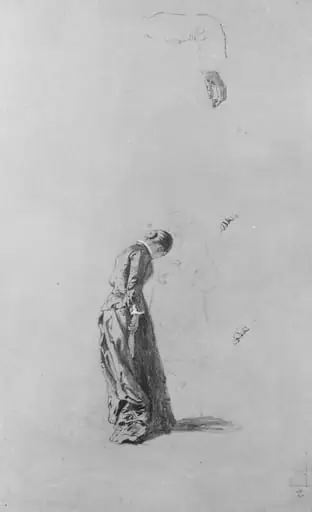
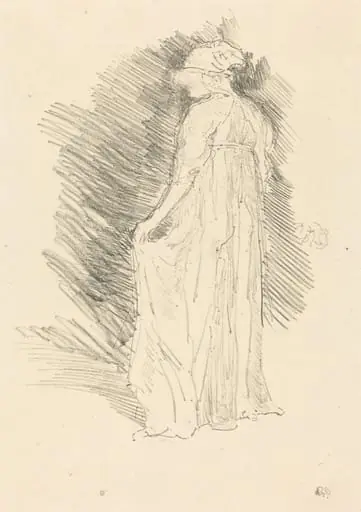
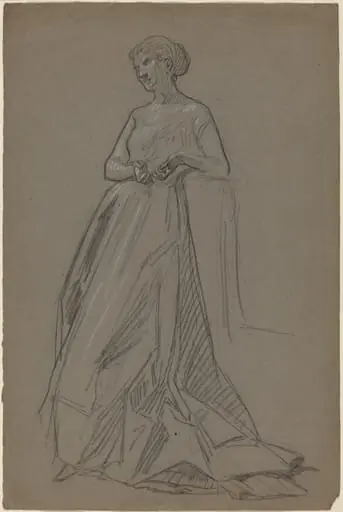
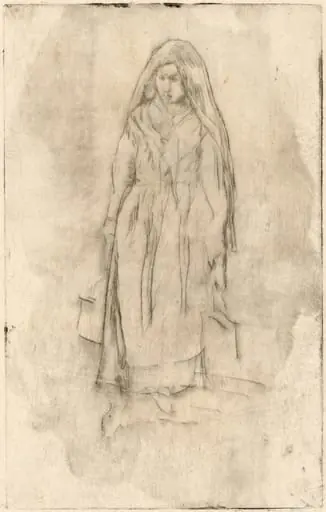
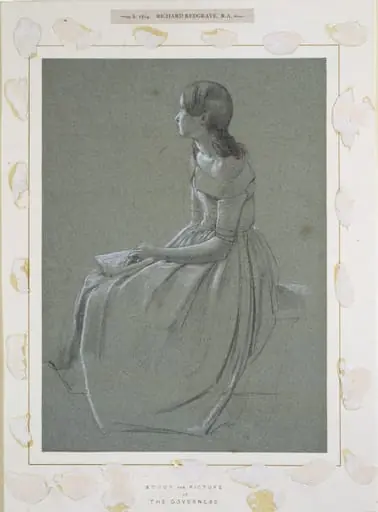
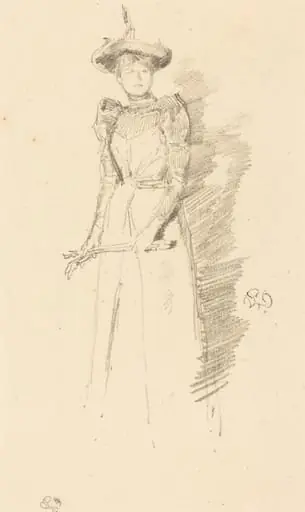
Standing Woman
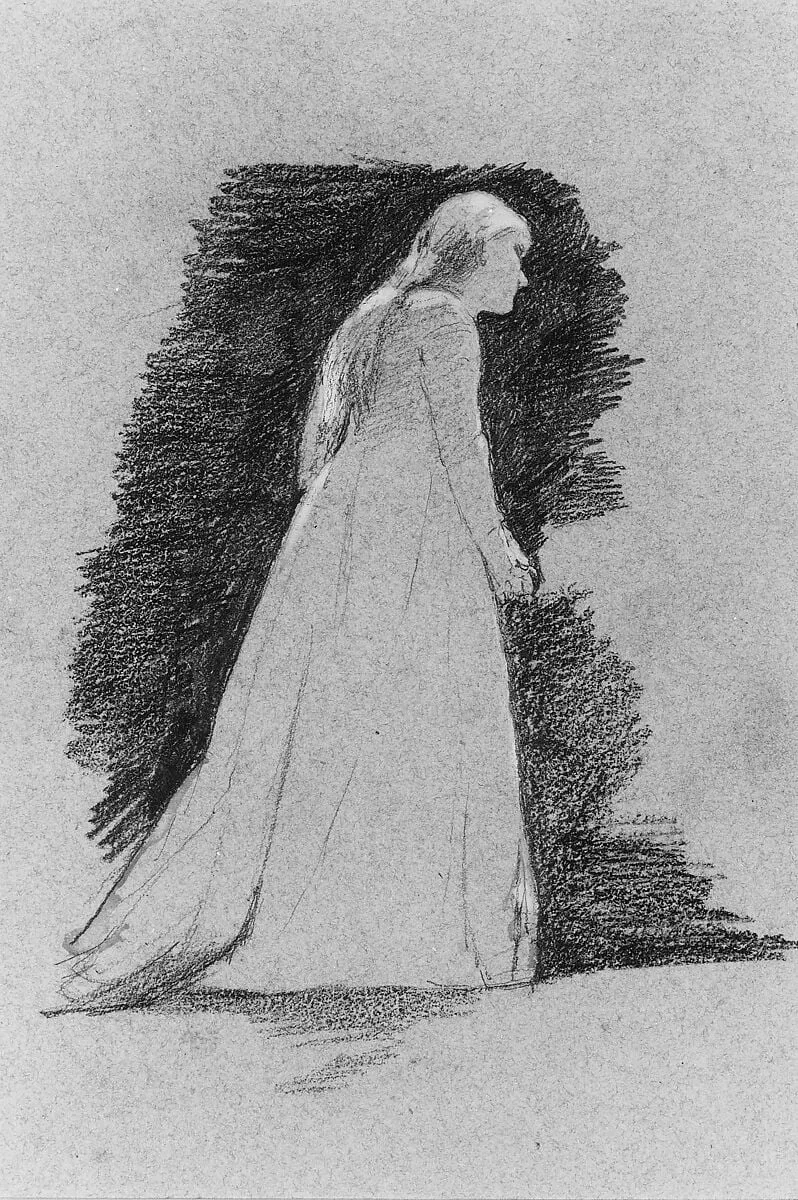
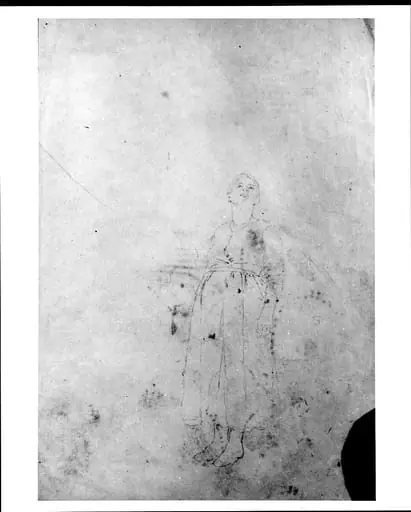
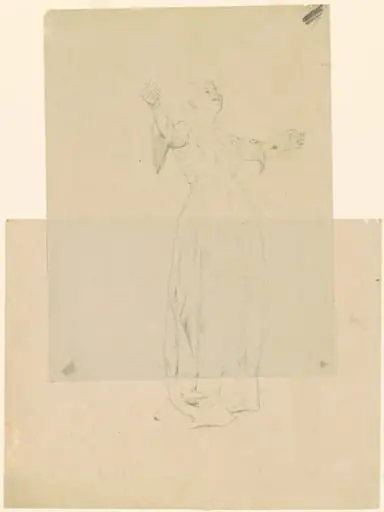
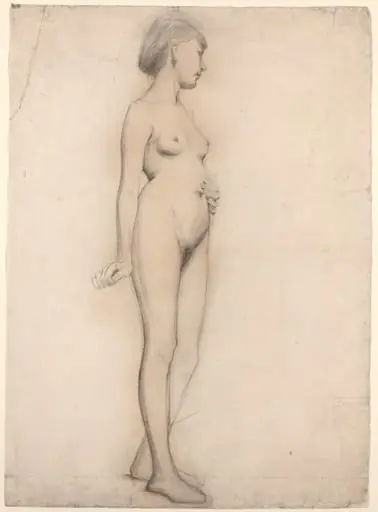
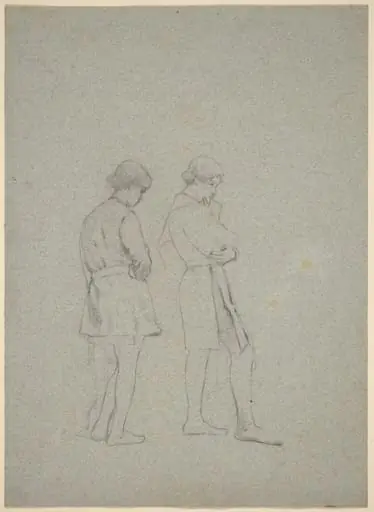
Standing Woman is a watercolor work on paper by the Impressionist artist Thomas Hovenden. It dates from 1882 and is held in the collection of the Metropolitan Museum of Art.
About this work
Overview
Created circa 1882, *Standing Woman* is a graphite and gouache work on blue wove paper by Thomas Hovenden, an Irish‑born artist who built his career in the United States. The piece measures a modest size and presents a single female figure in a portrait‑type composition.
Subject & Meaning
The drawing depicts a woman turned toward the left, dressed in a long, high‑collared gown and holding an open book. The pose and the inclusion of the book suggest a moment of quiet contemplation or study, reflecting Hovenden’s interest in everyday activities of ordinary people.
Technique & Style
Hovenden employs delicate graphite lines softened by washes of gouache, creating a muted palette that emphasizes form over surface detail. The blue wove paper provides a subtle tonal ground, while the combination of dry and wet media allows for gentle modeling of the figure’s volume.
History & Provenance
The work belongs to the American Wing collection, where it is displayed alongside other 19th‑century American drawings. Hovenden, who taught at the Pennsylvania Academy of the Fine Arts, produced the piece during his mature period, when he was active in both painting and drawing.
Context
*Standing Woman* aligns with Hovenden’s broader oeuvre, which includes historical scenes, domestic interiors, and narrative portraits, often featuring African American subjects. The drawing reflects the post‑Impressionist tendency toward simplified forms and a focus on the psychological presence of the sitter.
Artist & collection

Artist
Thomas Hovenden (December 28, 1840 – August 14, 1895) was an Irish-born painter and teacher who spent most of his life in the United States.