Artwork
York Stairs, the Thames, Blackfriars Bridge and St. Paul's Cathedral
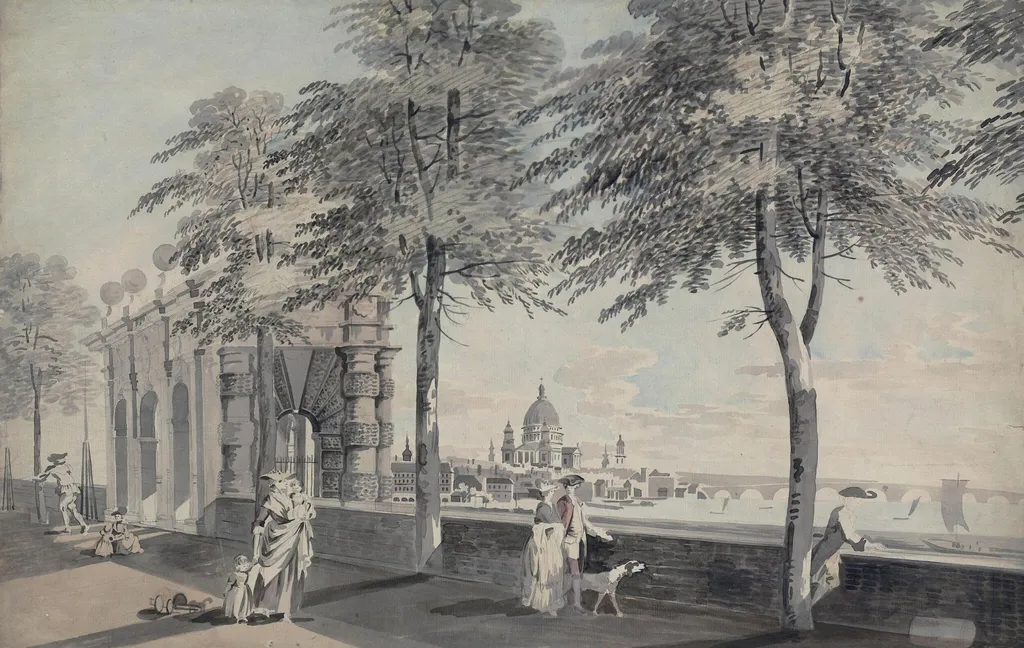
York Stairs, the Thames, Blackfriars Bridge and St. Paul's Cathedral is a watercolor work on paper by the Rococo painting artist Thomas Theodosius Forrest. It dates from 1760 and is held in the collection of the Victoria and Albert Museum.
About this work
Overview
Thomas Theodosius Forrest created this watercolour as a study for a larger work shown at the Royal Academy in 1770.
Thomas Theodosius Forrest created this watercolour as a study for a larger work shown at the Royal Academy in 1770. It captures a quiet stretch of the Thames near Blackfriars Bridge, with York Stairs and St. Paul’s Cathedral forming the backdrop. The composition is restrained, emphasizing spatial depth and atmospheric calm rather than dramatic detail. The medium’s transparency lends a subtle luminosity to the scene.
Subject & Meaning
The scene portrays everyday life along the Thames: figures gather near a stone structure at the water’s edge, framed by trees and a low wall. The presence of the bridge and cathedral situates the moment within London’s urban fabric, yet the absence of activity or motion suggests contemplation. The painting does not celebrate grandeur but instead invites quiet observation of the city’s quieter, less monumental corners.
Technique & Style
Forrest employed delicate washes of watercolour to suggest form and light, avoiding sharp outlines. The sky is rendered in soft grey tones, blending seamlessly with the muted hues of the river and buildings. Details are minimized—figures are suggestive rather than defined, and architectural elements are simplified. This approach reflects a preference for mood over precision, characteristic of preparatory studies in the late 18th century.
History & Provenance
The watercolour was made as a working sketch for a finished painting exhibited at the Royal Academy in 1770. Its survival suggests it was retained by the artist or a close associate, possibly as a reference or personal record. No documented ownership chain exists beyond its association with Forrest’s exhibition record, and it remains a rare surviving example of his preparatory work.
Context
In the 1760s and 1770s, London artists increasingly turned to local landscapes and urban views as subjects worthy of serious art. Forrest’s work aligns with this trend, capturing the Thames not as a symbol of power but as a lived environment. Though not part of the Romantic movement, his focus on atmosphere and quiet observation anticipates later shifts in landscape painting toward emotional resonance.
Legacy
While Forrest’s finished exhibition piece is now lost, this watercolour endures as a testament to the importance of preparatory studies in 18th-century British art. It reveals the artist’s process and the value placed on subtle, observational work. The piece contributes to understanding how urban scenes transitioned from topographical records to more introspective visual experiences.
Artist & collection
Artist
London’s bridges and churches appear in soft, layered washes on Thomas Theodosius Forrest’s watercolours.

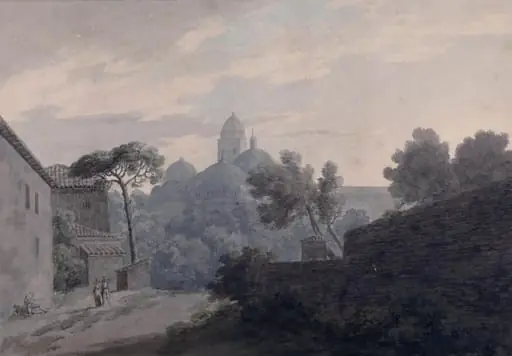 Sta. Giustina, Padua
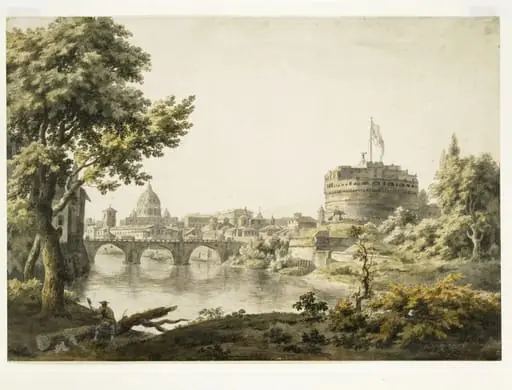 A view of Rome with the Tiber, the Castle of S. Angelo, and in the background St. Peter's
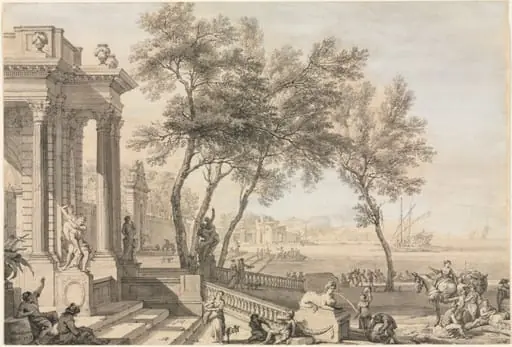 Fantastic Harbor Scene with Architecture and Figures
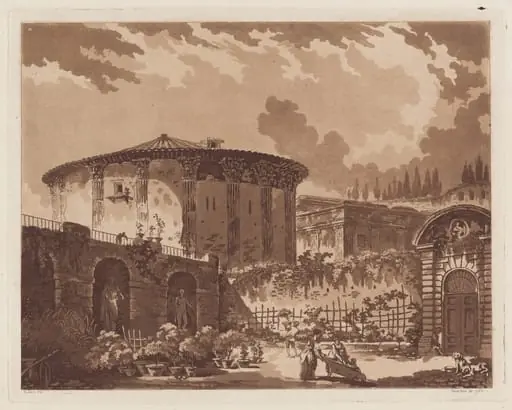 View in the Garden of a Roman Villa, with the Temple of Hercules Victor and the Temple of Portunus
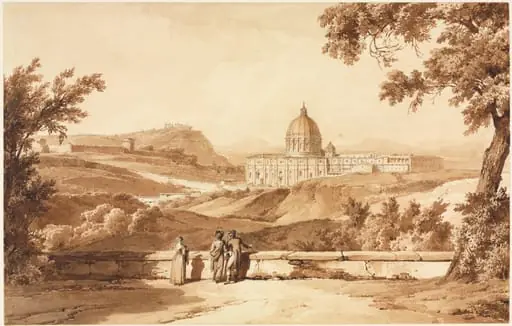 View of St. Peters, Rome
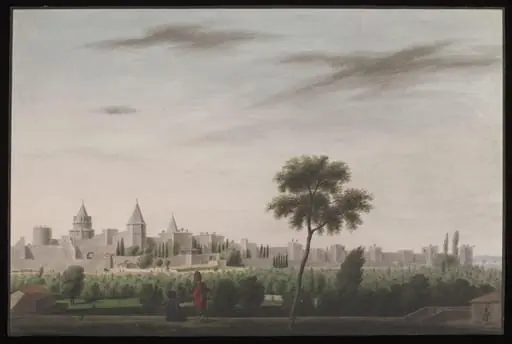 Yedikule, or the Castle of the Seven Towers, Istanbul
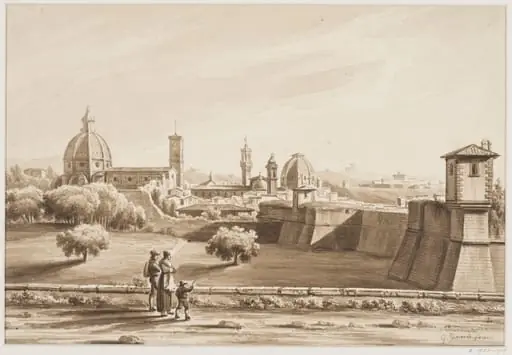 Untitled
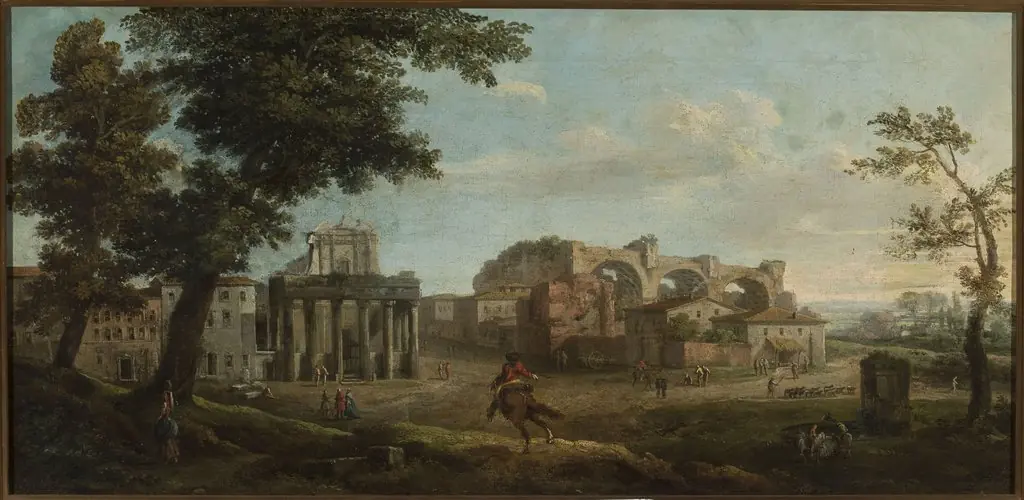 View of Rome
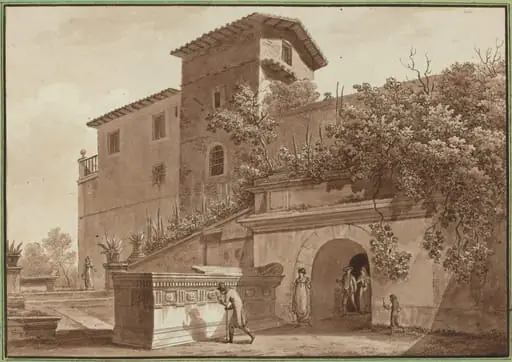 Tomb of Scipios
 Fantasielandschaft
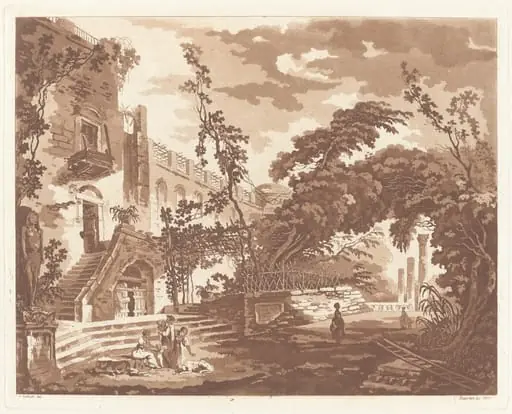 Entrance of the Temple of Serapis at Pozzuoli
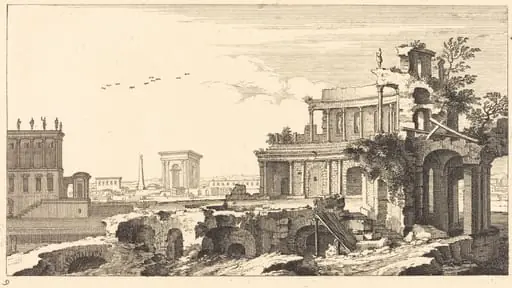 Landscape with Classical Ruins