Artwork
The Gipsy Woman Telling the Soldiers their Fortunes
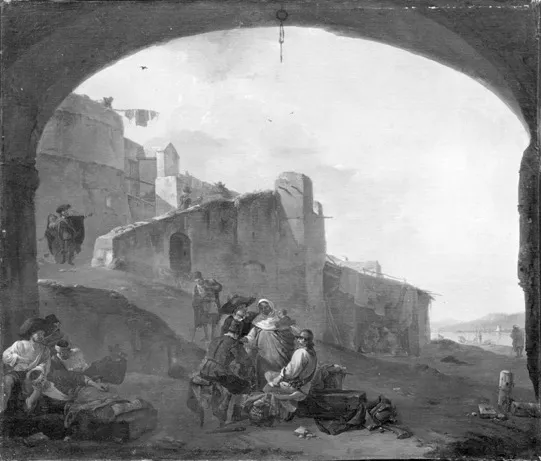
The Gipsy Woman Telling the Soldiers their Fortunes is an oil painting by the Dutch Golden Age artist Thomas Wijck. It dates from 1660 and is held in the collection of the Statens Museum for Kunst.
About this work
Overview
Thomas Wijck’s oil painting, dated to 1660, portrays a nocturnal interior where a group of soldiers congregates around a seated Romani woman. The work is part of the collection of Denmark’s Statens Museum for Kunst and exemplifies the artist’s interest in genre scenes that blend everyday life with a touch of the exotic.
Subject & Meaning
At the centre of the composition, the Romani woman holds a card, suggesting she is reading fortunes for the curious soldiers. Their attentive postures and the woman’s ambiguous expression create a narrative tension between belief and skepticism, hinting at contemporary attitudes toward fortune‑telling and the allure of the unknown.
Technique & Style
Wijck employs chiaroscuro to model the figures, allowing light to spill from an unseen source and illuminate the central trio while the surrounding space recedes into shadow. This contrast of illumination and darkness gives the scene depth, emphasizes the facial features, and directs the viewer’s eye toward the exchange of cards.
History & Provenance
Created in the mid‑seventeenth century, the painting entered the Statens Museum for Kunst’s holdings at an unspecified later date, where it remains on display. Its provenance prior to acquisition is not extensively documented, reflecting the often fragmentary records of Dutch genre works.
Context
The work fits within the Dutch Golden Age’s fascination with genre scenes that depict everyday moments infused with moral or social commentary. Soldiers, travelers, and fortune‑tellers were common motifs, used to explore themes of chance, fate, and the intersection of different social groups.
Artist & collection

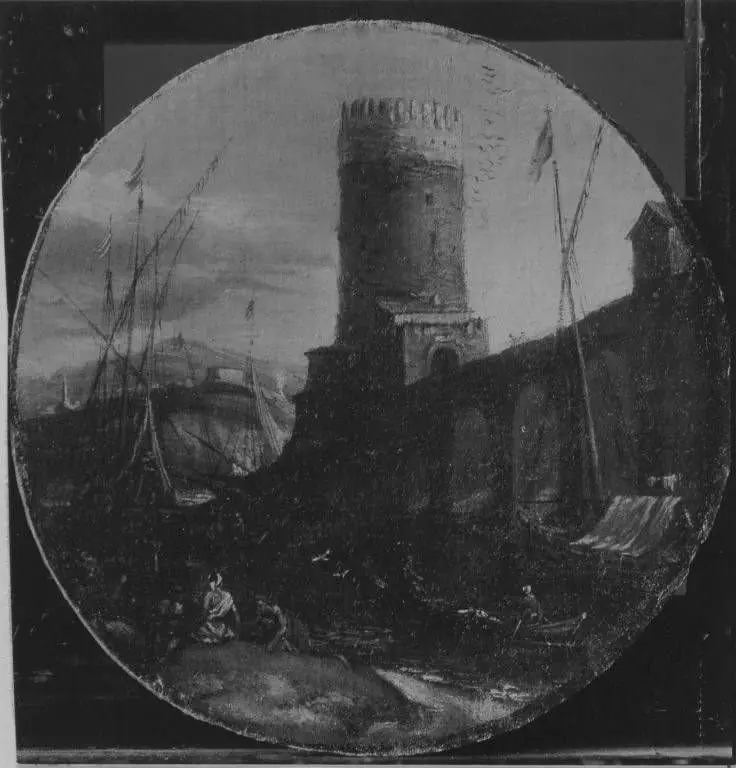
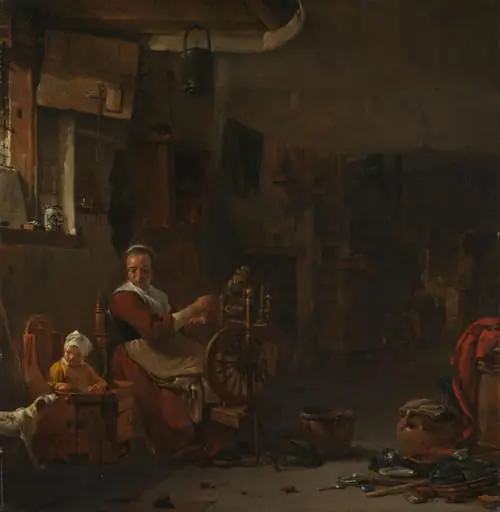
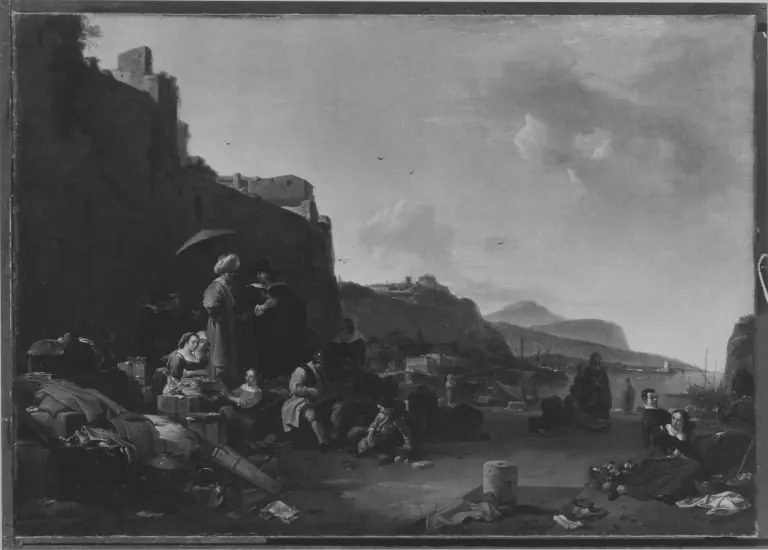 Hafenszene
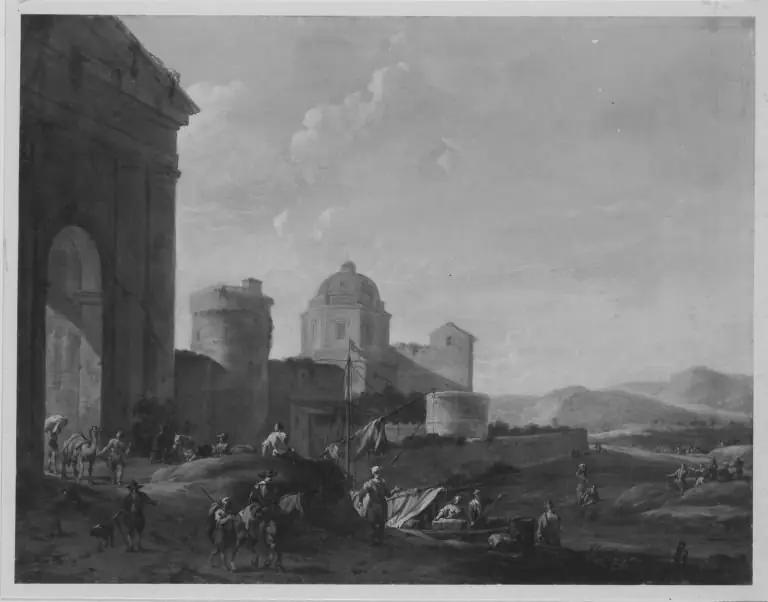 Fantasielandschaft
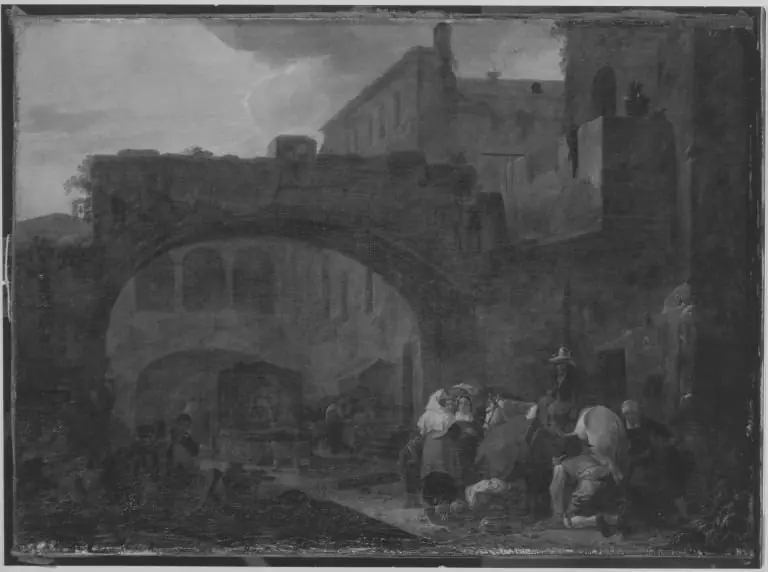 Gemüsemarkt
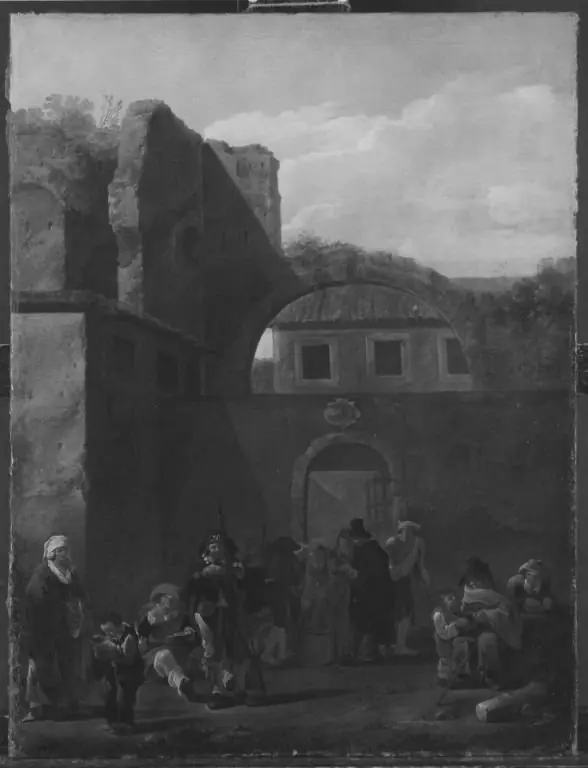 Armenspeisung im Klosterhof
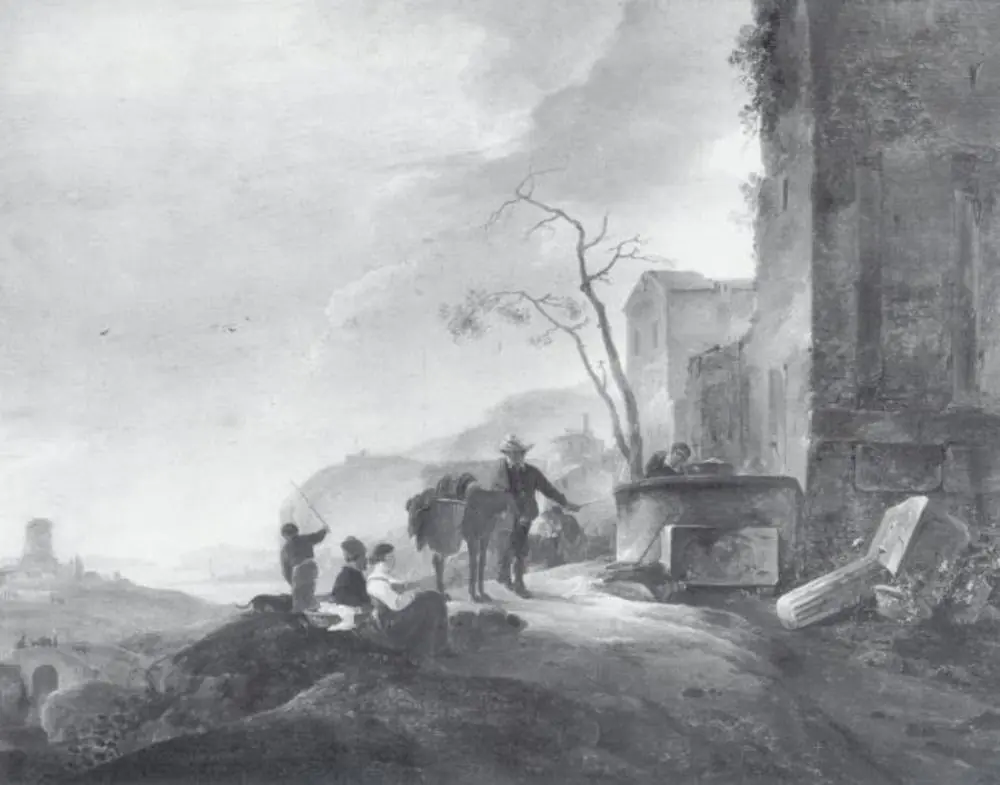 Italian Landscape with Figures at a Fountain among Antique Ruins
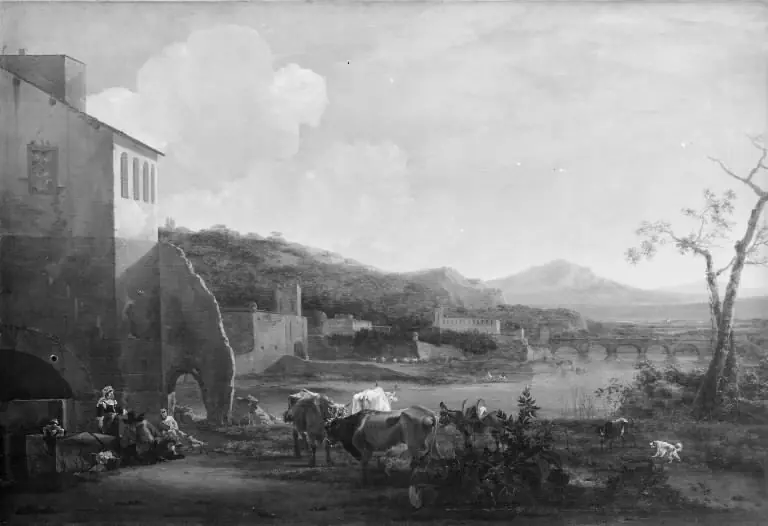 Italian Landscape
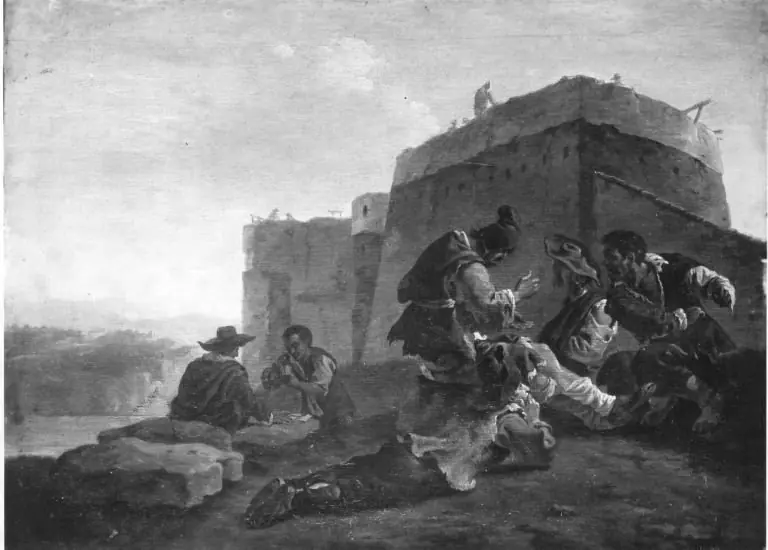 Spielende Facchini
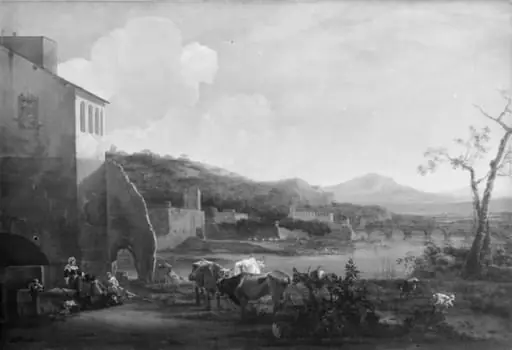 Italian Landscape
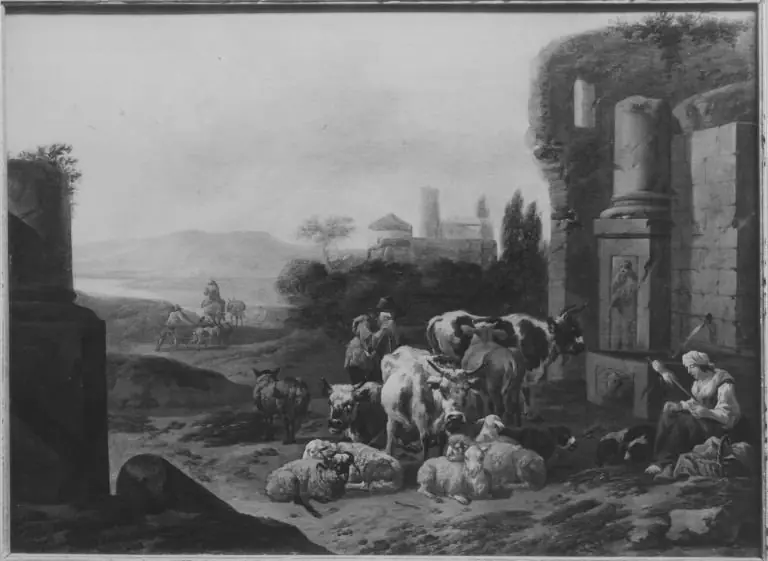 Ruinen
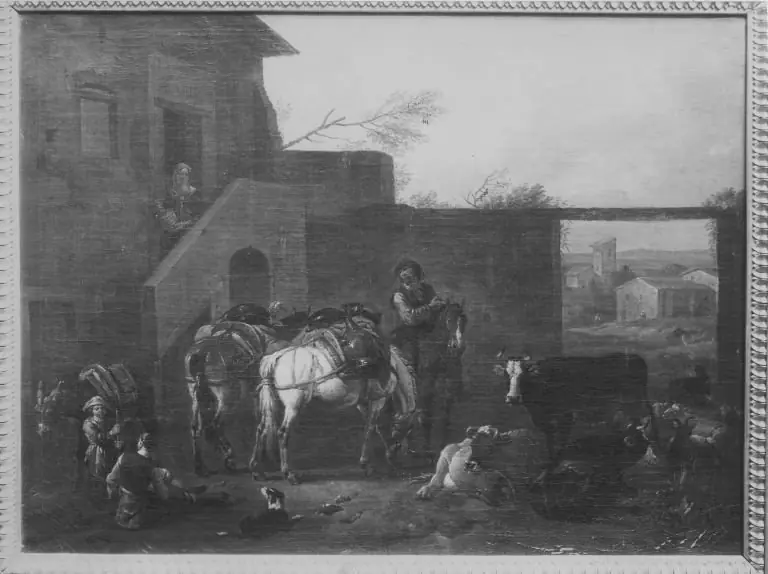 Vor der Schenke
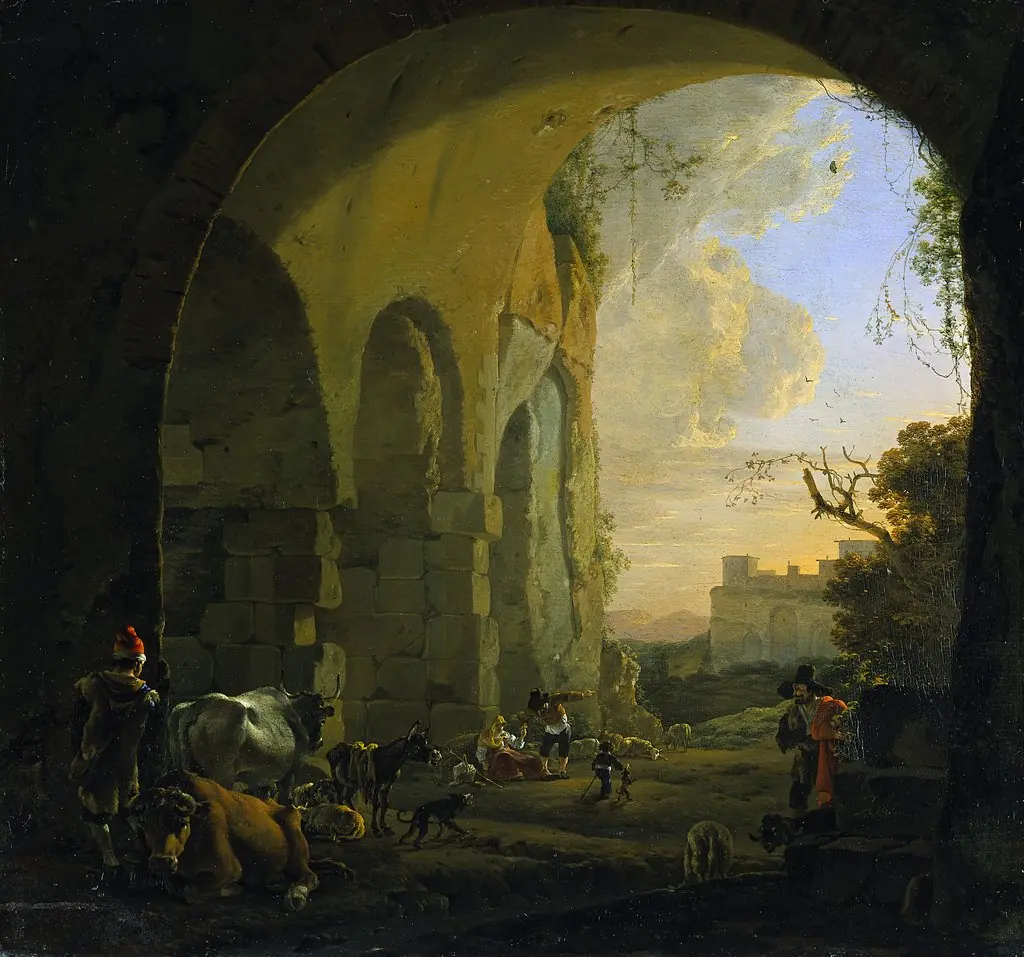 Drovers with cattle under an arch of the Colosseum in Rome
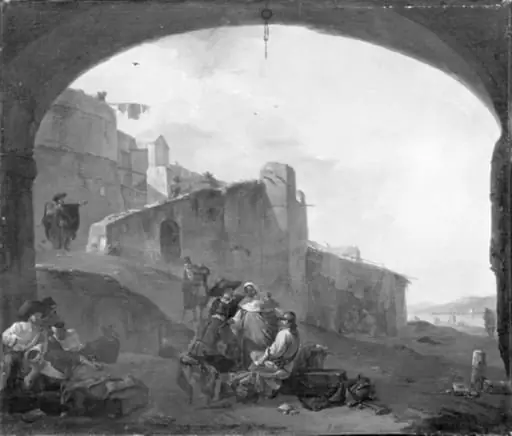 The Gipsy Woman Telling the Soldiers their Fortunes