Artwork
The Fall of the Rebellious Angels
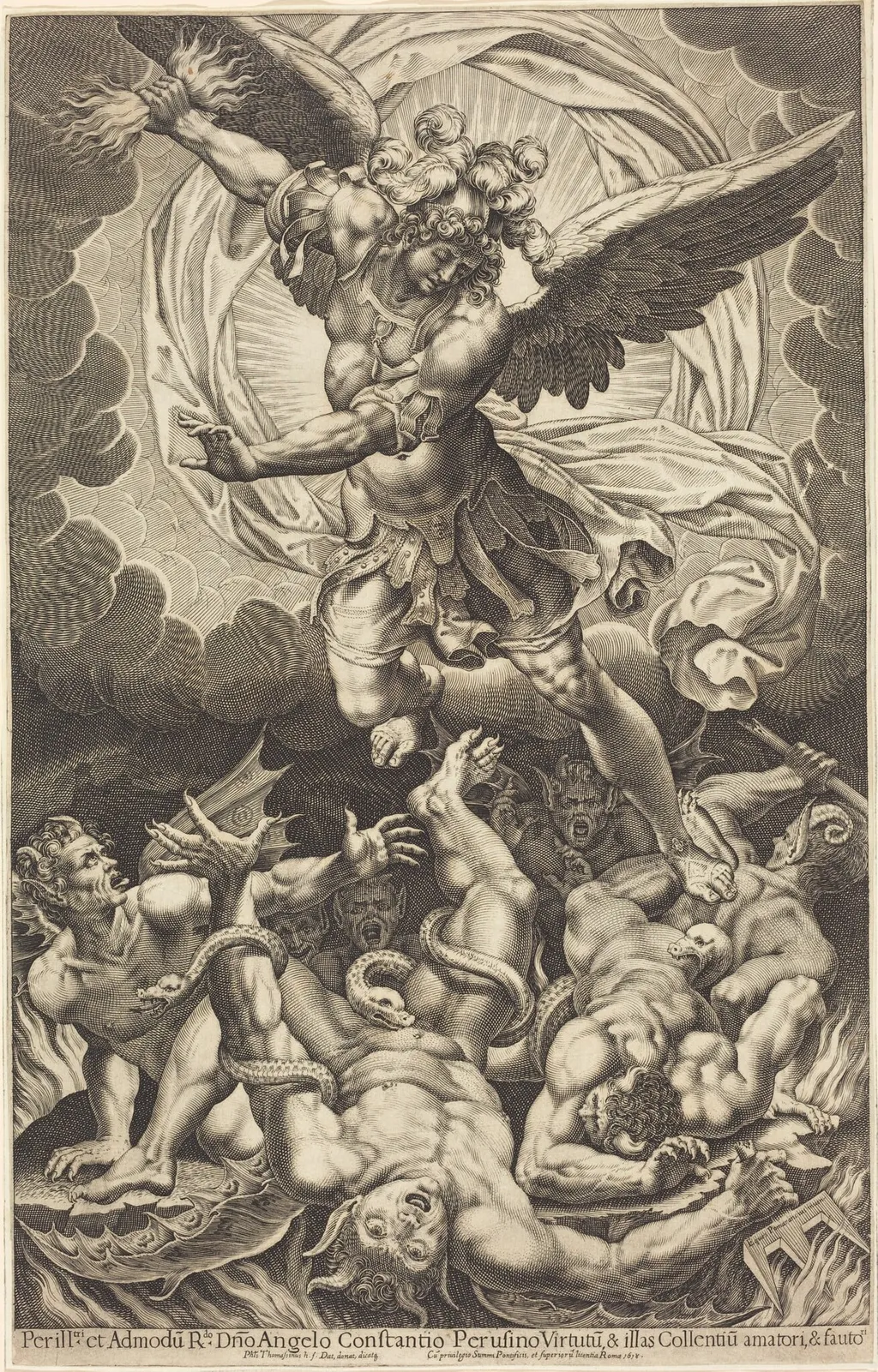
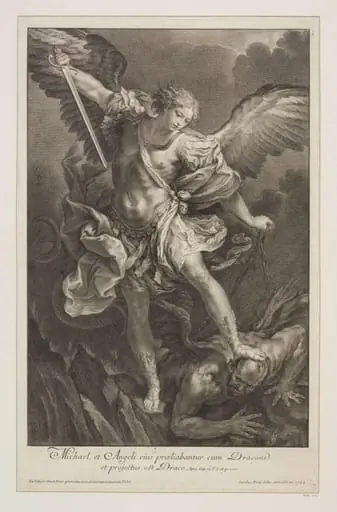
The Fall of the Rebellious Angels is an ink print by the Baroque artist Philippe Thomassin. It dates from 1618 and is held in the collection of the National Gallery of Art.
About this work
Overview
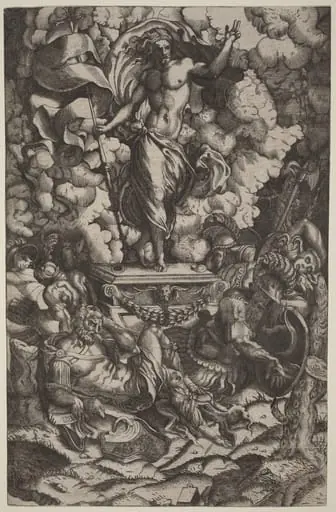
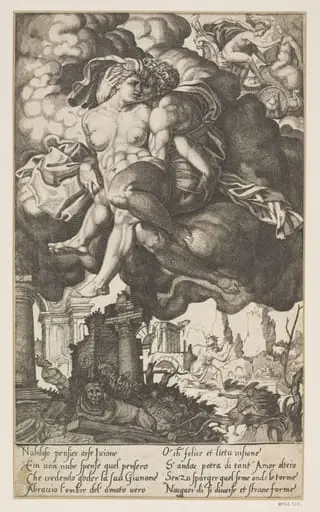
Philippe Thomassin’s 1618 engraving, titled The Fall of the Rebellious Angels, depicts a tumultuous aerial battle. The composition is densely populated with contorted figures, their bodies intertwined amid a stormy backdrop of dark clouds and jagged lines, conveying a sense of violent upheaval.
Subject & Meaning
The print illustrates the mythic descent of angels who have defied divine authority, a theme drawn from biblical and apocryphal narratives of celestial rebellion. Their twisted faces and aggressive gestures suggest both physical struggle and the spiritual anguish of beings cast out of heaven.
Technique & Style
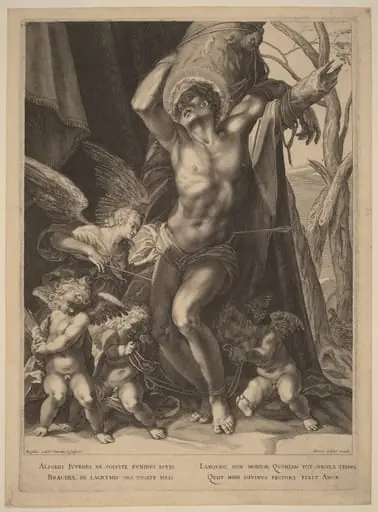
Thomassin employs fine, cross‑hatching lines to model shadows and texture, creating depth within the crowded scene. The intricate line work, characteristic of early 17th‑century engraving, renders the chaotic motion through densely layered strokes that delineate musculature, drapery, and atmospheric turbulence.
History & Provenance
Created in 1618, the engraving was produced during Thomassin’s active period in Paris, where he worked as a reproductive engraver for the French court. Surviving impressions are held in several European print collections, indicating the work’s circulation among collectors of religious and mythological prints.
Artist & collection