Artwork
Venus and Mercury
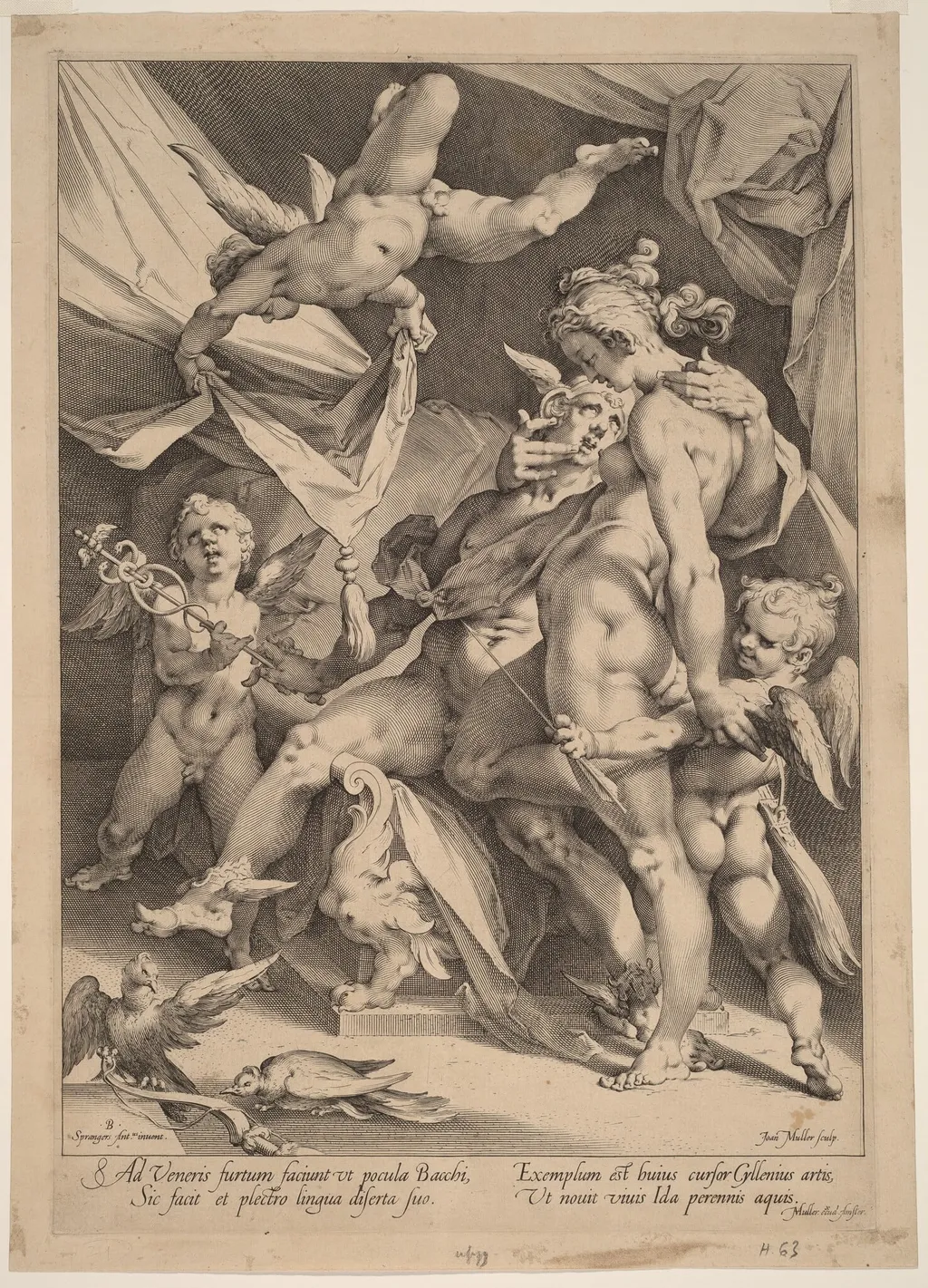
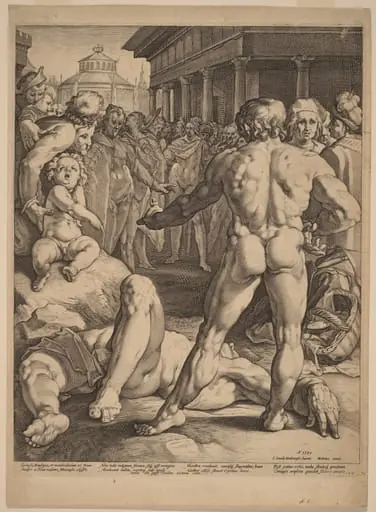
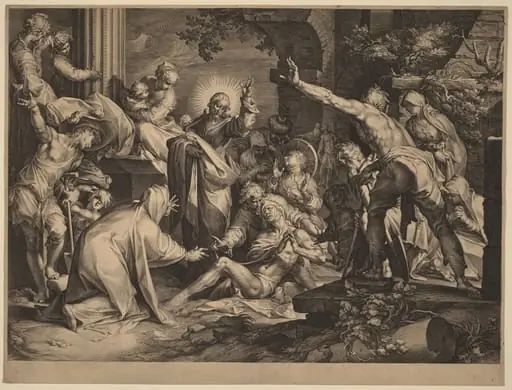
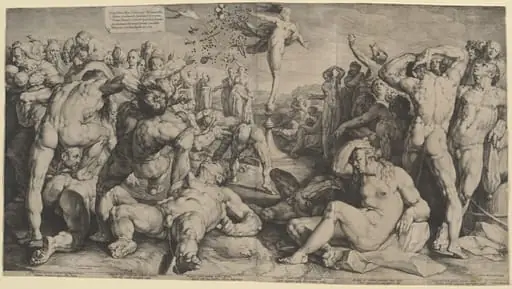
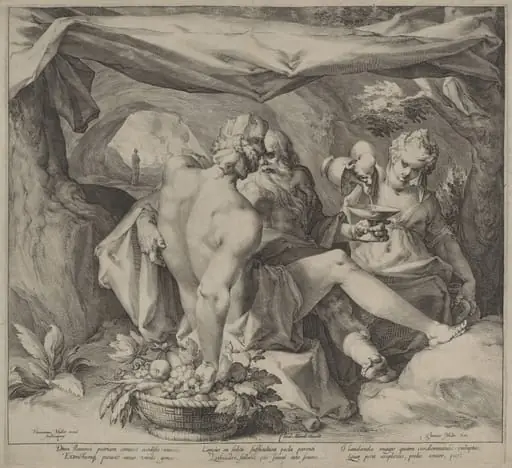
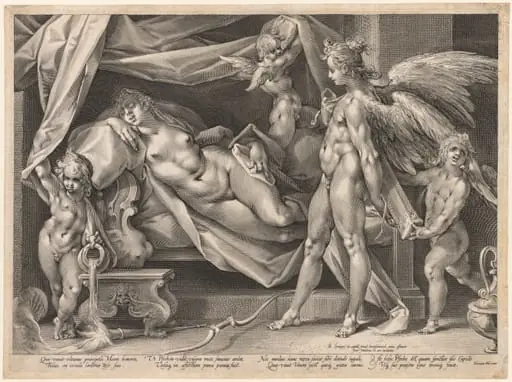
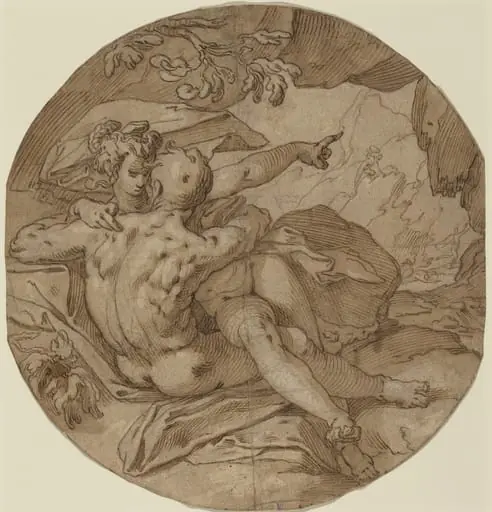
Venus and Mercury is an ink print by the Renaissance artist Jan Muller. It dates from 1600 and is held in the collection of the National Gallery of Art. Jan Harmensz.
About this work
The painting shows Venus and Mercury in a scene.
It's an engraving, which is a technique where a design is cut into a metal plate.
The artist, Jan Muller, made this engraving around 1600, and it's interesting because engravings like this were often used to make many copies of a design, which helped spread art to more people.
You can learn more about this technique by looking into engraving.
Overview
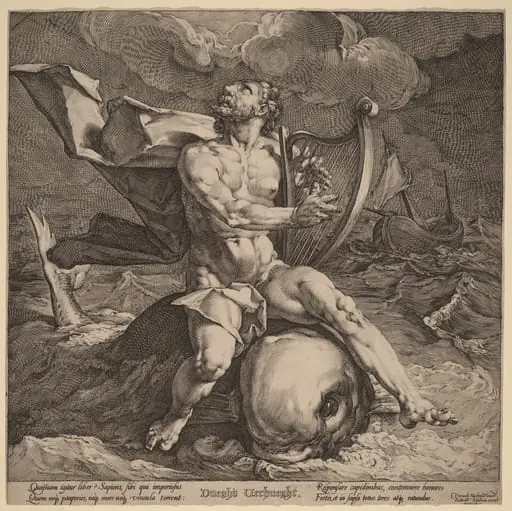
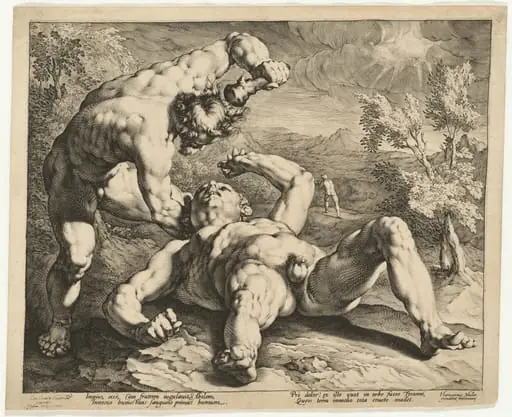
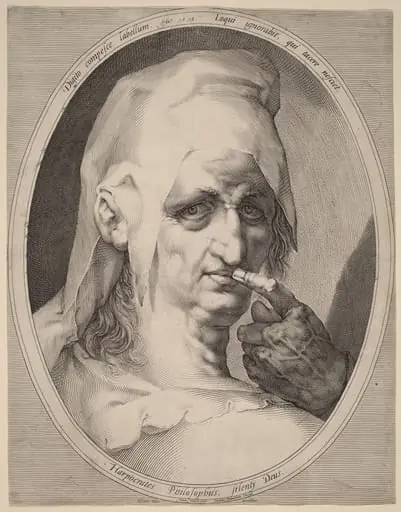
Jan Harmensz. Muller, a Dutch artist active at the turn of the 17th century, produced an engraving titled *Venus and Mercury* on laid paper. Executed circa 1600, the print belongs to the mythological tradition, depicting the two Roman deities in a single composition.
Subject & Meaning
The image presents Venus, the goddess of love, alongside Mercury, the messenger of the gods, a pairing that invites contemplation of themes such as beauty, desire, and communication. By placing the two figures together, the work reflects the period’s interest in classical narratives and their moral or allegorical implications.
Technique & Style
Muller employed the traditional engraving process, incising lines into a metal plate before transferring the design onto paper. The use of laid paper, with its characteristic ribbed texture, enhances the fine line work and tonal gradations typical of early Dutch printmaking, allowing for multiple reproductions of the composition.
History & Provenance
Born in Amsterdam into a family of printers and publishers, Muller trained within the family workshop before traveling to Italy for artistic study. After his return, he assumed control of the family business, continuing the production of prints. He remained in Amsterdam until his death in 1628, and the engraving reflects both his Dutch roots and Italian influences.
Context
The early 1600s saw a flourishing of print culture in the Netherlands, where engravings served as a primary means of disseminating artistic ideas beyond elite circles. *Venus and Mercury* exemplifies this trend, offering a widely accessible visual interpretation of classical mythology that could reach a broader audience than a single painting.
Artist & collection

Artist
Jan Harmensz. Muller (1571–1628) was a Dutch engraver and painter. Muller was born in Amsterdam. His father was a book printer, engraver and publisher. He learned the engraving trade while working in the family…