Artwork
Mr. Lewis in the Prince of Wales
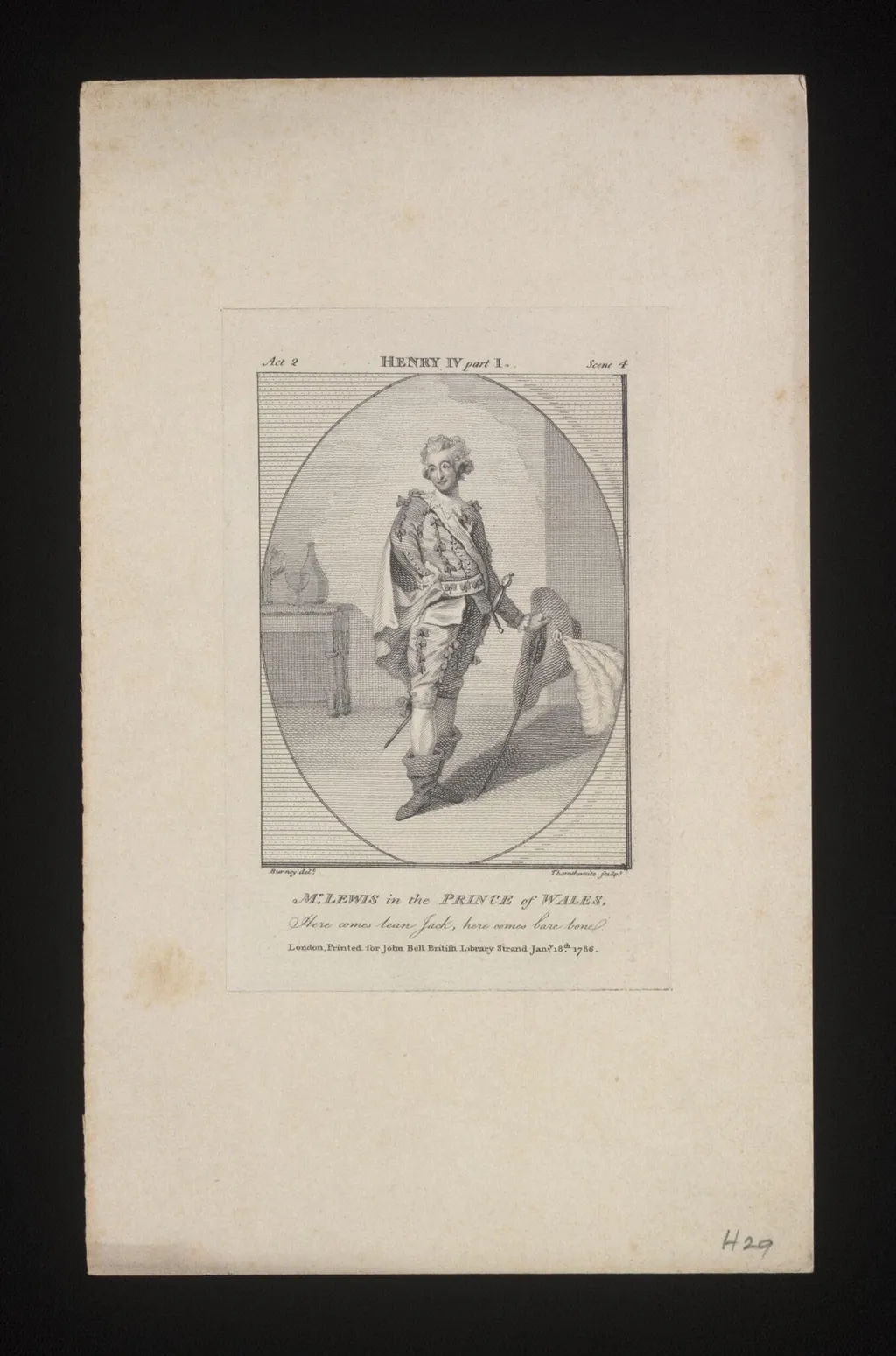
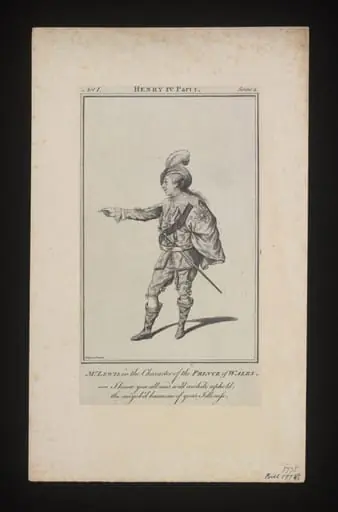
Mr. Lewis in the Prince of Wales is a print by the Romanticist artist J. Thornthwaite. It dates from 18 and is held in the collection of the Victoria and Albert Museum. This 1786 print captures actor William Thomas Lewis in costume as the Prince of Wales from Shakespeare’s Henry IV, Part 1.
About this work
This print shows an actor, William Thomas Lewis, dressed as the Prince of Wales in a famous play.
This print shows an actor, William Thomas Lewis, dressed as the Prince of Wales in a famous play. It’s a snapshot of theater from the 1700s. The image comes straight from a stage performance of *Henry IV, Part 1*.
The print was made by J. Thornthwaite and sold by John Bell in London. It’s dated January 17, 1786, so it’s old—over 230 years.
Look up the Victoria and Albert Museum to see more prints like this.
Overview
This 1786 print captures actor William Thomas Lewis in costume as the Prince of Wales from Shakespeare’s Henry IV, Part 1. Produced by engraver J. Thornthwaite and distributed by publisher John Bell in London, it was released on January 17 of that year. Part of the Harry Beard Collection, the image reflects the 18th-century practice of documenting theatrical performances through printed media for public consumption.
Subject & Meaning
The print portrays Lewis embodying the character of Prince Hal, Shakespeare’s complex royal figure torn between revelry and duty. As a stage portrait, it serves not as a literal likeness but as a representation of the actor’s interpretation during a live performance. Such images helped audiences recall or imagine the drama beyond the theater, reinforcing the cultural presence of Shakespearean roles in public life.
Technique & Style
Executed as a line engraving, the print uses fine, controlled strokes to render costume, posture, and facial expression. The composition is formal, centered on the actor in full stage regalia, with minimal background detail. This style prioritizes clarity and recognition over atmospheric depth, typical of theatrical portraiture meant for mass reproduction and sale to theatergoers.
History & Provenance
Created and published in London in early 1786, the print was part of a series issued by John Bell to document contemporary stage performances. It entered the Harry Beard Collection, a significant archive of British theatrical memorabilia. The print’s survival offers insight into how theater was preserved and circulated before photography, serving as both record and commodity.
Context
In late 18th-century Britain, Shakespeare’s plays were central to cultural identity, and actor portrayals were widely celebrated. Prints like this one allowed middle-class audiences to own a tangible connection to the stage. Publishers such as Bell capitalized on this demand, producing affordable images that bridged the gap between live performance and domestic culture.
Legacy
This print remains a valuable artifact of Georgian theater, illustrating how performance was documented and disseminated before modern media. It contributes to scholarly understanding of actor-audience relationships and the commercialization of drama. Today, it is studied alongside other theatrical prints in institutions like the Victoria and Albert Museum, preserving the visual history of British stage tradition.
Artist & collection
Artist
This artist made prints of actors on stage in the 1700s, turning famous roles into portraits.

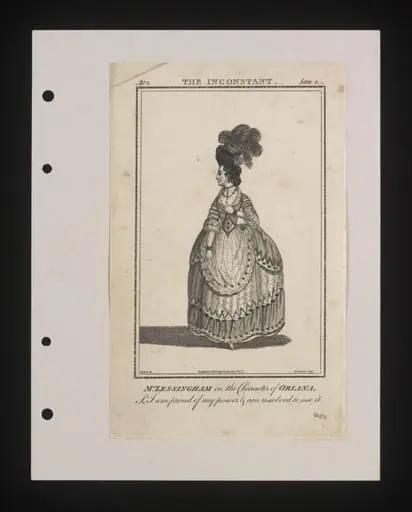 Mrs Lessingham in the character of Oriana
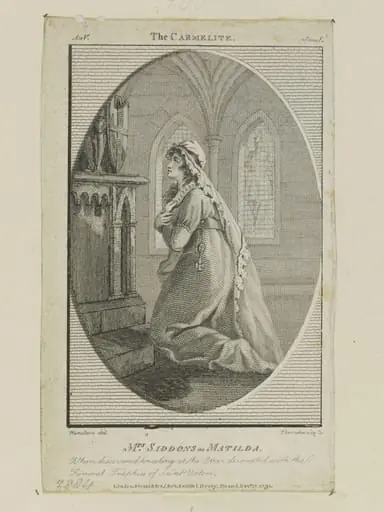 Mrs. Siddons as Matilda in the 'Carmelite'
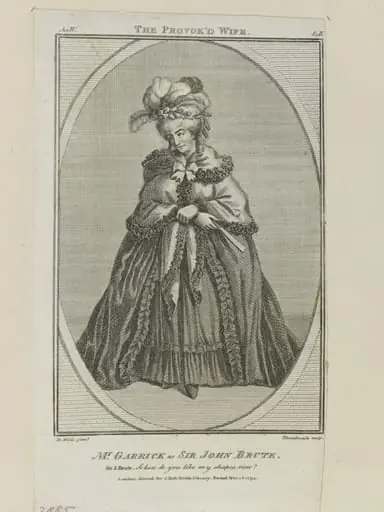 Mr. Garrick as Sir John Brute
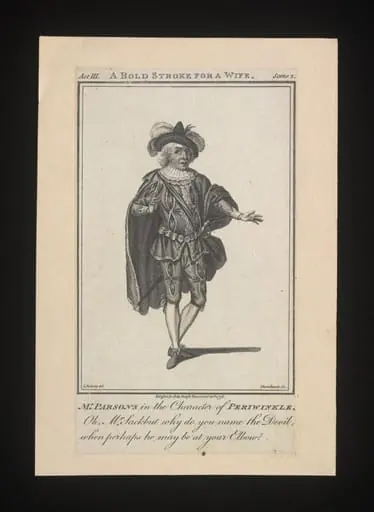 Mr Parsons in the character of Periwinkle in A Bold Stroke for a Wife
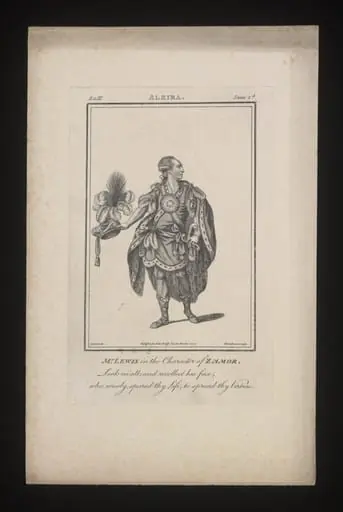 Mr. Lewis in the character of Zamor
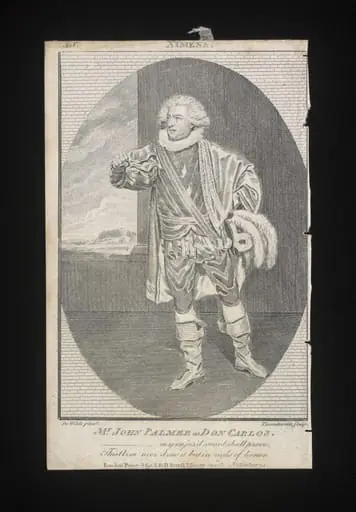 Mr John Palmer as Don Carlos
 H Beard Print Collection
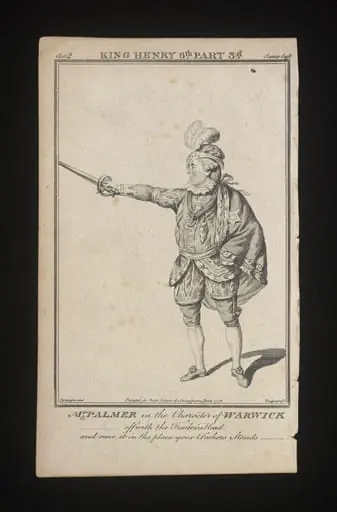
 John Palmer Junior as the Earl of Warwick