Artwork
Capitulation of a Town
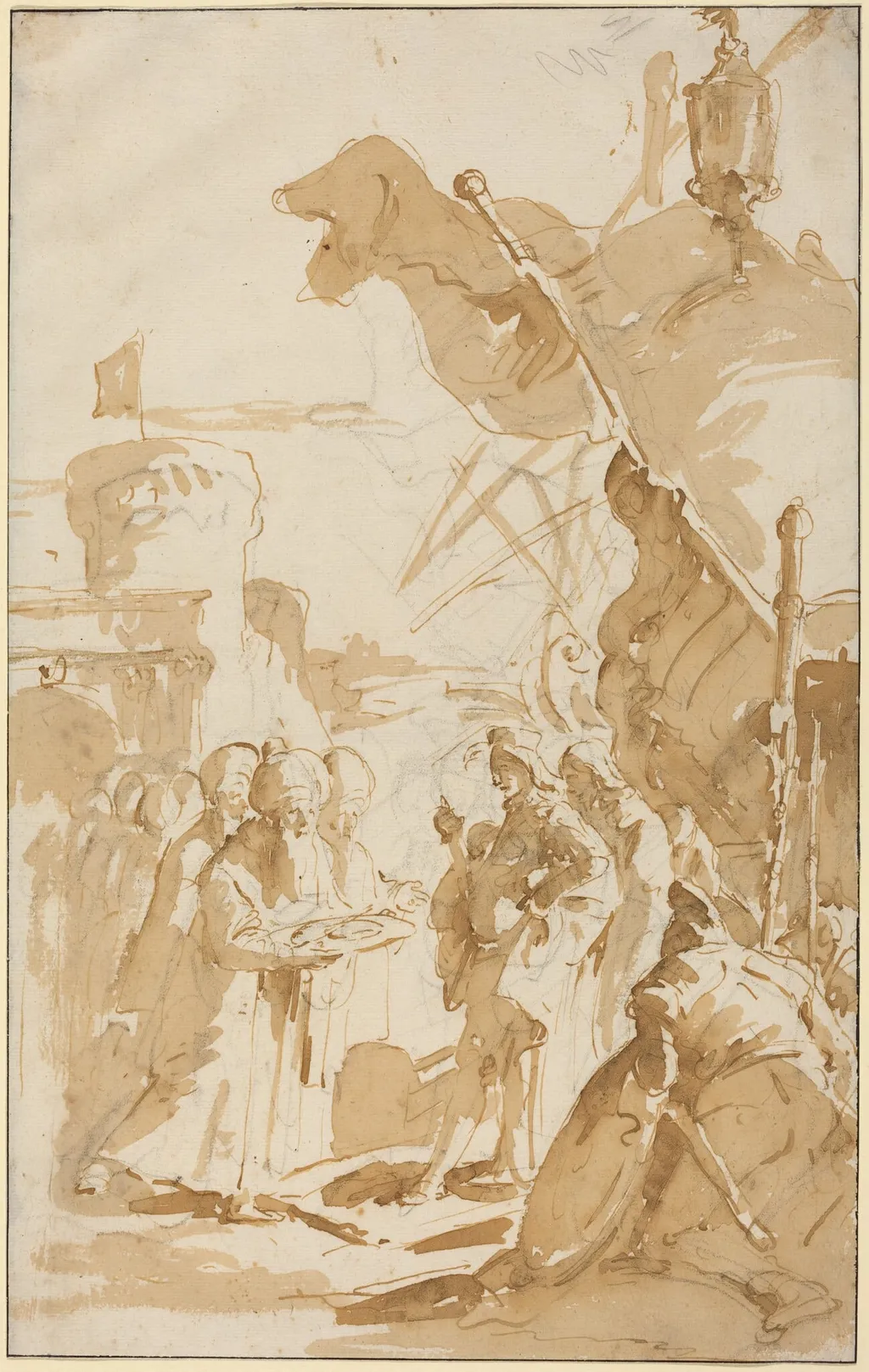
Capitulation of a Town is a chalk drawing by the Baroque artist Giovanni Battista Tiepolo. It dates from 1733 and is held in the collection of the National Gallery of Art.
About this work
Overview
Created in 1733, this drawing by Giovanni Battista Tiepolo is a preparatory study executed in pen and brown ink with wash over black chalk on laid paper.
Created in 1733, this drawing by Giovanni Battista Tiepolo is a preparatory study executed in pen and brown ink with wash over black chalk on laid paper. It reflects his practice of rapidly capturing dynamic scenes as groundwork for larger compositions. The medium’s immediacy and tonal range suggest it was made on-site or from direct observation, typical of Tiepolo’s working method during his active years across Italy and beyond.
Subject & Meaning
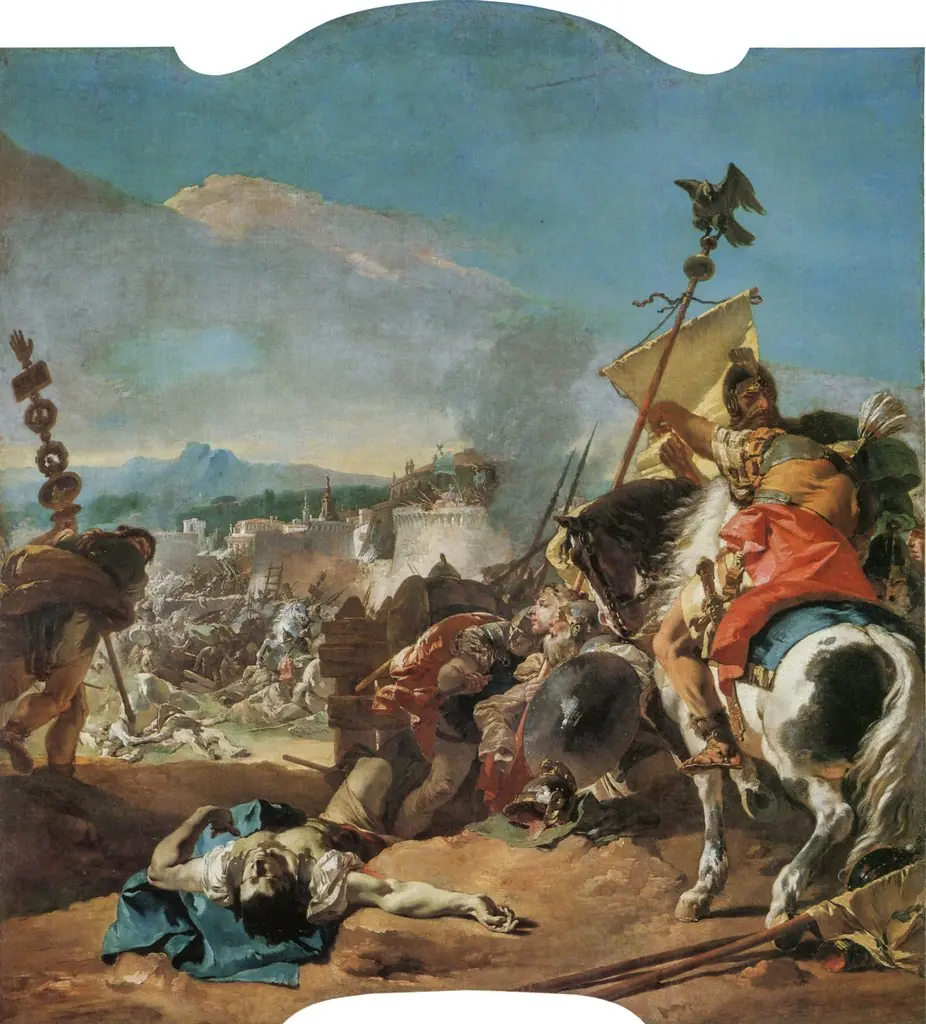
The scene portrays the moment of a town’s surrender, with mounted soldiers entering a walled settlement. A central figure at a table appears to be negotiating, while others react with urgency—some fleeing, others frozen in place. The composition conveys disorder and tension without narrative clarity, emphasizing the human response to conflict rather than its political or historical specifics.
Technique & Style
Tiepolo employed swift, fluid lines and layered brown washes to suggest motion and depth. Black chalk underdrawing anchors the forms, while the ink’s spontaneity captures fleeting gestures. The loose handling and selective shading avoid finish, prioritizing energy over detail. This approach reveals his skill in translating movement into ink, a hallmark of his preparatory drawings for monumental frescoes.
History & Provenance
The drawing originates from Tiepolo’s early career in Venice, before his major commissions in Germany and Spain. It likely belonged to his personal collection of studies, preserved by family or patrons after his death. Its survival as a standalone work, rather than being absorbed into a larger painting, offers rare insight into his process during a period of prolific output.
Context
In the early 1730s, Tiepolo was refining his narrative style amid the waning influence of Baroque grandeur and the rise of Rococo lightness. While his frescoes would soon emphasize theatricality and celestial drama, this drawing grounds his vision in earthly chaos. Such sketches were common among Venetian artists preparing for historical or allegorical subjects commissioned by nobility and religious institutions.
Legacy
This work exemplifies how Tiepolo’s sketches functioned as vital intermediaries between observation and large-scale painting. Though not intended for public display, such drawings have since become key to understanding his creative process. Their expressive freedom influenced later generations of draftsmen who valued spontaneity over polished finish in preparatory work.
Artist & collection

Artist
Giovanni Battista Tiepolo, also known as Giambattista Tiepolo, was an Italian painter and printmaker from the Republic of Venice who painted in the Rococo style, considered an important member of the 18th-century Venetian school.


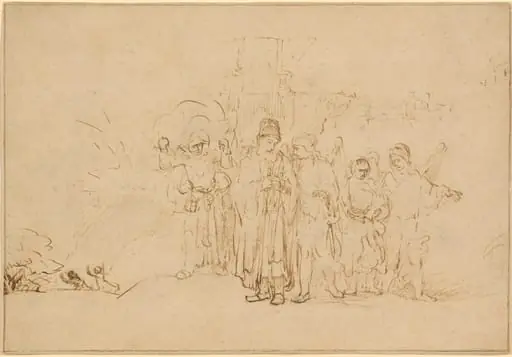 Lot and His Family Leaving Sodom
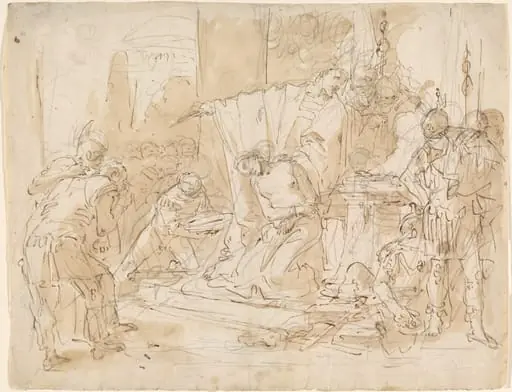 The Sacrifice of Iphigenia (recto) / Study of a Male Nude (verso)
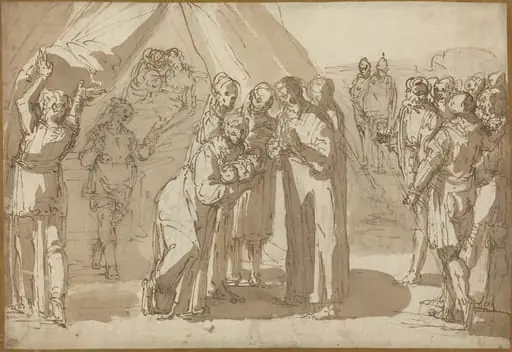 Birth Scene
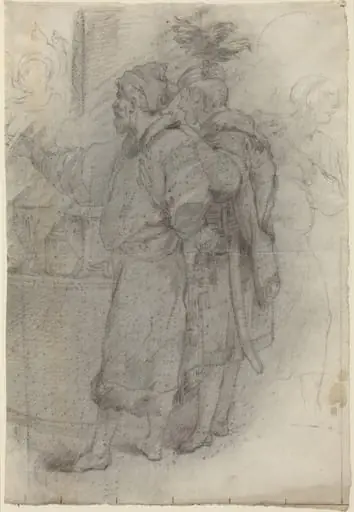 Two Standing Courtiers
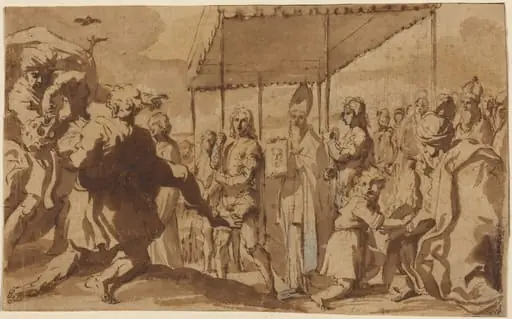 The Healing of the Possessed Boy in a Procession of the Volto Santo
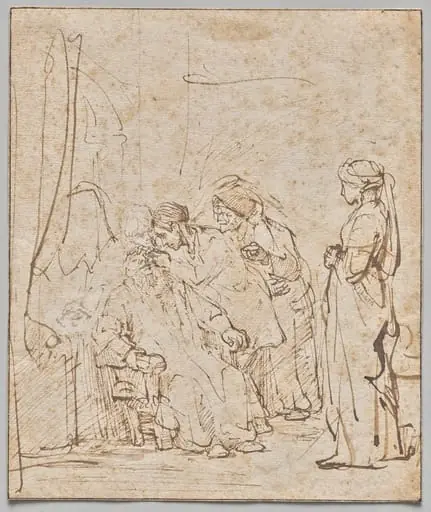 Tobias Healing His Father's Blindness
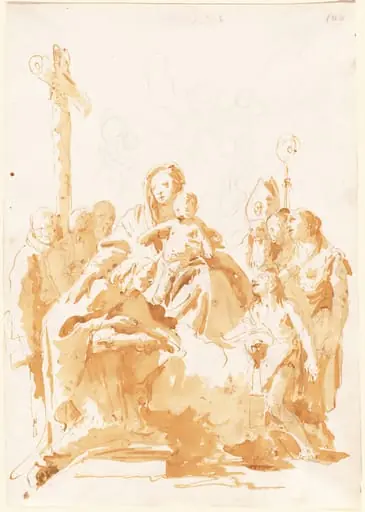 The Virgin and Child Adored by Bishops, Monks, and Women
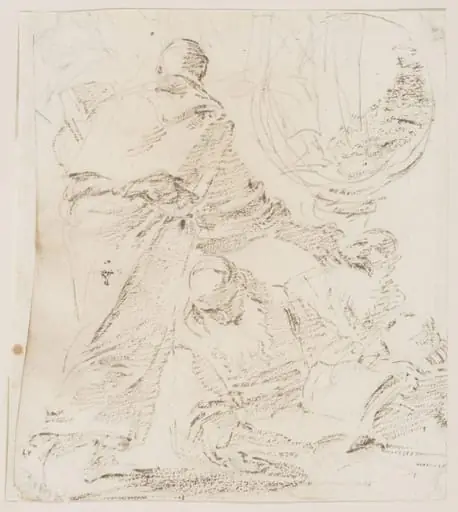 Recto: Three monks; verso: Slight sketch of a woman reclining, above: The lower portion of another figure
 The Betrothal of the Holy Virgin
 Worshippers at a Street Shrine