Artwork
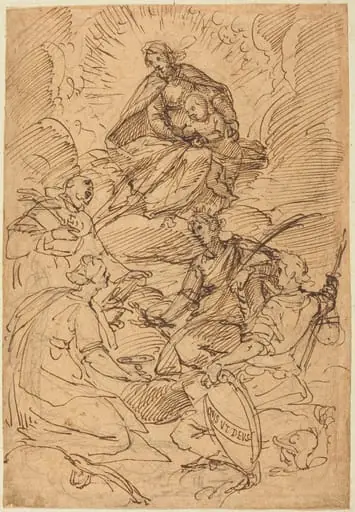
The Virgin and Child Adored by Bishops, Monks, and Women
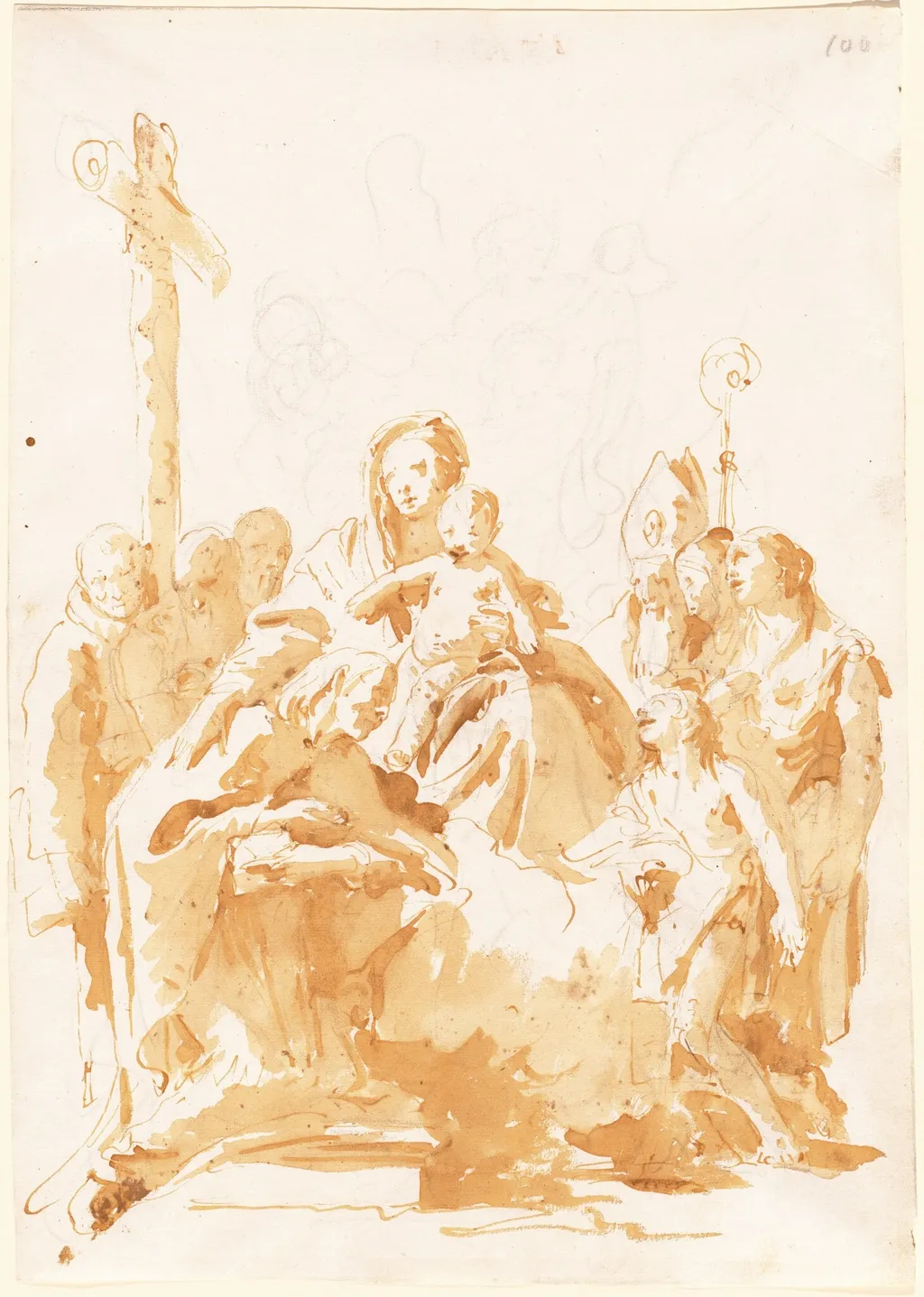
The Virgin and Child Adored by Bishops, Monks, and Women is a chalk drawing by the Baroque artist Giovanni Battista Tiepolo. It dates from 1738 and is held in the collection of the National Gallery of Art.
About this work
Overview
This 1738 drawing by Giovanni Battista Tiepolo is a religious scene executed in pen and brown ink with brown wash over black chalk on laid paper. It showcases the artist's skill in creating a composition with loose, expressive lines and shading.
Subject & Meaning
The drawing depicts the Virgin and Child surrounded by clergy and women, conveying a sense of reverence and adoration. The figures are arranged in a loose circle, with some standing and others kneeling, creating a dynamic and informal atmosphere.
Technique & Style
Tiepolo's use of brown ink and wash creates a soft, blended effect, while the visible texture of brushstrokes and smudges gives the drawing a sketchy, unfinished quality. The loose lines and shading suggest a rapid, spontaneous execution, characteristic of the artist's working method.
Context
As a leading figure in the Venetian school, Tiepolo's work reflects the influence of the Rococo style, which emphasized light, airy, and ornate decoration. The drawing's dramatic lighting and movement also resonate with the broader artistic trends of the Baroque era.
Artist & collection

Artist
Giovanni Battista Tiepolo, also known as Giambattista Tiepolo, was an Italian painter and printmaker from the Republic of Venice who painted in the Rococo style, considered an important member of the 18th-century Venetian school.


![Presentation of the Virgin in the Temple [verso], by Antonio Zanchi](https://artifactworldgallery.com/img/antonio-zanchi--presentation-of-the-virgin-in-the-temple-verso--450080eaf8685583-w320.webp) Presentation of the Virgin in the Temple [verso]
Presentation of the Virgin in the Temple [verso]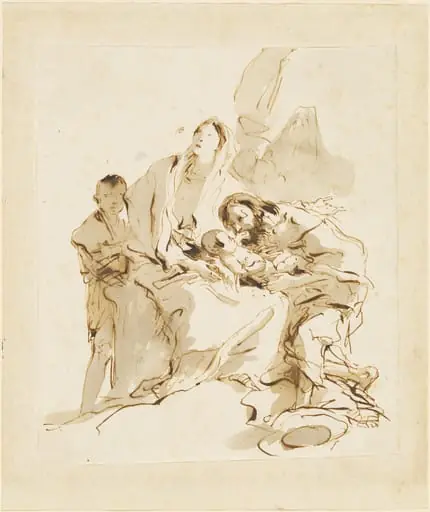 The Holy Family
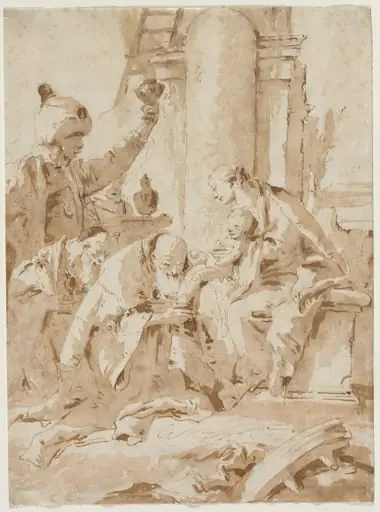 The Adoration of the Magi
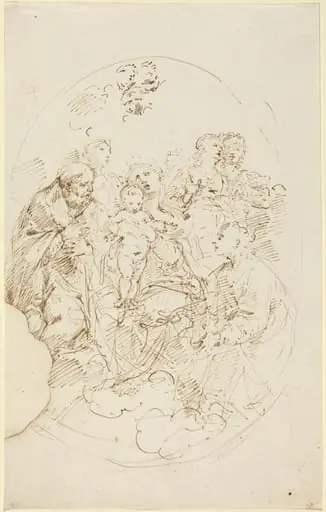 Virgin and Child with Five Saints
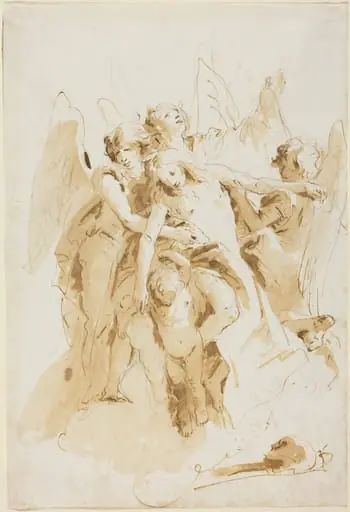 Saint Mary Magdalene Lifted by Angels
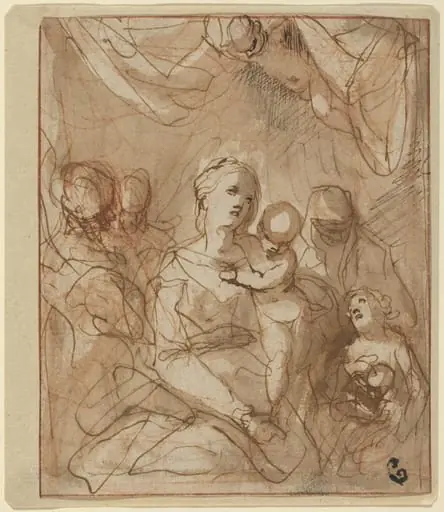 The Virgin and Infant Jesus with Saints
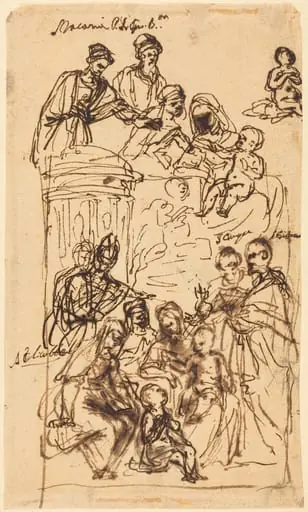 The Madonna and Child with Saints
![Presentation of the Virgin in the Temple [recto], by Antonio Zanchi](https://artifactworldgallery.com/img/antonio-zanchi--presentation-of-the-virgin-in-the-temple-recto--b60030c863fe5e3b-w320.webp) Presentation of the Virgin in the Temple [recto]
Presentation of the Virgin in the Temple [recto]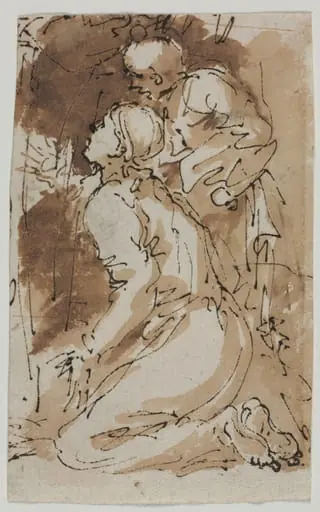 Figure Studies
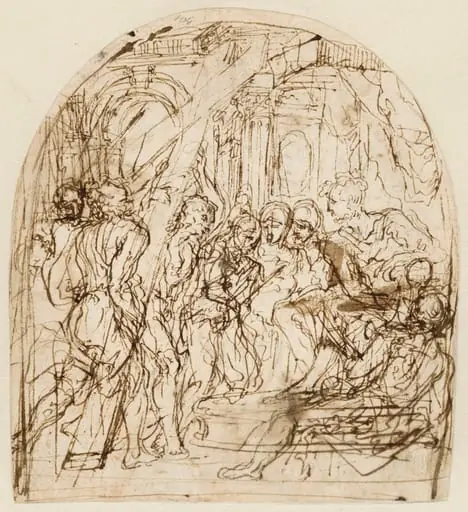 Christ Carrying the Cross
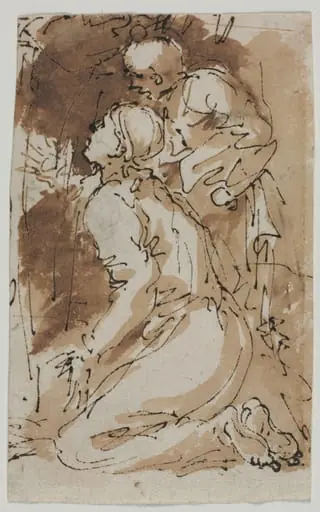 Figure Studies (recto)
 The Madonna and Child in Glory Adored by Saints