Artwork
The Betrothal of the Holy Virgin
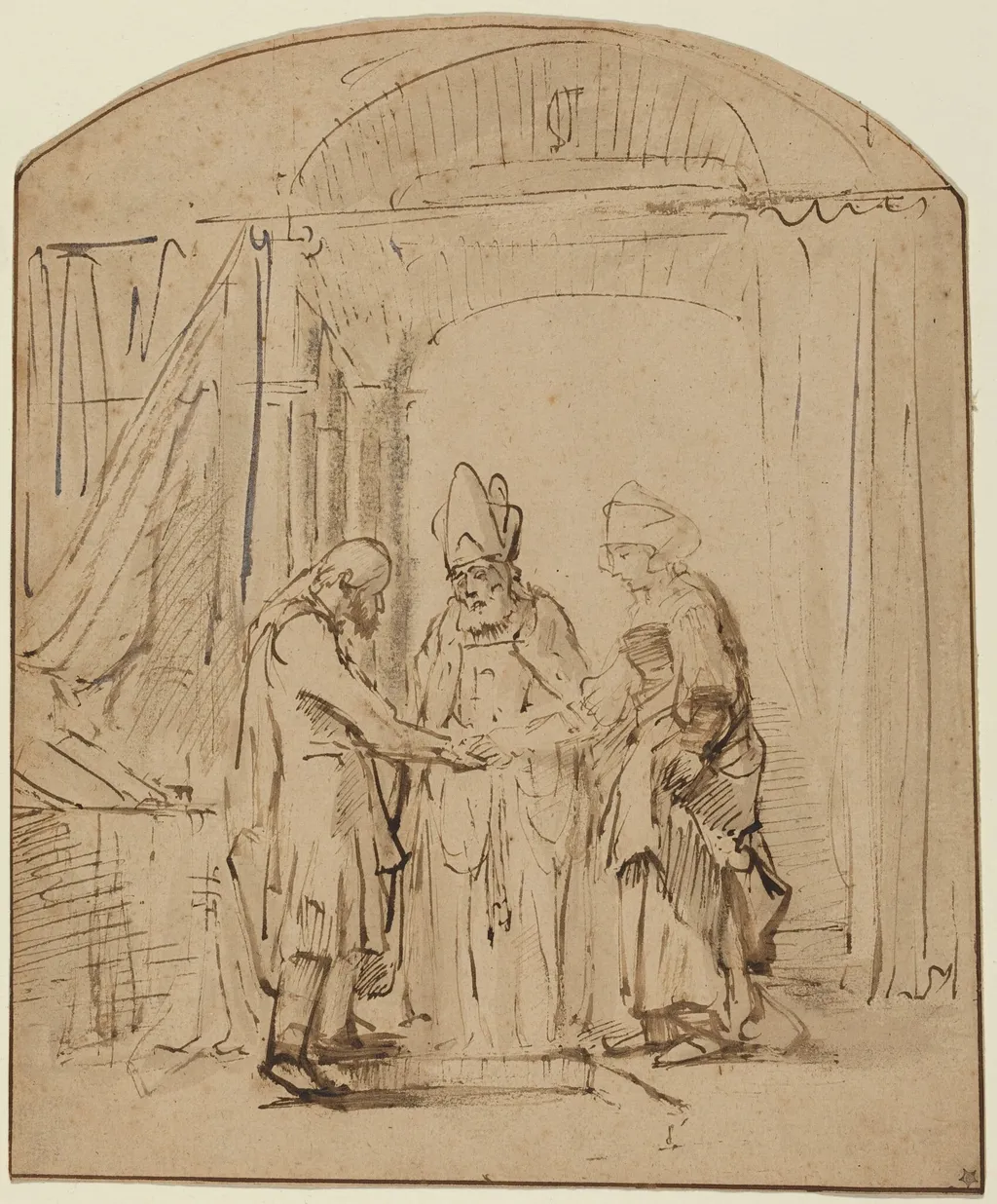
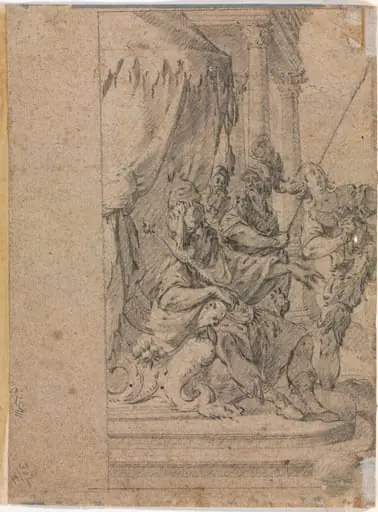
The Betrothal of the Holy Virgin is an ink drawing by the Baroque artist Unknown. It dates from 1638 and is held in the collection of the National Gallery of Art. This drawing, executed in pen and brown ink with wash, depicts the betrothal of the Virgin Mary to Joseph.
About this work
Overview
This drawing, executed in pen and brown ink with wash, depicts the betrothal of the Virgin Mary to Joseph. Created on laid paper, it belongs to the category of preparatory or independent graphic works from the Renaissance period. The medium suggests a focus on line and tonal variation rather than color, typical of studies intended for composition or devotional contemplation.
Subject & Meaning
The scene illustrates the moment when the high priest places a ring on Mary’s finger, symbolizing her sacred union with Joseph. This event, drawn from apocryphal texts like the Golden Legend, affirmed Mary’s purity and divine destiny. The composition emphasizes solemnity and ritual, reinforcing the theological significance of Mary’s role in salvation history.
Technique & Style
The artist employed precise pen lines to define figures and architecture, layered with soft brown washes to model volume and shadow. The use of laid paper, with its visible chain lines, adds texture and supports the delicate handling of ink. The style reflects a disciplined approach to form, balancing clarity with atmospheric depth, characteristic of early Renaissance draftsmanship.
History & Provenance
The drawing’s early ownership is undocumented, but its style and materials align with Italian workshop practices of the late 15th or early 16th century. It likely originated as a study for a larger altarpiece or fresco cycle. Its survival in good condition suggests it was preserved as a finished work, valued for its artistic merit rather than merely as a sketch.
Context
During the Renaissance, religious subjects dominated graphic production, especially in monastic and scholarly circles. Drawings like this served both devotional and pedagogical purposes, helping artists refine compositions before execution in more permanent media. The betrothal scene was a common theme in Northern Italian art, reflecting regional piety and liturgical emphasis on Mary’s sanctity.
Legacy
This drawing contributes to the understanding of how Renaissance artists approached sacred narratives through graphic media. Its preservation offers insight into the transition from preparatory study to finished composition. Though not widely known, it remains a quiet testament to the discipline and spiritual intent behind devotional art of the period.
Artist & collection

 Domestic Scene
 Giacomo and Cardinal Marco, investing Andrea, Abbot of San Zeno, with his Benefice
 The Nymph of Fontainebleau
 Portrait of a Woman
 Madonna and Child with Saints in the Enclosed Garden
 Venus and Minerva
 Family Group of Four on Sofa
 Wall painting from Room H of the Villa of P. Fannius Synistor at Boscoreale
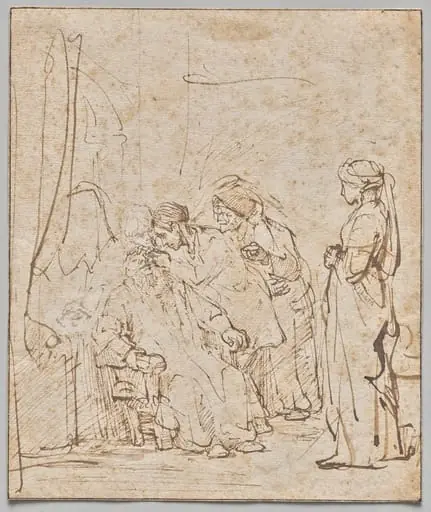 Tobias Healing His Father's Blindness
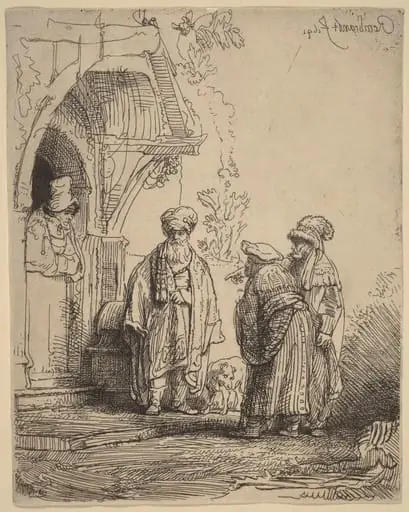 Three Oriental Figures (Jacob and Laban?)
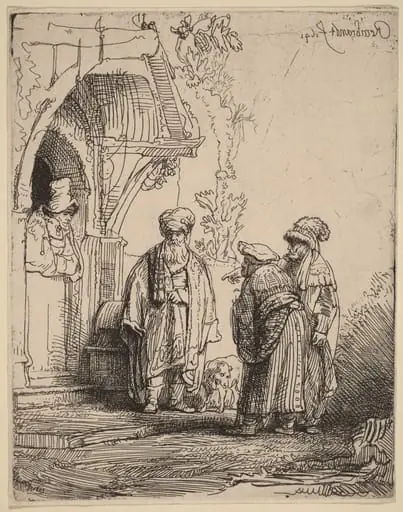 Three Oriental Figures (Jacob and Laban?)
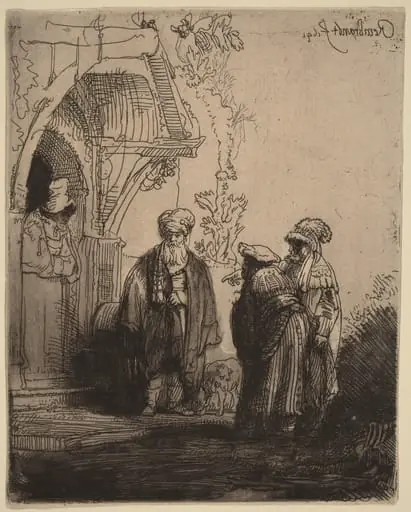 Three Oriental Figures (Jacob and Laban?)
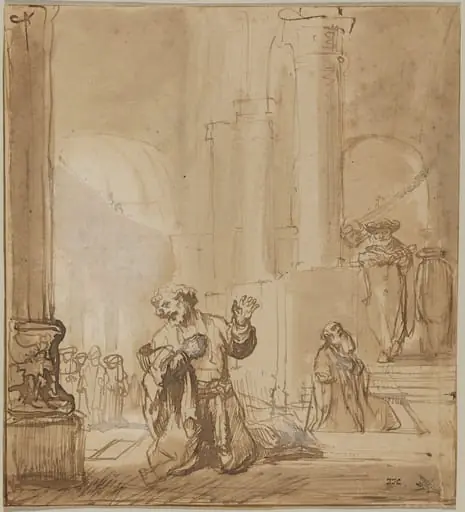 The Parable of the Publican and the Pharisee
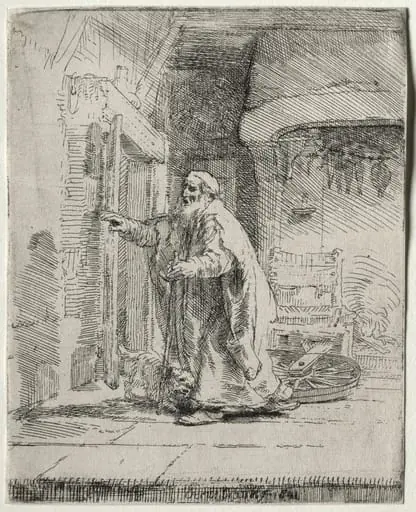 The Blindness of Tobit: The Larger Plate
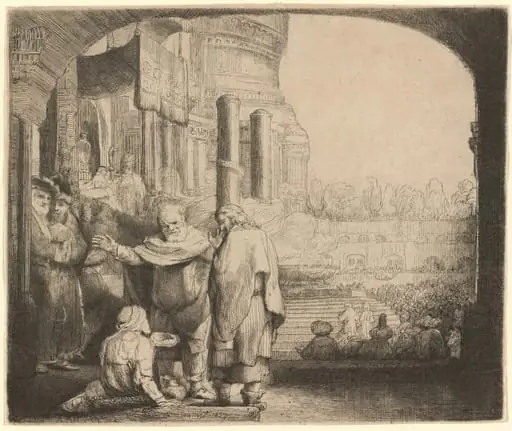 Peter and John Healing the Cripple at the Gate of the Temple
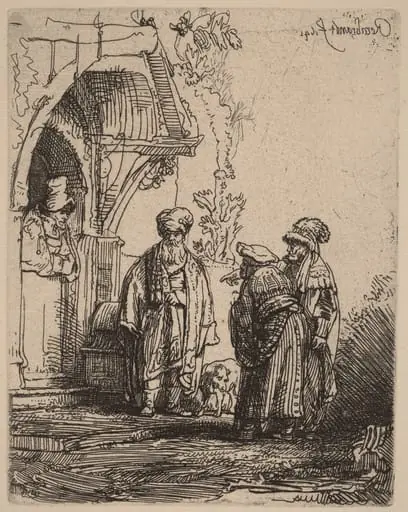 Three Oriental Figures (Jacob and Laban?)
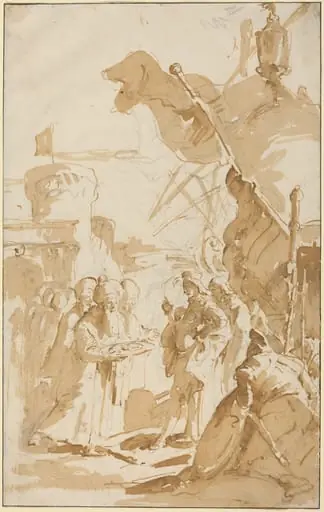 Capitulation of a Town
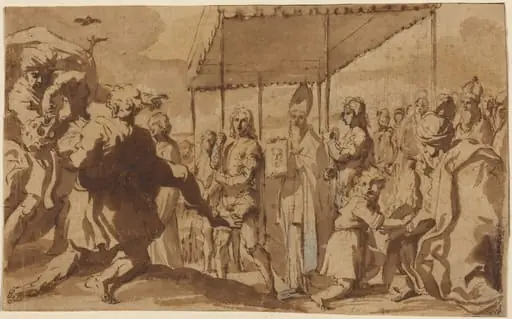 The Healing of the Possessed Boy in a Procession of the Volto Santo
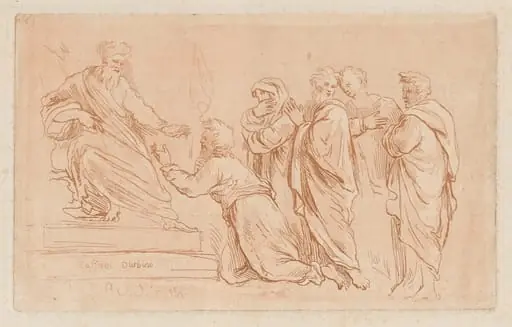 Adonias Imploring the Grace of Solomon or Jeroboam Kneeling before Rehoboam
 Panthea before Cyrus? (verso)