Artwork
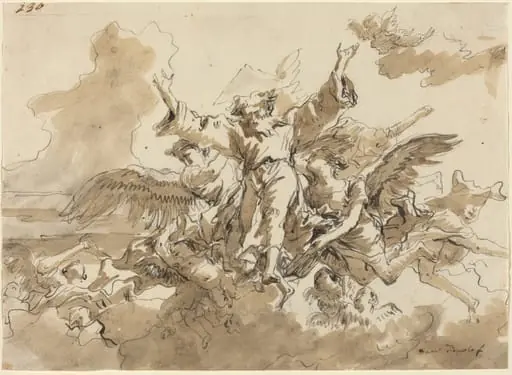
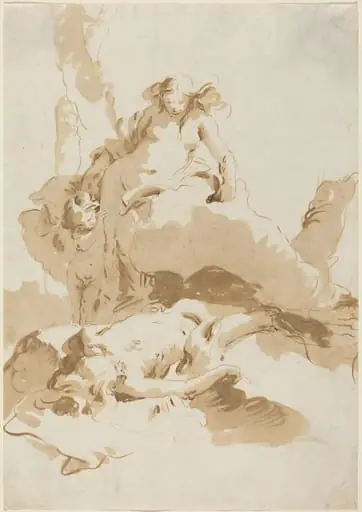
Saint Mary Magdalene Lifted by Angels
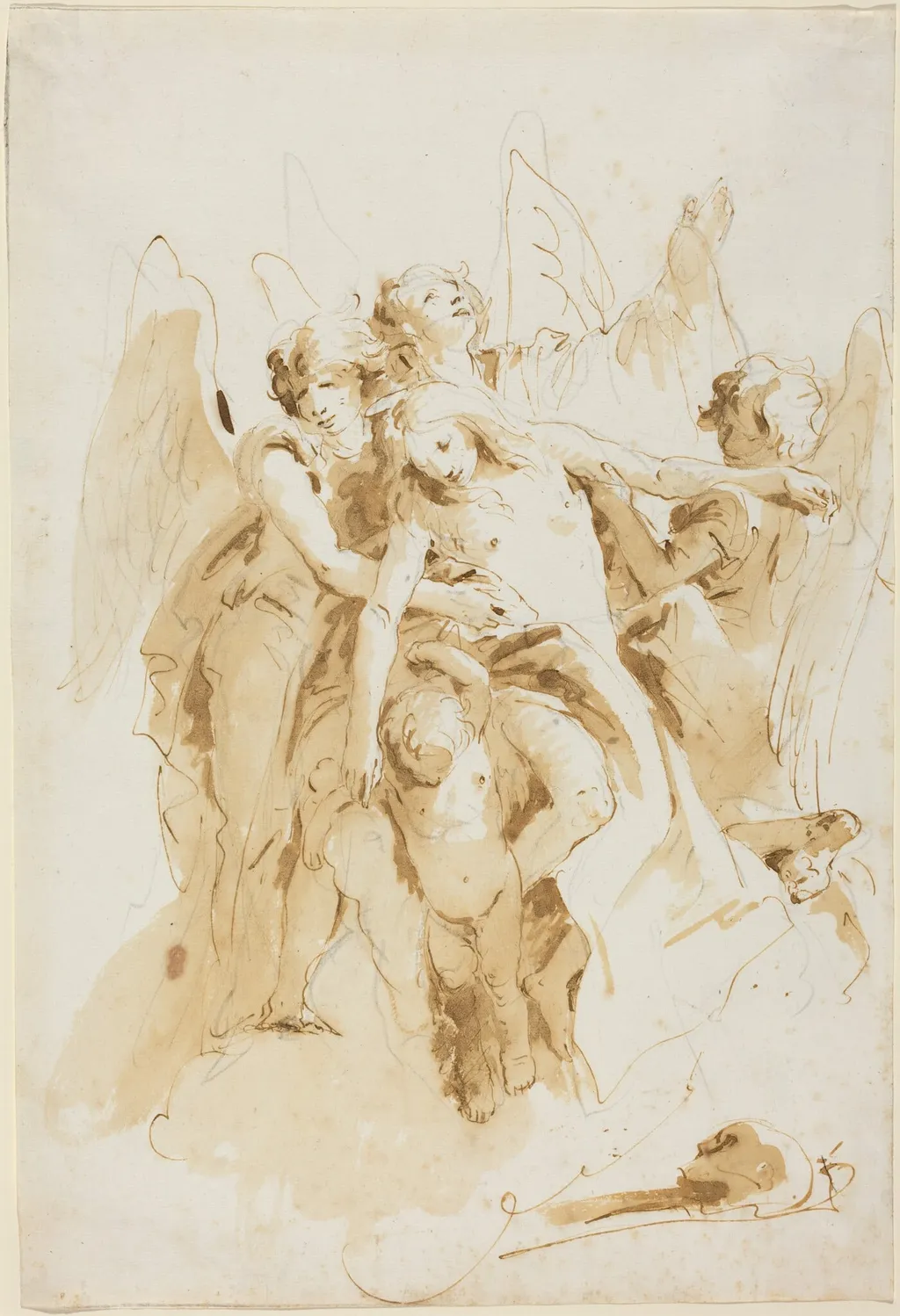
Saint Mary Magdalene Lifted by Angels is a chalk drawing by the Baroque artist Giovanni Battista Tiepolo. It dates from 1740 and is held in the collection of the National Gallery of Art.
About this work
Overview
Executed on laid paper with black chalk underdrawing, it employs fluid pen lines and layered brown washes to suggest motion and ethereal light.
This ink and wash drawing by Giovanni Battista Tiepolo, dated around 1740, captures a moment of divine ascent. Executed on laid paper with black chalk underdrawing, it employs fluid pen lines and layered brown washes to suggest motion and ethereal light. The work belongs to a series of preparatory studies Tiepolo made for larger religious compositions, reflecting his practice of exploring form and movement before final execution.
Subject & Meaning
The figure of Mary Magdalene is shown being raised heavenward by three angels, referencing her mystical elevation in Christian tradition. Her outstretched limbs and relaxed posture convey surrender to divine grace, while the angels, their faces indistinct, act as unseen agents of transcendence. The scene avoids overt narrative detail, focusing instead on spiritual uplift and the physical sensation of weightlessness.
Technique & Style
Tiepolo used rapid, expressive strokes of pen and ink, layered with diluted brown wash, to create a sense of airiness and motion. Black chalk provided structural underdrawing, while the wash softened edges and deepened shadows without fixing form. The sketchy quality and minimal detail reflect his emphasis on gesture and atmosphere over precision, typical of his preparatory method for frescoes and altarpieces.
History & Provenance
Created during Tiepolo’s mature period in Venice, this drawing likely served as a study for a lost or unexecuted altarpiece. It remained in private collections after his death, passing through European hands before entering public institutional ownership. Its survival as a standalone work highlights its artistic value beyond its original functional role in the studio.
Context
In mid-18th-century Venice, religious imagery was often rendered with theatrical dynamism, reflecting the era’s taste for emotional intensity and visual spectacle. Tiepolo’s approach aligned with broader Rococo tendencies—lightness, movement, and spiritual drama—while distinguishing itself through his mastery of rapid, fluid draftsmanship that prioritized expressive energy over decorative finish.
Legacy
This drawing exemplifies Tiepolo’s influence on the evolution of preparatory drawing as an art form in its own right. Its emphasis on movement and transient light anticipated later Romantic sensibilities. Though not widely exhibited in his lifetime, it has since become a key reference for understanding how Venetian artists translated spiritual themes into dynamic visual language through sketch.
Artist & collection

Artist
Giovanni Battista Tiepolo, also known as Giambattista Tiepolo, was an Italian painter and printmaker from the Republic of Venice who painted in the Rococo style, considered an important member of the 18th-century Venetian school.

 Creation of the Universe
![The Ecstasy of Saint Francis [recto], by Sebastiano Ricci](https://artifactworldgallery.com/img/sebastiano-ricci--the-ecstasy-of-saint-francis-recto--5f53f9b59775e5dd-w320.webp) The Ecstasy of Saint Francis [recto]
The Ecstasy of Saint Francis [recto] Study for an oval painting
 The Virgin and Child Adored by Bishops, Monks, and Women
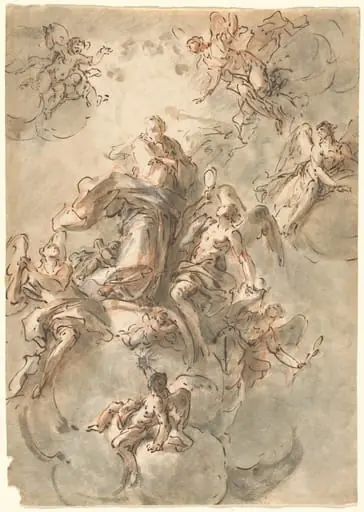 Virgin of the Immaculate Conception
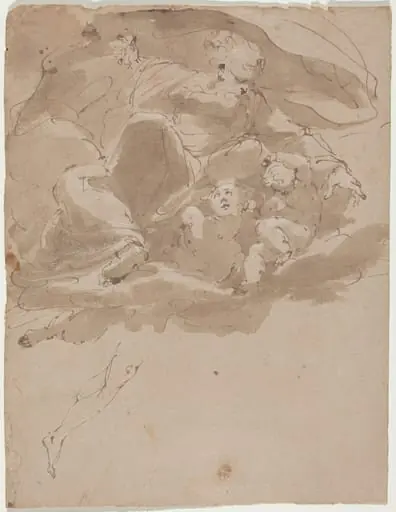 God the Father with Angels
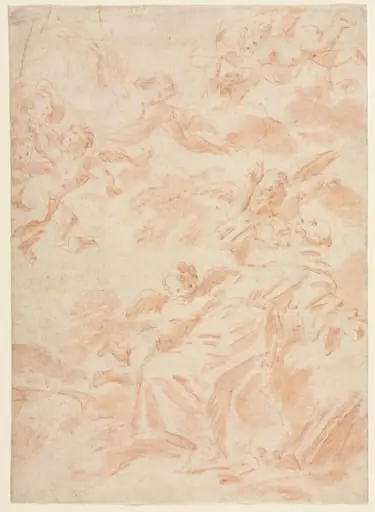 The Stigmatization of Saint Francis
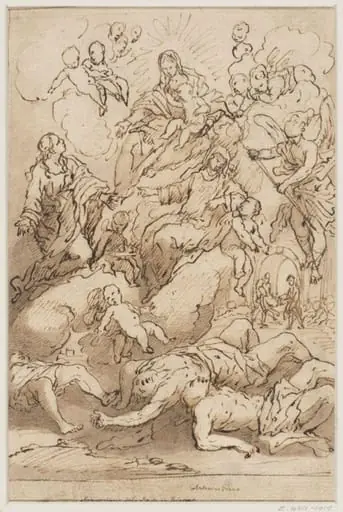 Anniversary of the Plague at Palermo
 Venus and Cupid Discovering the Body of Adonis
 The Women at the Sepulchre with Christ of the Noli me Tangere