Artwork
Joseph and Mary Prepare to Leave
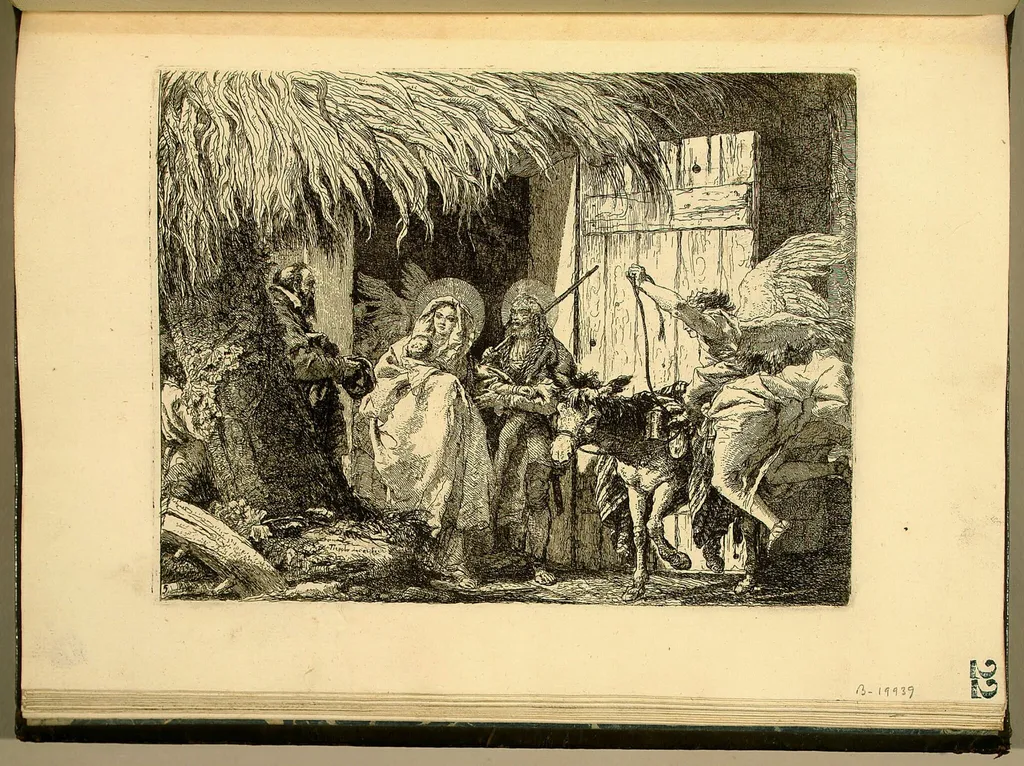
Joseph and Mary Prepare to Leave is an ink print by the Romanticist artist Giovanni Domenico Tiepolo. It dates from 1753 and is held in the collection of the National Gallery of Art.
About this work
Overview
The piece reflects his technical precision and sensitivity to narrative detail within the constraints of the medium.
Giovanni Domenico Tiepolo created the etching *Joseph and Mary Prepare to Leave* in 1753, during a period when he was actively engaged in both painting and printmaking. Trained by his father, Giovanni Battista Tiepolo, he applied his mastery of line and composition to this small-scale work, using etching to capture a quiet moment from the Holy Family’s journey. The piece reflects his technical precision and sensitivity to narrative detail within the constraints of the medium.
Subject & Meaning
The scene portrays Joseph and Mary moments before their departure, likely referencing the Flight into Egypt. Mary sits atop a donkey, while Joseph stands beside her, staff in hand, suggesting readiness for travel. The composition emphasizes quiet resolve rather than drama, focusing on the domestic intimacy of their preparation. The absence of angels or divine intervention underscores a humanized interpretation of the biblical narrative, grounded in everyday realism.
Technique & Style
Tiepolo employed etching to achieve fine, controlled lines that define form and texture without heavy shading. The figures are rendered with delicate contours, while the landscape background is suggested through sparse, rhythmic strokes of ink. Unlike painted works, this print relies on tonal variation and line weight to imply depth and atmosphere, showcasing his skill in translating painterly sensibilities into graphic form.
History & Provenance
Created in Venice during Tiepolo’s mature period, the etching was likely made for private collectors or as part of a series illustrating biblical scenes. It was not widely published during his lifetime but circulated among connoisseurs of Italian printmaking. Its survival in museum collections today reflects its status as a refined example of 18th-century Venetian graphic art, valued for its craftsmanship over mass appeal.
Context
In mid-18th-century Italy, religious subjects remained common in printmaking, though often treated with increasing naturalism. Tiepolo’s approach diverged from Baroque grandeur, favoring restrained emotion and intimate scale. His etchings responded to a growing market for small, portable images suited to domestic contemplation, aligning with broader Enlightenment interests in human experience over theatrical spectacle.
Legacy
Tiepolo’s etchings, including this one, influenced later generations of Italian draftsmen and printmakers who sought to blend narrative clarity with technical subtlety. While less celebrated than his father’s frescoes, his graphic works are recognized for their quiet elegance and contribution to the evolution of printmaking as an independent art form in the 18th century.
Artist & collection
Artist
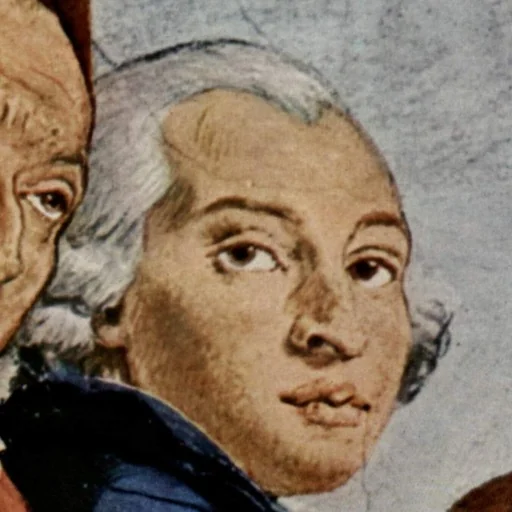
Giovanni Domenico Tiepolo (August 30, 1727 – March 3, 1804) was an Italian painter and printmaker in etching. He was the son of artist Giovanni Battista Tiepolo and elder brother of Lorenzo Baldissera Tiepolo.

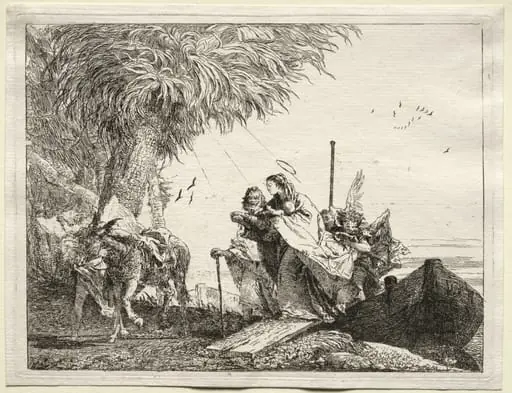 Flight into Egypt: The Holy Family, Disembarking
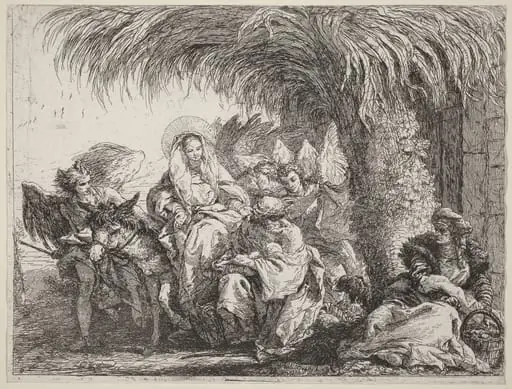 Joseph Kneels with the Child before Mary on the Donkey
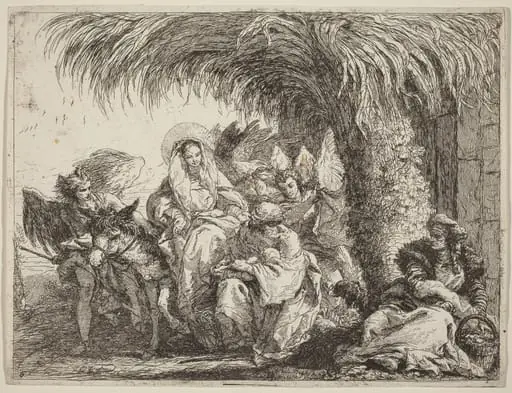 Joseph Kneels with the Child before Mary on the Donkey
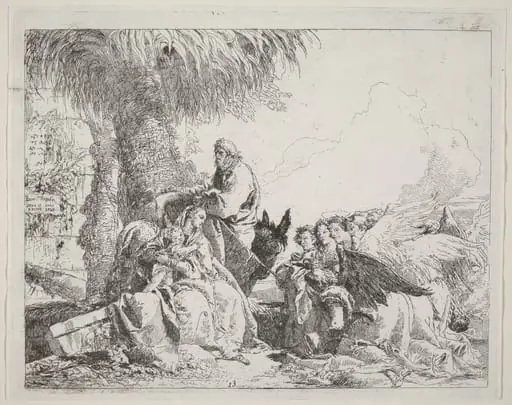 The Rest on the Flight, with Adoring Angels
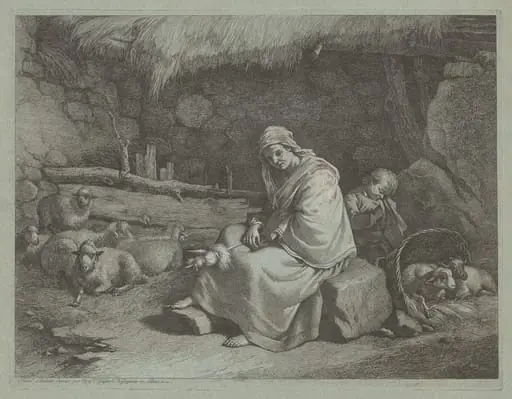 Interior of a Stable with a Seated Spinner and Sleeping Child
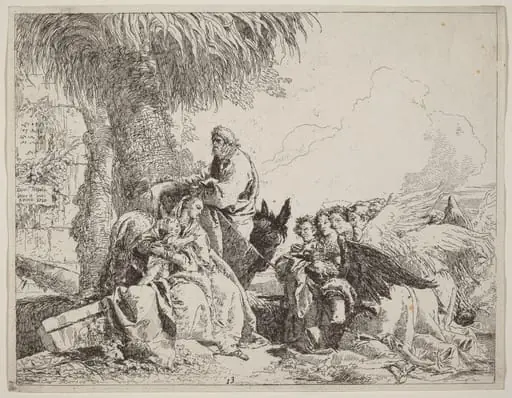 The Rest on the Flight, with Adoring Angels
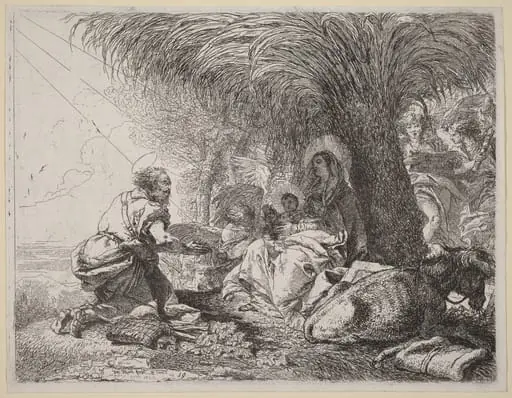 The Rest on the Flight with Joseph in Adoration
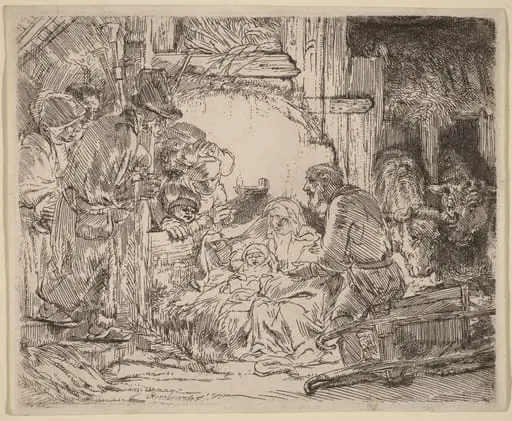 The Adoration of the Shepherds: with the Lamp
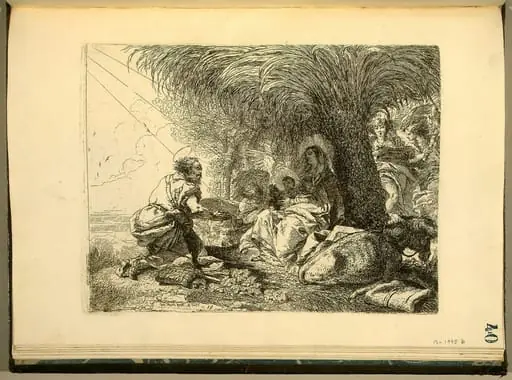 The Rest on the Flight with Joseph in Adoration