Artwork
Le faucon
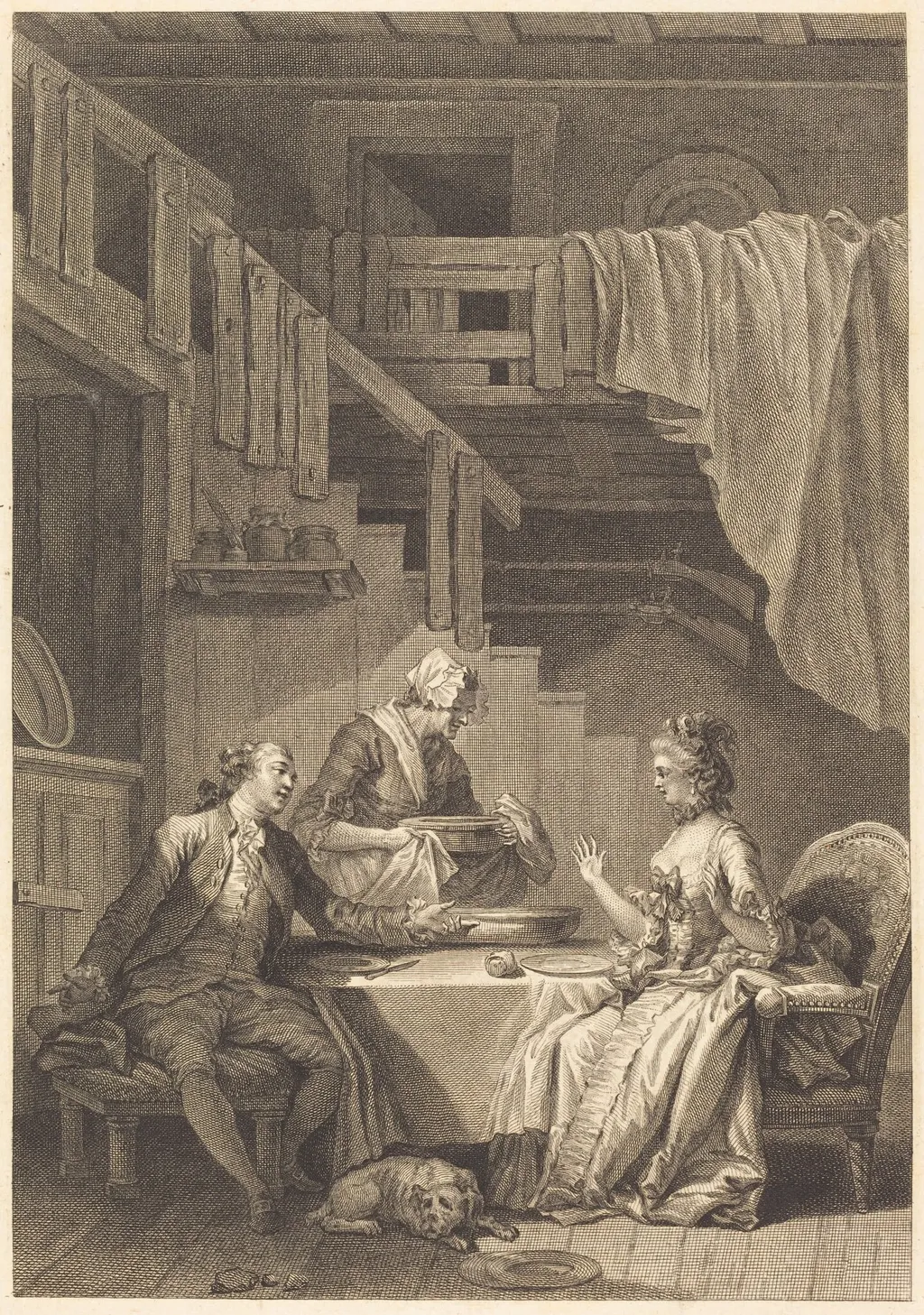
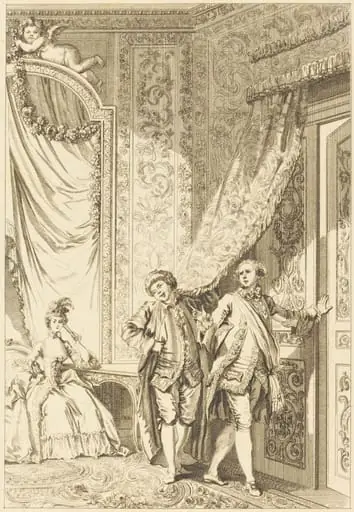
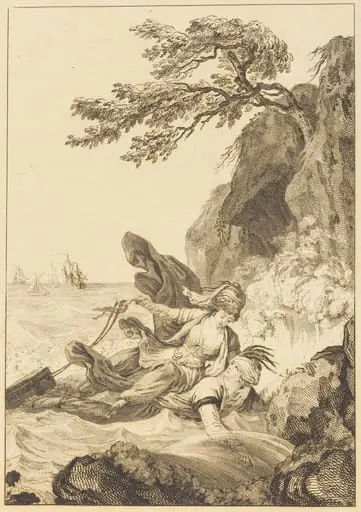
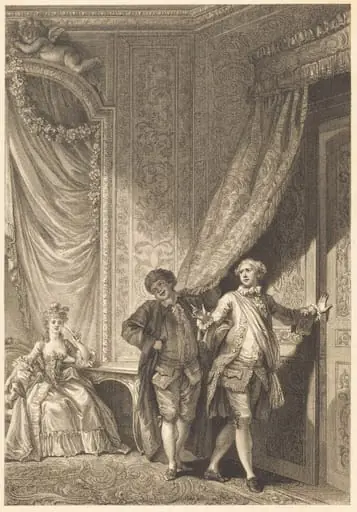
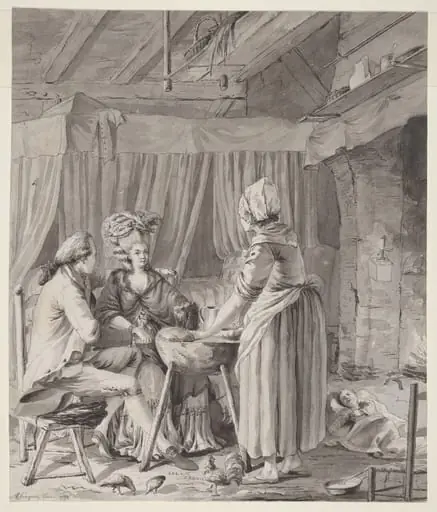
Le faucon is an ink print by the Baroque artist Jean-Baptiste Tilliard. It dates from 1774 and is held in the collection of the National Gallery of Art.
About this work
Overview
The composition emphasizes quiet interaction, with careful attention to posture and spatial depth achieved through fine line work and tonal variation.
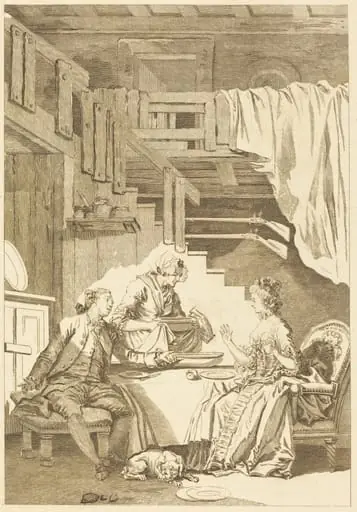
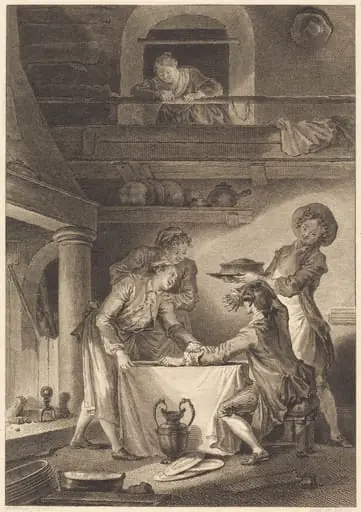
Le faucon is a black-and-white print made in 1774 by Jean-Baptiste Tilliard using etching and engraving techniques. It depicts an intimate interior scene with three figures gathered in a modest domestic space. Stone steps recede into the background, framing the figures around a low table. The composition emphasizes quiet interaction, with careful attention to posture and spatial depth achieved through fine line work and tonal variation.
Subject & Meaning
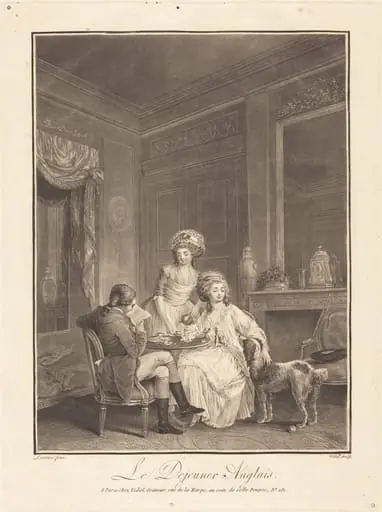
The scene captures a moment of domestic quietude among three individuals: a man in loose attire, a woman in plain dress holding an object, and a finely dressed woman conversing beside a reclining dog. The dog’s calm presence suggests familiarity and comfort. No narrative is overt, but the arrangement implies shared time, possibly a pause in daily life. The absence of grandeur or drama invites contemplation of ordinary human connection.
Technique & Style
Tilliard employed etching and engraving to render fine details in ink on paper. Delicate cross-hatching and varying line weights model the textures of fabric, skin, and stone, lending volume to the forms. The dog’s fur and the folds of clothing are suggested through subtle tonal gradations rather than solid shading. The precision of the lines reflects the printmaker’s control, while the overall tone remains restrained, avoiding theatricality.
History & Provenance
Created in 1774, Le faucon belongs to a period when printmaking was widely used for both artistic expression and reproduction. Tilliard, active in France during the late 18th century, produced works often centered on domestic and genre scenes. While specific early ownership records are scarce, the print’s survival suggests it was circulated among collectors interested in intimate, finely executed engravings of everyday life.
Context
In the decades before the French Revolution, there was growing interest in scenes of private life among the middle and upper classes. Artists turned away from mythological or royal subjects toward quieter, relatable moments. Tilliard’s work aligns with this trend, reflecting a cultural shift toward valuing domestic tranquility and personal interaction, captured with technical precision rather than emotional exaggeration.
Legacy
Le faucon remains a modest but well-crafted example of late 18th-century French printmaking. It illustrates how etching and engraving could convey nuance and atmosphere without color or large scale. Though not widely known today, it contributes to the broader understanding of how artists documented the rhythms of everyday existence, preserving a quiet dignity in ordinary moments.
Artist & collection