Artwork
Le faucon
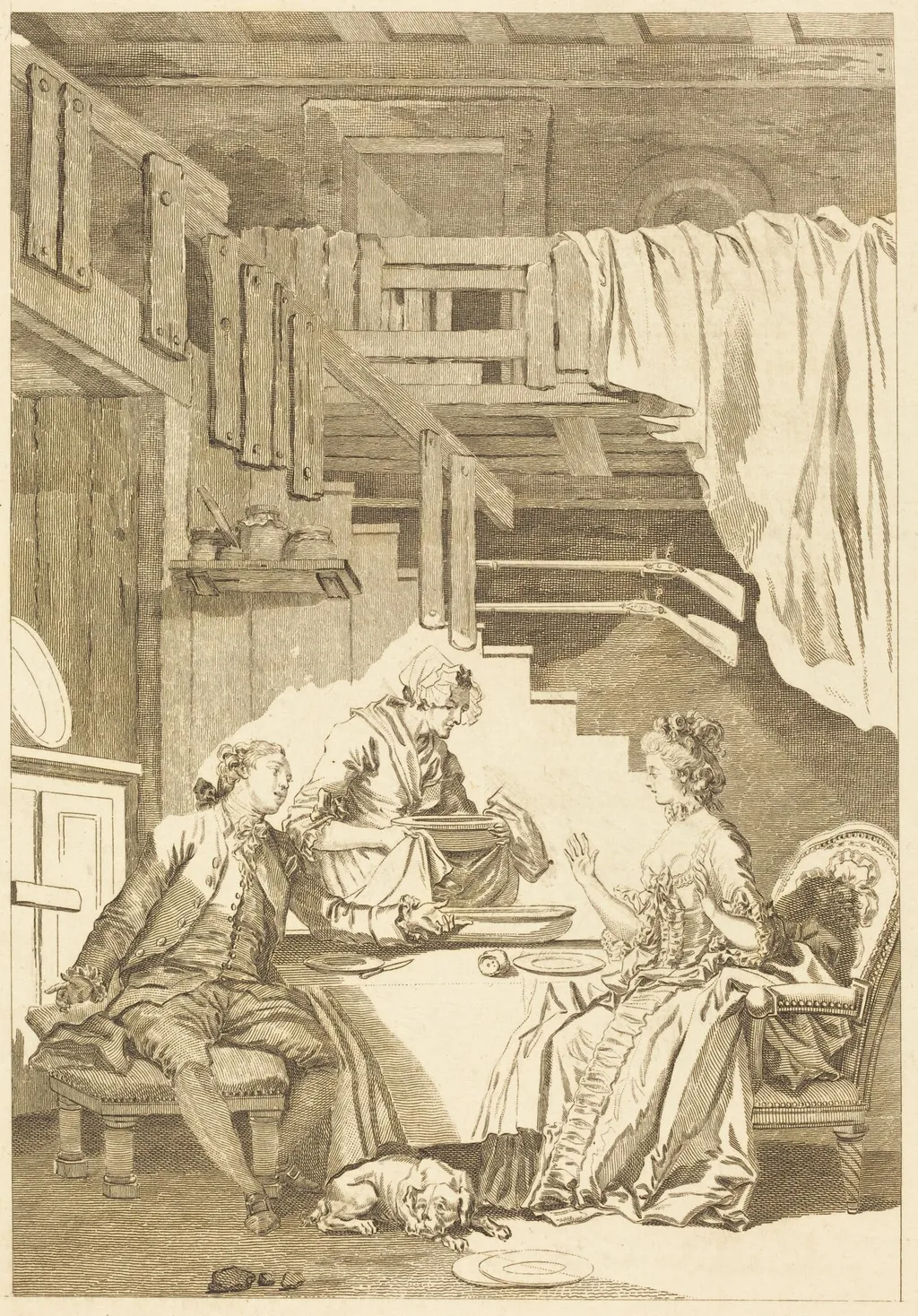
Le faucon is an ink print by the Baroque artist Jean-Baptiste Tilliard. It dates from 1774 and is held in the collection of the National Gallery of Art.
About this work
Overview
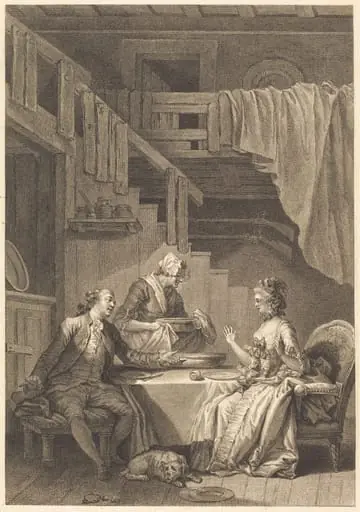
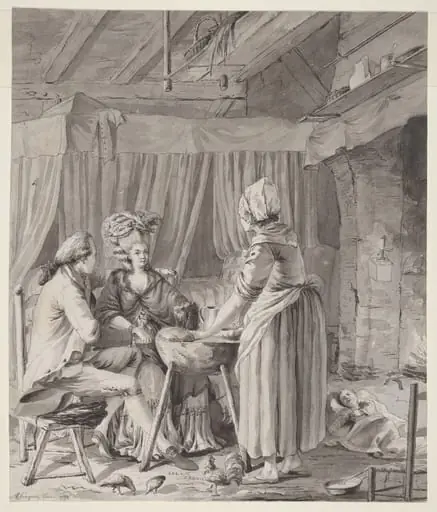
Le faucon is an 1774 etching by Jean-Baptiste Tilliard, depicting an intimate domestic scene. The composition centers on three figures and a dog within a modest interior, rendered with fine linear detail typical of etching technique. The work captures a quiet moment of daily life, avoiding theatricality in favor of observed realism.
Subject & Meaning
The figures—two women and a man—are engaged in unspoken interaction, one woman holding a bowl, another gesturing toward the space ahead. A dog rests at their feet, reinforcing the domestic setting. Though titled after a bird of prey, the image contains no falcon; the name may reference a lost narrative or symbolic layer now obscured by time.
Technique & Style
Tilliard employed etching to achieve delicate tonal gradations and precise linework, emphasizing textures of fabric, wood, and stone. The composition is tightly framed, with architectural elements like wooden beams and a staircase guiding the viewer’s eye. The style reflects 18th-century printmaking conventions, prioritizing clarity over dramatic contrast.
History & Provenance
Created in 1774, the etching entered the collection of the National Gallery of Art in Washington, D.C., where it remains part of its holdings in European prints. No earlier provenance is documented, and the work appears to have circulated primarily among collectors of genre prints during the late 18th and early 19th centuries.
Context
Tilliard worked during a period when domestic scenes gained popularity in print culture, often serving as affordable alternatives to painted genre works. While the Baroque label is occasionally applied, the piece lacks the dynamism or emotional intensity typical of that style, instead aligning more closely with quiet realism emerging in French printmaking of the era.
Legacy
Le faucon endures as a modest example of 18th-century printmaking, valued for its observation of everyday life rather than its artistic innovation. It contributes to the broader record of domestic imagery in print, illustrating how ordinary moments were preserved and circulated among middle-class audiences.
Artist & collection


![A Game of Cards [recto], by Anton Weiss](https://artifactworldgallery.com/img/anton-weiss--a-game-of-cards-recto--6bb6d053bcd336b7-w320.webp)