Artwork
Bridge & Bath. Gerash -
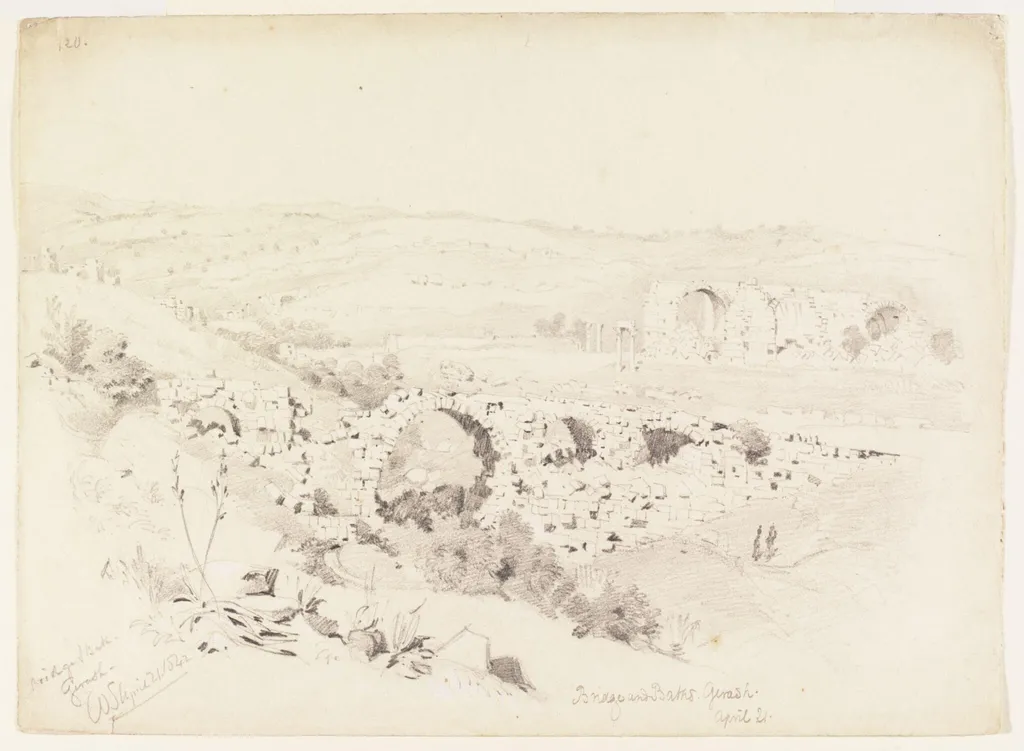
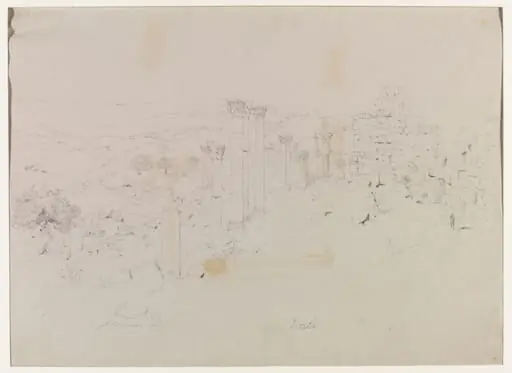
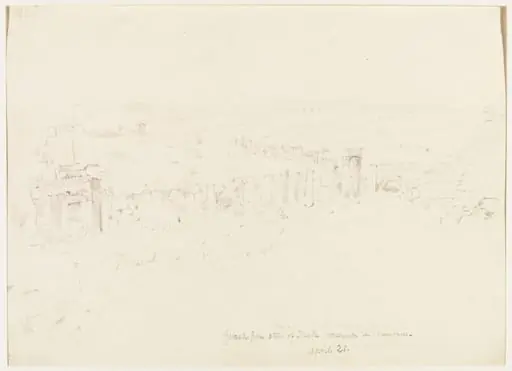
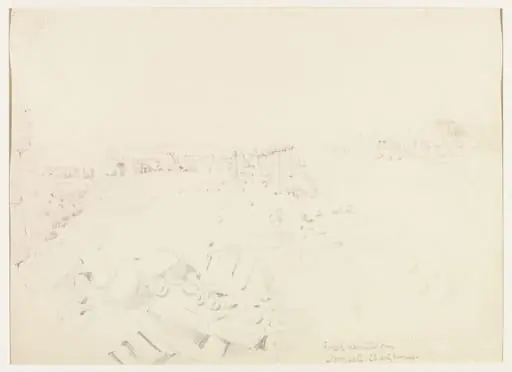
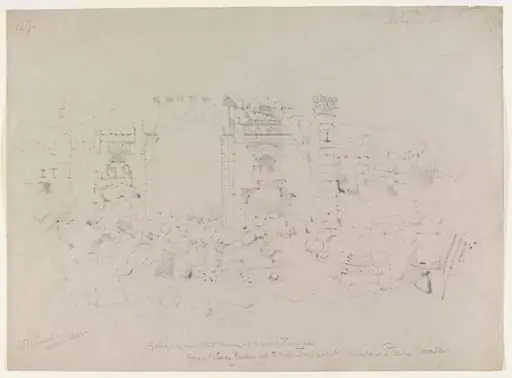
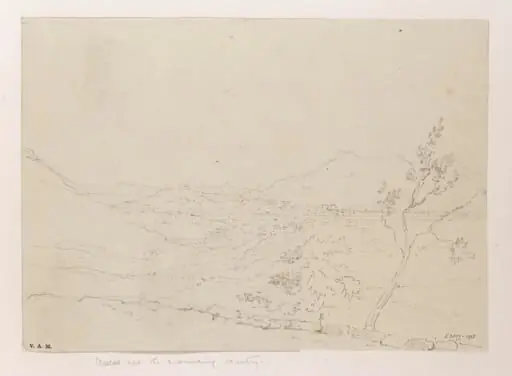
Bridge & Bath. Gerash - is a drawing by the Romanticist artist William J. Tipping. It dates from 1842 and is held in the collection of the Victoria and Albert Museum. This pencil drawing captures a quiet moment at the ancient site of Jerash, rendered with delicate, rapid strokes.
About this work
Overview
This pencil drawing captures a quiet moment at the ancient site of Jerash, rendered with delicate, rapid strokes.
This pencil drawing captures a quiet moment at the ancient site of Jerash, rendered with delicate, rapid strokes. It belongs to a small group of sketches attributed to William Turner, a 19th-century British diplomat and writer, and is cataloged as part of a series numbered SD.1053 to SD.1061. The work was previously offered at auction by Sotheby’s, reflecting its documented provenance and scholarly recognition within Turner’s lesser-known graphic output.
Subject & Meaning
The scene centers on a modest stone bridge crossing a shallow stream, flanked by native vegetation and distant ruins. A faint archway suggests the presence of ancient architecture, not as a grand monument but as a quiet, weathered presence within the landscape. The composition conveys observation rather than commemoration, emphasizing the integration of ruins into the natural environment rather than their historical grandeur.
Technique & Style
Executed in fine, fluid pencil lines, the drawing employs quick, light strokes to suggest texture—ripples in water, rough tree bark, and sparse foliage. There is no heavy shading or polish; the sketch retains the immediacy of on-site observation. Cross-hatching is used sparingly, creating subtle depth without overworking the surface, reinforcing its character as a personal visual note rather than a finished piece.
History & Provenance
The drawing is linked to William Turner through cataloging by Rodney Searight, who identified it among a group of travel sketches made during Turner’s time in the Levant. Its sale through Sotheby’s confirms its documented history and places it within the context of 19th-century British travelers’ records of the Eastern Mediterranean. Its survival as a single sheet among a numbered series suggests it was part of a private, rather than public, artistic endeavor.
Context
Created during a period when European travelers increasingly documented ancient sites in the Ottoman Empire, this sketch reflects a shift from monumental representation to intimate observation. Unlike grand architectural renderings of the era, Turner’s work focuses on the quiet coexistence of nature and decay, aligning with emerging Romantic sensibilities that valued authenticity over idealization.
Legacy
Though not widely exhibited, the drawing contributes to understanding Turner’s role as a perceptive observer of antiquity beyond his published writings. Its modest scale and unpolished technique offer a counterpoint to more formal archaeological illustrations of the time, preserving a personal, unmediated encounter with a landscape shaped by centuries of use and erosion.
Artist & collection
Artist
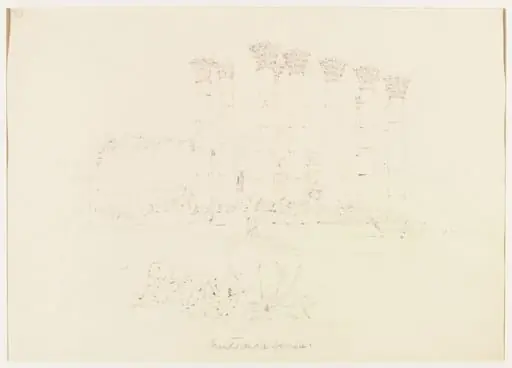
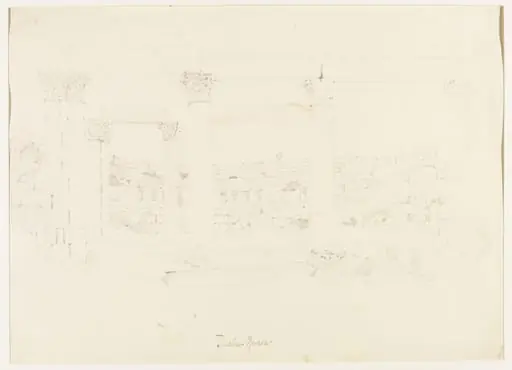
This British artist drew the ruins of an ancient Roman city in 1842. Look at the crumbling columns and stone arches in Grand Temple Gerasa, the tiered Theatre, and the small sketches of the Bridge & Bath. These exacting…

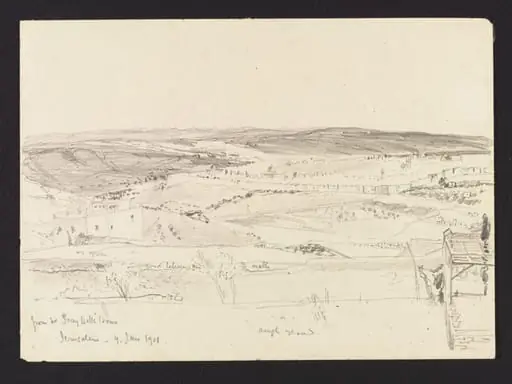 From Mr Gray Hill's House, Jerusalem
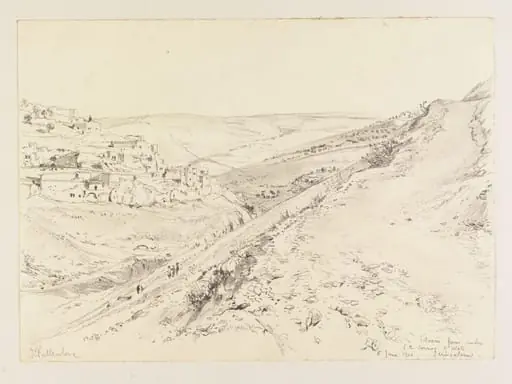 Siloam from under S.E. Corner of Wall Jerusalem
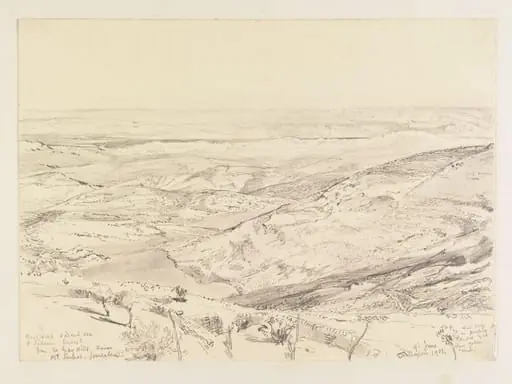 Moab Hills, Dead Sea & Judean Desert
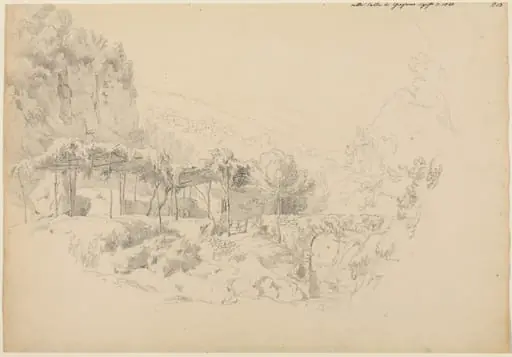 A Shady Arbor in the Valley of Gragnano
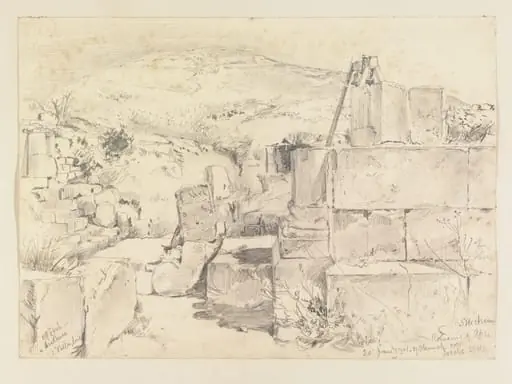 Shechem Remains of Apse of Church over Jacobs Well
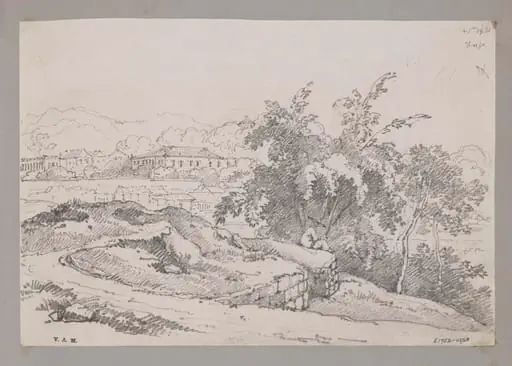 The Casa, Macao, in the gardens of which is Camoens' Cave (the residence of Lady Pereira), Macao
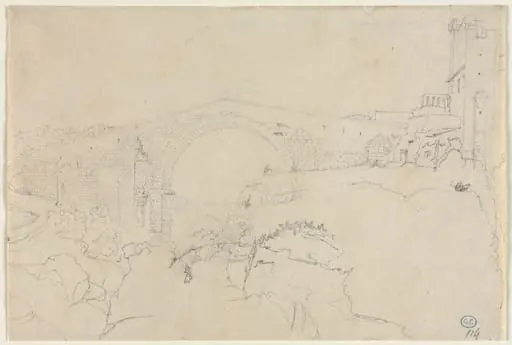 The Ponte dell'Abbadia at Vulci
 Macau, looking south-west along the peninsula
 The Sea of Galilee from the heights of Safad