Artwork
The Sea of Galilee from the heights of Safad
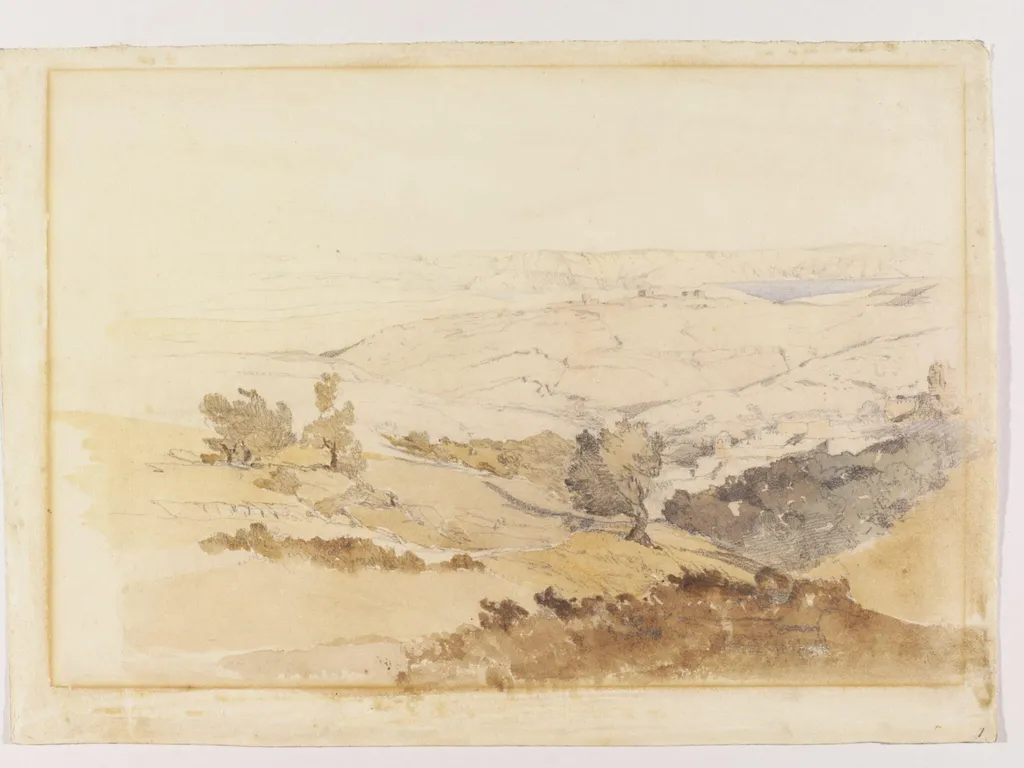
The Sea of Galilee from the heights of Safad is a watercolor work on paper by the British Romanticist artist William Edward Dighton. It dates from 1852 and is held in the collection of the Victoria and Albert Museum.
About this work
Overview
Created in May 1852, this watercolour by William Edward Dighton captures a view of the Sea of Galilee as observed from the elevated terrain of Safad.
Created in May 1852, this watercolour by William Edward Dighton captures a view of the Sea of Galilee as observed from the elevated terrain of Safad. It belongs to a small group of topographical sketches made during the artist’s travels in Palestine. The work is executed in delicate, transparent washes, characteristic of 19th-century travel documentation. Its modest scale and restrained palette reflect its function as a visual record rather than a finished exhibition piece.
Subject & Meaning
The scene presents a quiet, unembellished panorama: the inland sea lies distant beneath a hazy sky, framed by the undulating hills of the Golan Heights. No human figures or architectural elements interrupt the landscape, emphasizing its natural solitude. The composition suggests a traveler’s observational gaze, recording geographic features with minimal interpretation. The absence of narrative or symbolism points to its role as a factual sketch, valued for its topographical accuracy.
Technique & Style
Dighton employed light, fluid watercolour washes to suggest the arid, sun-baked terrain. Soft gradations of brown and gray define the rolling hills, while sparse, loose strokes indicate scattered vegetation and rocky outcrops. The sky is barely hinted at, fading into the horizon to enhance the sense of distance. This restrained technique aligns with contemporary British travel sketching practices, prioritizing immediacy and atmospheric effect over detail or polish.
History & Provenance
The watercolour was produced during Dighton’s 1852 journey through Palestine, part of a series documenting regional landscapes. It remained in private hands until its sale at Christie’s in 1971, where it realized £52.50. Its subsequent ownership is not publicly documented. The work’s survival as a single piece among a larger group suggests it was likely one of many studies made during the trip, preserved for its personal or documentary value.
Context
In the mid-19th century, British travelers and artists increasingly visited the Levant, producing sketches to record biblical and ancient sites. Dighton’s work fits within this trend, reflecting both scientific interest in geography and the Romantic fascination with distant lands. These drawings were often used as references for later paintings or published illustrations, though many, like this one, remained as personal records of observation.
Legacy
Though not widely exhibited or reproduced, the watercolour contributes to a broader archive of 19th-century travel documentation. It offers insight into how Western observers visually interpreted the landscapes of Palestine during a period of growing archaeological and religious interest. Its preservation in institutional collections, such as the Victoria and Albert Museum, ensures its continued relevance as a historical artifact of visual exploration.
Artist & collection
Artist
William Edward Dighton painted watercolours of 19th-century Middle Eastern landscapes and ruins.

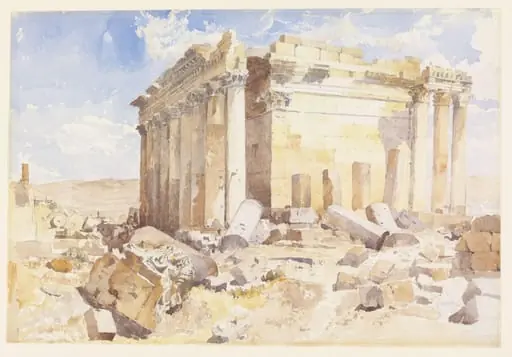
![The Cape of the Veil [Sinai], by William Edward Dighton](https://artifactworldgallery.com/img/william-edward-dighton--the-cape-of-the-veil-sinai--972bd1edd967dc98-w320.webp)
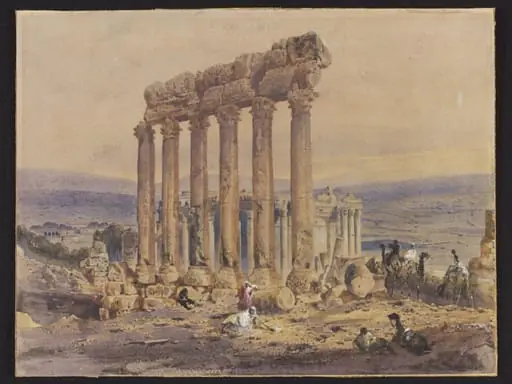
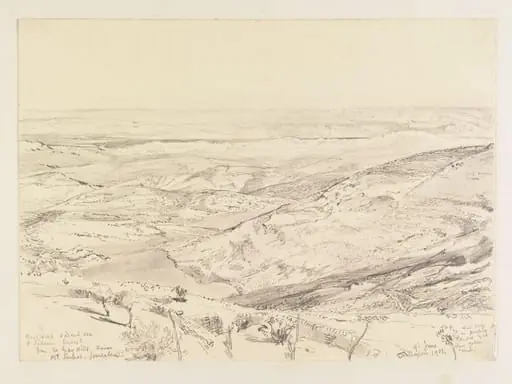 Moab Hills, Dead Sea & Judean Desert
 Hilly Landscape with Landsberg Castle
 The Southdown, Underhill Road; Clayton to Westmeston
 The Southdown, Underhill Road; Ditchling Beacon, from the Meadows near Westmeston
 An Extensive View in Shropshire
 Near the Travellers Rest Inn, Dolgelly
 The Southdown, Underhill Road; Edburton, and the Road Eastwards
 Hillside and Trees
 Lodge Barn, near Ditchling
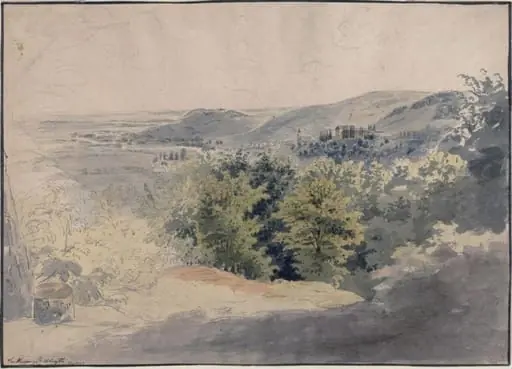 Landscape with hills in the background
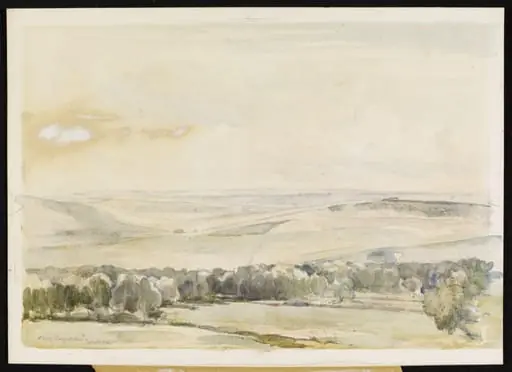 The Downs from Friston
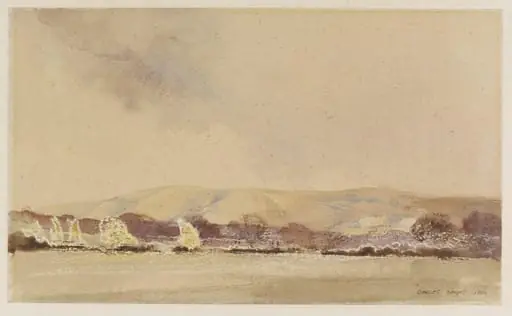 Fields and Woods South of Ditchling