Artwork
Copacul cu găini
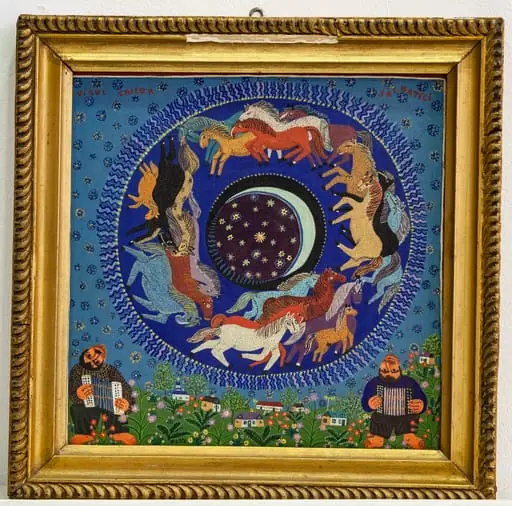
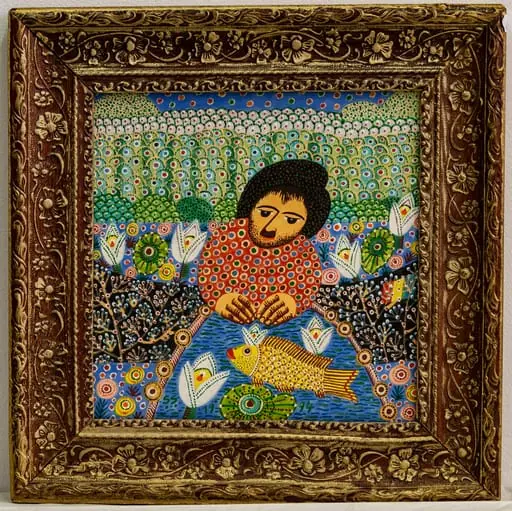
Copacul cu găini is a print by Știrbu Ștefan. It dates from 1984 and is held in the collection of the Gavrila Simion Eco-Museum Research Institute Tulcea.
About this work
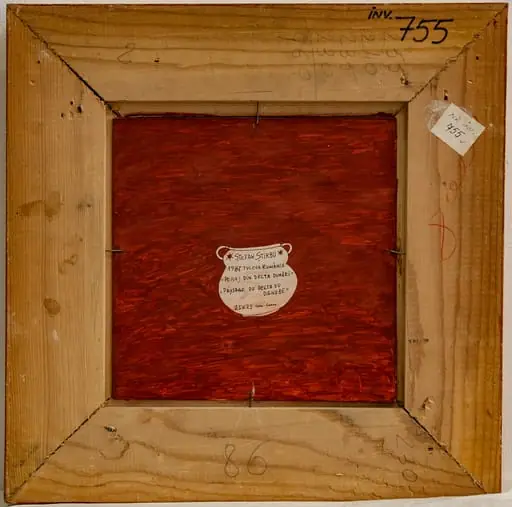
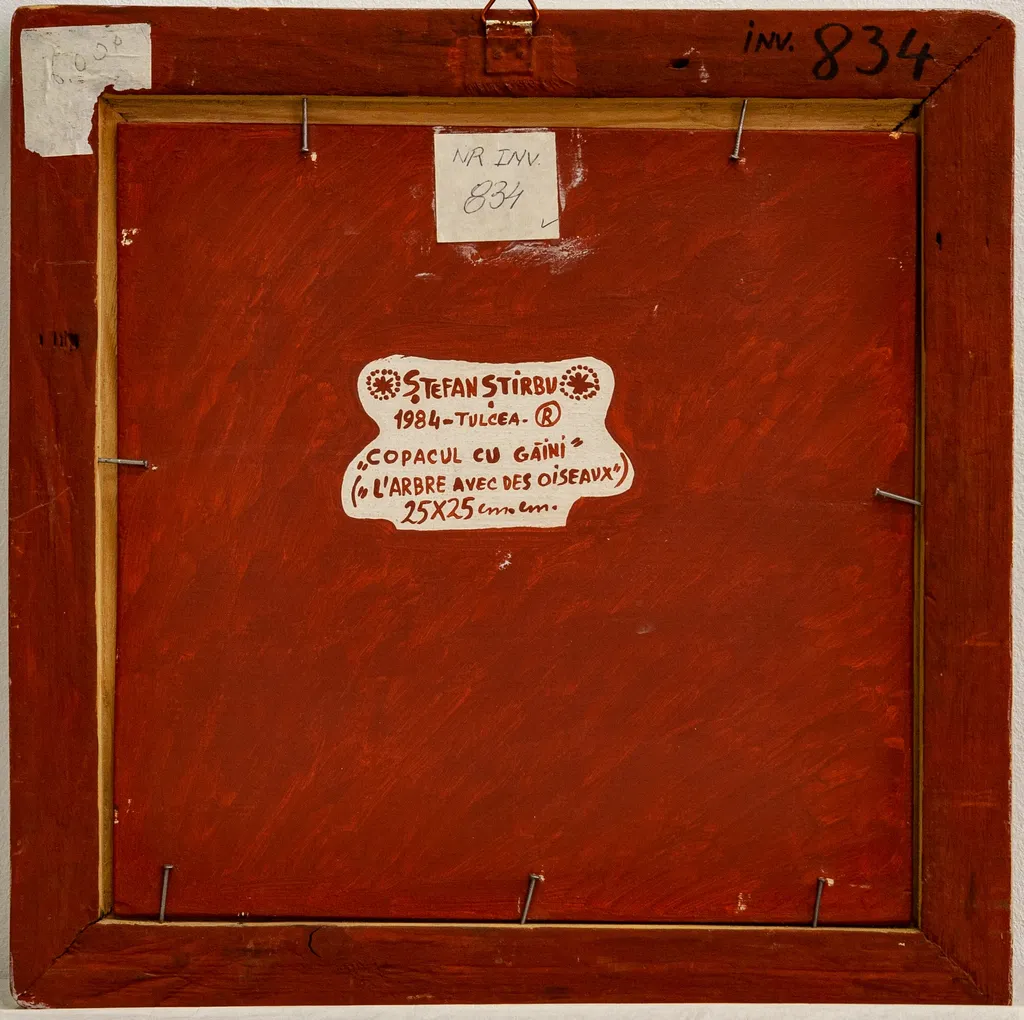
The back shows signs of wear, with nails holding the frame together.
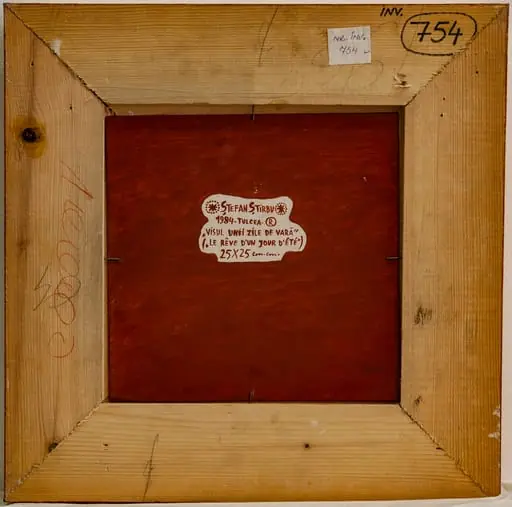
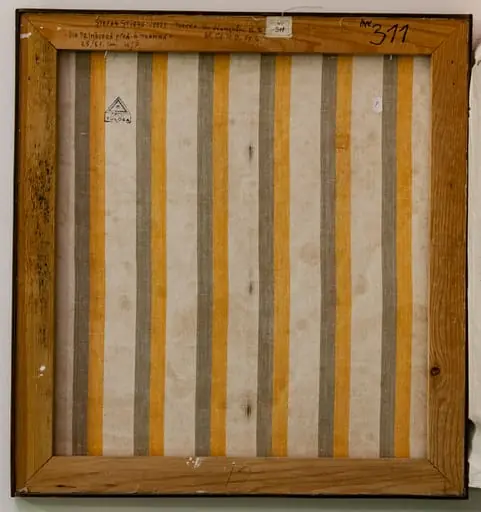
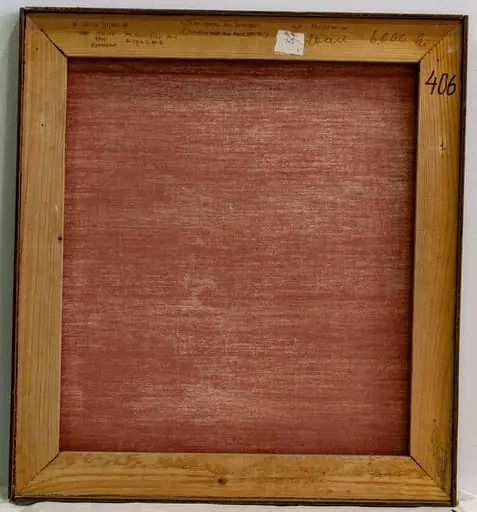
This is the back of a framed piece with a red-brown board. You can see two small labels: one with the number *834* and another handwritten label that reads *"Știrbu Ștefan 1984-Tulcea"* along with the title *"Copacul cu găini"* (which means *"The Tree with Chickens"* in Romanian).
The painting is small—just 25x25 cm—and looks like a print. The back shows signs of wear, with nails holding the frame together.
Check out the Museum of Ethnography to see more works like this.
Overview
Copacul cu găini is a small, square panel measuring 25 by 25 centimeters, created in 1984 by Romanian artist Știrbu Ștefan. It is housed in the Museum of Ethnography and appears to be a printed image mounted on a red-brown wooden board. The reverse side reveals evidence of its framing history, including nails and two labels—one stamped with the number 834, the other handwritten with the artist’s name, date, location, and title.
Subject & Meaning
The title, meaning 'The Tree with Chickens,' suggests a rural, domestic scene, likely drawn from everyday life in the Tulcea region. The imagery may reflect local folklore or personal memory, blending natural elements with domestic animals in a simplified, symbolic composition. The work does not aim for realism but instead evokes a quiet, familiar moment from the artist’s cultural environment.
Technique & Style
The piece resembles a printed image rather than a painted one, with flat areas of color and minimal detail. Its small scale and straightforward composition suggest a deliberate simplicity, possibly influenced by folk art traditions or amateur printmaking. The lack of shading or perspective reinforces a stylized, almost emblematic quality, aligning with regional visual customs rather than academic conventions.
History & Provenance
Created in 1984 in Tulcea, the work entered the collection of the Museum of Ethnography shortly after its making. The handwritten label on the reverse confirms its origin and authorship, while the stamped number likely corresponds to an inventory record. The frame’s worn condition and visible nails indicate it was assembled and displayed locally, possibly by the artist or a family member, before institutional acquisition.
Context
In the 1980s, Romania’s cultural institutions increasingly documented regional folk expressions under state-sponsored ethnographic programs. Știrbu Ștefan’s work fits within this effort to preserve vernacular imagery, even when produced by non-professional artists. The painting reflects a broader trend of collecting everyday visual culture from rural communities, particularly in the Danube Delta region.
Legacy
Though modest in scale and technique, Copacul cu găini contributes to a larger archive of Romanian folk-inspired art from the late 20th century. Its preservation in a national museum underscores the value placed on personal, localized expressions within official cultural narratives. It remains a quiet testament to the artistic activity occurring beyond formal training and institutional recognition.
Artist & collection
Artist
A Romanian printmaker, Ștefan Știrbu made linocuts and paintings that blend folklore scenes with everyday life.
Museum
Gavrila Simion Eco-Museum Research Institute Tulcea
Continue through works from the same source collection.