Artwork
Din primăvară până-n toamnă
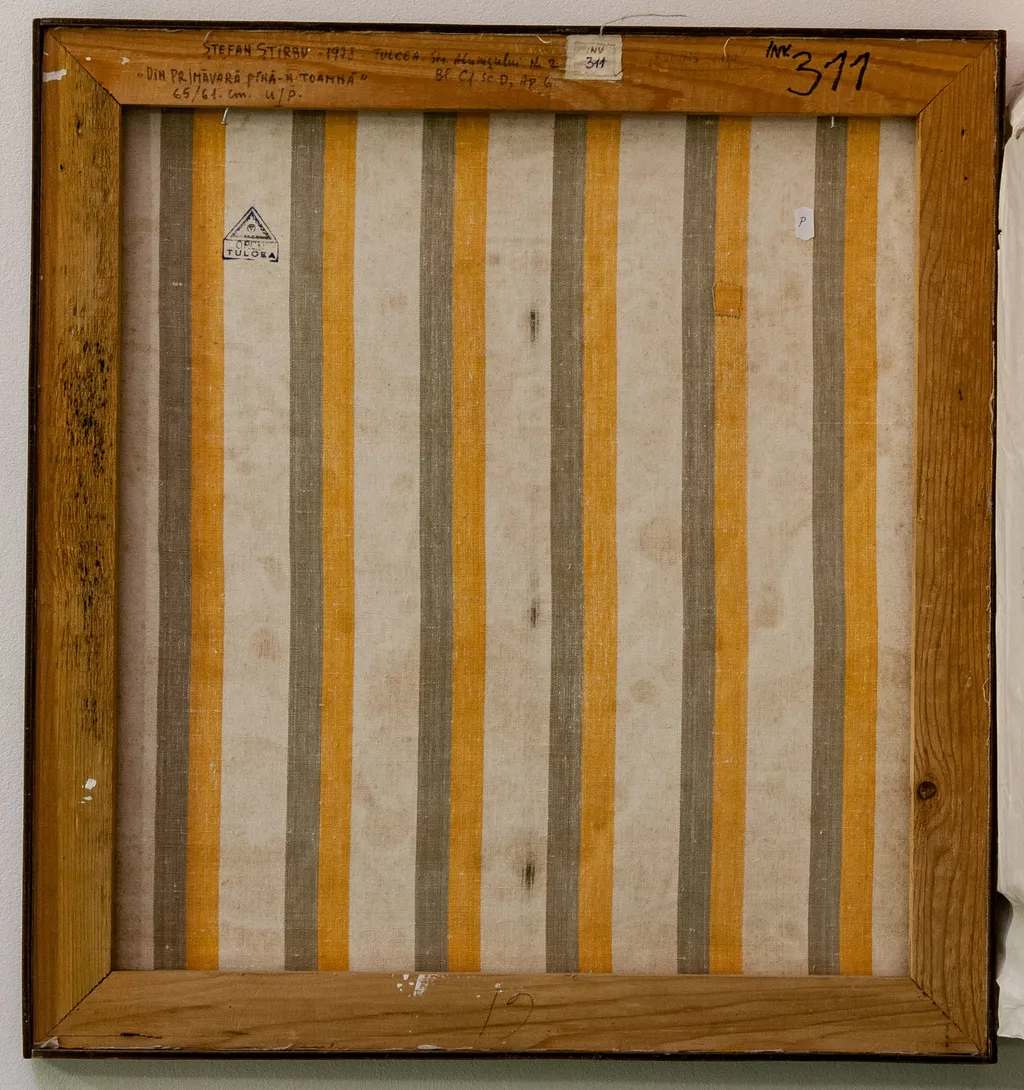
Din primăvară până-n toamnă is an unspecified painting by Știrbu Ștefan. It dates from 1978 and is held in the collection of the Gavrila Simion Eco-Museum Research Institute Tulcea.
About this work
Overview
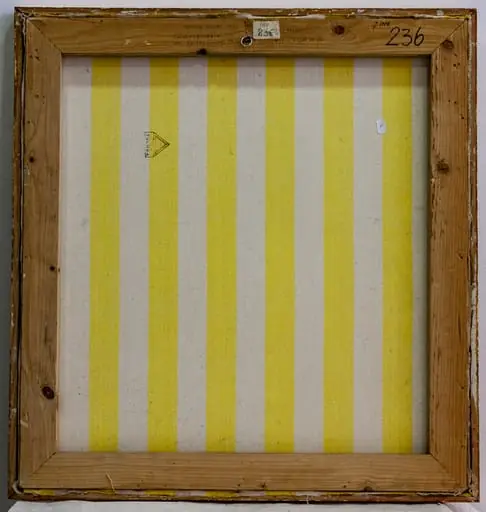
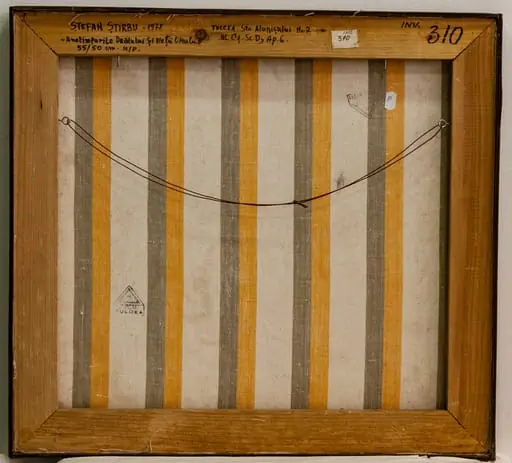
Din primăvară până-n toamnă is a 1978 abstract painting by Știrbu Ștefan, composed of vertical stripes in muted tones of yellow, gray, and pale brown.
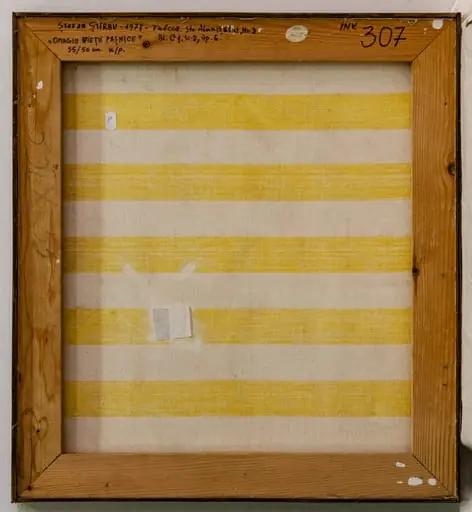
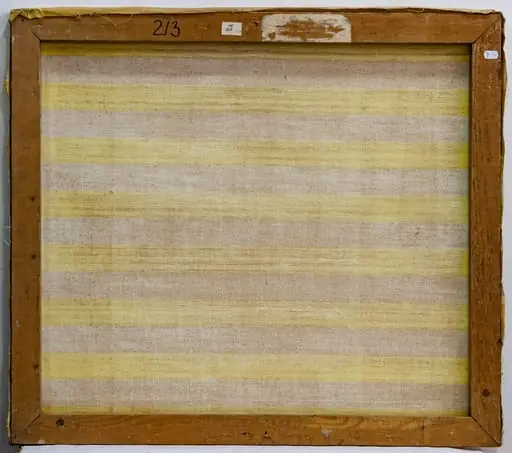
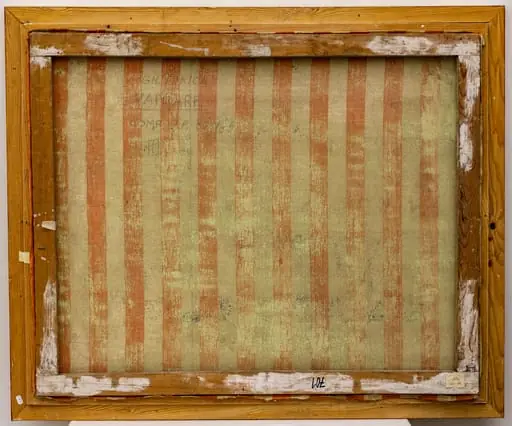
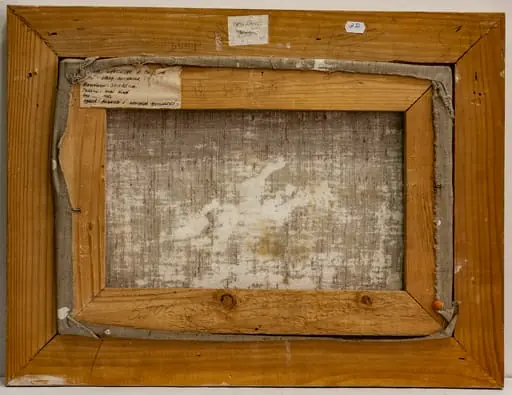
Din primăvară până-n toamnă is a 1978 abstract painting by Știrbu Ștefan, composed of vertical stripes in muted tones of yellow, gray, and pale brown. The work is mounted in a weathered wooden frame bearing inscriptions and labels, suggesting long-term display. Its format is narrow and tall, emphasizing verticality. No representational imagery appears; the composition relies solely on color and structure to convey its intent.
Subject & Meaning
The title references the passage of seasons, yet the painting offers no literal depiction of nature. Instead, the ordered stripes may symbolize time’s progression through subtle chromatic shifts. The absence of figuration invites contemplation of rhythm and duration rather than narrative. The work suggests a meditative observation of natural cycles, expressed through abstraction rather than illustration.
Technique & Style
The stripes are applied with flat, even pigment, avoiding modeling or texture. Edges between bands are irregular, hinting at hand-painted execution rather than mechanical precision. The palette is restrained, favoring low-saturation hues that blend into one another. The wooden frame, aged and marked, functions as an integral part of the piece, reinforcing its quiet, unadorned character.
History & Provenance
Created in 1978, the work entered the collection of the Museum of Ethnography, where it remains. Its inclusion in an ethnographic institution, rather than a fine arts setting, suggests an interest in its cultural or conceptual resonance with folk traditions or vernacular aesthetics. The frame’s labels indicate prior exhibitions or cataloging, though specific acquisition details are not documented.
Context
In late 1970s Romania, abstract art was often constrained by state-sanctioned realism. Știrbu’s work, though non-representational, avoids overt political symbolism, possibly allowing it to pass scrutiny. Its simplicity aligns with broader Eastern European tendencies toward minimalism and material honesty, reflecting a quiet resistance to ideological rigidity through understated form.
Legacy
The painting endures as an example of restrained abstraction in Romanian modernism. It has not been widely reproduced or discussed in international contexts, but within its institutional home, it serves as a quiet testament to the potential of minimal visual language. Its presence in an ethnographic museum underscores its perceived connection to cultural rhythm rather than artistic novelty.
Artist & collection
Artist
A Romanian printmaker, Ștefan Știrbu made linocuts and paintings that blend folklore scenes with everyday life.
Museum
Gavrila Simion Eco-Museum Research Institute Tulcea
Continue through works from the same source collection.