Artwork
Elaine
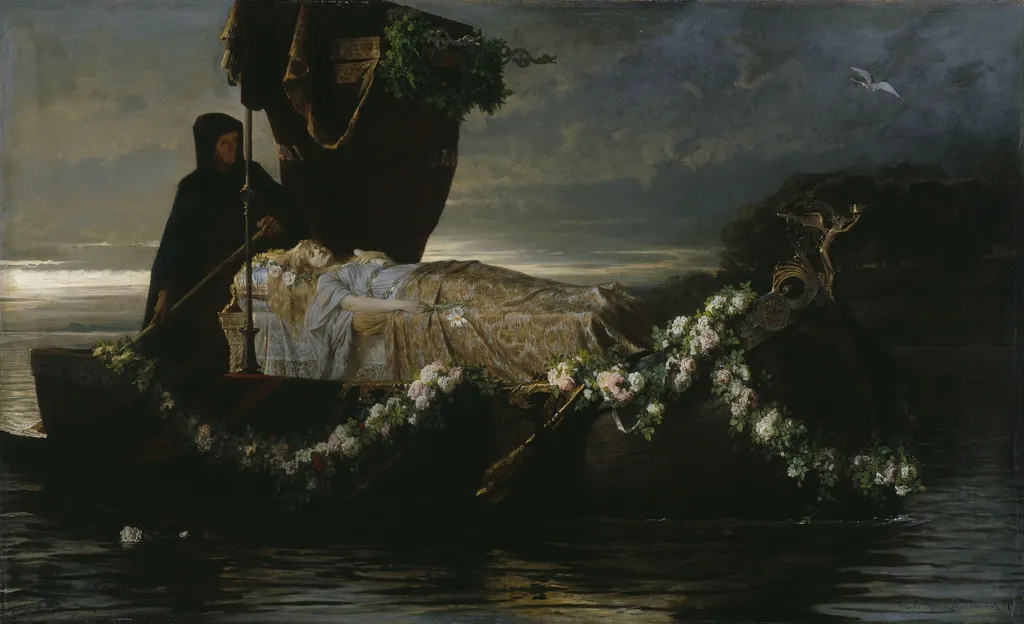
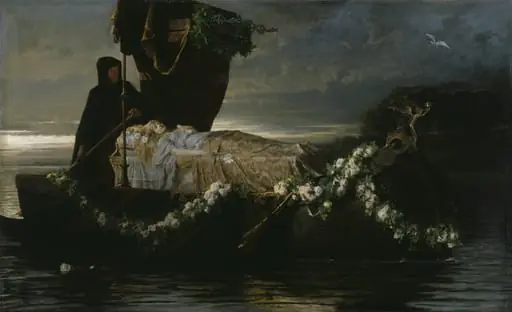
Elaine is an oil painting by the American Impressionist artist Toby E. Rosenthal. It dates from 1874 and is held in the collection of the Art Institute of Chicago.
About this work
Overview
The work reflects his engagement with narrative painting during a period when American artists were absorbing European academic traditions.
Toby Edward Rosenthal, born in Prussia in 1848 and later active in New Haven, Connecticut, completed *Elaine* in 1874 using oil on canvas. The work reflects his engagement with narrative painting during a period when American artists were absorbing European academic traditions. Though sometimes associated with American Impressionism, Rosenthal’s style leans toward romantic realism, emphasizing mood and symbolic detail over optical effects.
Subject & Meaning
The painting portrays a woman reclining on a floral-decked boat, her pale gown and loose blonde hair suggesting vulnerability or stillness. A cloaked figure at the prow, holding a pole, evokes mythic or allegorical undertones—possibly a ferryman guiding the soul. The stillness of the figure, the abundance of flowers, and the dim, hazy sky imply a transition between life and death, drawing loosely on literary traditions of tragic femininity.
Technique & Style
Rosenthal employs chiaroscuro to model the woman’s form against the darkened boat and water, creating a sculptural presence amid the soft, diffused light. The white gown and golden blanket contrast with the muted greens and grays of the surroundings, directing focus to her face. Brushwork is precise in the figure’s features, while the background remains loosely rendered, enhancing the dreamlike atmosphere without overt Impressionist fragmentation.
History & Provenance
Completed in 1874, *Elaine* entered the collection of the Art Institute of Chicago in the early 20th century. Rosenthal, who trained in Munich and exhibited widely in the United States, gained recognition for his narrative scenes and portraits. The painting’s acquisition by the museum reflects its standing among late 19th-century American academic works, though it never achieved widespread public prominence.
Context
In the 1870s, American artists often turned to literary and mythological themes to elevate genre painting. Rosenthal’s depiction of Elaine likely references Tennyson’s *Idylls of the King*, in which the character Elaine dies of unrequited love and is set adrift. This literary connection was common among painters seeking moral or emotional depth, aligning the work with broader transatlantic romantic traditions.
Legacy
Though Rosenthal’s reputation faded after his death in 1903, *Elaine* remains a representative example of narrative painting in late 19th-century America. It illustrates how academic training and literary symbolism shaped visual storytelling before the rise of modernism. The painting is studied today for its synthesis of European technique and American thematic sensibility, rather than as a groundbreaking innovation.
Own this work as a print
Artist & collection
Artist
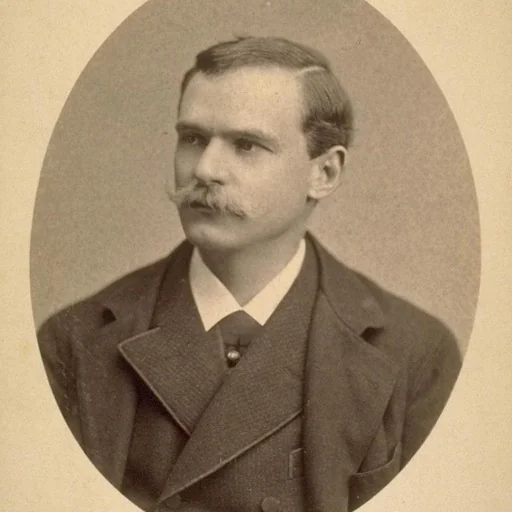
Tobias Edward Rosenthal, known as Toby (15 March 1848 in Strasburg in Westpreußen, Prussia – 23 December 1917 in Munich) was a German-American genre and portrait painter. He generally claimed to have been born in New Haven, Connecticut.

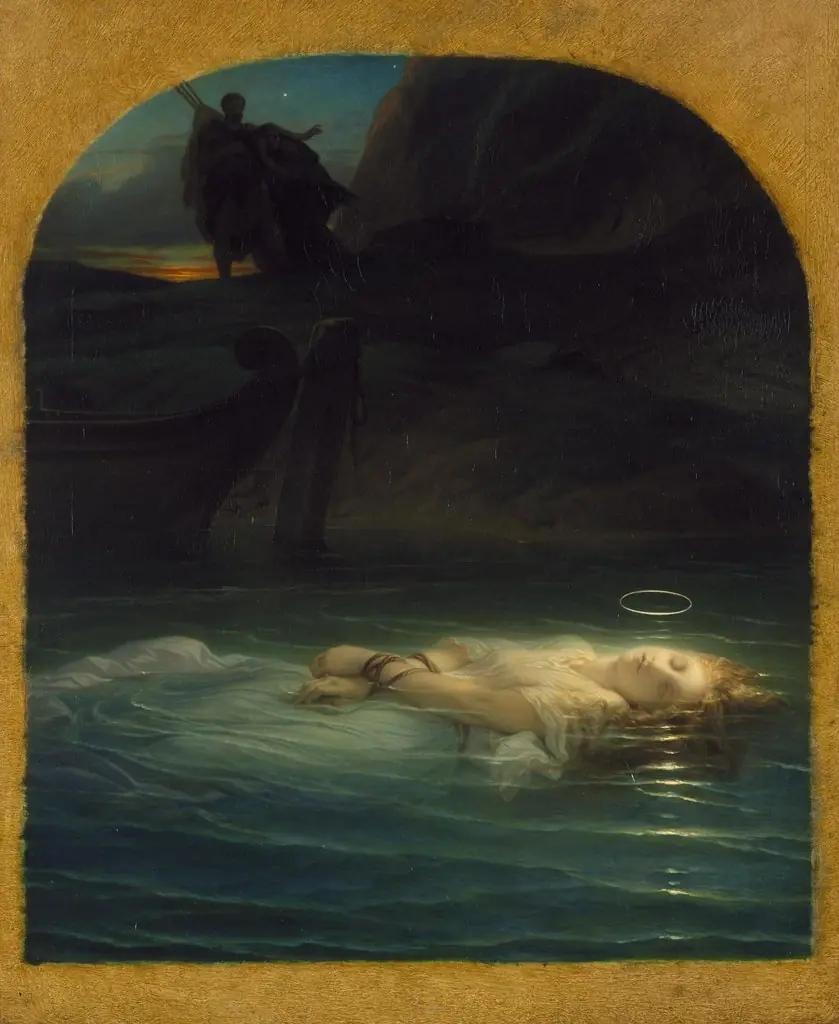 Christian Martyr Drowned in the Tiber During the Reign of Diocletian
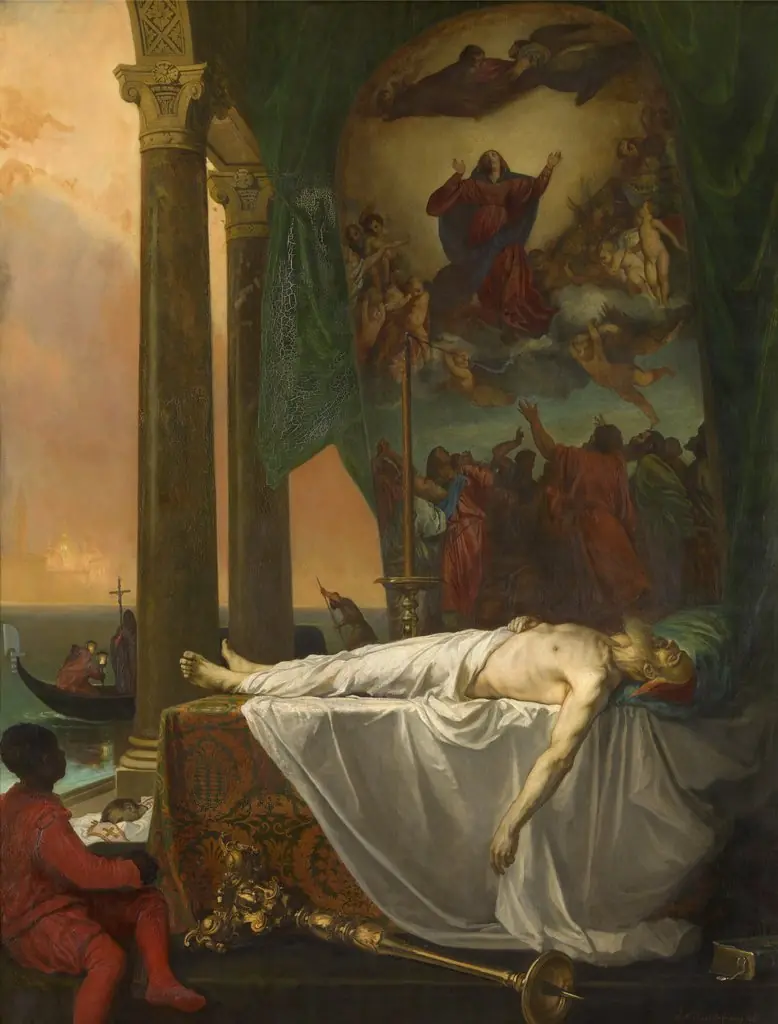 Titian Lying in State at the Palazzo Barbarigo
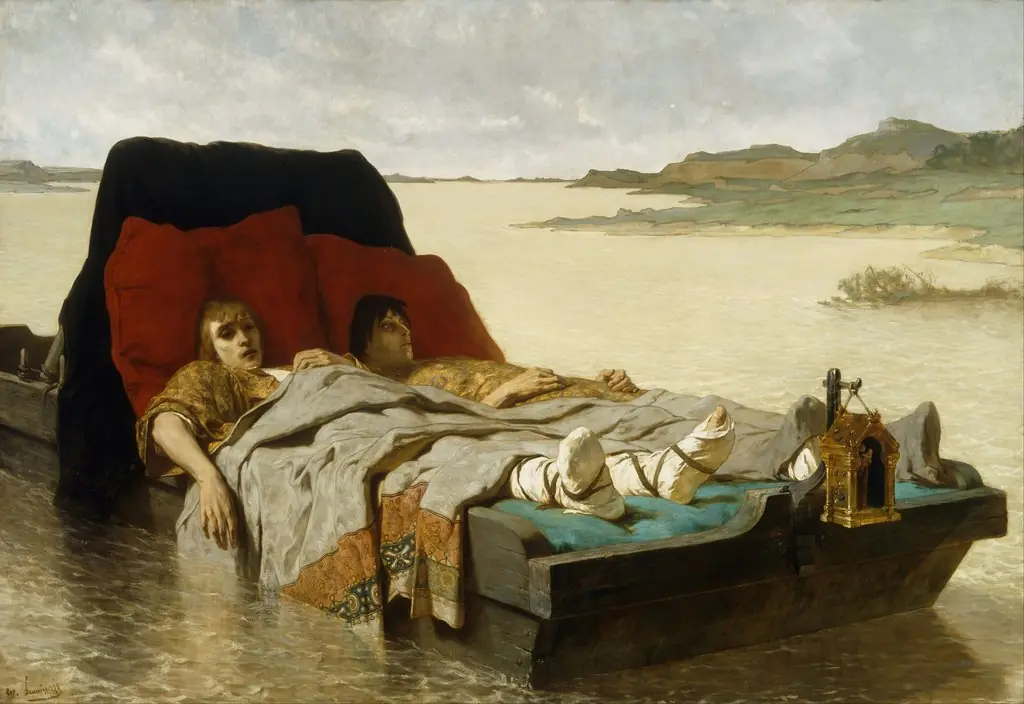 The sons of Clovis II
 Aleksander Sobieski on his deathbed in Rome in 1714
 Lost Illusions
 El cadáver de Álvarez de Castro
 The Mourning of László Hunyadi
 Los amantes de Teruel
 Muerte del príncipe de Viana
 The Discovery of the Corpse of King Louis II
 Doña Juana la loca