Artwork
Untitled
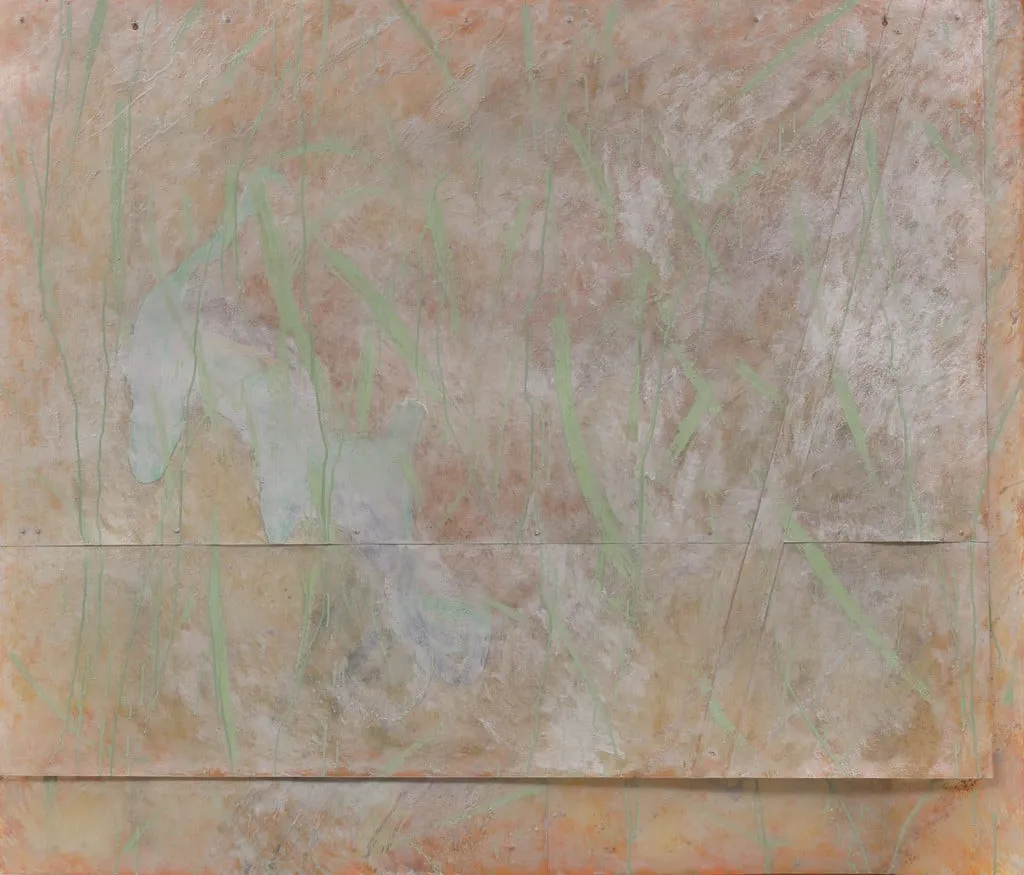
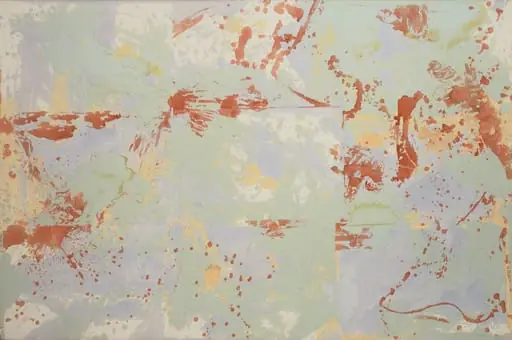
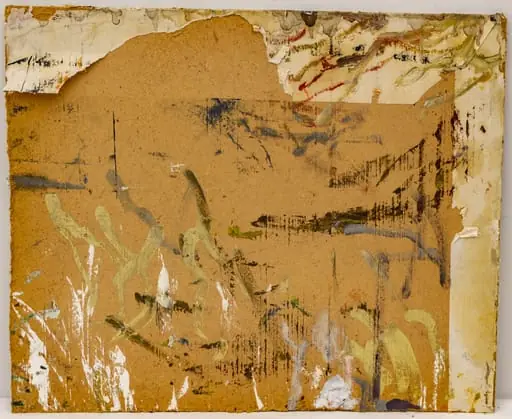
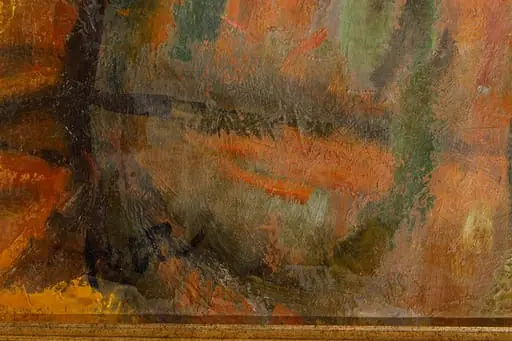
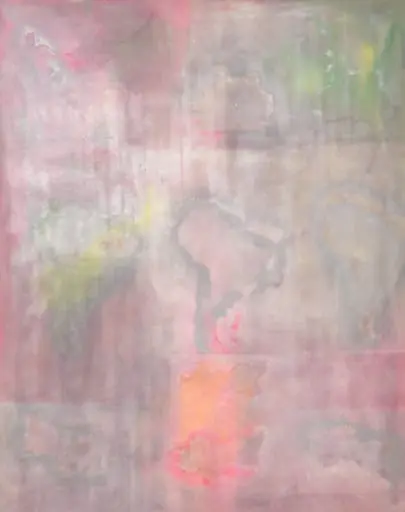
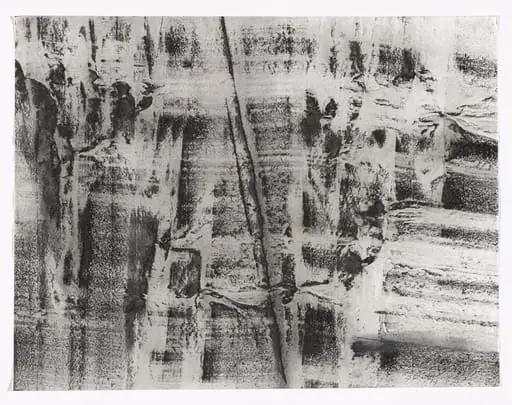
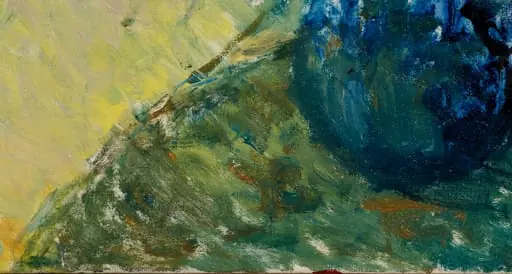
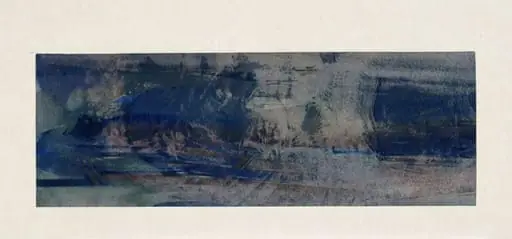
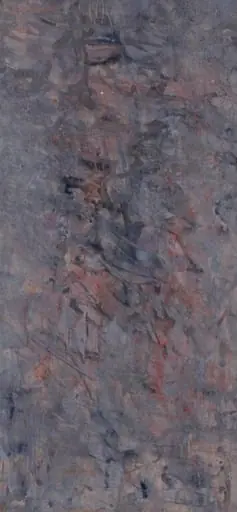
Untitled is a glass painting by the Contemporary Abstract artist Tom Holland. It dates from 1969 and is held in the collection of the Museum of Modern Art.
About this work
Overview
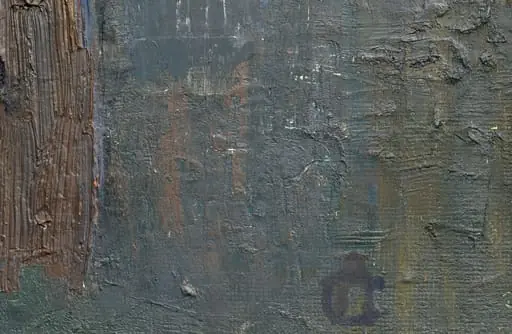
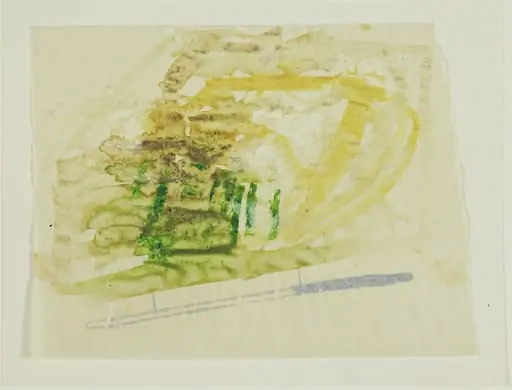
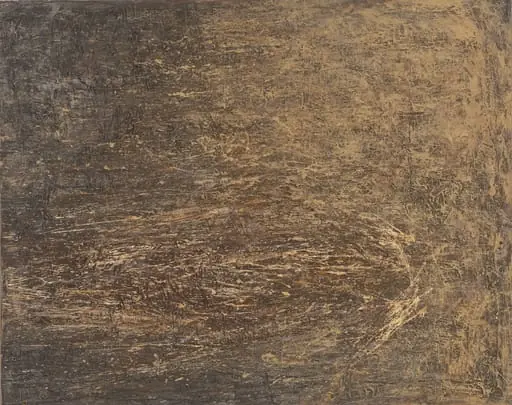
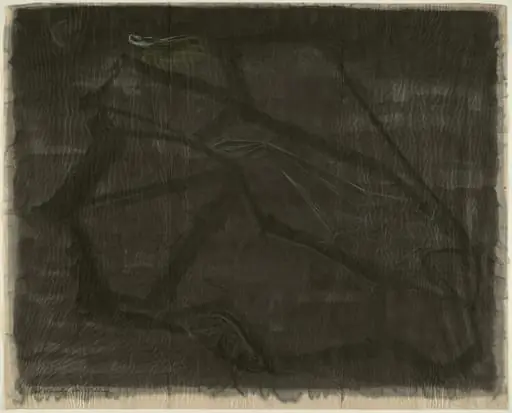
Created in 1969, this work by American artist Tom Holland combines epoxy resin and fiberglass with copper rivets to form a textured, non-traditional surface.
Created in 1969, this work by American artist Tom Holland combines epoxy resin and fiberglass with copper rivets to form a textured, non-traditional surface. Though often categorized as a painting, its physical depth and materiality align it more closely with sculptural practice. The piece resists conventional representation, instead emphasizing the interplay of industrial substances and their inherent irregularities.
Subject & Meaning
The composition suggests隐约的 forms—possibly animal-like—that emerge from a layered, earth-toned ground. These shapes are not clearly defined but hinted at through shifts in texture and tone. The vertical green lines, resembling fissures or stalks, introduce a sense of fragmentation or growth. The work invites contemplation of natural and manufactured coexistence rather than conveying a fixed narrative.
Technique & Style
Holland applied epoxy resin over fiberglass to create a hardened, uneven surface, allowing the material’s natural imperfections to become part of the aesthetic. Copper rivets are embedded at intervals, adding localized metallic contrast. The process prioritizes material behavior over precise control, resulting in a tactile, irregular field that challenges distinctions between painting and sculpture.
History & Provenance
The work entered The Museum of Modern Art’s collection shortly after its creation, reflecting institutional interest in post-1960s material experimentation. Holland’s use of industrial media aligned with broader artistic shifts away from traditional media toward found and synthetic substances. Its acquisition underscores its significance within the era’s evolving definitions of abstract art.
Context
Emerging during a period when artists like Robert Morris and Eva Hesse redefined sculpture through unconventional materials, Holland’s work shares affinities with Process Art and Arte Povera. His focus on fiberglass, resin, and metal reflects a wider interest in the physical properties of industrial byproducts and their potential to convey organic or geological qualities.
Legacy
Holland’s approach influenced later generations of artists who prioritized material authenticity over formal polish. This work remains a quiet example of how industrial substances, when treated with sensitivity, can evoke natural phenomena without direct imitation. Its presence in MoMA’s collection affirms its role in expanding the boundaries of postwar American abstraction.
Artist & collection
Artist
Tom Holland (born June 15, 1936) is an American visual artist. Holland is known for creating a style of art that may use fiberglass (or fibreglass), aluminum (or aluminium), epoxy paint, plywood, beads, oil paint,…