Artwork
Landscape with a Vine
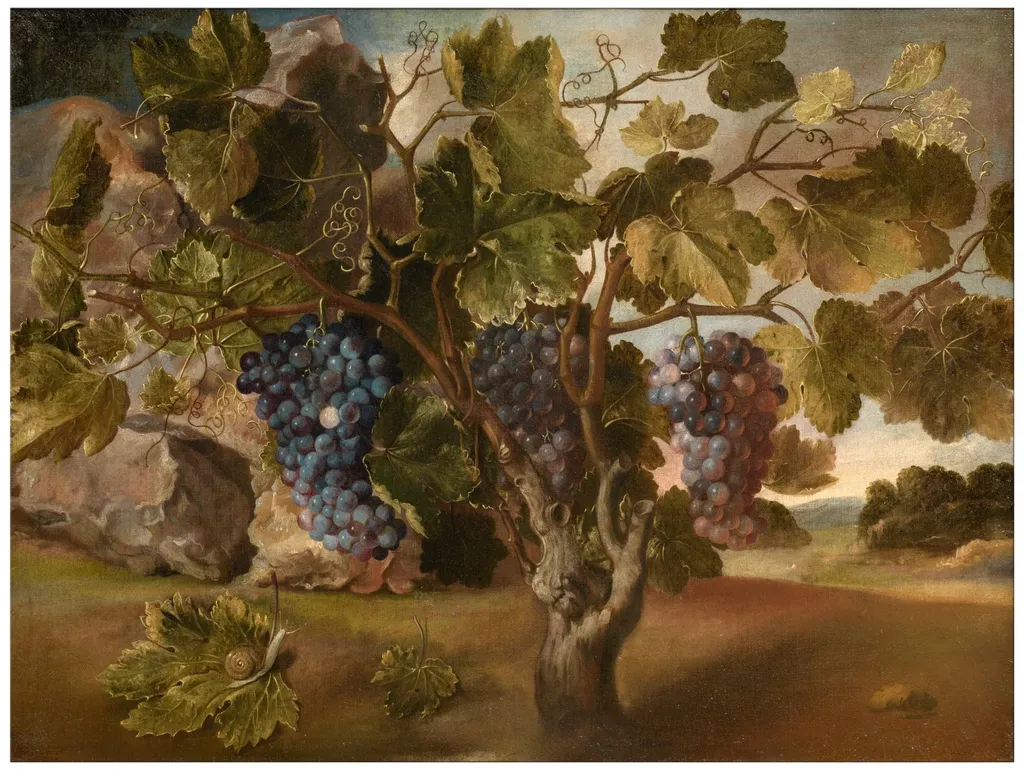
Landscape with a Vine is an oil painting by the Early Baroque Italian artist Tomás Yepes. It dates from 1645 and is held in the collection of the Museo del Prado.
About this work
Overview
Though Yepes is best known for still lifes of pantry goods, this piece reflects his lesser-known engagement with landscape themes.
Painted in 1645 by Tomás Yepes, *Landscape with a Vine* is an oil-on-canvas work from the Spanish Baroque period. Though Yepes is best known for still lifes of pantry goods, this piece reflects his lesser-known engagement with landscape themes. It depicts a single vine entwined against a muted backdrop, blending natural observation with quiet composition. The painting is part of the Museo del Prado’s collection, representing a niche within 17th-century Spanish painting that merges domestic intimacy with rural scenery.
Subject & Meaning
The painting centers on a mature grapevine, its twisted branches heavy with clusters of dark fruit. The vine, neither idealized nor symbolic, is rendered as a living, weathered organism. Subtle signs of seasonal change—yellowing leaves, dew-like highlights on grapes—suggest transience without overt allegory. The background hills and trees offer no narrative, only context. The work invites contemplation of growth, decay, and the quiet rhythms of agricultural life, grounded in the Valencian countryside where Yepes lived and worked.
Technique & Style
Yepes employed oil paint with careful attention to surface texture and light. The grapes are rendered with high contrast, their glossy surfaces catching ambient light to suggest moisture and weight. The vine’s bark is scraped and layered to emphasize roughness, while the background sky is softly blurred, creating atmospheric depth. Though influenced by Italian chiaroscuro, the handling is restrained, avoiding dramatic contrasts. The palette favors earth tones and muted greens, reinforcing a sense of naturalism over theatricality.
History & Provenance
Created in Valencia during the mid-17th century, the painting entered the Spanish royal collection before being transferred to the Museo del Prado in the 19th century. Its attribution to Yepes is supported by stylistic parallels with his known still lifes and other landscape works. Unlike many Baroque paintings of the era, it was never widely reproduced or celebrated in contemporary writings, suggesting it was appreciated locally rather than as a public statement. Its survival reflects the museum’s broader effort to preserve regional Spanish art.
Context
In 17th-century Spain, landscape painting was secondary to religious and courtly subjects. Yet in Valencia, artists like Yepes cultivated a quiet tradition of observing the natural world around them. This work aligns with a regional tendency to depict humble, cultivated environments—gardens, orchards, vineyards—as worthy of artistic attention. It reflects a cultural moment when local identity and daily life began to find expression beyond ecclesiastical or aristocratic themes.
Legacy
Though not widely studied outside Spain, *Landscape with a Vine* exemplifies the understated realism that characterized many provincial Baroque painters. It stands as evidence of an artistic practice focused on observation rather than grandeur. Today, it contributes to scholarly understanding of how non-urban subjects were treated in Spanish art, offering a counterpoint to the more dominant narratives of the period. Its preservation ensures continued access to a quieter, more personal strand of Baroque expression.
Artist & collection
Artist
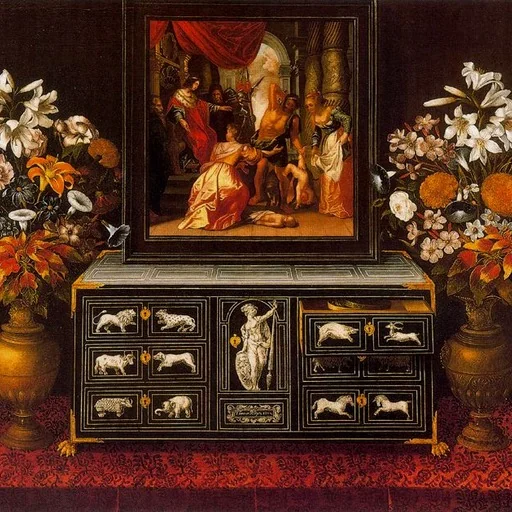
Tomás de Yepes or Hiepes (also known as Thomas de Yepes or Hiepes; 1595 or 1600 – 16 June 1674) was a Spanish Baroque painter in the Kingdom of Valencia.

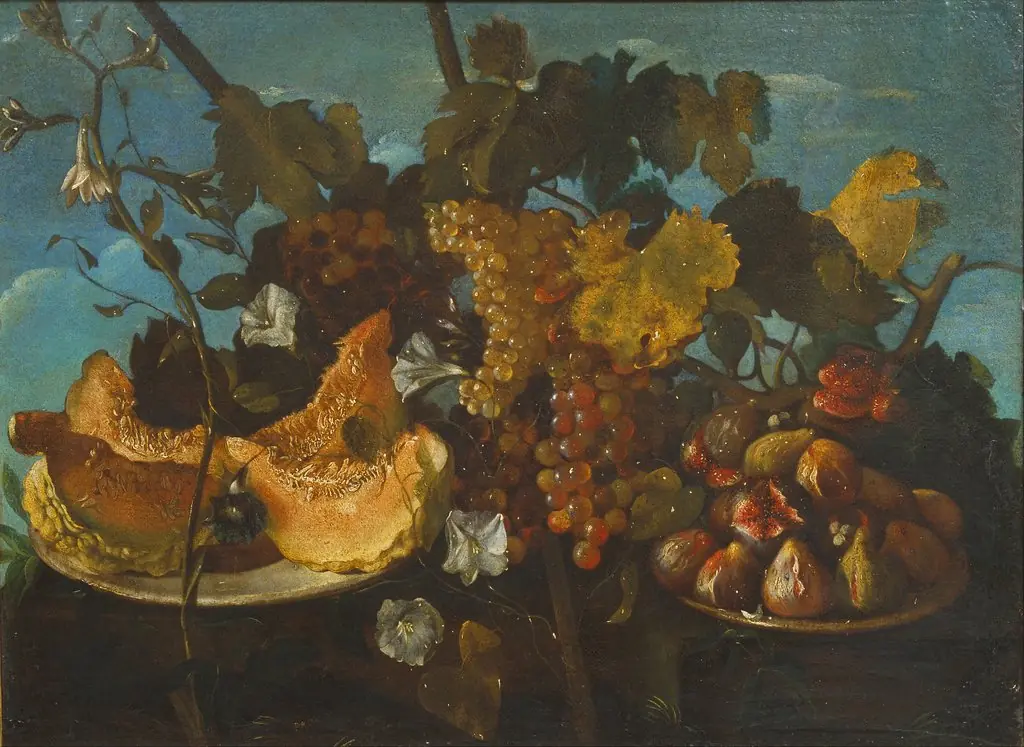 Still Life with Grapes, Figs and Pumpkin
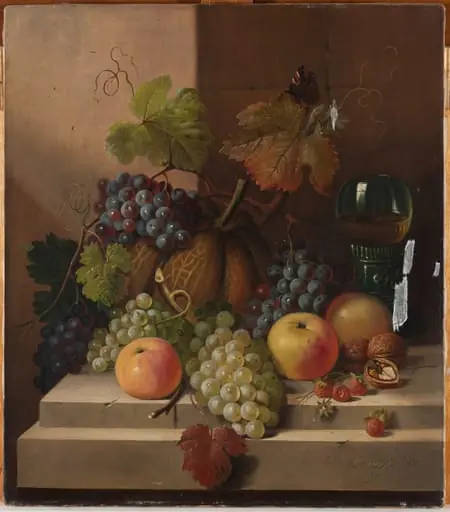 Früchtestillleben
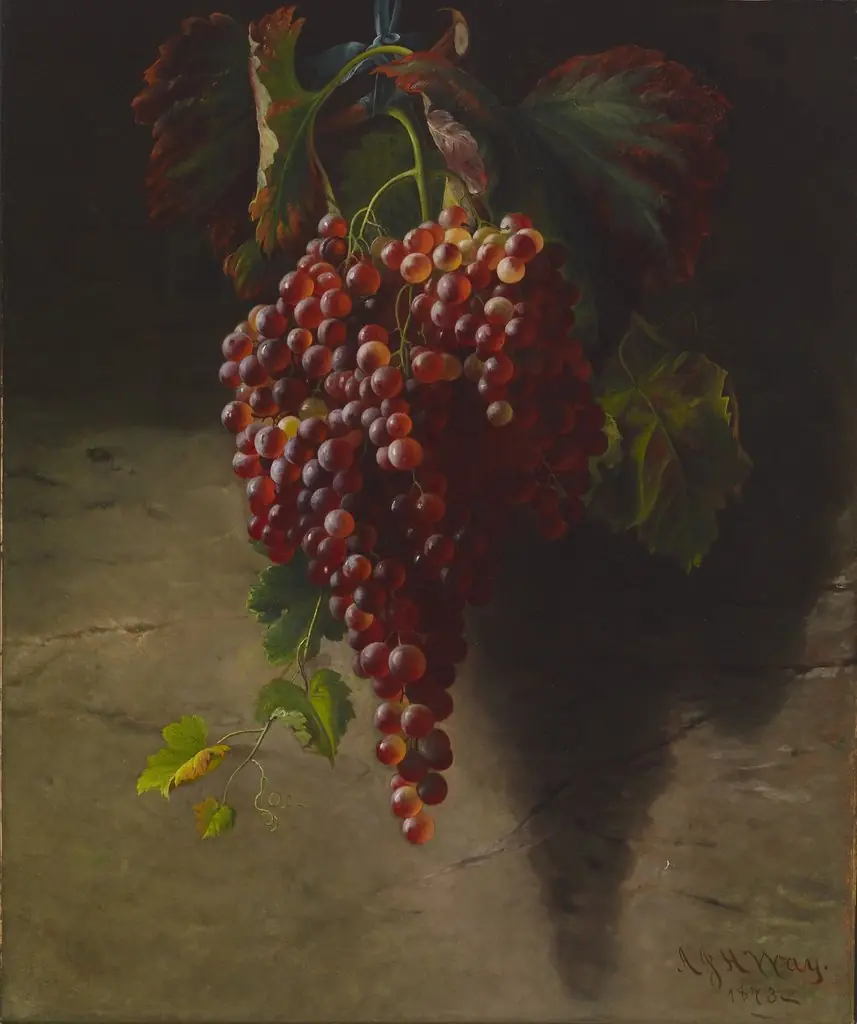 Bunch of Grapes
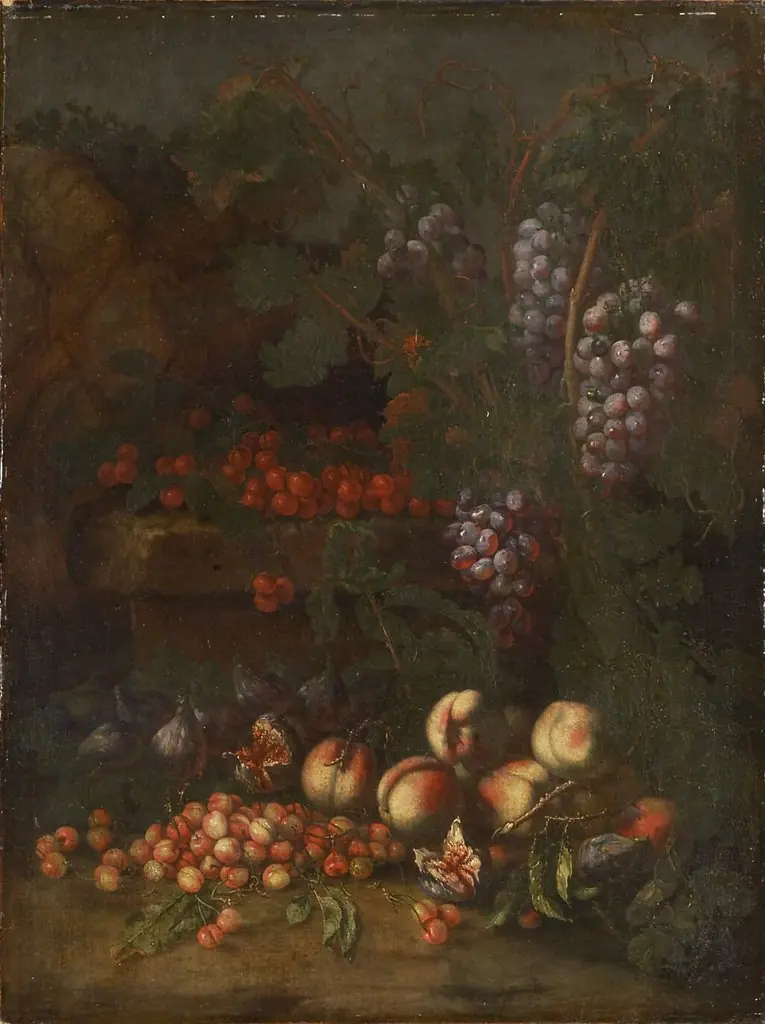 Früchtestilleben
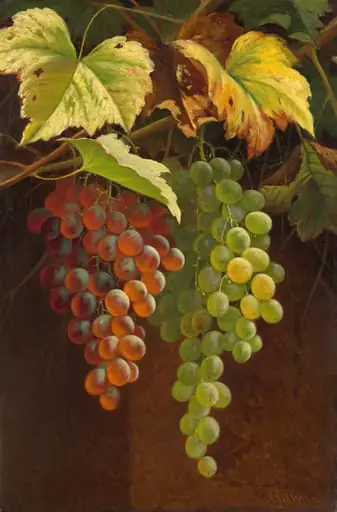 Two Bunches of Grapes
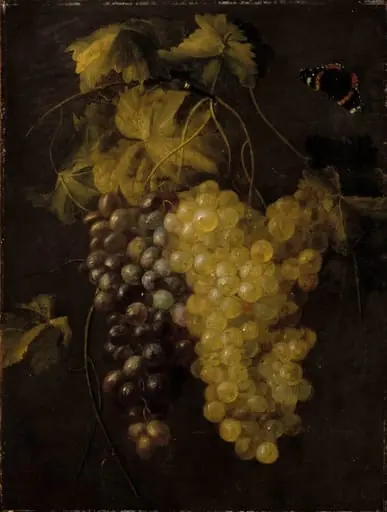 Kaksi rypäleterttua
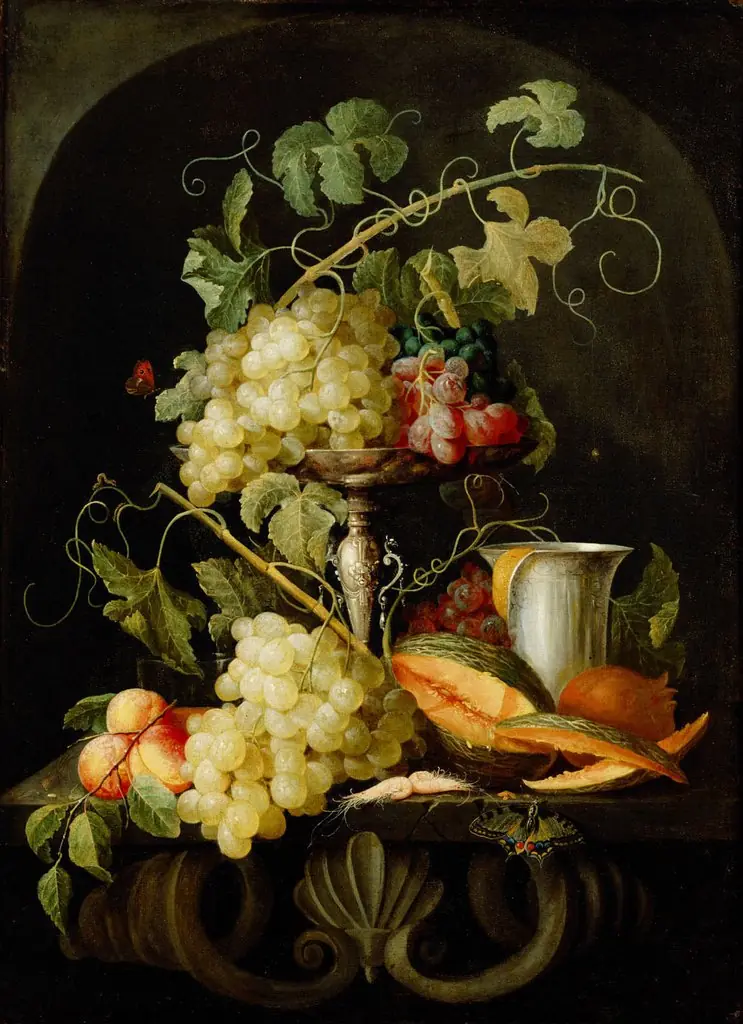 Still life with fruit
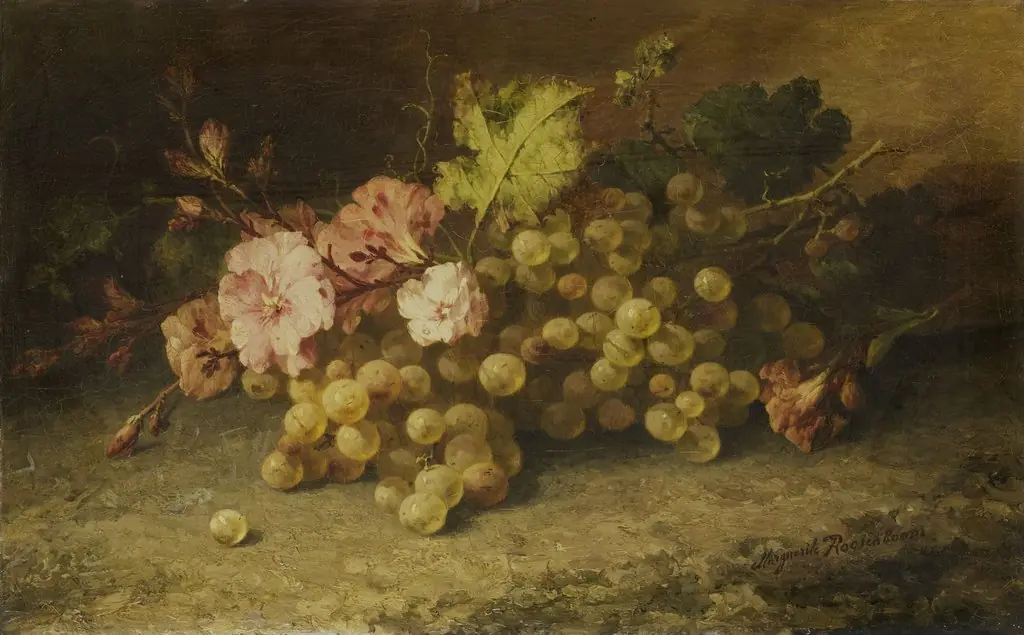 Still life with grapes
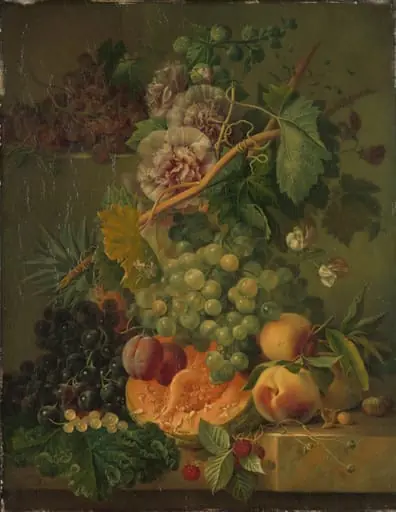 Still Life with Flowers and Fruits
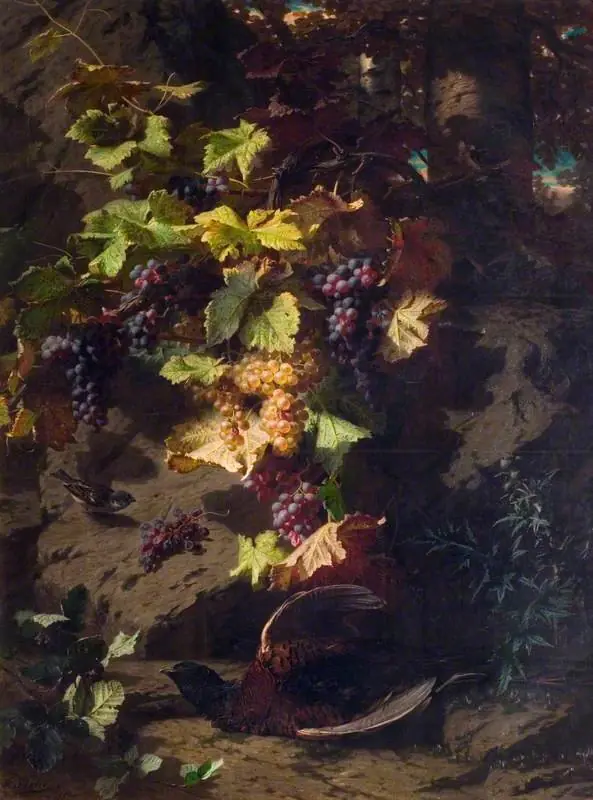 Fruit and Game
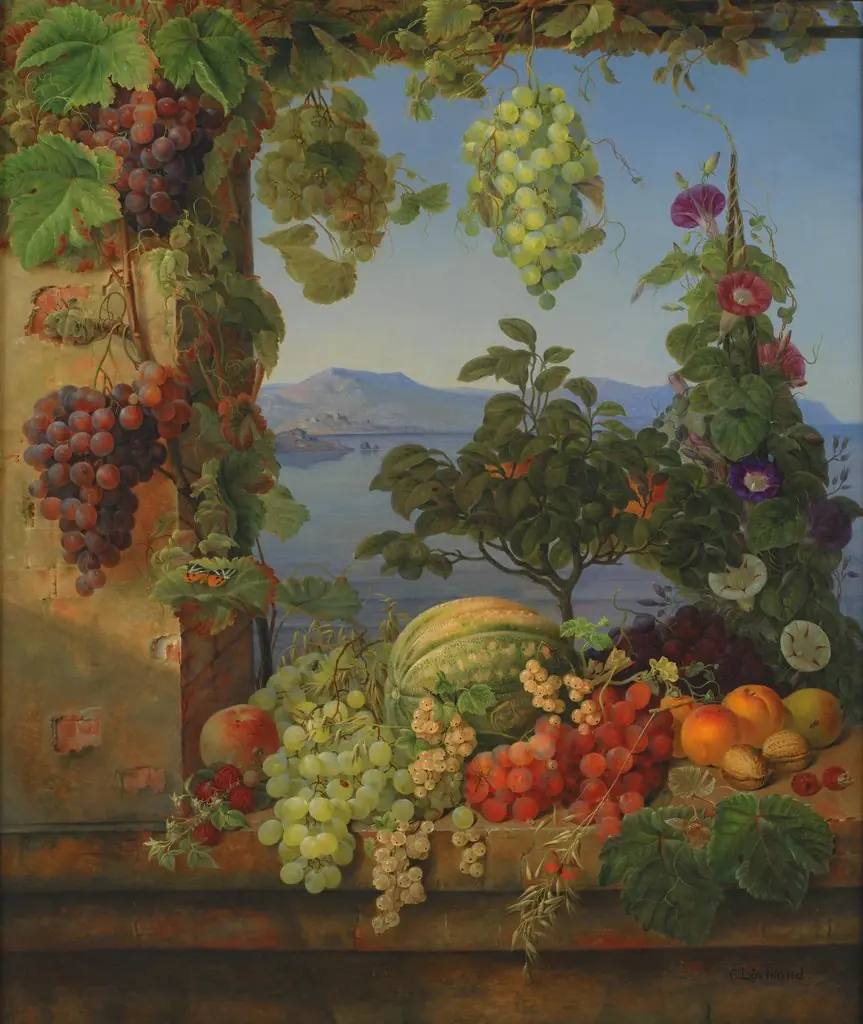 Frugter i et italiensk landskab
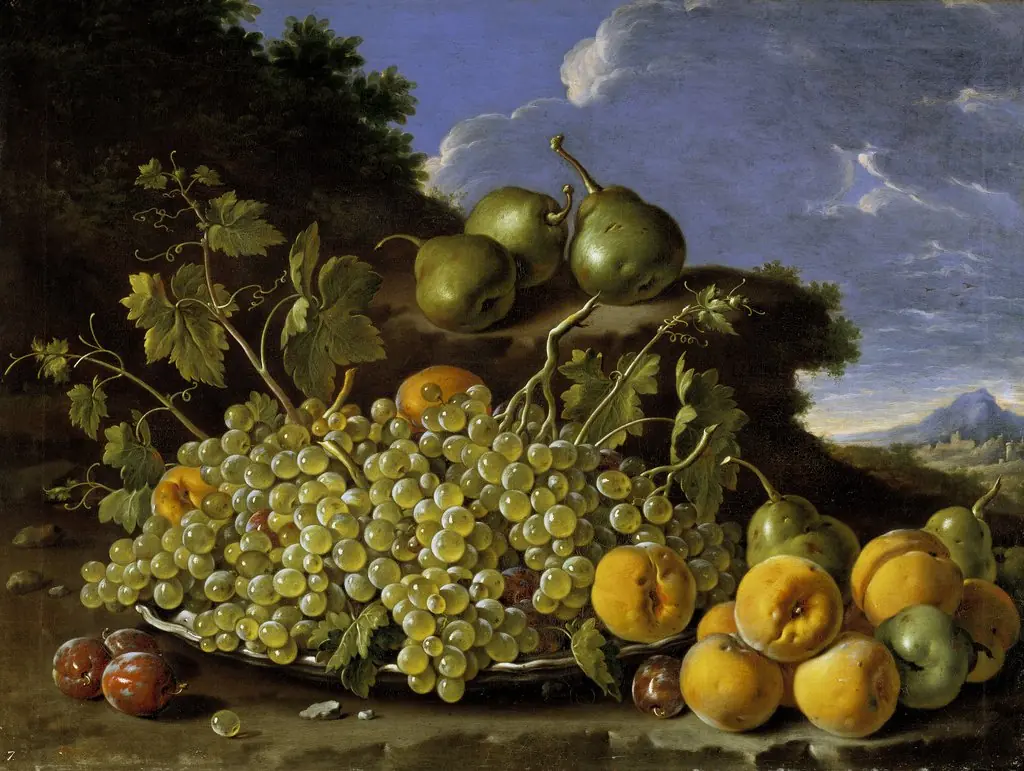 Still Life with Plate of Grapes Peaches Pears and Prunes in a Landscape