Artwork
Lagăr de prizonieri (Vânatul păduchilor)
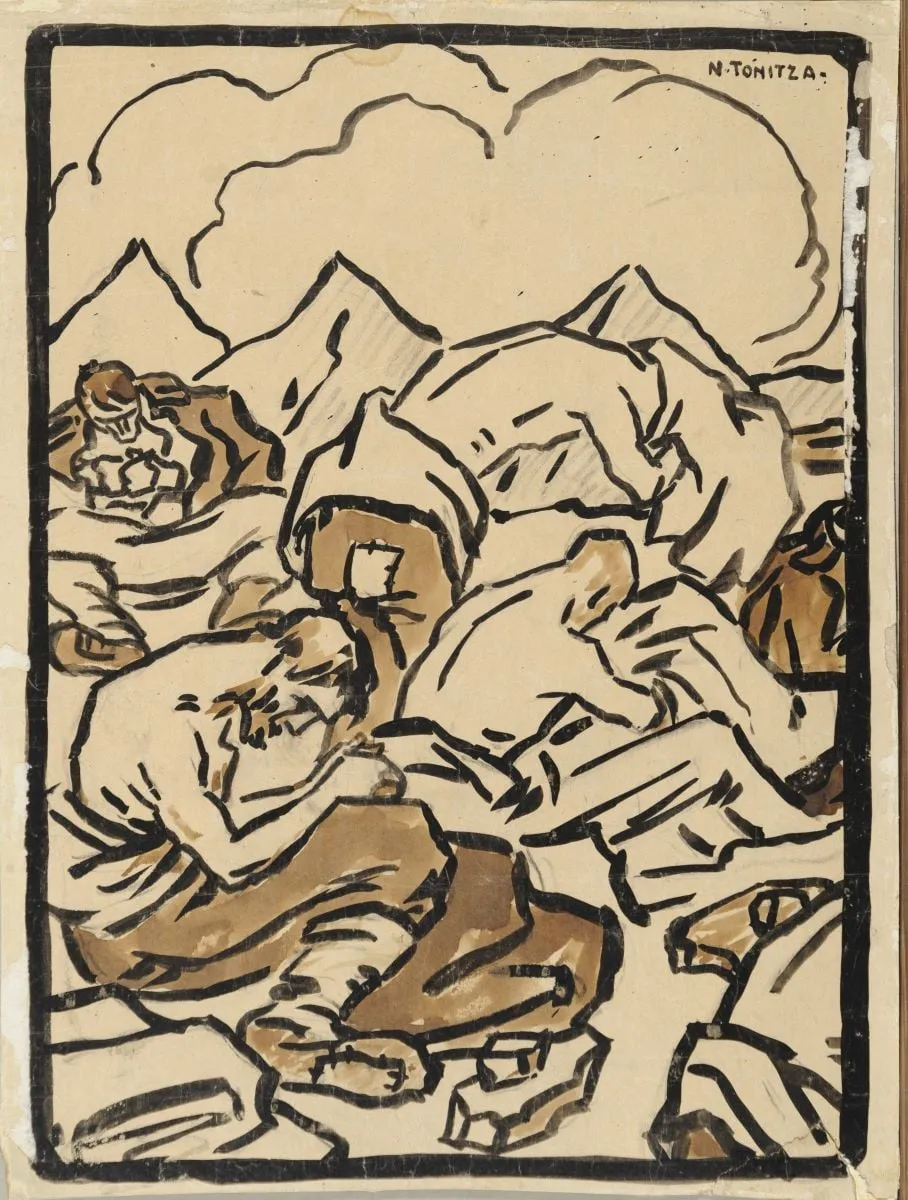
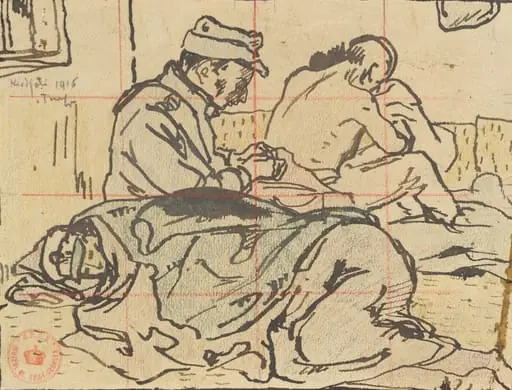
Lagăr de prizonieri (Vânatul păduchilor) is a drawing by Nicolae Tonitza. It dates from 1917 and is held in the collection of the National Museum of Art of Romania.
About this work
Overview
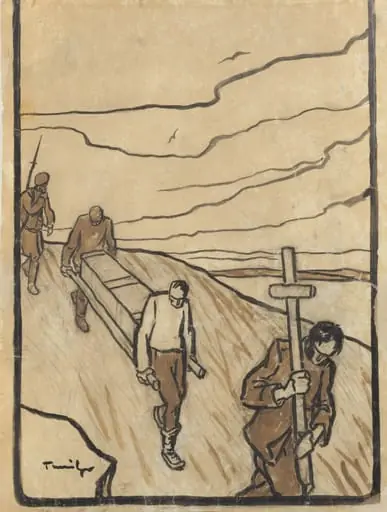
Nicolae Tonitza’s drawing Lagăr de prizonieri (Vânatul păduchilor), executed around 1917, presents a densely packed assemblage of figures. The composition is dominated by a tangled mass of bodies whose faces are indistinct, set against a muted backdrop of faint clouds and silhouetted structures.
Subject & Meaning
The work captures a scene of confinement, suggesting a prison camp or similar enclosure where individuals are forced into close proximity. The anonymity of the figures, rendered without distinct features, emphasizes collective suffering over personal identity.
Technique & Style
Tonitza employs heavy, dark contour lines to define forms, creating a sense of immediacy and tension. The drawing relies on a limited palette of browns and grays, allowing the paper’s natural tone to emerge in lighter areas. Overlapping strokes and cross‑hatching generate texture and depth within the cramped space.
History & Provenance
Created during the tumultuous period of World War I, the piece reflects the artist’s response to contemporary social upheavals. Its exact ownership trail remains undocumented, but it is recognized as part of Tonitza’s early 20th‑century oeuvre.
Artist & collection

Artist
Nicolae Tonitza was a Romanian painter, engraver, lithographer, journalist and art critic. Drawing inspiration from Post-Impressionism and Expressionism, he had a major role in introducing modernist guidelines to local art.

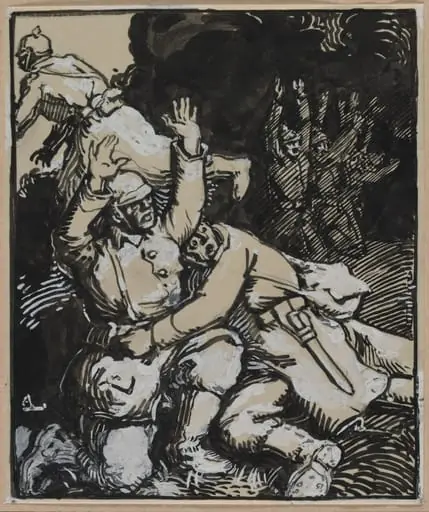 Dans une tranchée, des soldats allemands se rendent
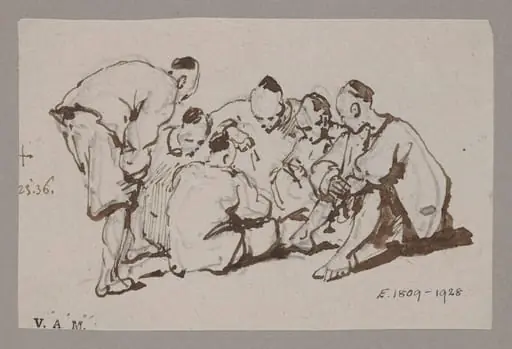 A group of six Chinese figures
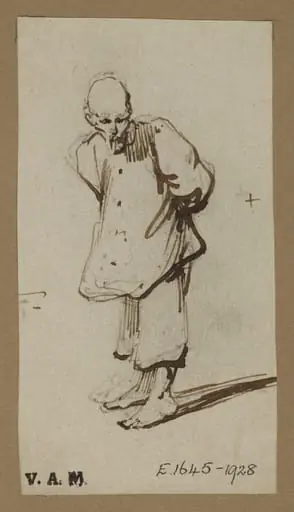 A stooping Chinese man
 Untitled
 Turcoaice șezând
 Soldați în lagărul bulgăresc de la Kîrdjali
 The Dismissal of Hagar
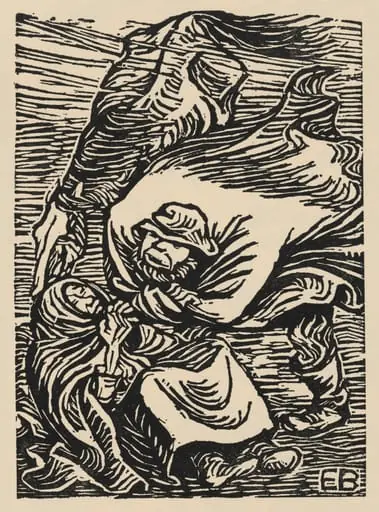 Gruppe im Sturm (Couple in a Storm) from Deutsche Graphiker der Gegenwart (German Printmakers of Our Time)
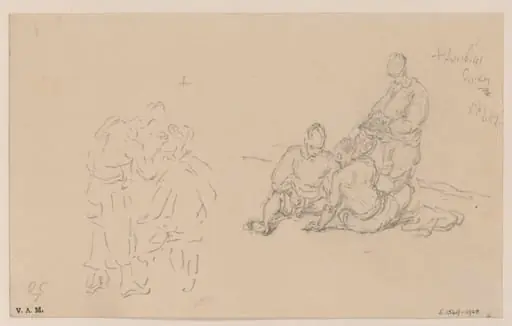 Two sketches of groups of Chinese figures
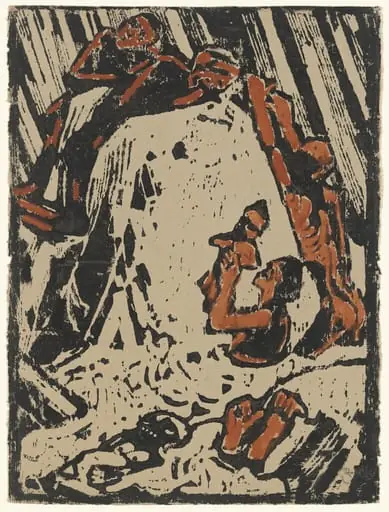 Flood (Sintflut)
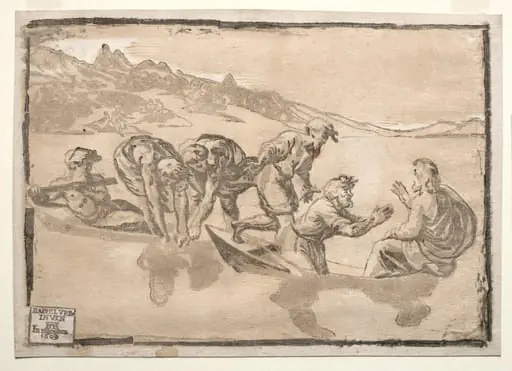 The Miraculous Draught of Fishes
 Înmormântarea unui prizonier în Bulgaria