Artwork
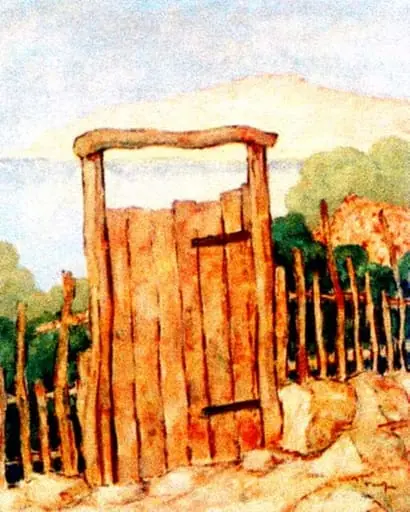
Poartă brâncovenească
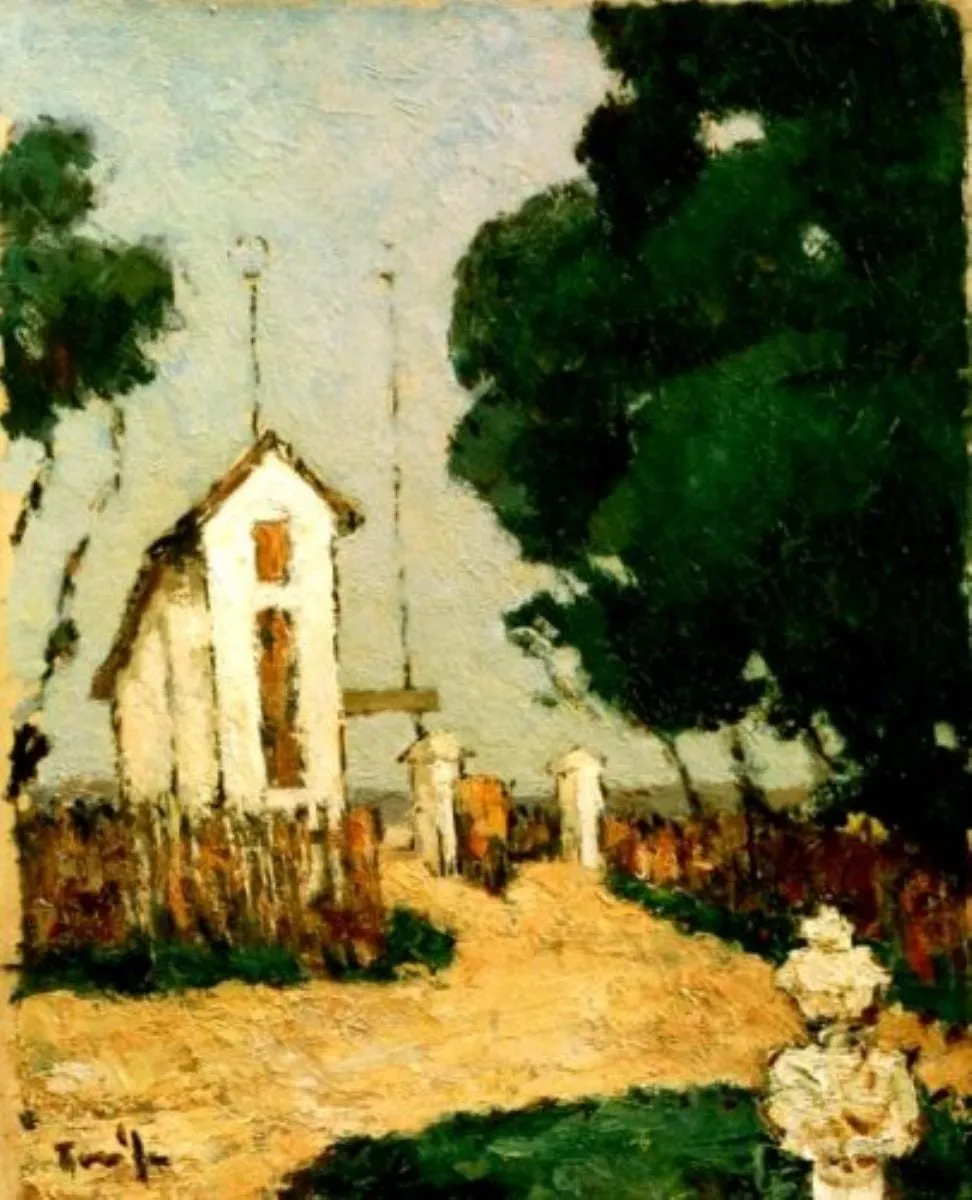
Poartă brâncovenească is an unspecified painting by Nicolae Tonitza. It dates from 1925 and is held in the collection of the National Museum of Art of Romania.
About this work
Overview
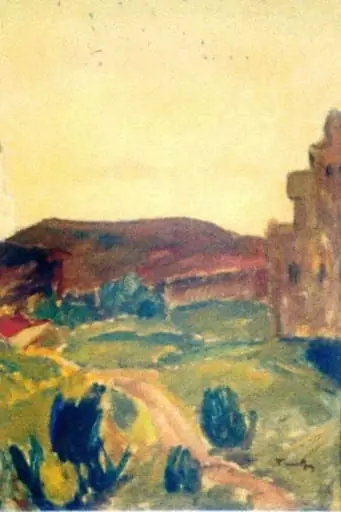
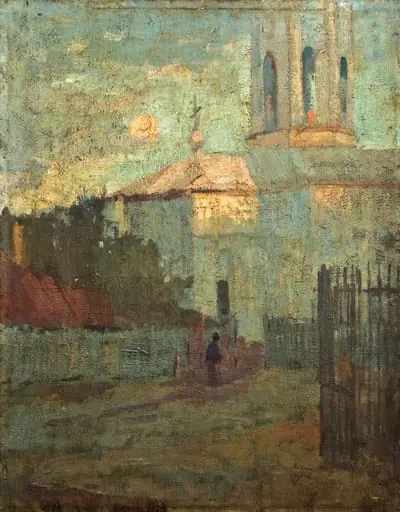
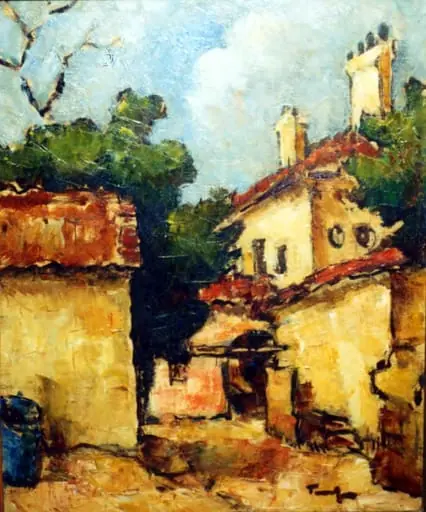
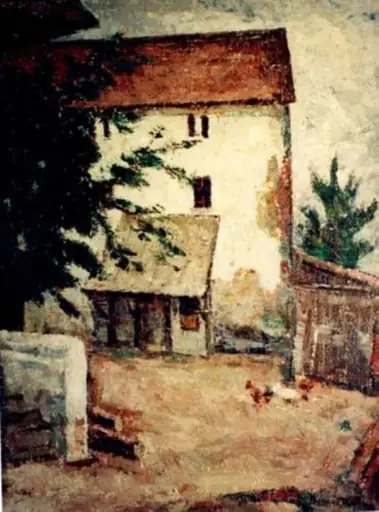
Nicolae Tonitza’s 1925 canvas entitled *Poartă brâncovenească* depicts a solitary white structure with a modest wooden roof, set against a barren lane. The building’s plain walls feature a single modest window and a door, while a low stick fence hints at neighboring dwellings beyond. A pale sky stretches overhead, and a stand of dark trees gathers on the right, framing the scene.
Subject & Meaning
The work captures a moment of rural stillness, focusing on an unadorned gatehouse that serves as a threshold between cultivated land and the surrounding wilderness. By isolating the modest architecture amid a dry, patchy ground, Tonitza emphasizes the quiet endurance of everyday structures within a landscape that is both harsh and tranquil.
Technique & Style
The approach does not align with any dominant avant‑garde movement, instead presenting a straightforward, observational rendering of a provincial scene.
Tonitza employs brisk, sketch‑like brushwork that gives the surface a textured, almost impasto quality without heavy layering. The palette is restrained to warm earth tones—soft whites, muted browns, and subdued greens—conveying a sense of subdued warmth. The approach does not align with any dominant avant‑garde movement, instead presenting a straightforward, observational rendering of a provincial scene.
Context
Created in the interwar period, the painting reflects Tonitza’s interest in Romanian countryside motifs that he explored alongside his more figurative work. The modest composition aligns with a broader national tendency to document local architecture and landscape, offering a visual record of regional vernacular forms during a time of social and cultural transition.
Artist & collection

Artist
Nicolae Tonitza was a Romanian painter, engraver, lithographer, journalist and art critic. Drawing inspiration from Post-Impressionism and Expressionism, he had a major role in introducing modernist guidelines to local art.