Artwork
Prințesa
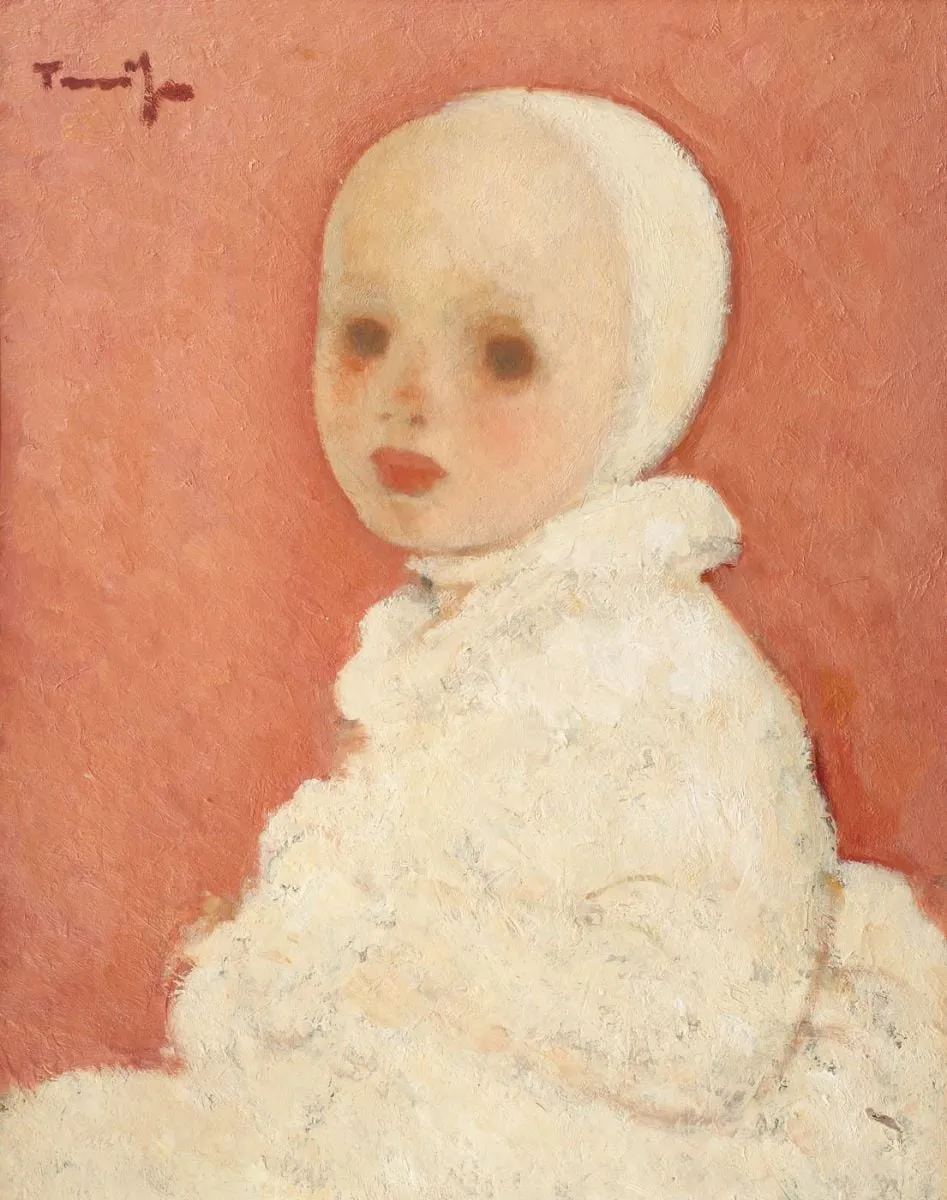
Prințesa is a print by Nicolae Tonitza. It dates from 1923 and is held in the collection of the Colecție particulară - București.
About this work
Overview
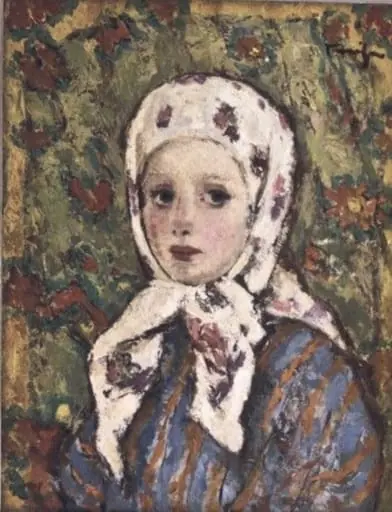
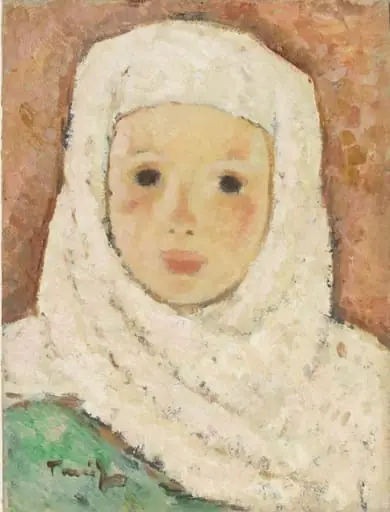
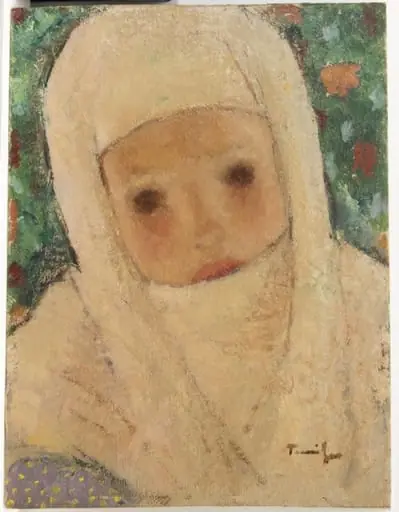
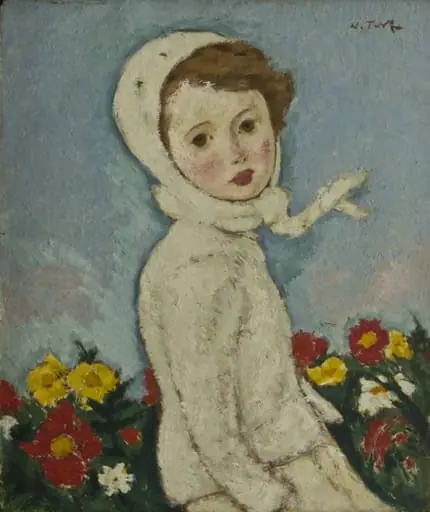
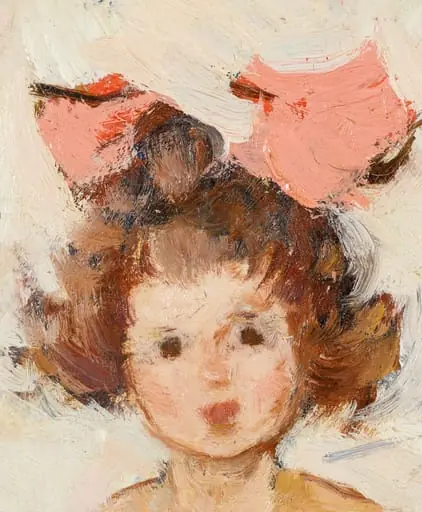
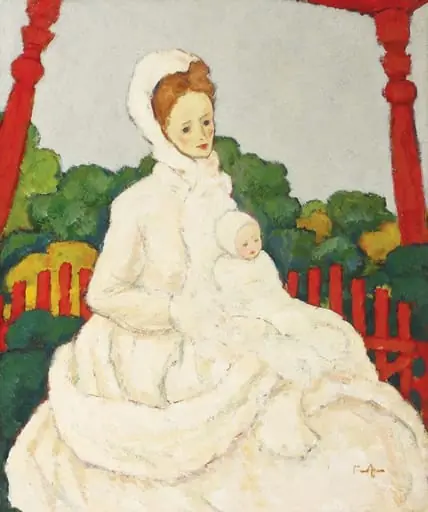
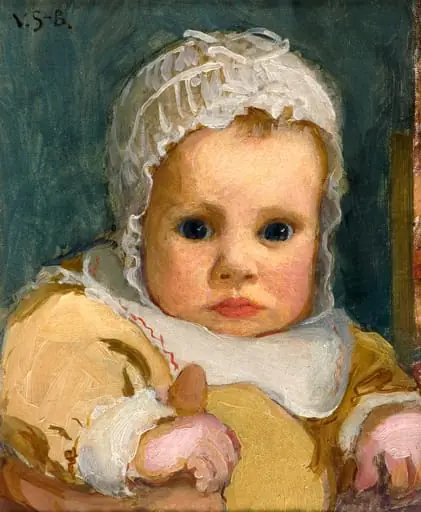
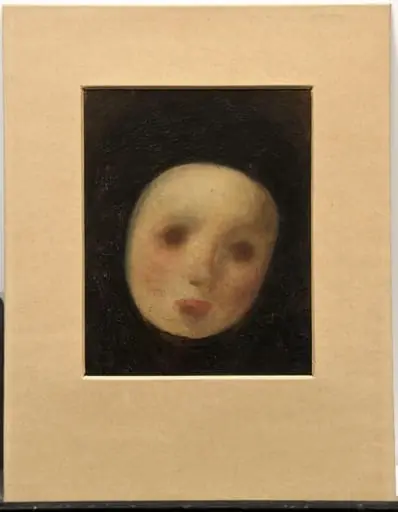
Prințesa, painted around 1923 by Romanian artist Nicolae Tonitza, is a small-scale portrait of an infant. The work resides in the Museum of Ethnography and exemplifies Tonitza’s interest in simplifying form and emotion. Its raw, unidealized depiction departs from traditional portraiture, focusing instead on elemental human presence through minimal features and tactile brushwork.
Subject & Meaning
The subject is an infant swaddled in a pale covering, rendered without individualizing traits. The face, reduced to a pale oval with two dark eye sockets and a single red line for the mouth, evokes a mask-like stillness. This abstraction suggests a universal representation of infancy rather than a specific child, emphasizing vulnerability and anonymity over identity.
Technique & Style
Tonitza applied paint thickly and unevenly, creating a textured surface that emphasizes materiality over refinement. The background, a flat, warm ochre-red, contrasts sharply with the pale figure, enhancing its isolation. The lack of modeling or shading, combined with bold, gestural strokes, aligns the work with expressive modernism and the physicality of impasto.
History & Provenance
The painting was completed during Tonitza’s mature period, when he increasingly turned to intimate, psychologically charged subjects. It entered the collection of the Museum of Ethnography shortly after its creation, likely due to its ethnographic tone and departure from academic norms. Its preservation there reflects institutional interest in vernacular expressions of Romanian modernism.
Context
In early 1920s Romania, artists like Tonitza sought to redefine national identity through art that drew from folk traditions and emotional authenticity. Prințesa reflects this movement, rejecting classical ideals in favor of raw, simplified forms. Its placement in an ethnographic museum signals its perceived connection to cultural essence rather than elite artistic conventions.
Legacy
Prințesa remains a quiet but significant example of Tonitza’s shift toward expressive abstraction. It influenced later Romanian modernists who valued emotional resonance over technical polish. Though not widely exhibited, its presence in the Museum of Ethnography ensures its role as a touchstone for discussions on identity, simplicity, and the portrayal of the human condition in interwar art.
Artist & collection

Artist
Nicolae Tonitza was a Romanian painter, engraver, lithographer, journalist and art critic. Drawing inspiration from Post-Impressionism and Expressionism, he had a major role in introducing modernist guidelines to local art.