Artwork
Spate (Studiu)
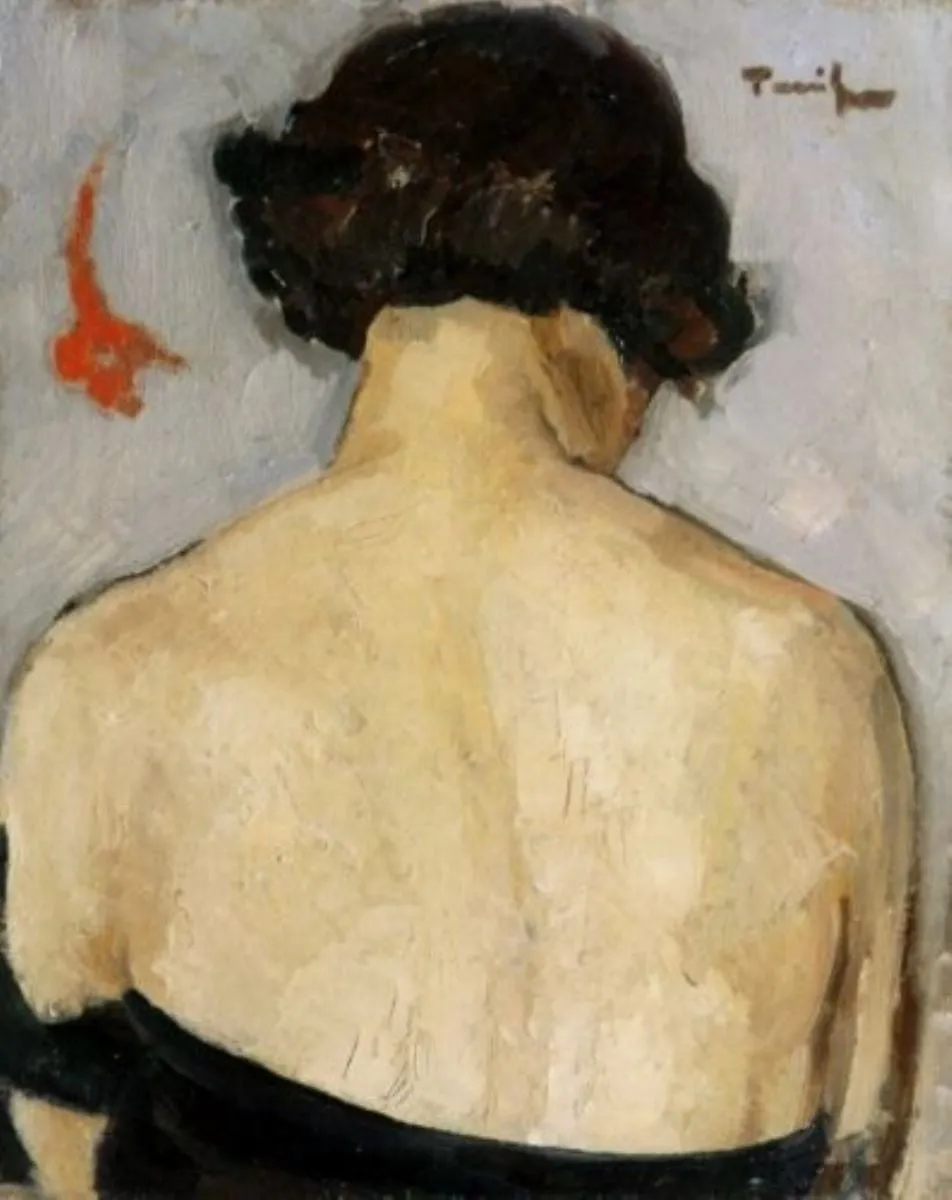
Spate (Studiu) is a print by Nicolae Tonitza. It dates from 1923 and is held in the collection of the National Museum of Art of Romania.
About this work
Overview
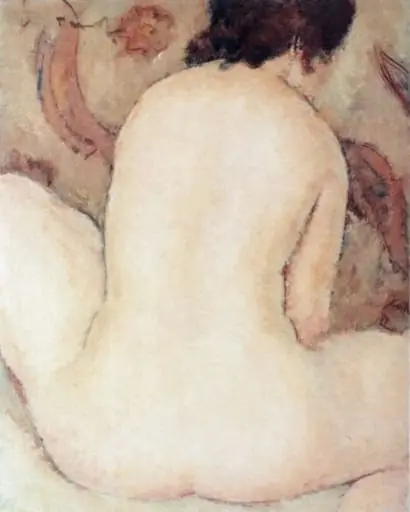
Spate (Studiu), dated around 1923, is a portrait study by Romanian artist Nicolae Tonitza.
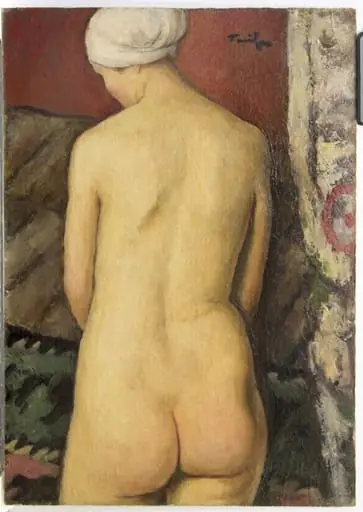
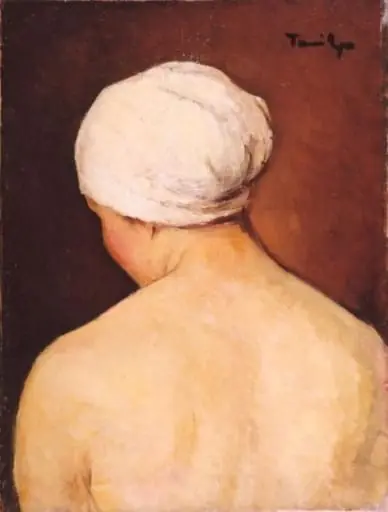
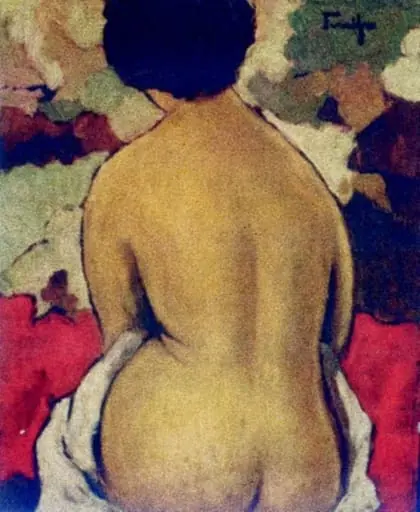
Spate (Studiu), dated around 1923, is a portrait study by Romanian artist Nicolae Tonitza. It presents a seated woman viewed from behind, her form rendered with quiet intimacy. The composition is restrained, focusing on posture and texture rather than narrative. The figure occupies the center of a muted gray field, with a small orange element subtly placed to the left, introducing a restrained chromatic counterpoint without disrupting the somber tone.
Subject & Meaning
The subject is a woman in private repose, her back turned and gaze absent, suggesting introspection or withdrawal. Her stillness and unadorned attire convey a sense of solitude rather than performance. Tonitza avoids idealization; her posture is natural, shoulders gently lowered, as if caught in an unguarded moment. The work invites contemplation of inner life, not outward appearance, aligning with early 20th-century shifts toward psychological realism in portraiture.
Technique & Style
Tonitza employs soft chiaroscuro to model the figure’s form, using subtle gradations of light to define the curve of the back and shoulders. The skin is rendered in warm, earthy tones that contrast with the cool gray background, enhancing volume without harsh definition. Brushwork is deliberate but unobtrusive, favoring smooth transitions over texture. The black strapless top anchors the composition, its simplicity reinforcing the figure’s quiet dignity.
History & Provenance
Created during Tonitza’s mature period, Spate (Studiu) belongs to a series of intimate figure studies he produced in the early 1920s. These works emerged from his engagement with post-impressionist and expressionist tendencies, moving away from earlier academic conventions. The painting remained within Romanian collections after its creation, reflecting its status as a personal exploration rather than a public commission. Its provenance is documented in Romanian art archives from the mid-20th century.
Context
In early 1920s Romania, artists like Tonitza were redefining national art through personal, non-monumental subjects. Spate (Studiu) reflects this trend, rejecting grand historical themes in favor of quiet, everyday presence. Influences from French modernism and Romanian folk aesthetics converge in its restrained palette and emotional reserve. The work aligns with broader European movements that valued psychological depth over decorative flourish.
Legacy
Spate (Studiu) exemplifies Tonitza’s contribution to Romanian modernism through its emotional restraint and formal economy. While not widely exhibited internationally, it remains a touchstone in domestic art history for its sensitive portrayal of interiority. Later Romanian painters cited its subdued palette and focus on the unposed figure as influential in developing a national visual language grounded in authenticity rather than spectacle.
Artist & collection

Artist
Nicolae Tonitza was a Romanian painter, engraver, lithographer, journalist and art critic. Drawing inspiration from Post-Impressionism and Expressionism, he had a major role in introducing modernist guidelines to local art.