Artwork
Head of a Woman (Marguérite Adolphine Helfrich)
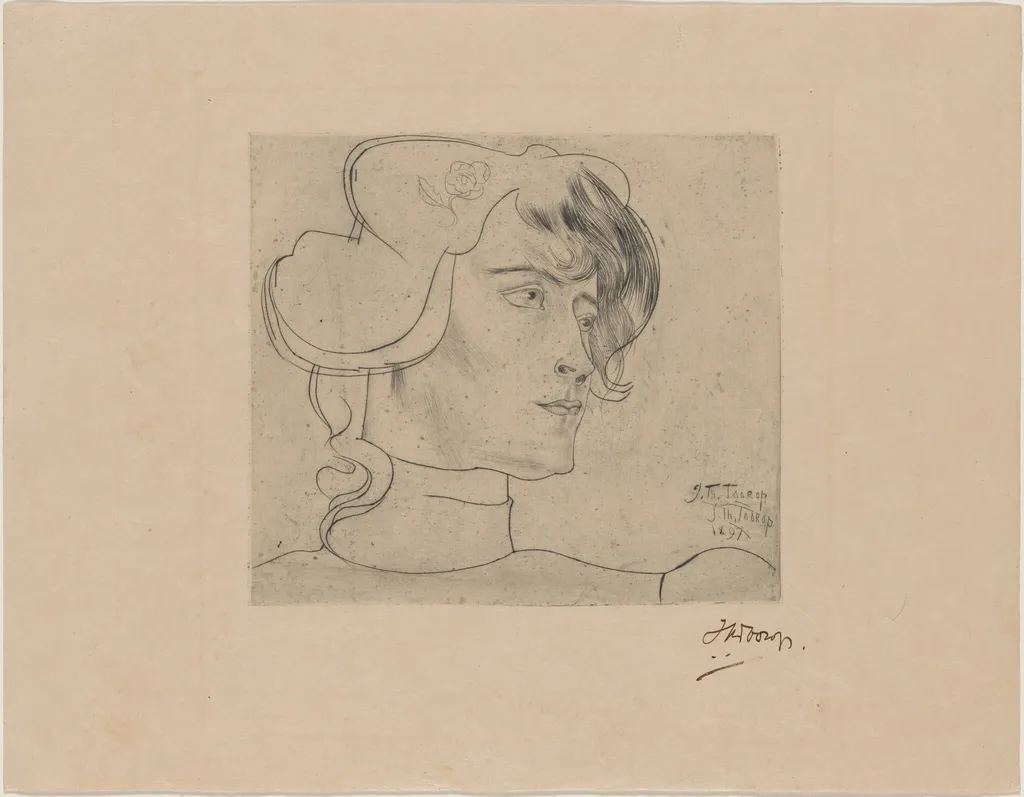
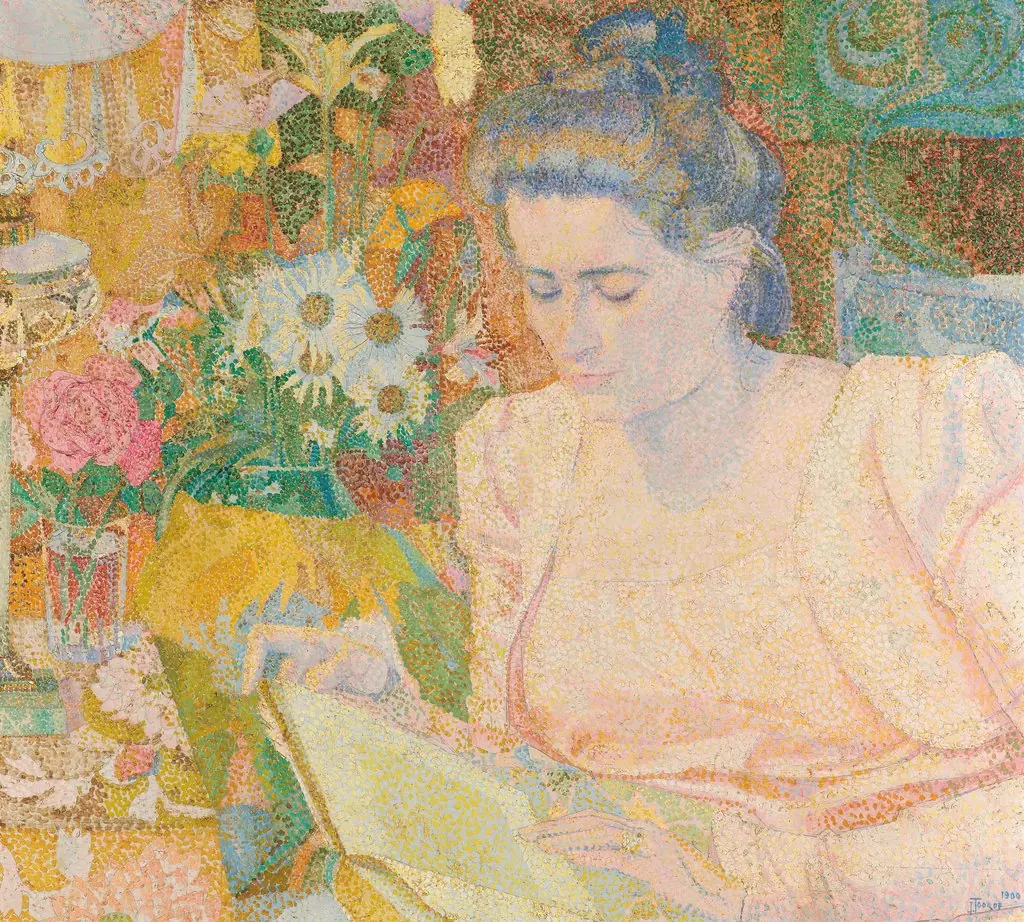
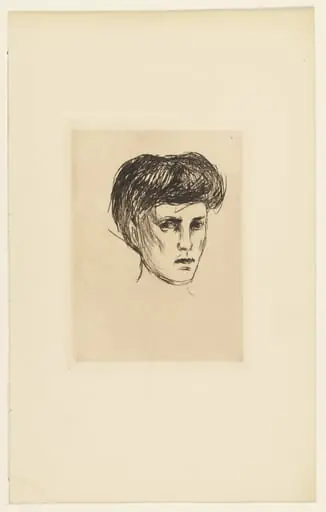
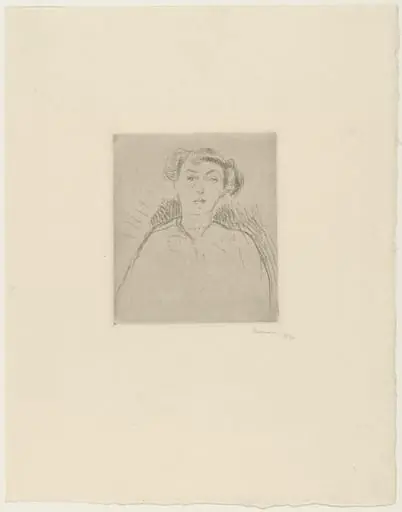
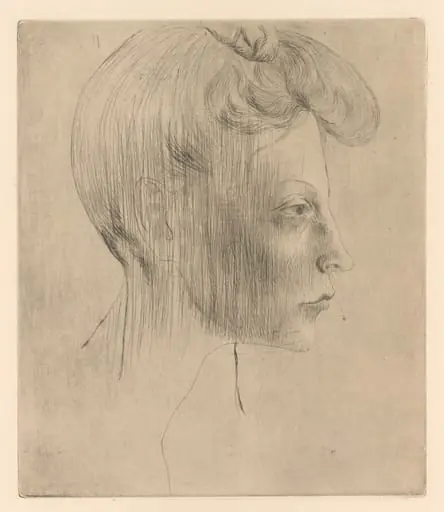
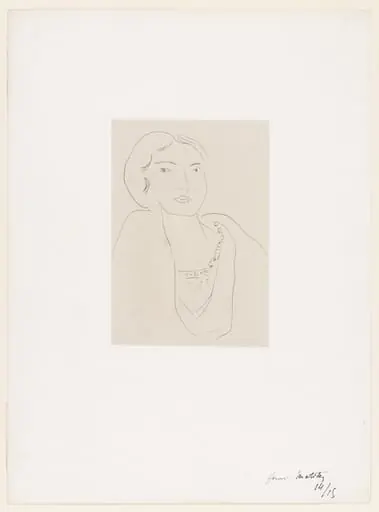
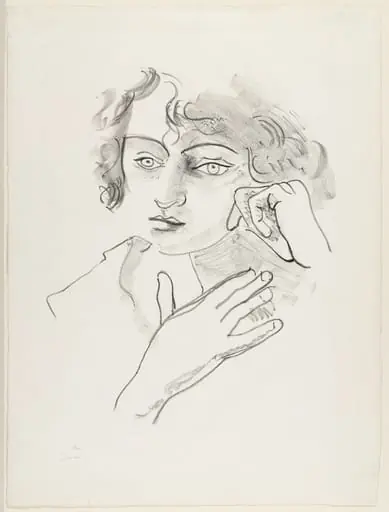
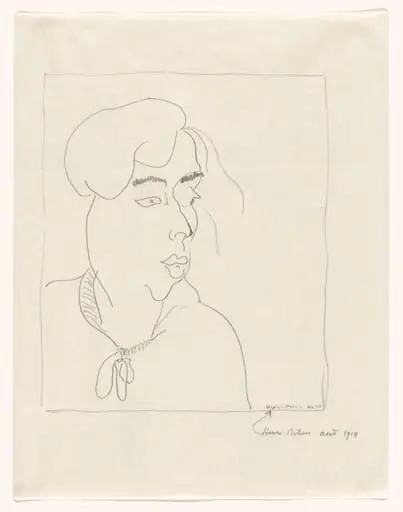
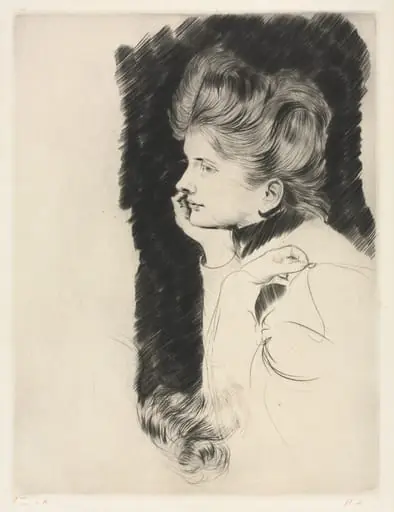
Head of a Woman (Marguérite Adolphine Helfrich) is an ink print by the Impressionist artist Jan Toorop. It dates from 1897 and is held in the collection of the National Gallery of Art.
About this work
Overview
The work belongs to a period when Toorop was transitioning between Symbolism and Art Nouveau, moving away from his earlier Amsterdam Impressionist influences.
Created in 1897, *Head of a Woman (Marguérite Adolphine Helfrich)* is a drypoint print on wove paper by Dutch artist Jan Toorop. The work belongs to a period when Toorop was transitioning between Symbolism and Art Nouveau, moving away from his earlier Amsterdam Impressionist influences. The medium of drypoint allowed for fine, expressive lines that suit the intimate scale and emotional tone of the portrait.
Subject & Meaning
The subject is Marguérite Adolphine Helfrich, Toorop’s wife, portrayed with quiet composure and a subtle smile. Her direct gaze and serene expression suggest a personal, almost contemplative connection between artist and sitter. Rather than emphasizing physical detail, the work conveys inner stillness, aligning with Symbolist interests in psychological depth over literal representation.
Technique & Style
Toorop employed drypoint to create soft, flowing lines that define the contours of the face and hair with minimal yet deliberate strokes. The wove paper’s smooth surface enhances the delicacy of the incised lines, avoiding heavy shading in favor of rhythmic, curvilinear forms. This approach reflects his engagement with Art Nouveau’s emphasis on organic line and Symbolist restraint, merging intimacy with stylization.
History & Provenance
The print was made during Toorop’s time in the Netherlands, shortly after his marriage to Helfrich in 1895. It remained within private collections for much of the 20th century, with no public exhibition history noted in major institutional records. Its survival as a singular impression underscores its status as a personal rather than commercial work.
Context
In the late 1890s, Toorop was part of a broader European movement redefining portraiture through emotional and formal abstraction. While contemporaries like Munch and Klimt explored psychological intensity through bold color or symbolism, Toorop turned to linear economy, drawing from Japanese prints and Art Nouveau design to convey presence without narrative.
Legacy
This print exemplifies Toorop’s ability to fuse personal subject matter with avant-garde technique. Though less widely known than his larger Symbolist compositions, works like this influenced later generations of printmakers seeking emotional resonance through minimal means. It remains a quiet testament to the artist’s domestic life and his evolving visual language.
Artist & collection

Artist
Johannes Theodorus "Jan" Toorop was a Dutch painter who worked in various styles, including Symbolism, Art Nouveau, and Pointillism. His early work was influenced by the Amsterdam Impressionism movement.