Artwork
Venise sauvée (Venice Preserved)
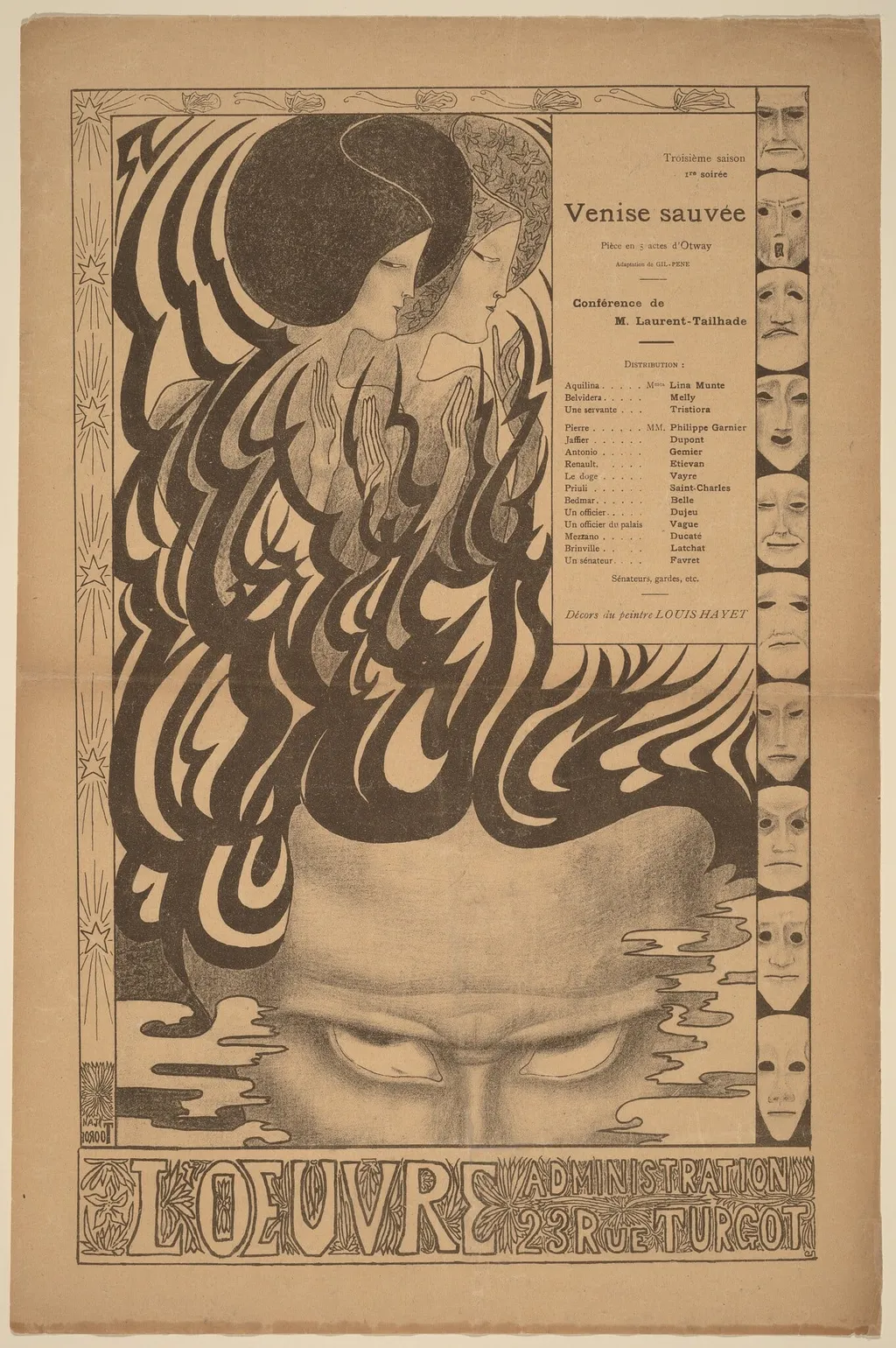
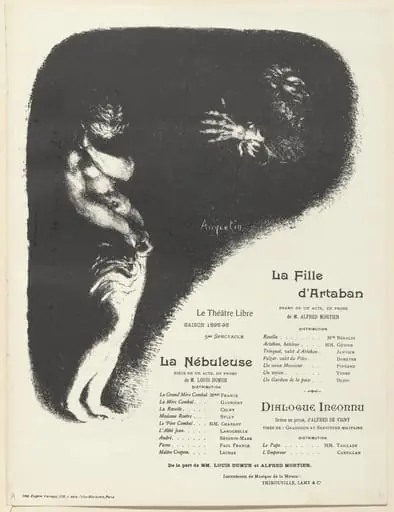
Venise sauvée (Venice Preserved) is an ink print by the Impressionist artist Jan Toorop. It dates from 1895 and is held in the collection of the National Gallery of Art.
About this work
Overview
Its atmospheric composition and stylized forms reflect Toorop’s evolving visual language beyond his earlier Impressionist roots.
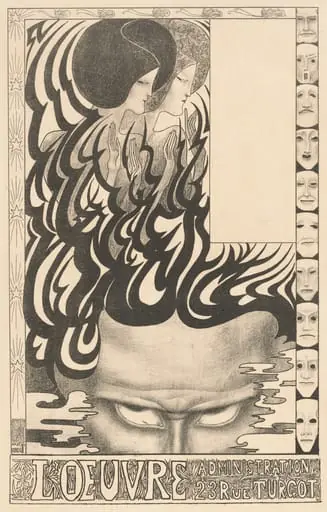
Created in 1895, *Venise sauvée* is a lithograph on light brown wove paper by Dutch artist Jan Toorop. It emerged during a period when Toorop was synthesizing Symbolist, Art Nouveau, and Pointillist approaches. The work functions as a poster, combining imagery with textual information—names and a Paris address appear at the base—suggesting a theatrical or promotional context. Its atmospheric composition and stylized forms reflect Toorop’s evolving visual language beyond his earlier Impressionist roots.
Subject & Meaning
The central figure is a woman emerging from water, arms raised as if in supplication or triumph. Her flowing hair and the swirling lines around her evoke motion and transformation, possibly symbolizing deliverance or spiritual ascent. To her right, a row of identical, expressionless faces gazes forward, creating a stark contrast between dynamic individuality and passive observation. The title, *Venice Preserved*, hints at allegory—perhaps the city as a fragile entity saved from collapse, or a metaphor for cultural endurance.
Technique & Style
Toorop employed lithography to achieve fluid, organic lines that define the woman’s form and the surrounding currents. The light brown paper enhances the tonal subtlety, allowing the ink to blend with the ground rather than stand in sharp contrast. Wavy, rhythmic contours dominate the composition, characteristic of Art Nouveau’s emphasis on natural flow, while the stylized faces and flattened space reflect Symbolist tendencies toward emotional abstraction over realism.
History & Provenance
The print was produced in Paris in 1895, likely for a theatrical or cultural event, given the inclusion of names and a local address. Toorop, then active in French artistic circles, frequently collaborated with Parisian publishers and theaters. While specific exhibition records are sparse, the work aligns with his broader output during this phase, when he moved from Dutch realism toward more symbolic, decorative forms influenced by contemporary French avant-garde trends.
Context
In mid-1890s Paris, Symbolist imagery flourished in posters and graphic arts, often blending myth, emotion, and social commentary. Toorop’s work intersected with this milieu, responding to the era’s fascination with mysticism and psychological depth. The contrast between the active female figure and the static onlookers may reflect contemporary debates about agency, gender, and collective passivity—themes echoed in literature and theater of the time.
Legacy
Though not widely reproduced, *Venise sauvée* exemplifies Toorop’s transitional role between 19th-century realism and modernist symbolism. Its integration of graphic design and narrative depth influenced later poster artists who sought to merge fine art with public communication. The work remains a quiet but distinct example of how Symbolist ideals were adapted into the commercial visual culture of fin-de-siècle Europe.
Artist & collection

Artist
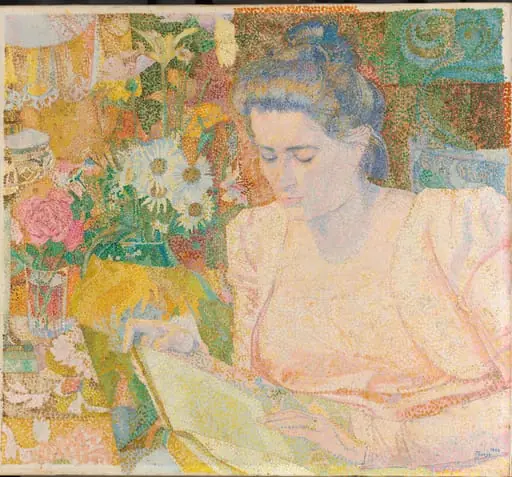
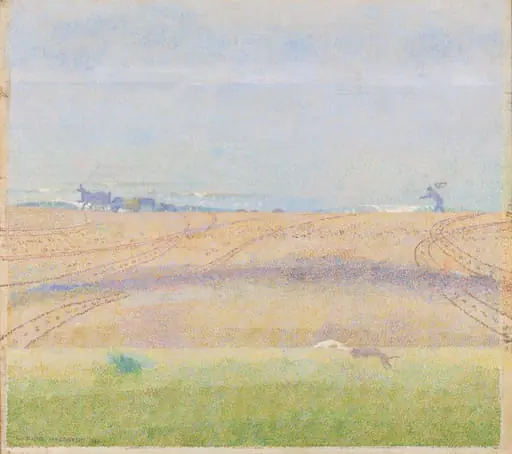
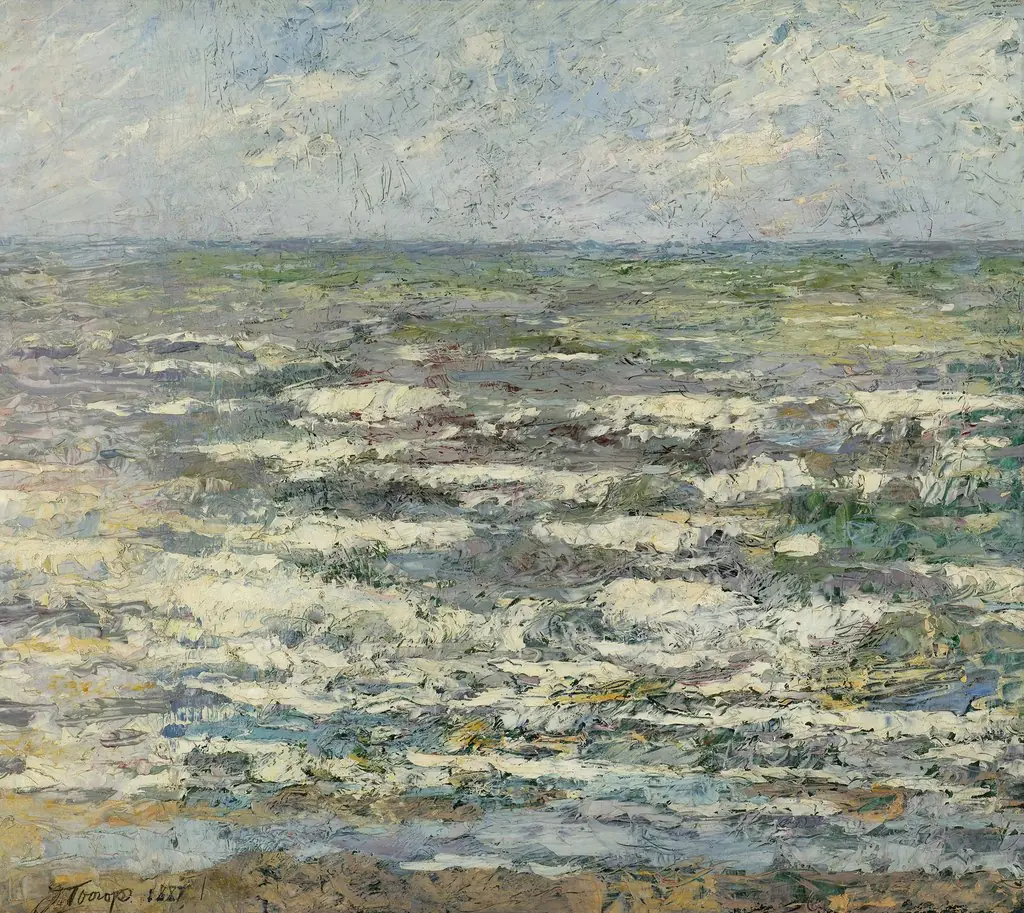
Johannes Theodorus "Jan" Toorop was a Dutch painter who worked in various styles, including Symbolism, Art Nouveau, and Pointillism. His early work was influenced by the Amsterdam Impressionism movement.