Artwork
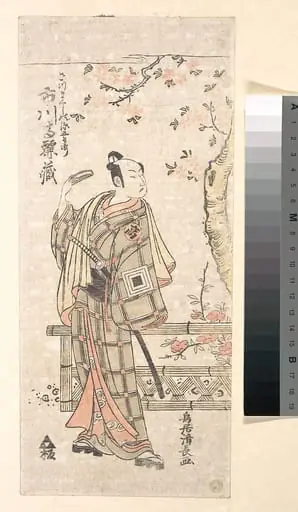
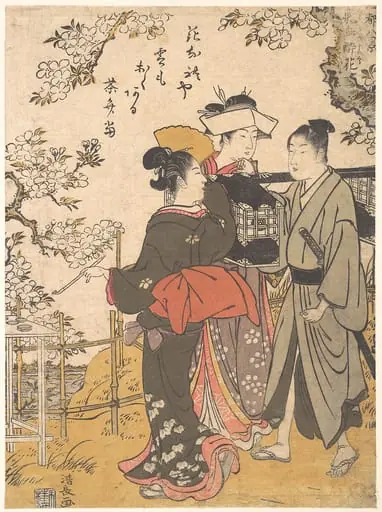
Sawamura Sojuro III and Arashi Murajiro as Kusunoki Masatsura and Koto no Naishi
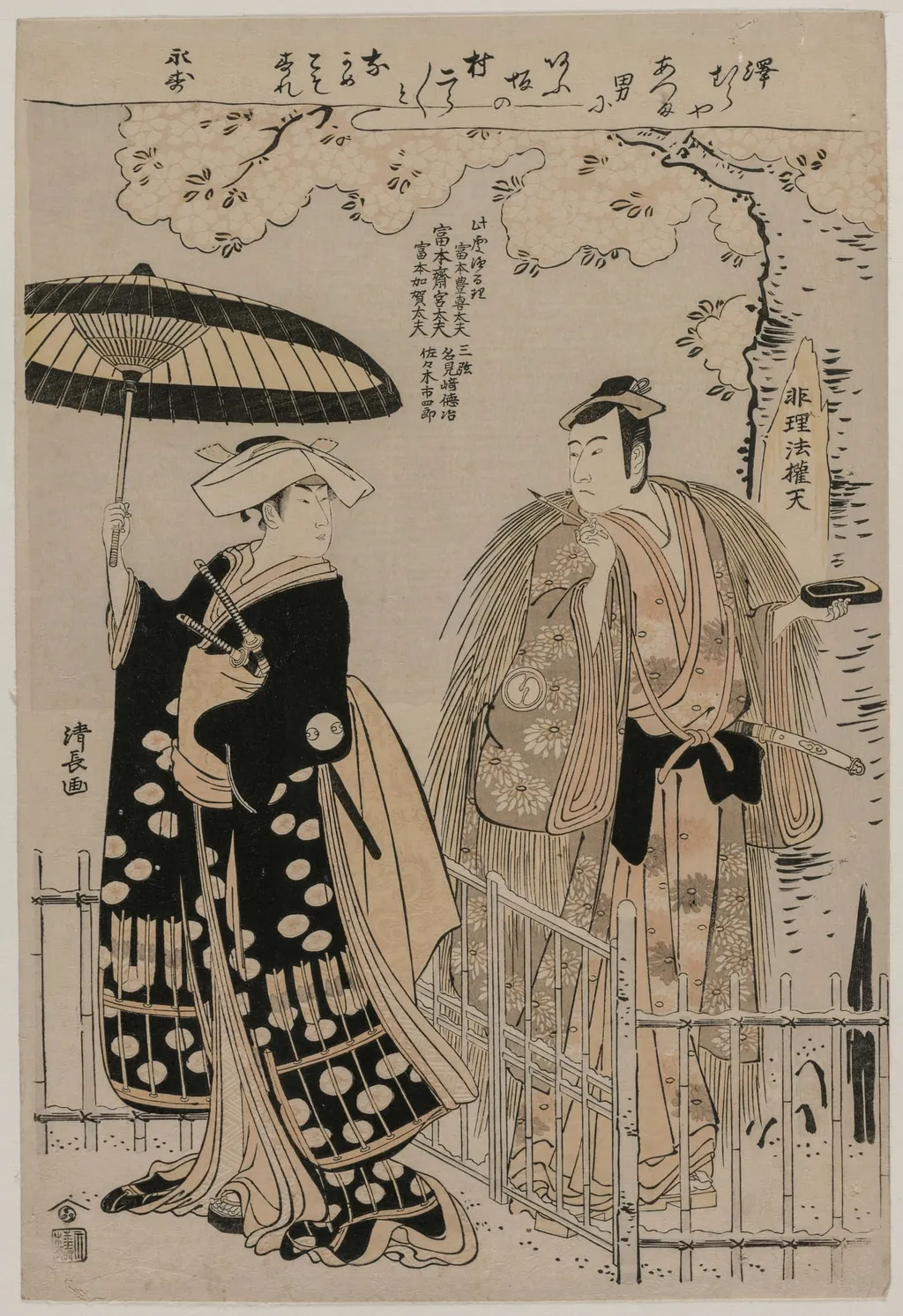
Sawamura Sojuro III and Arashi Murajiro as Kusunoki Masatsura and Koto no Naishi is a print by the Romanticist artist Torii Kiyonaga. It dates from 1786 and is held in the collection of the Cleveland Museum of Art.
About this work
Overview
Torii Kiyonaga’s woodblock print, dated 1786, portrays two celebrated kabuki actors—Sawamura Sojuro III and Arashi Murajiro—costumed as the historic figures Kusunoki Masatsura and Koto no Naishi. Executed in the ukiyo-e tradition, the image is part of the Cleveland Museum of Art’s collection and exemplifies the period’s fascination with theatrical portraiture.
Subject & Meaning
Their solemn expressions suggest a scene of loyalty and conflict drawn from Japanese historical drama.
The composition captures a dramatic moment from a stage production, with the actor playing Kusunoki Masatsura holding a black umbrella and wearing a dark kimono patterned with white dots, while his counterpart, cast as Koto no Naishi, stands beside a wooden fence in a light, floral‑patterned robe, sword at his side. Their solemn expressions suggest a scene of loyalty and conflict drawn from Japanese historical drama.
Technique & Style
Kiyonaga employs the multicolour nishiki-e method, layering pigments to achieve the contrasting dark and light garments and the delicate floral motifs. Fine line work defines the actors’ faces and the surrounding props, while a sparse background of calligraphic characters and minimal landscape elements creates a theatrical stage‑like ambience typical of late‑18th‑century ukiyo-e.
History & Provenance
Created during the height of Kiyonaga’s career, the print entered the Cleveland Museum of Art’s holdings through acquisition in the 20th century, joining a broader collection of Japanese prints that illustrate the evolution of kabuki portraiture. Its documented provenance traces back to early collectors of Edo‑period prints before its museum purchase.
Context
The work reflects the Edo period’s popular culture, where kabuki actors were celebrated as celebrities and frequently depicted in prints that immortalised their roles. By casting contemporary performers as medieval heroes, the image bridges historical narrative and modern entertainment, offering insight into the era’s theatrical conventions and the public’s appetite for dramatized history.
Artist & collection

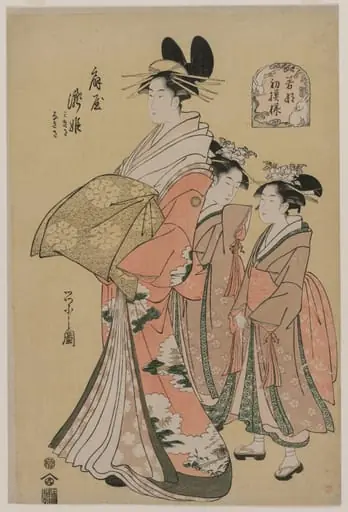 The Courtesan Takihime and Attendants (from the series New Patterns of Young Greens)
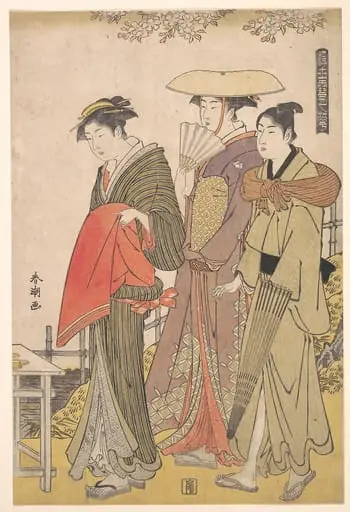 Ukiyoe Ga|The Beauty of the Floating World
 Untitled
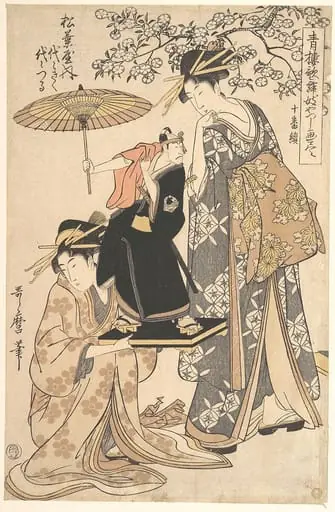 青楼歌舞妓やつし画尽 十番続|The Oiran Yoyogiku of Matsubaya Standing under a Cherry Tree
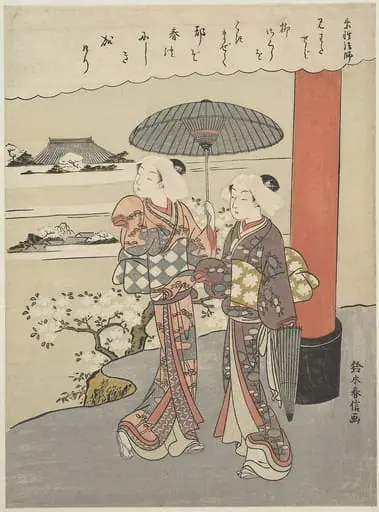 百人一首 素性法師|Poem by the Monk Sosei (act. 850-97)
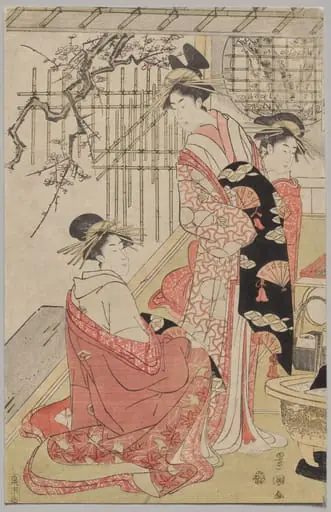 Courtesans of the Ōgiya on a Spring Outing
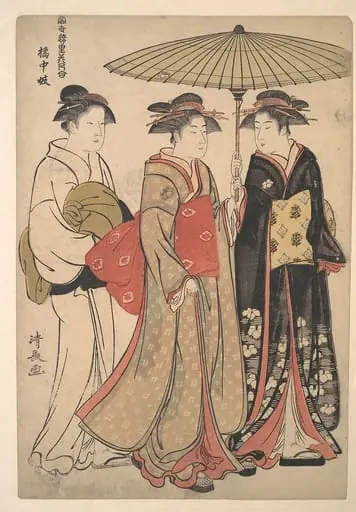 Kitchugi|Geisha of the Tachibana Street