Artwork
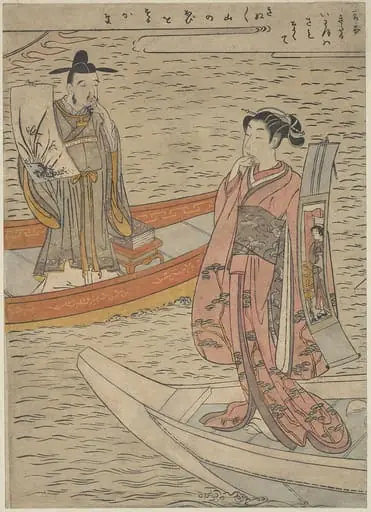
百人一首 素性法師|Poem by the Monk Sosei (act. 850-97)
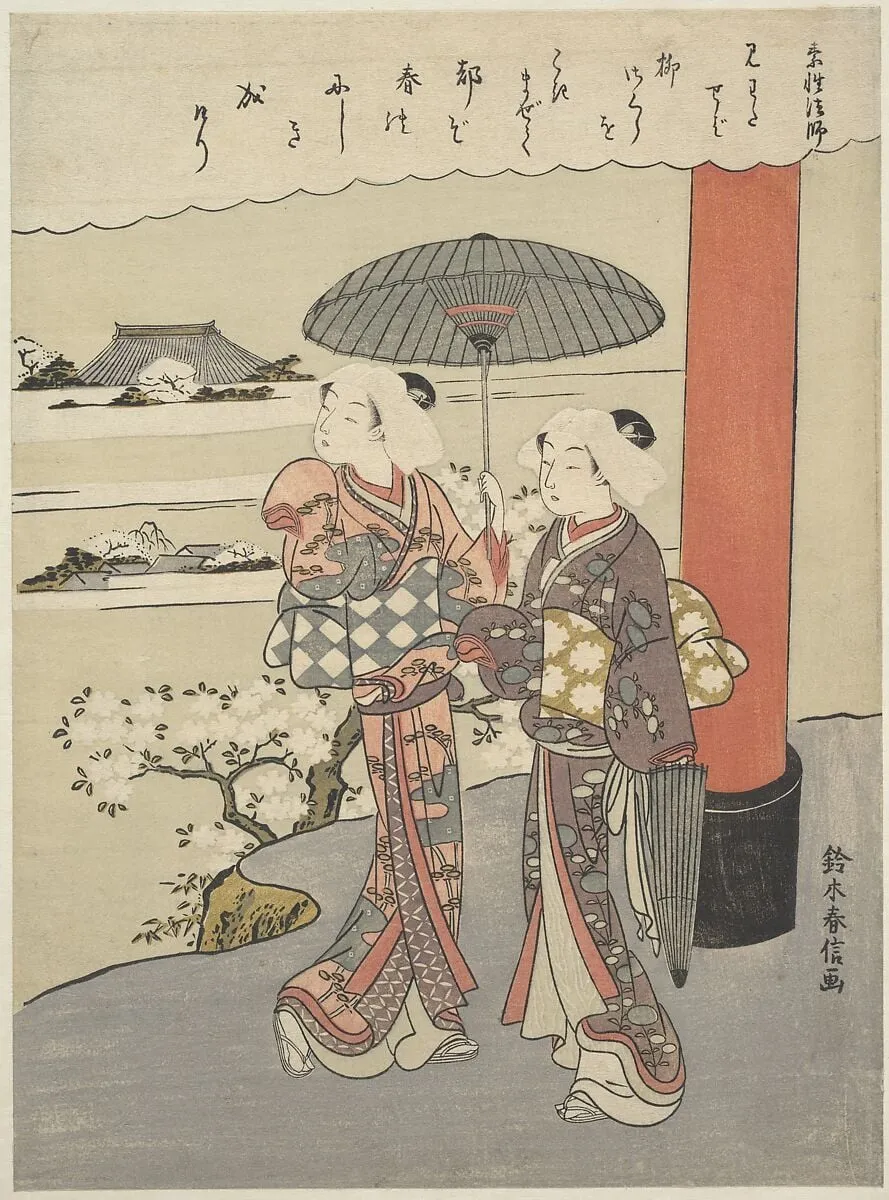
百人一首 素性法師|Poem by the Monk Sosei (act. 850-97) is an ink print by the Romanticist artist Suzuki Harunobu. It dates from 1768 and is held in the collection of the Metropolitan Museum of Art.
About this work
Overview
This woodblock print, created around 1768 by Suzuki Harunobu, illustrates a verse from the Hyakunin Isshu anthology, attributed to the monk Sosei.
This woodblock print, created around 1768 by Suzuki Harunobu, illustrates a verse from the Hyakunin Isshu anthology, attributed to the monk Sosei. Rendered in ink and color on paper with embossing, it belongs to a series pairing classical poetry with intimate visual scenes. The composition captures a quiet moment between two figures, their attire and gestures suggesting ritual or pilgrimage, set against a softly rendered natural landscape.
Subject & Meaning
The scene depicts two figures walking beneath a black umbrella, one holding a fan, the other a small box—possibly containing religious relics or offerings. Their movement through a blooming cherry grove evokes transience, a central theme in classical Japanese poetry. The presence of misty hills and a distant bridge implies a journey, both physical and spiritual, aligning with Sosei’s Buddhist contemplative voice and the seasonal symbolism of cherry blossoms.
Technique & Style
Harunobu employs delicate flat color fields alongside subtle embossing (karazuri), particularly on the umbrella’s pattern, creating tactile contrast without pigment. Fine lines suggest texture in fabric and foliage, while the background uses muted washes to suggest depth and atmosphere. The integration of poetic text at the top anchors the image in literary tradition, balancing visual harmony with textual authority, characteristic of early nishiki-e prints.
History & Provenance
Produced during the height of Harunobu’s career, this print was part of a widely circulated series that popularized classical poetry among Edo’s urban elite. It entered The Metropolitan Museum of Art’s collection through established channels of Japanese print acquisition in the early 20th century. Its preservation in good condition reflects careful handling and the print’s enduring cultural value within Western collections of Japanese art.
Context
In mid-18th century Edo, illustrated poetry collections became fashionable among literate townspeople. Harunobu’s series reimagined ancient courtly verses through contemporary urban aesthetics, blending spiritual themes with everyday elegance. The use of embossing and limited color palettes reflected technical innovation, while the choice of Buddhist poets like Sosei signaled a broader interest in religious heritage amid secularizing trends.
Legacy
Harunobu’s Hyakunin Isshu prints helped redefine the role of woodblock printing as a medium for literary and aesthetic refinement, not just entertainment. This work, among others in the series, influenced later artists in their treatment of poetry and nature. Its quiet dignity and technical precision continue to inform scholarly understanding of how classical Japanese culture was reinterpreted in the Edo period.
Artist & collection

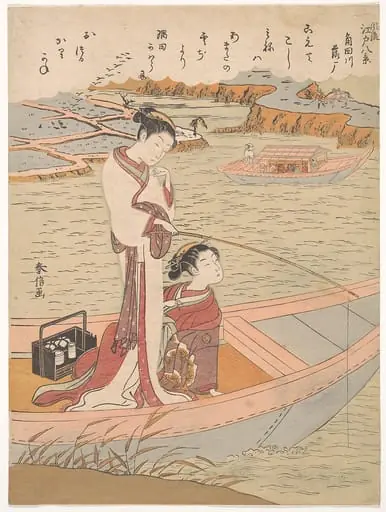
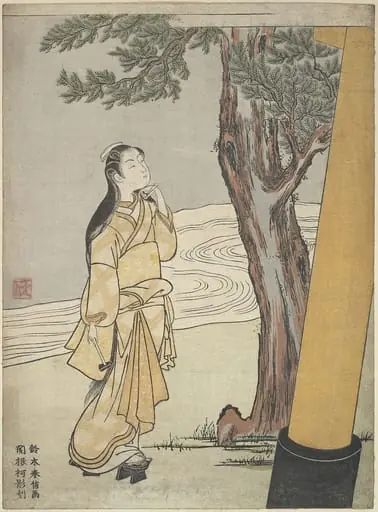
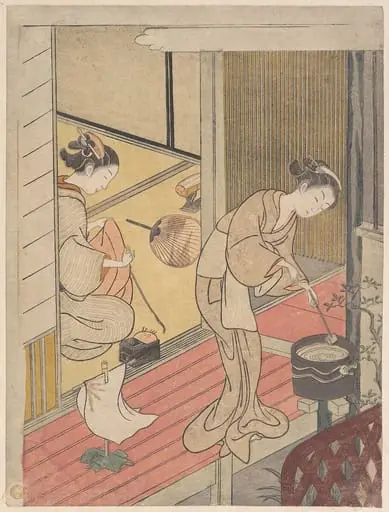
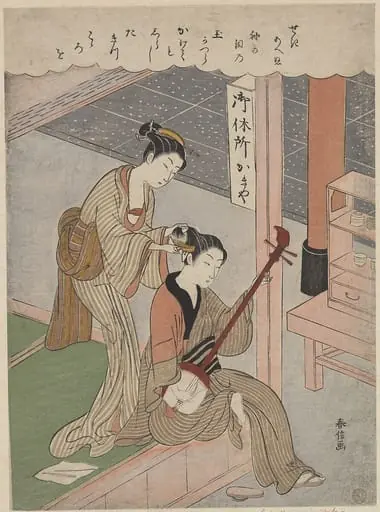
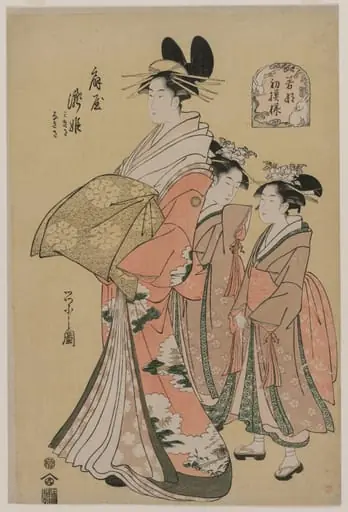 The Courtesan Takihime and Attendants (from the series New Patterns of Young Greens)
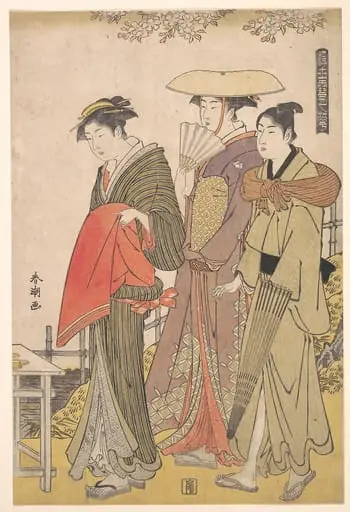 Ukiyoe Ga|The Beauty of the Floating World
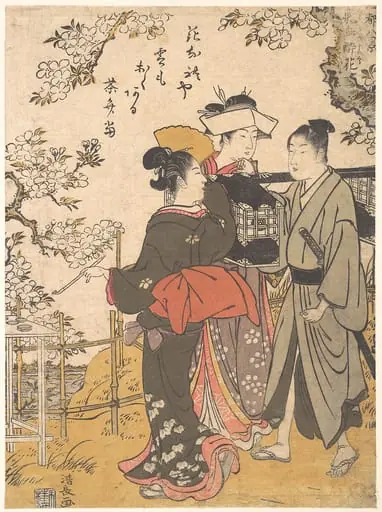 Untitled
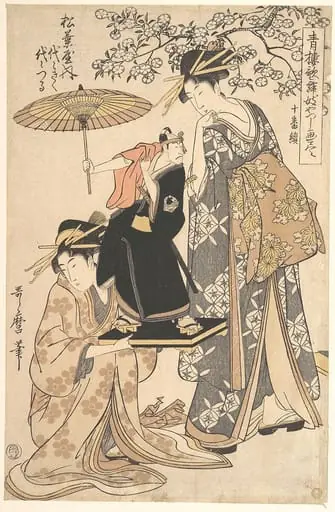 青楼歌舞妓やつし画尽 十番続|The Oiran Yoyogiku of Matsubaya Standing under a Cherry Tree
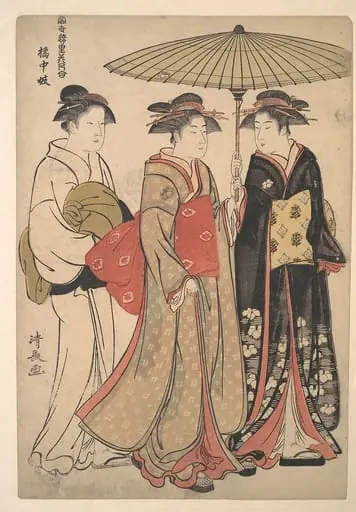 Kitchugi|Geisha of the Tachibana Street
 Untitled
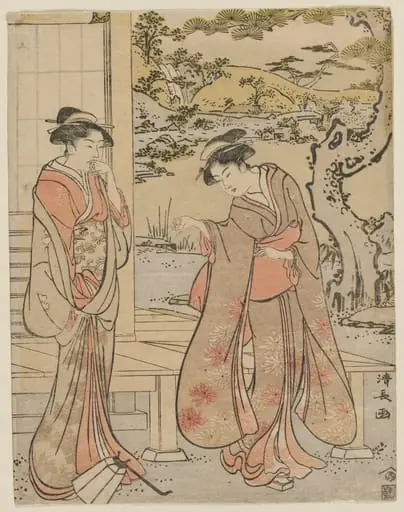 Woman Dropping a Lantern by a Porch
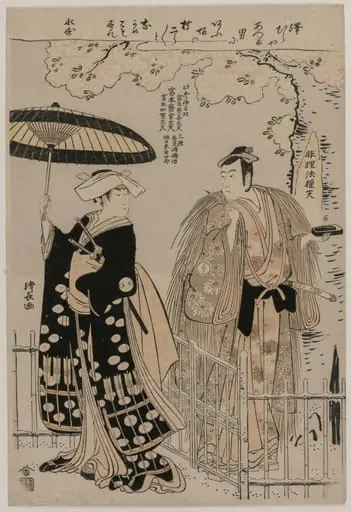 Sawamura Sojuro III and Arashi Murajiro as Kusunoki Masatsura and Koto no Naishi
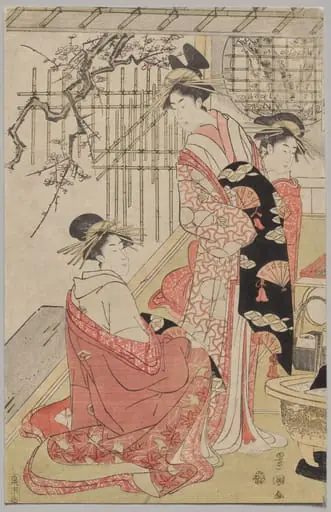 Courtesans of the Ōgiya on a Spring Outing
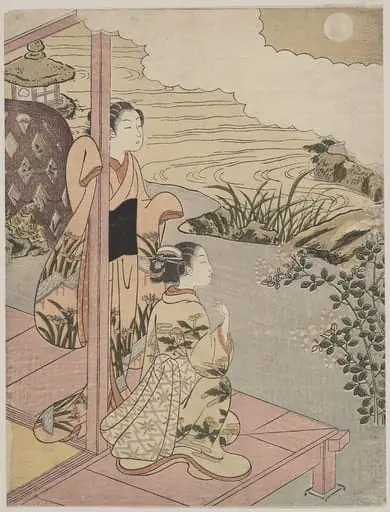 Untitled
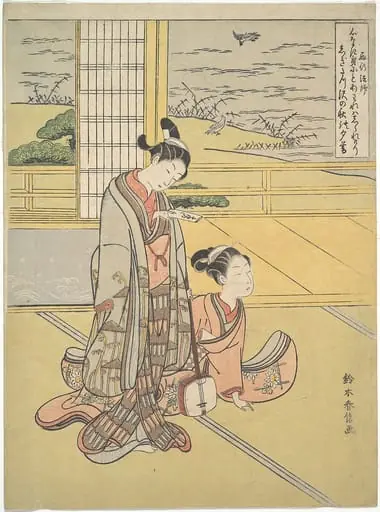 鈴木春信画 見立三夕 「西行法師」|A Young Man and Woman with a Shamisen; Monk Saigyō, from a series alluding to the Three Evening Poems (Sanseki waka)
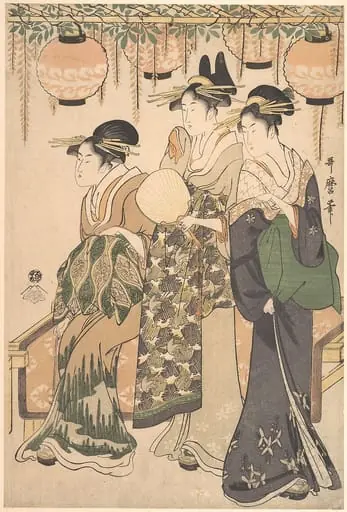 藤棚下の遊女たち|Courtesans Beneath a Wisteria Arbor (Fuji dana shita no yūjo tachi)