Artwork
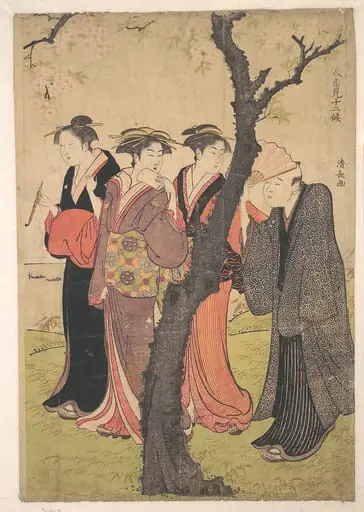
The Courtesan Senzan of Chojiya Strolling with her Kamuro Yasono and Yasoji and Two Shinzo
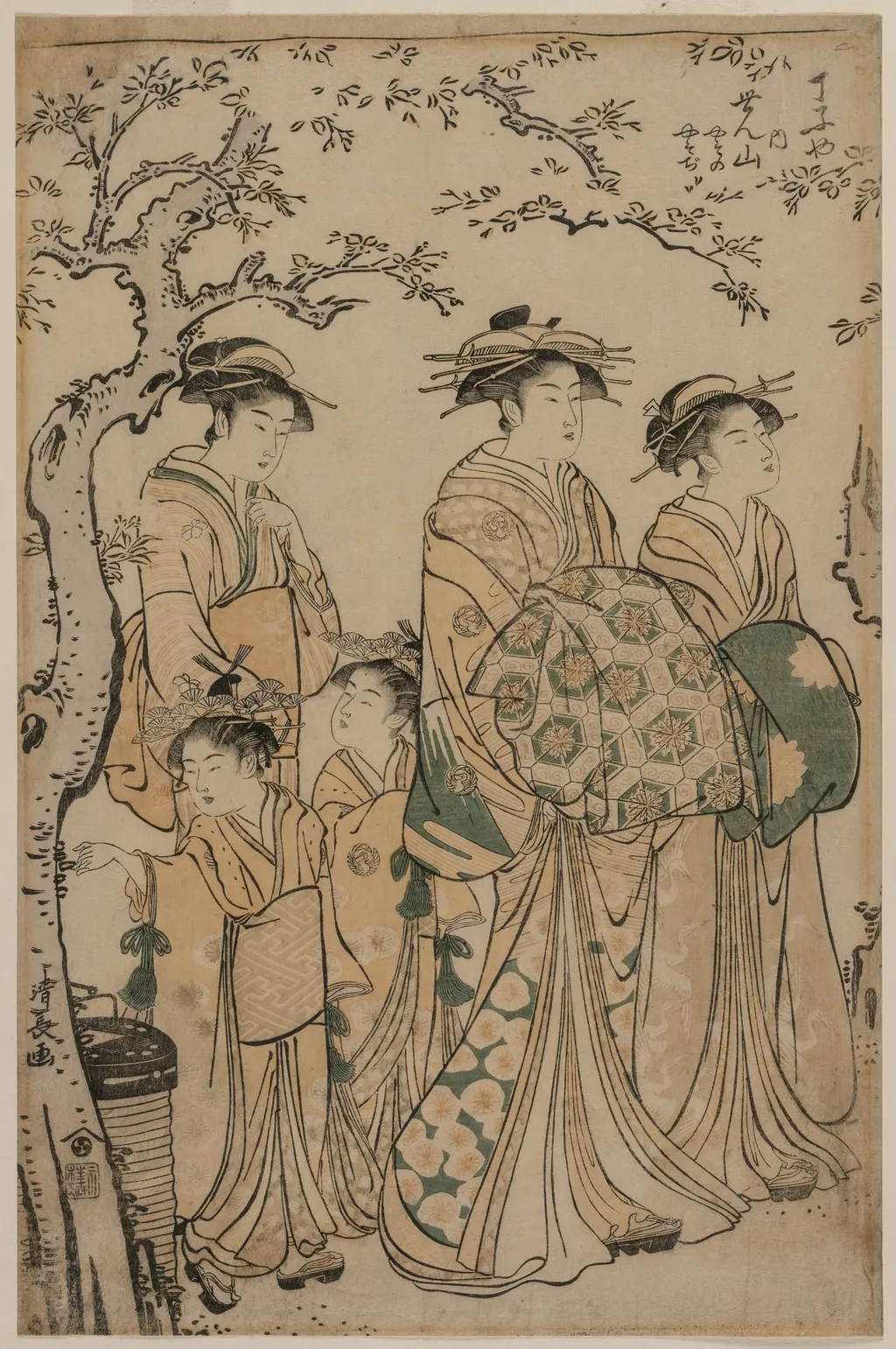
The Courtesan Senzan of Chojiya Strolling with her Kamuro Yasono and Yasoji and Two Shinzo is a print by the Romanticist artist Torii Kiyonaga. It dates from 1786 and is held in the collection of the Cleveland Museum of Art.
About this work
Overview
Created in 1786 by Torii Kiyonaga, this woodblock print depicts four women walking beneath leafless trees. It is part of a series portraying courtesans and their attendants in formal attire, rendered with refined lines and muted color. The work resides in the collection of The Cleveland Museum of Art, where it exemplifies late 18th-century ukiyo-e portraiture focused on urban pleasure quarters.
Subject & Meaning
The calm expressions and composed posture suggest dignity, not frivolity, aligning with ideals of refined elegance expected of high-ranking entertainers.
The central figure is Senzan, a courtesan of the Chojiya establishment, accompanied by her kamuro (young attendant), Yasoji, and two shinzo (lower-ranking female servants). Their synchronized movement and coordinated attire reflect status and ritualized social roles within the pleasure district. The calm expressions and composed posture suggest dignity, not frivolity, aligning with ideals of refined elegance expected of high-ranking entertainers.
Technique & Style
Kiyonaga employed fine, controlled linework and subtle gradations of color typical of the Torii school. The figures are elongated and gracefully posed, their kimono patterns rendered with precision. The barren trees and minimal background isolate the subjects, emphasizing textile detail and facial composure. The print’s composition balances symmetry with slight asymmetry in posture, guiding the viewer’s eye along the group’s procession.
History & Provenance
Produced during the height of Edo-period ukiyo-e popularity, the print was likely distributed as a single-sheet print for private collectors. It entered The Cleveland Museum of Art’s collection through established acquisitions of Japanese prints in the early 20th century. Its preservation reflects its significance as a document of Edo-era social hierarchy and aesthetic values.
Context
This print belongs to a genre that documented the lives of courtesans and their entourages, catering to urban audiences fascinated by the licensed pleasure quarters. The seasonal bareness of the trees may allude to transience, a recurring theme in Japanese art. Unlike theatrical scenes, this image captures a quiet, everyday moment, elevating the ordinary into a study of grace and social order.
Legacy
Kiyonaga’s work influenced later ukiyo-e artists by refining the portrayal of female figures with psychological nuance and structural harmony. This print remains a key example of how genre subjects were elevated through formal discipline. It continues to inform scholarly understanding of gender, class, and visual culture in Edo-period Japan.
Artist & collection

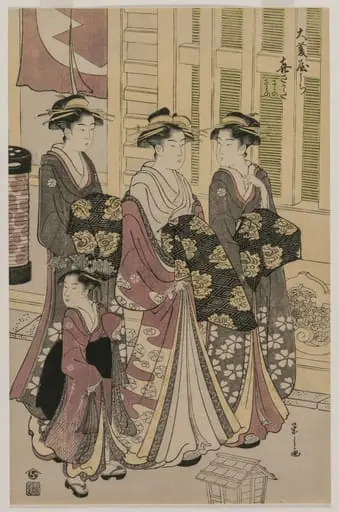 The Courtesan Kisagata of Ohishiya Strolling at Night with Two Shinzo and a Kamuro
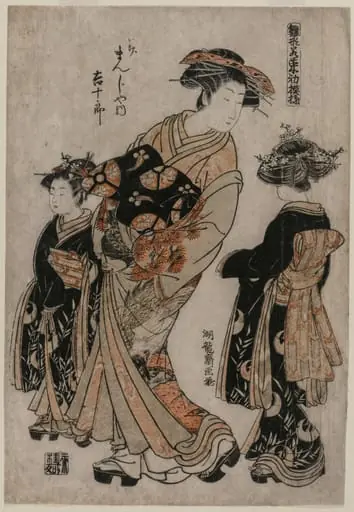 The Courtesan Kichijuro of Kage Manjiya with Two Kamuro (from the series Models for Fashions: New Designs as Fresh as Young Leaves)
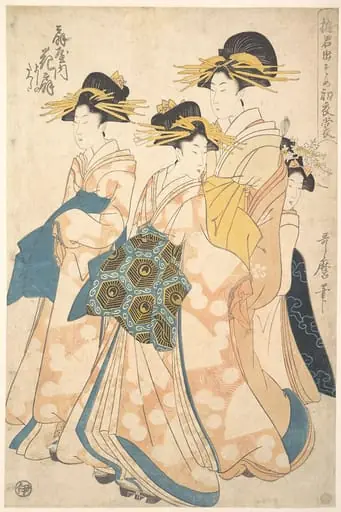 遊君出そめ初衣裳 扇屋内花扇|The Oiran Hanaogi of Ogiya attended by Two Shinzo and Her Kamuro Yoshino
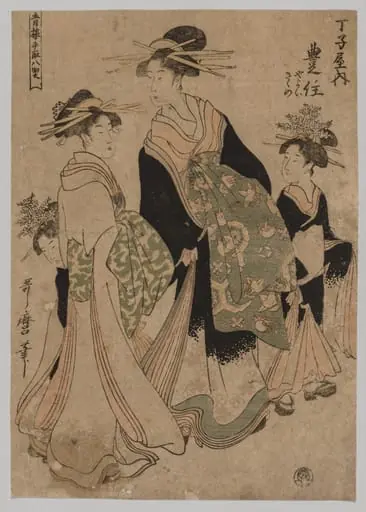 Courtesans and Attendants
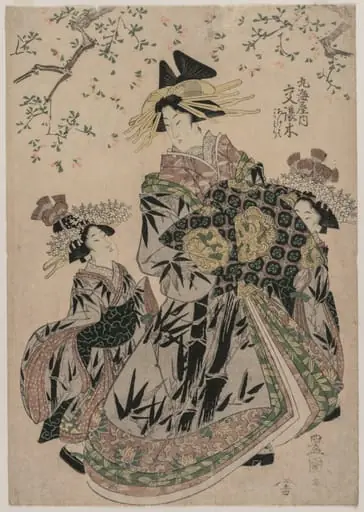 The Courtesan Katakoshigi (?) of Maruebiya with her Kamuro Ageha and Midori
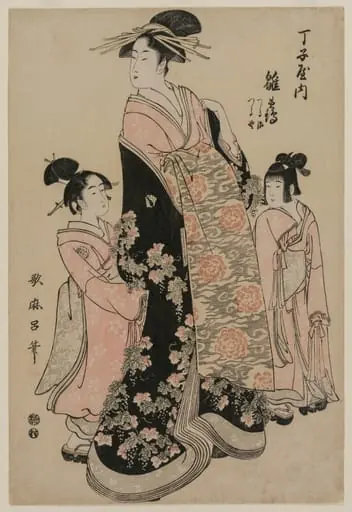 The Courtesan Hinazuru of Chojiya with her Attendants Tsuruji and Tsuruno
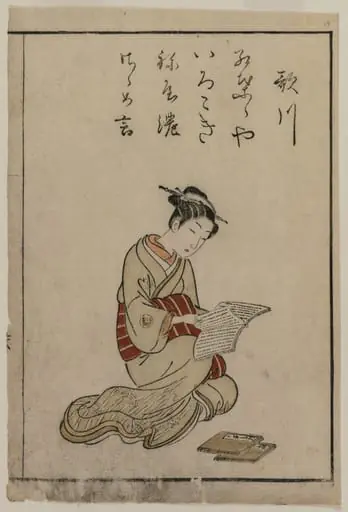 The Courtesan (From A Collection of Beautiful Women of the Yoshiwara)