Artwork
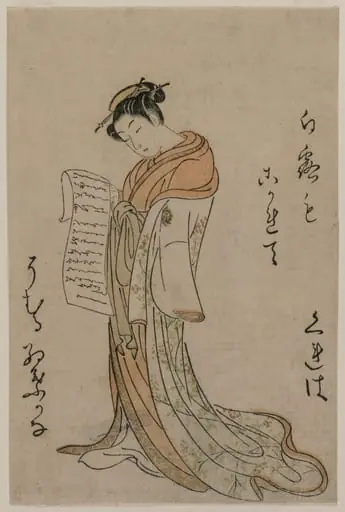
The Courtesan (From A Collection of Beautiful Women of the Yoshiwara)
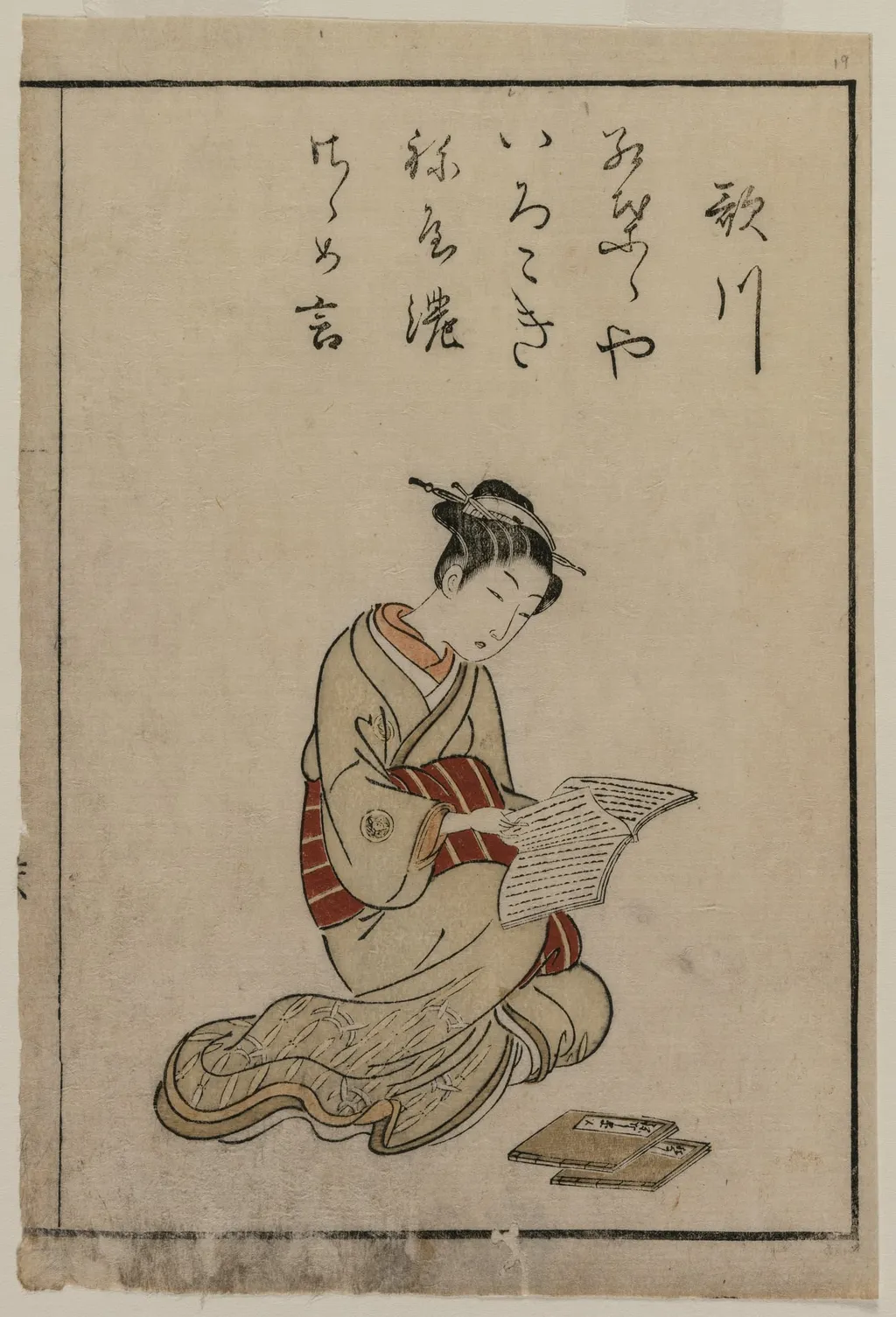
The Courtesan (From A Collection of Beautiful Women of the Yoshiwara) is a print by the Romanticist artist Suzuki Harunobu. It dates from 1770 and is held in the collection of the Cleveland Museum of Art.
About this work
Overview
The work is now in the collection of The Cleveland Museum of Art, where it represents a key example of ukiyo-e’s evolution toward intimate, everyday scenes.
Created in 1770 by Suzuki Harunobu, this woodblock print is part of a series depicting women of Tokyo’s Yoshiwara pleasure district. Rendered in delicate polychrome ink, it captures a courtesan in a moment of quiet repose. The composition emphasizes stillness and refined detail, typical of Harunobu’s early full-color prints. The work is now in the collection of The Cleveland Museum of Art, where it represents a key example of ukiyo-e’s evolution toward intimate, everyday scenes.
Subject & Meaning
The figure is a high-ranking courtesan, identified by her formal attire and poised demeanor. Her lowered gaze and focused attention on the fan suggest introspection rather than performance. The fan, adorned with linear patterns possibly referencing poetry or musical notation, implies cultural refinement. The small box beside her, containing folded papers, hints at correspondence or literary exchange—elements that elevate her beyond mere entertainment to a figure of subtle intellectual presence.
Technique & Style
Harunobu employed nishiki-e, a multi-block printing method that allowed for subtle gradations and soft color transitions. The robe’s pale tones contrast gently with the crimson sash and dark hat, creating visual harmony. Fine lines define the texture of the woven mat and the fan’s pattern, while the figure’s posture and minimal background focus attention on her stillness. The print’s quiet elegance reflects Harunobu’s mastery in conveying emotion through restraint rather than drama.
History & Provenance
Produced during the peak of ukiyo-e’s popularity, this print circulated among urban elites in Edo. It was likely part of a limited series sold as collectible images of fashionable women. The Cleveland Museum of Art acquired it in the 20th century as part of its growing collection of Japanese prints. Its preservation reflects early Western interest in Japanese art, particularly works that illustrated daily life with nuance and grace.
Context
In late 18th-century Edo, the Yoshiwara district was both a center of entertainment and a space where cultural refinement was cultivated. Courtesans were expected to be skilled in poetry, music, and conversation, not just beauty. Harunobu’s prints contributed to a broader visual culture that idealized these women as embodiments of aesthetic sensibility, blending commerce with artistry in a rapidly urbanizing society.
Legacy
Harunobu’s work helped redefine ukiyo-e by shifting focus from dramatic narratives to intimate, contemplative moments. This print exemplifies how Japanese artists elevated everyday scenes into subjects worthy of artistic attention. Its influence extended beyond Japan, contributing to the 19th-century Japonisme movement in Europe. Today, it remains a touchstone for understanding the quiet dignity embedded in Edo-period visual culture.
Artist & collection

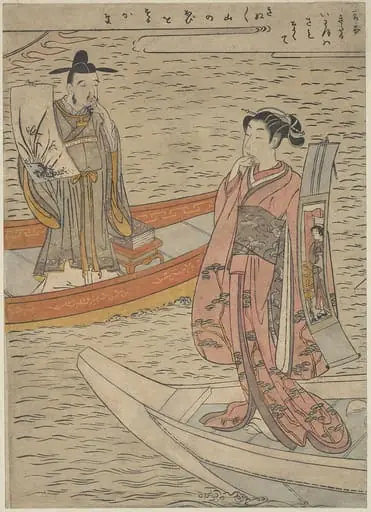
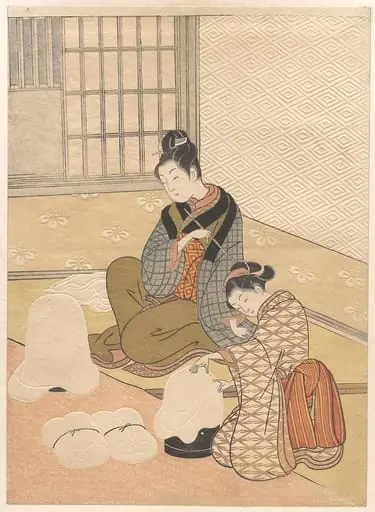
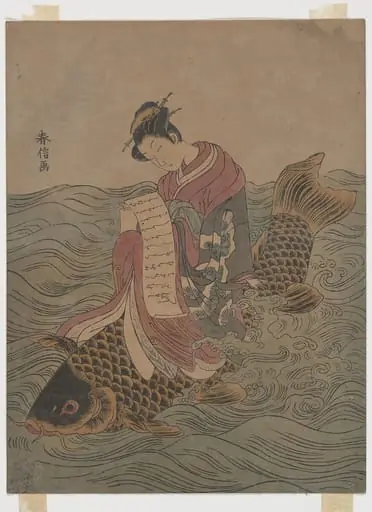
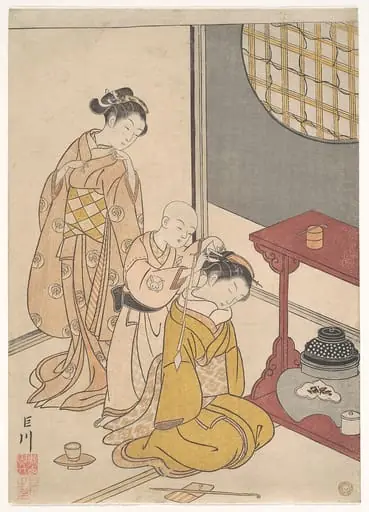
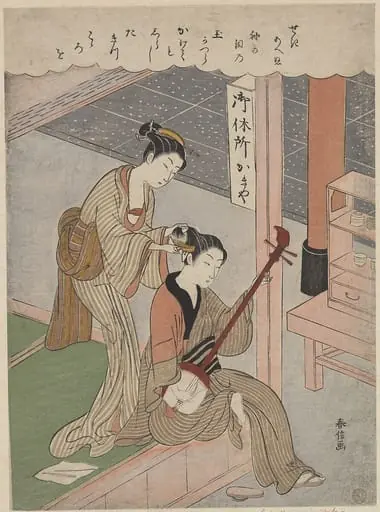
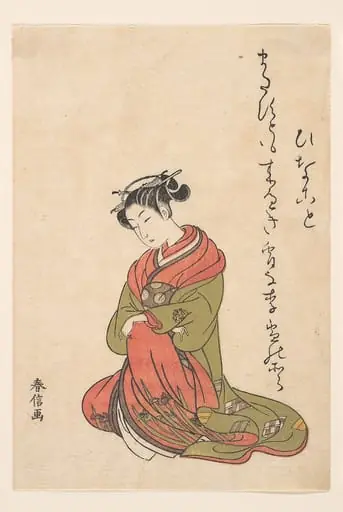 青楼美人合|The Courtesan Itsuhata with Her Pipe
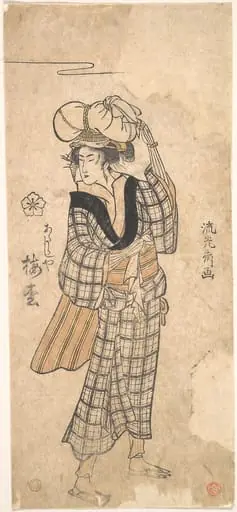 「あたらしや梅松」|The Courtesan Umematsu of the Atarashiya Brothel Costumed as an Ohara Maiden
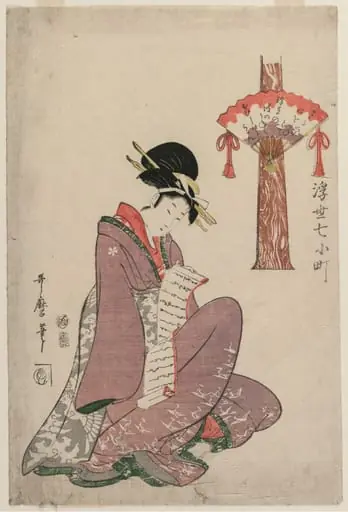 Woman Reading a Letter (from the series Seven Episodes in the Life of Komachi in the Floating World)
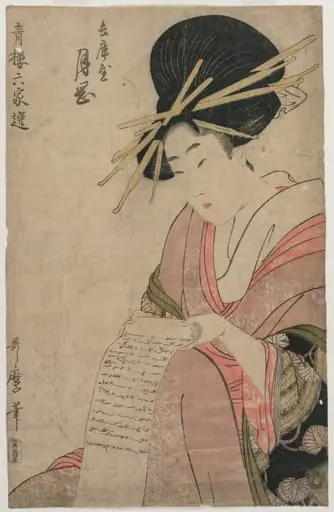 The Courtesan Tsukioka of Hyogoya Rolling a Letter (from the series A Selection of Six Authors in the Green Houses)
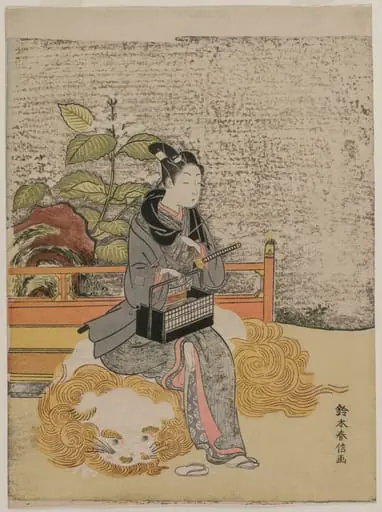 Youth as a Stand-in Monju
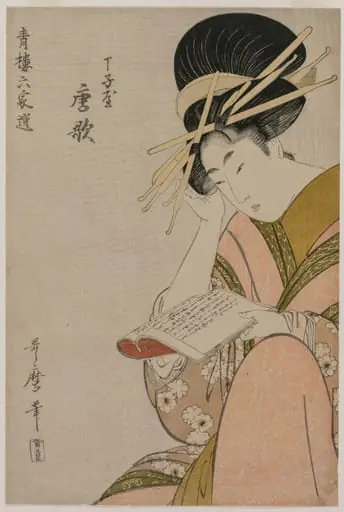 The Courtesan Karauta of Chojiya Reading a Book (from the series Six Authors of the Green Houses)
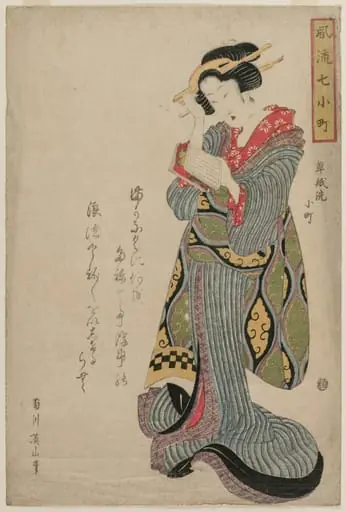 Komachi Washes the Book (from the series Seven Elegant Episodes from the Life of the Poetess Ono no Komachi)
 Kureha of Gakuiseya, from Selection of Beauties from the Pleasure Quarters