Artwork
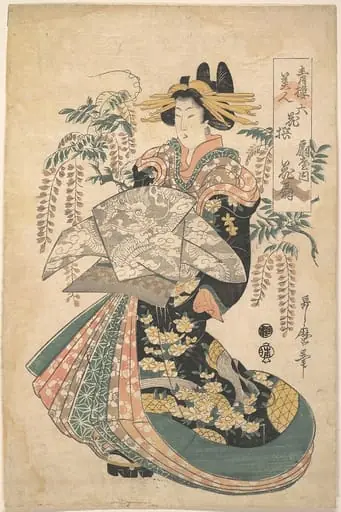
遊君出そめ初衣裳 扇屋内花扇|The Oiran Hanaogi of Ogiya attended by Two Shinzo and Her Kamuro Yoshino
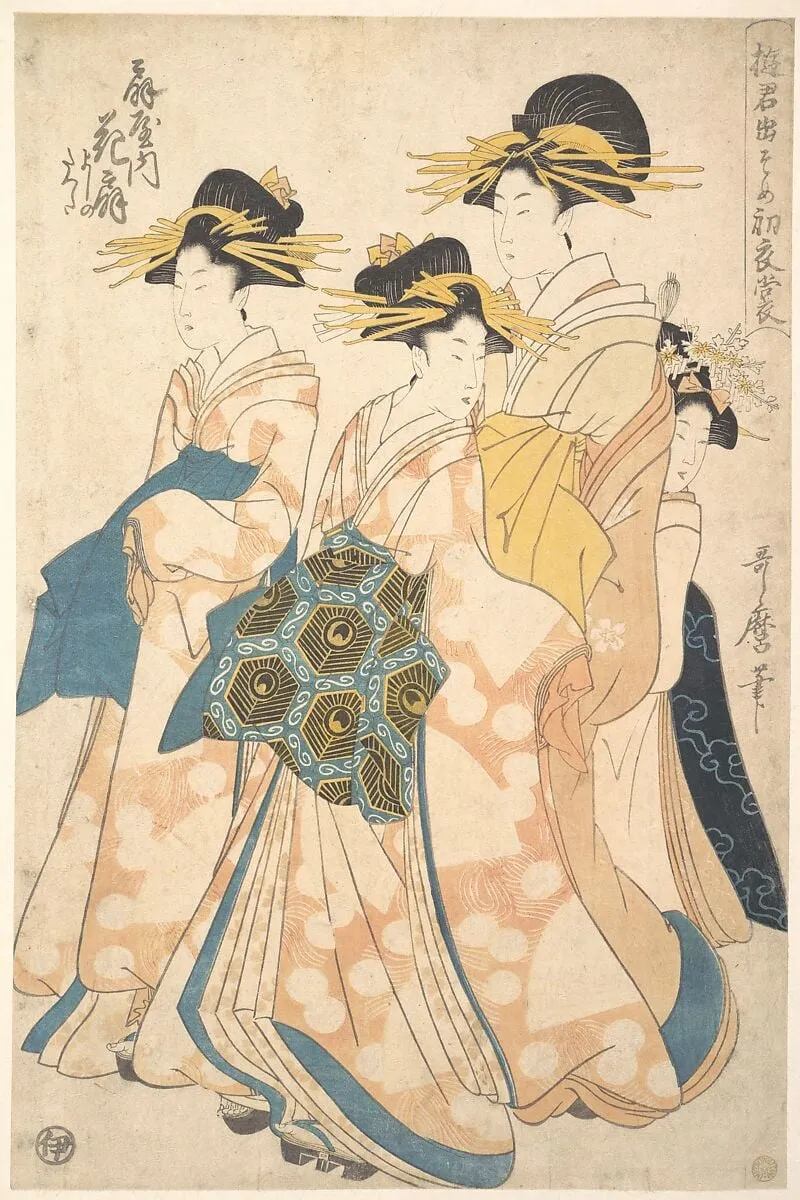
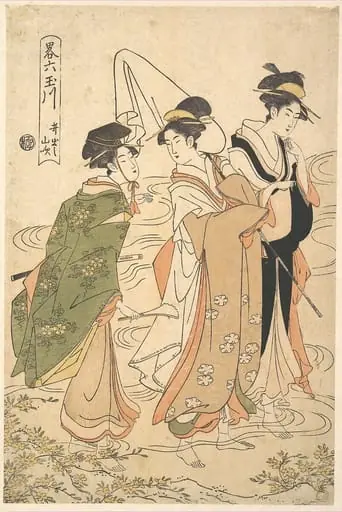
遊君出そめ初衣裳 扇屋内花扇|The Oiran Hanaogi of Ogiya attended by Two Shinzo and Her Kamuro Yoshino is an ink print by the Romanticist artist Utamaro II. It dates from 1806 and is held in the collection of the Metropolitan Museum of Art.
About this work
Overview
Rendered in ink and color on paper, it captures a moment of quiet ritual among three women associated with the Ogiya establishment.
This woodblock print, dated around 1806, is attributed to Utamaro II and depicts a scene from the pleasure quarters of Edo. Rendered in ink and color on paper, it captures a moment of quiet ritual among three women associated with the Ogiya establishment. The composition emphasizes stillness and refined detail, characteristic of ukiyo-e portraiture of the period. The work is part of the collection at The Metropolitan Museum of Art.
Subject & Meaning
The central figure is Hanaogi, an oiran of high rank, accompanied by two attendants: two shinzo and a kamuro named Yoshino. Their attire and accessories signal status within the courtesan hierarchy. The lantern she holds, adorned with intricate gold swirls, may symbolize her role as a hostess or mark a ceremonial occasion. The calm expressions and composed postures reflect the controlled elegance expected of elite courtesans in formal settings.
Technique & Style
Utamaro II employs flat areas of bold color—blue, yellow, and white—to define the robes, contrasting with the soft, blurred background of faint floral motifs. Lines are clean and minimal, suggesting movement without detail. The gold accents on the lantern and hair ornaments are applied with care, adding luminosity without realism. The lack of perspective and emphasis on pattern align with traditional ukiyo-e aesthetics, prioritizing symbolic presence over spatial depth.
History & Provenance
Created in the early 19th century during the Bunka era, the print likely circulated as a commercial print among urban patrons interested in the culture of the Yoshiwara. It entered the collection of The Metropolitan Museum of Art through documented acquisition, though its earlier ownership history remains undocumented. Its preservation reflects the growing Western interest in Japanese prints during the late 19th and early 20th centuries.
Context
This print belongs to a genre that documented the lives of courtesans, often commissioned by brothel owners to promote their most celebrated women. The Ogiya was a renowned establishment in Edo’s Yoshiwara district. Such images served both as advertising and as cultural artifacts, capturing the fashion, rituals, and social codes of a highly regulated yet glamorous subculture within Edo society.
Legacy
Though Utamaro II’s output is less widely studied than his predecessor’s, this print exemplifies the continuation of his stylistic lineage. It contributes to the historical record of female representation in Edo-period art, illustrating how status, dress, and ritual were visually codified. Today, it remains a reference for scholars examining the intersection of commerce, gender, and aesthetics in Japanese print culture.
Artist & collection

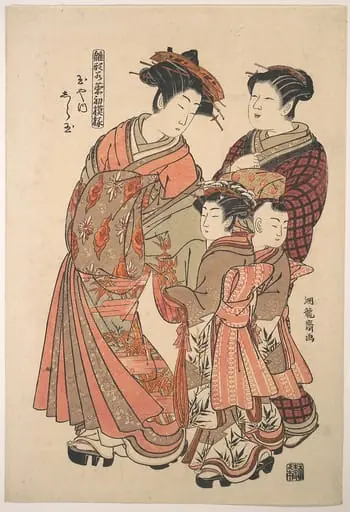 『雛形若菜初模様 玉や内 しら玉』|The Courtesan Shiratama of the Tamaya Brothel, from the series “A Pat-tern Book of the Year’s First Designs, Fresh as Spring Herbs” (“Hinagata wakana hatsu moyō”)
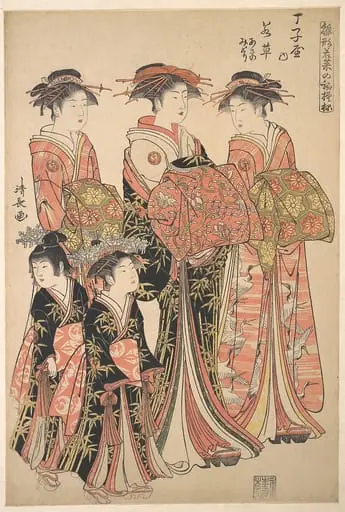 鳥居清長画 「雛形若菜の初模様 丁子屋の若草・ あさの・みどり」|The Courtesan Wakakusa of the Chōjiya Brothel, and Attendants Asano and Midori, from the series “A Pattern Book of the Year’s First Designs, Fresh as Spring Herbs” (Hinagata wakana no hatsumoyō)
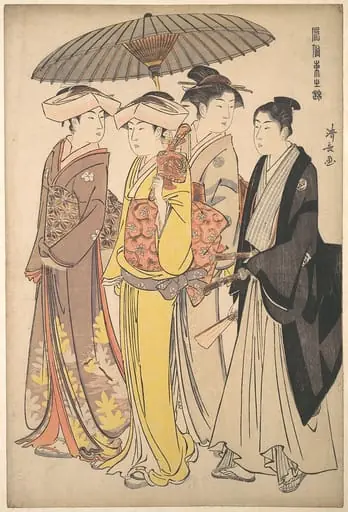 「風俗東之錦」 武家の息女と侍女と若党 |A Lady from a Samurai Household with Three Attendants, from the series A Brocade of Eastern Manners (Fūzoku Azuma no nishiki)
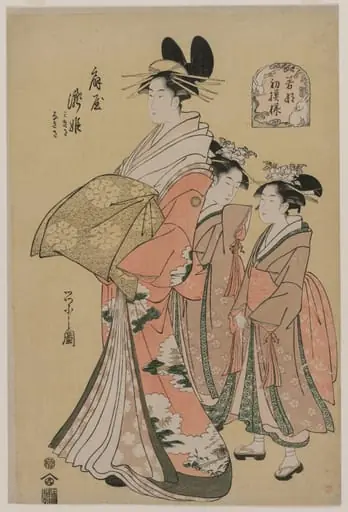 The Courtesan Takihime and Attendants (from the series New Patterns of Young Greens)
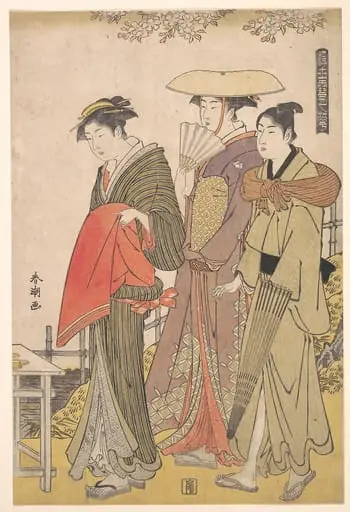 Ukiyoe Ga|The Beauty of the Floating World
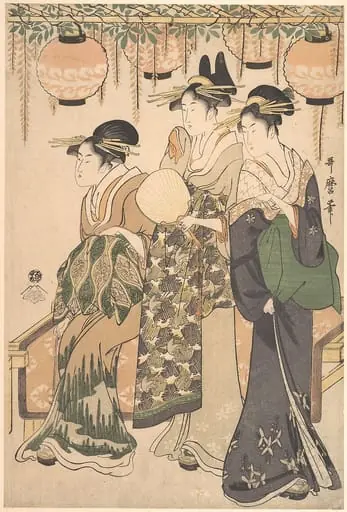 藤棚下の遊女たち|Courtesans Beneath a Wisteria Arbor (Fuji dana shita no yūjo tachi)
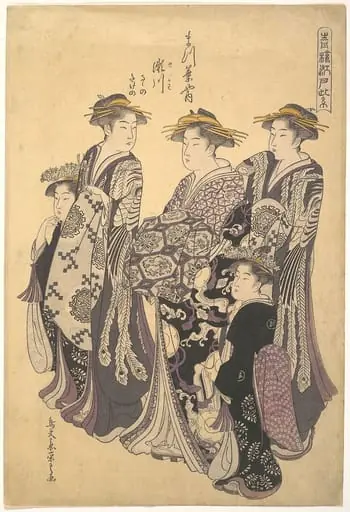 Seiryu Edo|Courtesan District of Edo
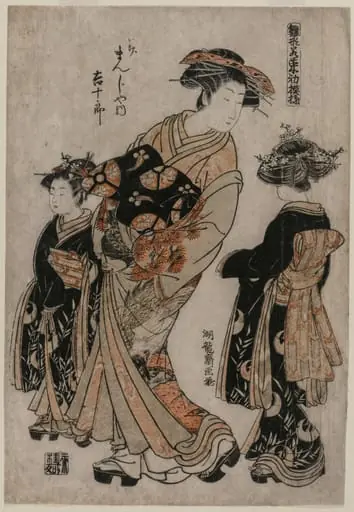 The Courtesan Kichijuro of Kage Manjiya with Two Kamuro (from the series Models for Fashions: New Designs as Fresh as Young Leaves)
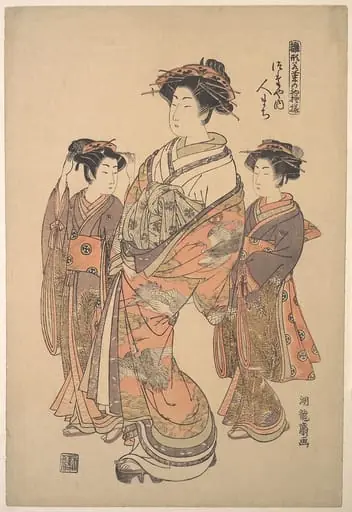 『雛形若菜の初模様 つたや内 人まち』|The Courtesan Hitomachi of the Tsutaya Brothel, from the series “A Pat-tern Book of the Year’s First Designs, Fresh as Spring Herbs” (“Hinagata wakana no hatsu moyō”)
 礫川亭永理 (鳥橋斎栄里)画 「畧六玉川 井出の山吹」|Mountain Roses of Ide (Ide no Yamabuki), from the series A Parodic Six Jewel Rivers (Yatsushi Mu-Tamagawa)