Artwork
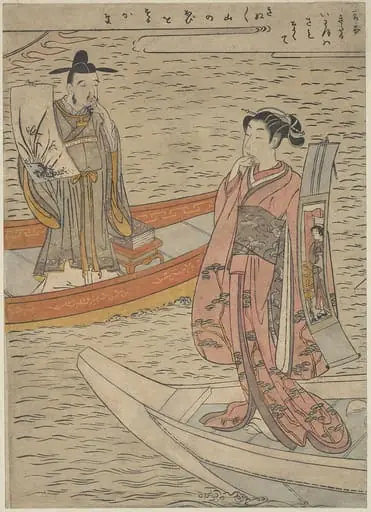
井手の玉川|Jewel River at Ide (Ide no Tamagawa)
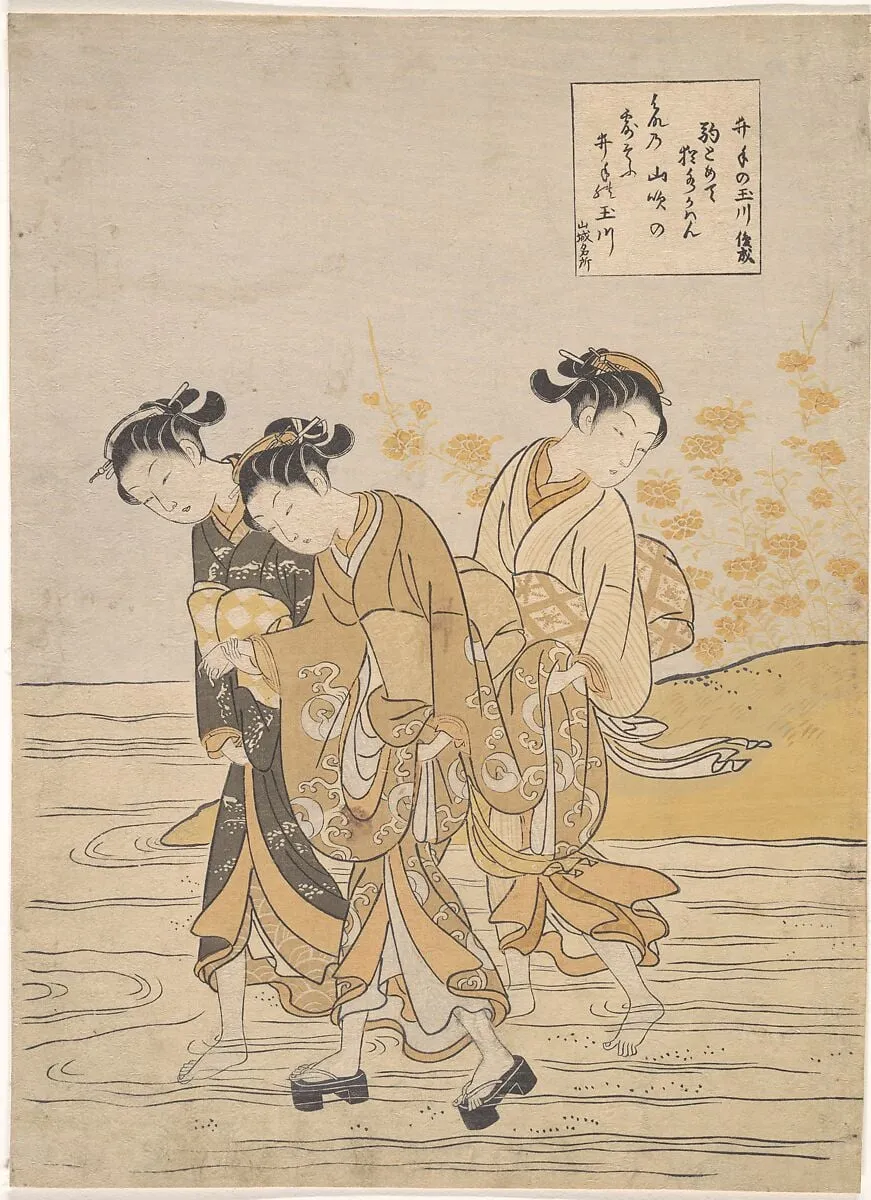
井手の玉川|Jewel River at Ide (Ide no Tamagawa) is an ink print by the Romanticist artist Suzuki Harunobu. It dates from 1768 and is held in the collection of the Metropolitan Museum of Art.
About this work
Overview
Created around 1768, this woodblock print by Suzuki Harunobu depicts a tranquil riverside scene. Three women in flowing kimono walk along the bank, their garments rendered in soft, swirling patterns. The composition balances the figures with a lightly sketched water surface and drifting cherry blossoms, conveying a moment of leisurely travel in an elegant, seasonal setting.
Subject & Meaning
The work presents three female travelers, a common motif in Edo‑period genre prints that celebrates the pleasures of seasonal outings. The presence of fans and the delicate cherry blossoms suggest a spring setting, while the graceful posture of the women conveys refined femininity and the social ritual of promenade along a river.
Technique & Style
Harunobu employed the multicolor woodblock method (nishiki-e), combining ink and pigments on paper. Fine, almost calligraphic brushstrokes define the folds of the kimono and the rippling water, while the muted palette emphasizes subtle tonal shifts. The use of swift, wavy lines for the river surface creates a sense of movement without heavy detailing.
History & Provenance
The print is part of the Metropolitan Museum of Art’s collection, acquired as a representative example of Harunobu’s early nishiki-e output. Its dating to the late 1760s places it among the artist’s works that helped popularize color woodblock printing in mid‑Edo Japan, reflecting both technical innovation and contemporary taste.
Artist & collection

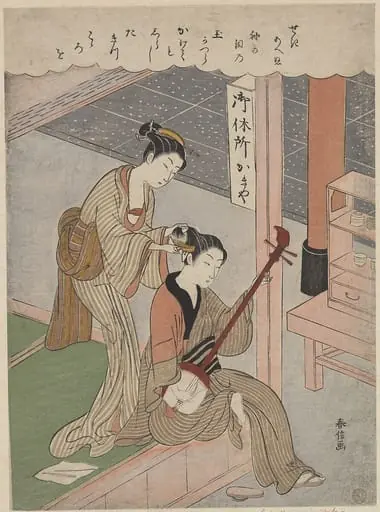
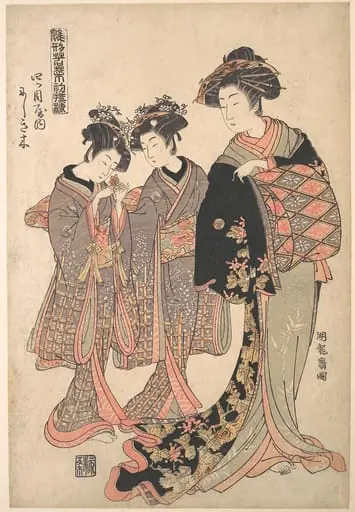 『雛形若菜初模様 四ツ目屋内 にしき木』|The Courtesan Nishikigi of the Yotsumeya Brothel, from the series “A Pattern Book of the Year’s First Designs, Fresh as Spring Herbs” (“Hinagata wakana hatsu moyō”)
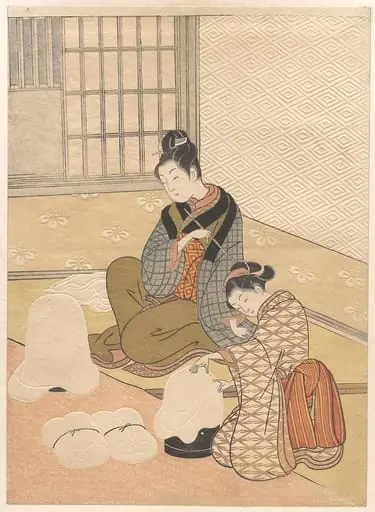
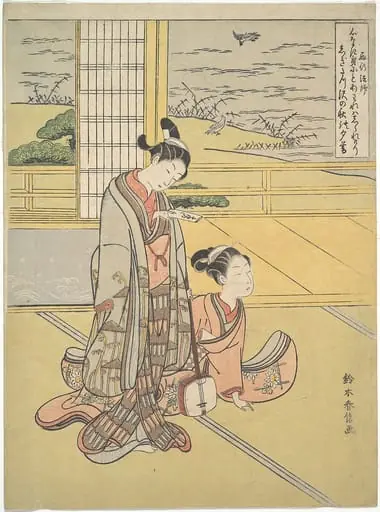 鈴木春信画 見立三夕 「西行法師」|A Young Man and Woman with a Shamisen; Monk Saigyō, from a series alluding to the Three Evening Poems (Sanseki waka)
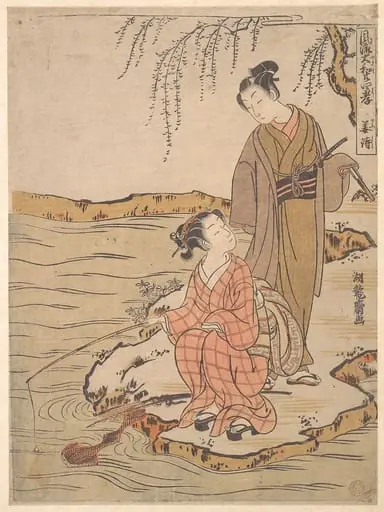 Untitled
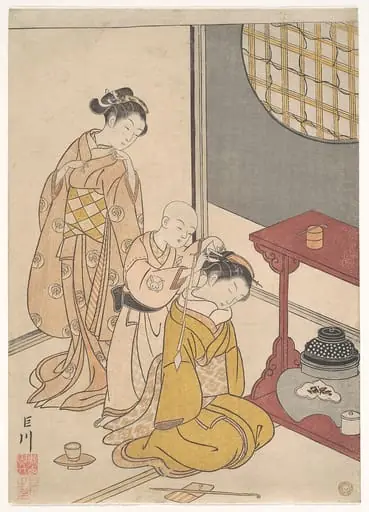
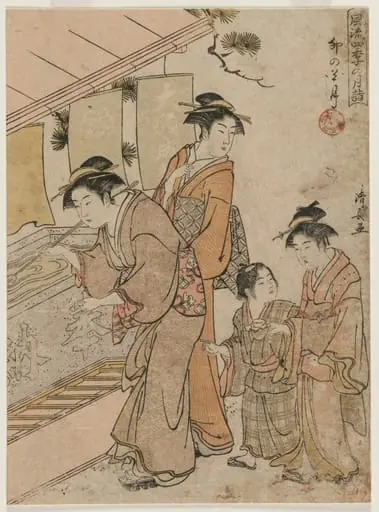 The Fourth Month (from the series Fashionable Monthly Visits to Temples in the Four Seasons)
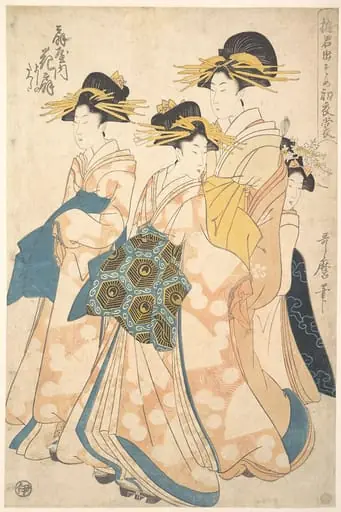 遊君出そめ初衣裳 扇屋内花扇|The Oiran Hanaogi of Ogiya attended by Two Shinzo and Her Kamuro Yoshino
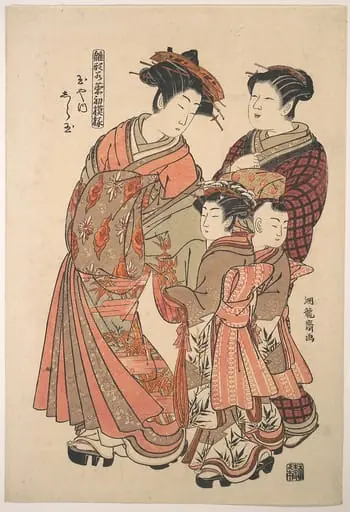 『雛形若菜初模様 玉や内 しら玉』|The Courtesan Shiratama of the Tamaya Brothel, from the series “A Pat-tern Book of the Year’s First Designs, Fresh as Spring Herbs” (“Hinagata wakana hatsu moyō”)
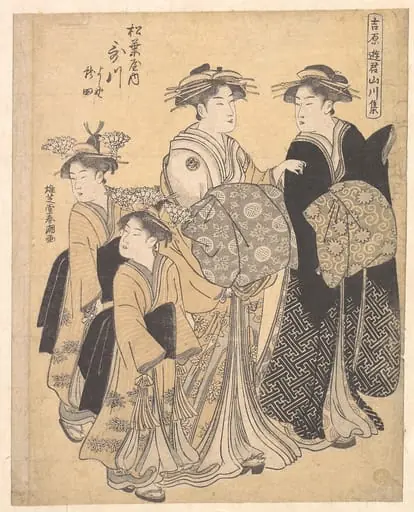 Untitled