Artwork
Untitled
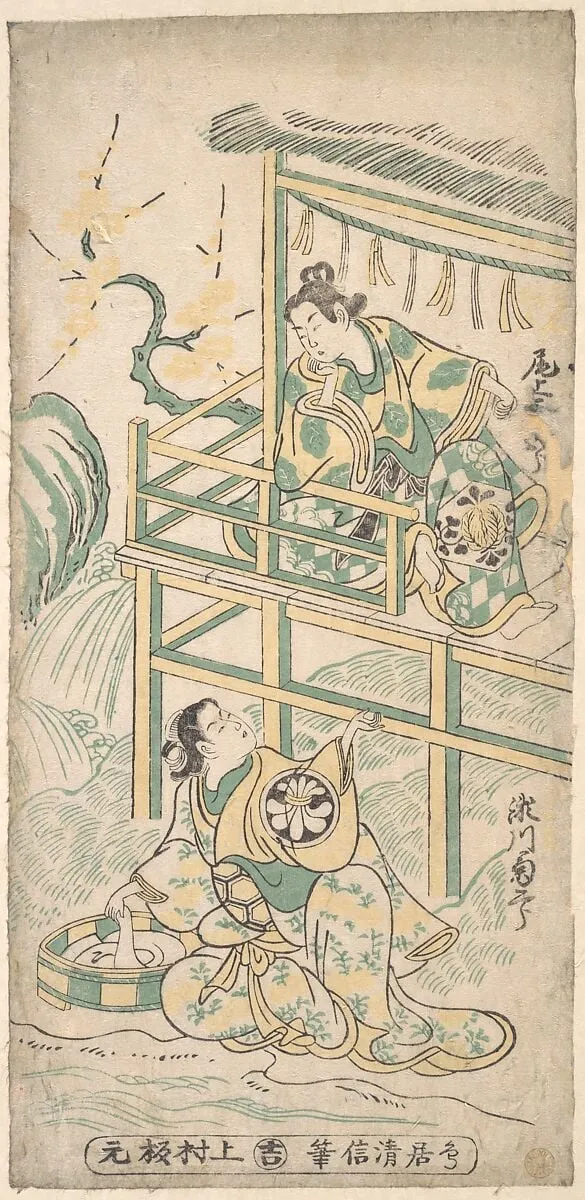
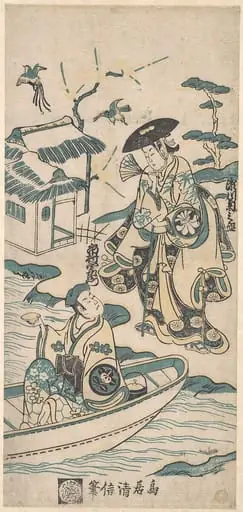
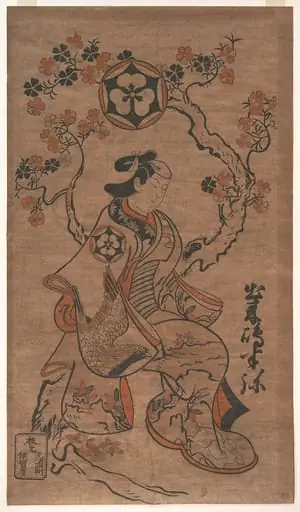
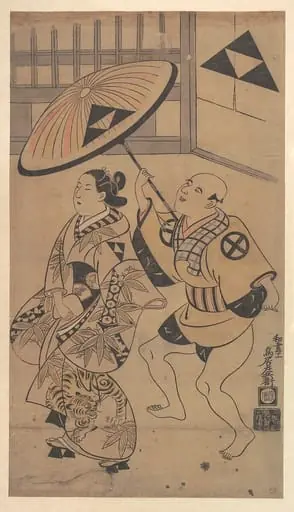
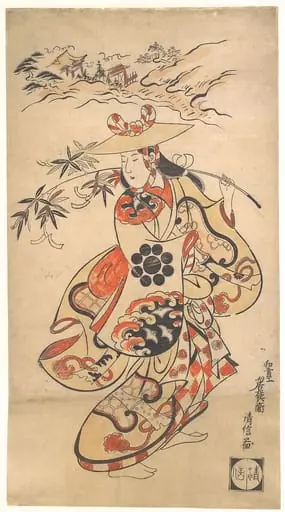
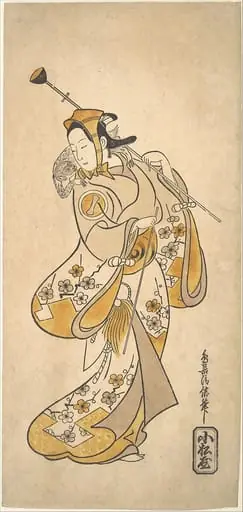
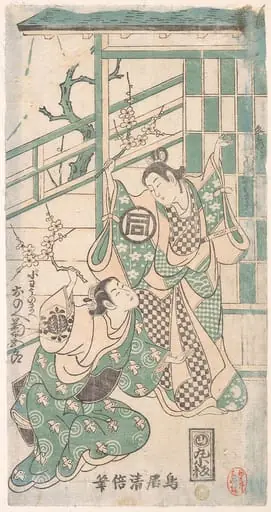
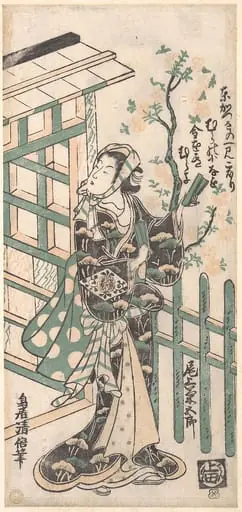
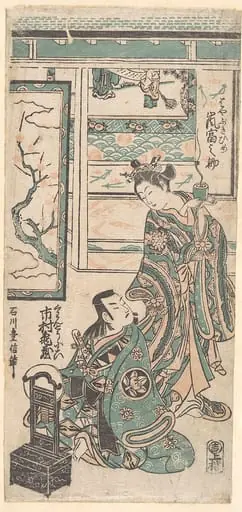
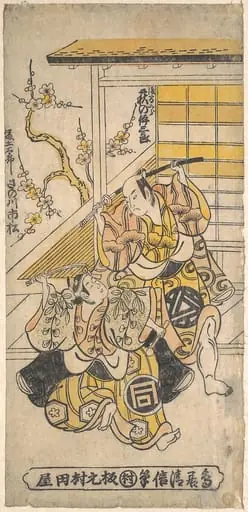
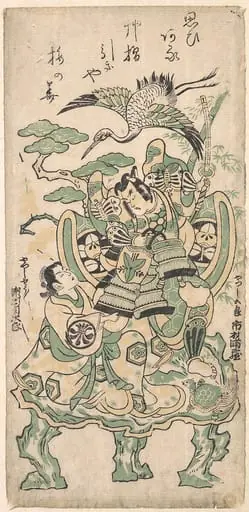
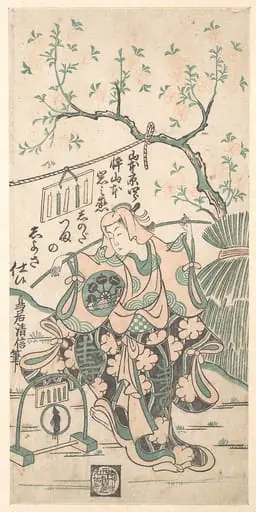
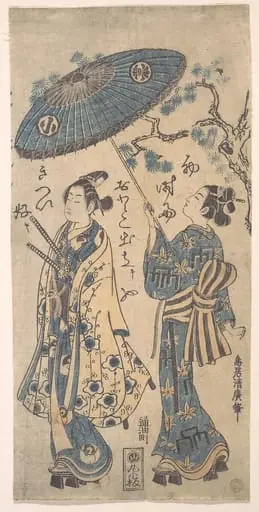
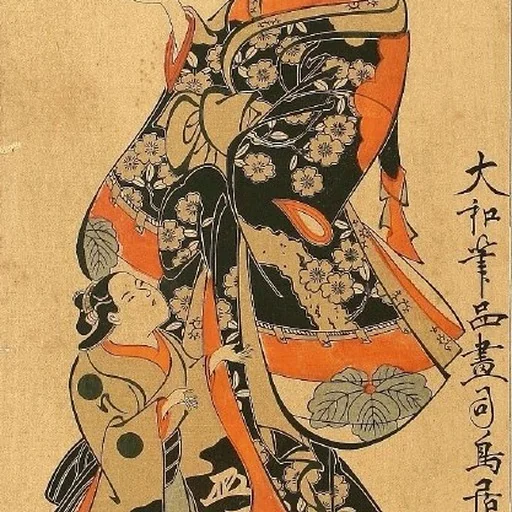
Untitled is an ink print by the Baroque artist Torii Kiyonobu. It is held in the collection of the Metropolitan Museum of Art.
About this work
Overview
This woodblock print, dated around 1745, is attributed to Torii Kiyonobu I and resides in The Metropolitan Museum of Art’s collection.
This woodblock print, dated around 1745, is attributed to Torii Kiyonobu I and resides in The Metropolitan Museum of Art’s collection. Executed in ink and color on paper, it exemplifies the ukiyo-e tradition’s focus on quiet, domestic moments. The composition captures two women in a modest waterside dwelling, their gestures and positioning suggesting an unspoken narrative. The work’s restrained palette and fluid linework reflect a shift toward subtlety in early Edo-period printmaking.
Subject & Meaning
The scene depicts two women in an ordinary domestic setting: one seated indoors with a basket, gazing upward; the other leans on a balcony, holding a fan and a cat. Their interaction implies a moment of pause amid daily routines. The bare tree and churning waves in the background evoke transience and the passage of time, common themes in Japanese aesthetics. The cat, a subtle presence, adds warmth and intimacy, grounding the image in lived experience rather than theatricality.
Technique & Style
Kiyonobu employed swift, expressive brushwork to convey motion and atmosphere, with lines that suggest rather than define form. Colors are applied thinly and selectively, favoring muted earth tones and soft grays over vivid hues. The background elements—waves and branches—are rendered with minimal detail, relying on implied movement. This approach reflects a move away from the bold, theatrical style of earlier Torii school works toward a more intimate, observational mode.
History & Provenance
Created during the mid-Edo period, the print likely originated as part of a series or standalone image for a broad urban audience. It entered The Metropolitan Museum of Art’s collection through established channels of early 20th-century Japanese art acquisition. While its exact early ownership is undocumented, its preservation suggests it was valued for its compositional grace and technical refinement within collector circles.
Context
In the 1740s, ukiyo-e was expanding beyond kabuki actors and courtesans to include scenes of everyday life. Kiyonobu, a leading figure of the Torii school, contributed to this shift by applying his theatrical training to domestic subjects. His work bridged the dynamic energy of early ukiyo-e with the quieter realism that would later define artists like Utamaro. This print reflects a broader cultural interest in the poetry of ordinary moments.
Legacy
Though less celebrated than later ukiyo-e masters, Kiyonobu’s experimentation with mood and composition influenced the evolution of genre scenes in Japanese printmaking. His use of restrained color and suggestive line work paved the way for more introspective imagery. This print stands as an early example of how the medium could convey emotional nuance without overt drama, contributing to the genre’s lasting depth.
Artist & collection
Artist
Torii Kiyonobu I (Japanese: 鳥居 清信; c. 1664 – 22 August 1729) was a Japanese painter and printmaker in the ukiyo-e style, who is renowned for his work on kabuki signboards and related materials. Along with his father…