Artwork
A Monkey Playing on His Back
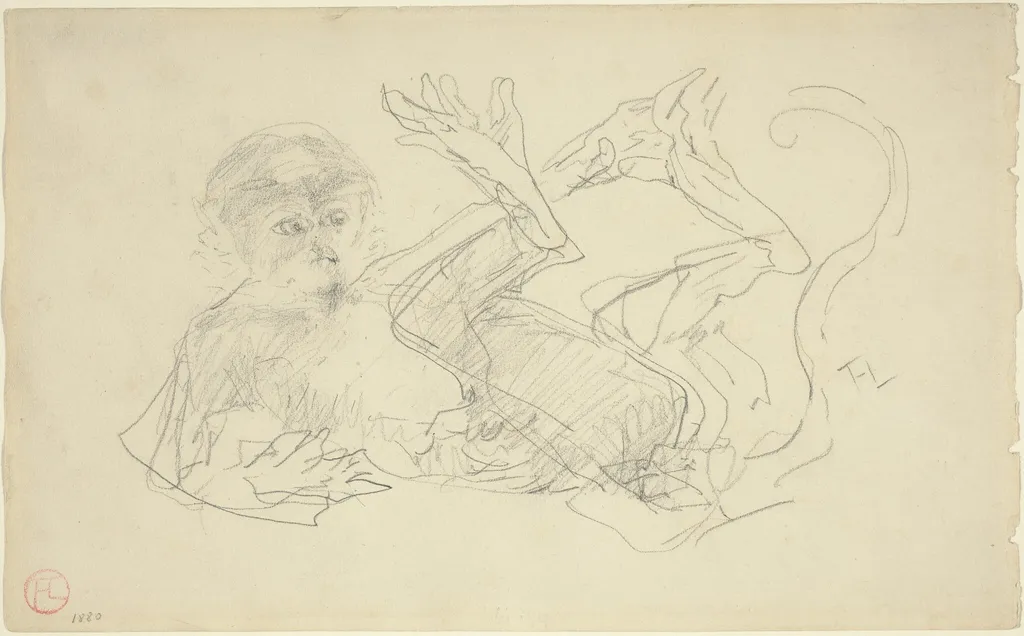
A Monkey Playing on His Back is a graphite drawing by the Impressionist artist Henri de Toulouse-Lautrec. It dates from 1880 and is held in the collection of the National Gallery of Art.
About this work
Overview
Henri de Toulouse‑Lautrec’s drawing *A Monkey Playing on His Back* was executed in 1880 with graphite on wove paper. The work measures a modest size typical of his early studies and depicts a solitary monkey in a relaxed pose. As a paper drawing, it showcases the artist’s preliminary handling of line and shading before he turned to larger, more public subjects.
Subject & Meaning
The image presents a monkey reclining on its back, a motif that hints at the artist’s fascination with animals as symbols of leisure and vulnerability. While the composition is straightforward, the choice of a playful primate reflects Toulouse‑Lautrec’s early interest in everyday scenes that later evolved into more complex portrayals of Parisian nightlife.
Technique & Style
Rendered entirely in graphite, the drawing relies on varied pressure to create tonal depth, from delicate hatching in the background to richer, darker strokes defining the monkey’s form. The use of wove paper provides a smooth surface that allows fine detail, while the overall line work anticipates the bold, expressive contours that would characterize the artist’s later prints and posters.
History & Provenance
Created when Toulouse‑Lautrec was sixteen, the drawing belongs to the period before his immersion in Montmartre’s cabaret and brothel circles. It remained in private collections for much of the 20th century before entering a museum holding of his early sketches, where it serves as a reference point for scholars tracing his artistic development.
Context
The late 19th‑century Parisian art scene was dominated by Impressionist and Post‑Impressionist experiments, yet Toulouse‑Lautrec pursued a more observational approach, focusing on marginal figures and quotidian moments. This early work, produced before his famous depictions of performers, illustrates his initial engagement with drawing as a tool for studying form and gesture within the bustling urban environment.
Artist & collection
Artist
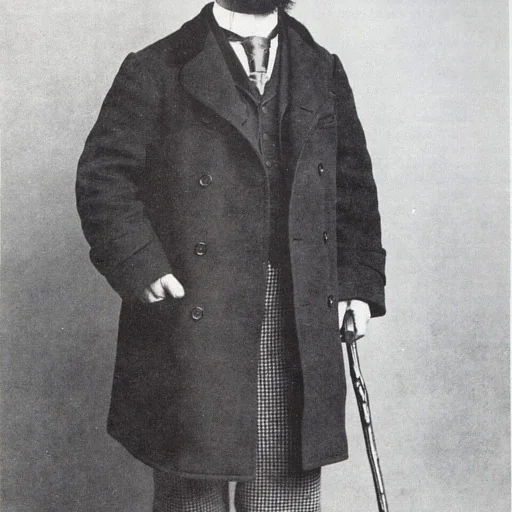
Comte Henri Marie Raymond de Toulouse-Lautrec-Montfa (24 November 1864 – 9 September 1901), known as Toulouse-Lautrec (French: ), was a French painter, printmaker, draughtsman, caricaturist, and illustrator.

![Sheet of Studies [recto and verso], by John Flaxman](https://artifactworldgallery.com/img/john-flaxman--sheet-of-studies-recto-and-verso--47b91b8b6f057ed6-w320.webp) Sheet of Studies [recto and verso]
Sheet of Studies [recto and verso] Untitled
 Untitled
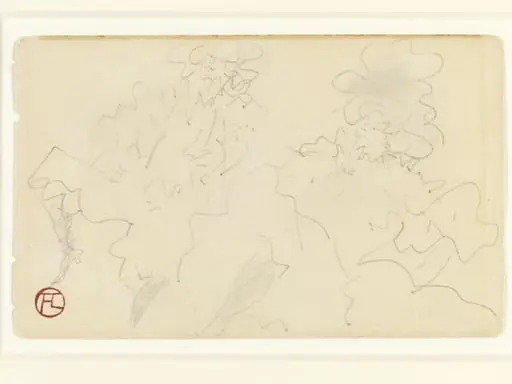 Two women dancing
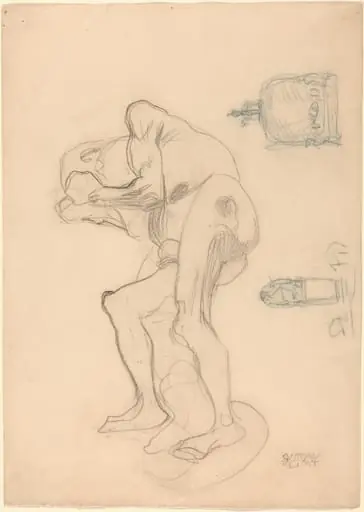 Study of a Nude Old Woman Clenching Her Fists, and Two Decorative Objects
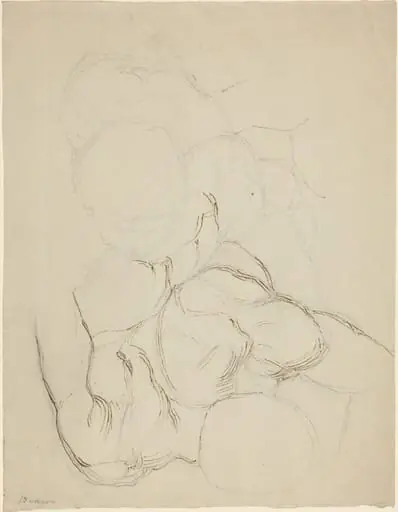 Two Male Nudes seen from Above
![Study for "Shoeing Calvary Horses at the Front" [verso], by John Singer Sargent](https://artifactworldgallery.com/img/john-singer-sargent--study-for-shoeing-calvary-horses-at-the-front-verso--6f6d1a163e84e9ab-w320.webp) Study for "Shoeing Calvary Horses at the Front" [verso]
Study for "Shoeing Calvary Horses at the Front" [verso]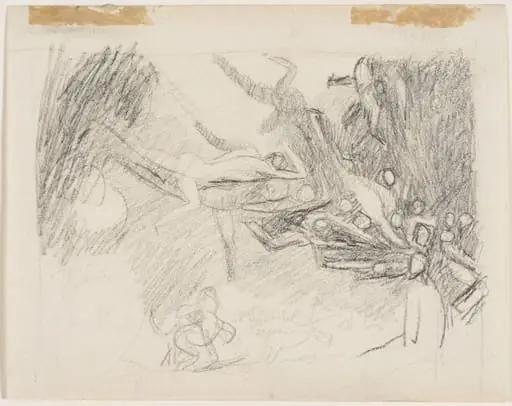 Untitled
 Untitled
![Head of a Cow [recto], by Paul Gauguin](https://artifactworldgallery.com/img/paul-gauguin--head-of-a-cow-recto--b91cefb1149f906f-w320.webp) Head of a Cow [recto]
Head of a Cow [recto] Studies of a Male Nude (verso)
![Crouching Monkey and Man's Head; Bones and Muscles [verso], by Paul Gauguin](https://artifactworldgallery.com/img/paul-gauguin--crouching-monkey-and-man-s-head-bones-and-muscles-verso--6ce66c8fb6bba7c2-w320.webp) Crouching Monkey and Man's Head; Bones and Muscles [verso]
Crouching Monkey and Man's Head; Bones and Muscles [verso]