Artwork
A Spectator (Une spectatrice)
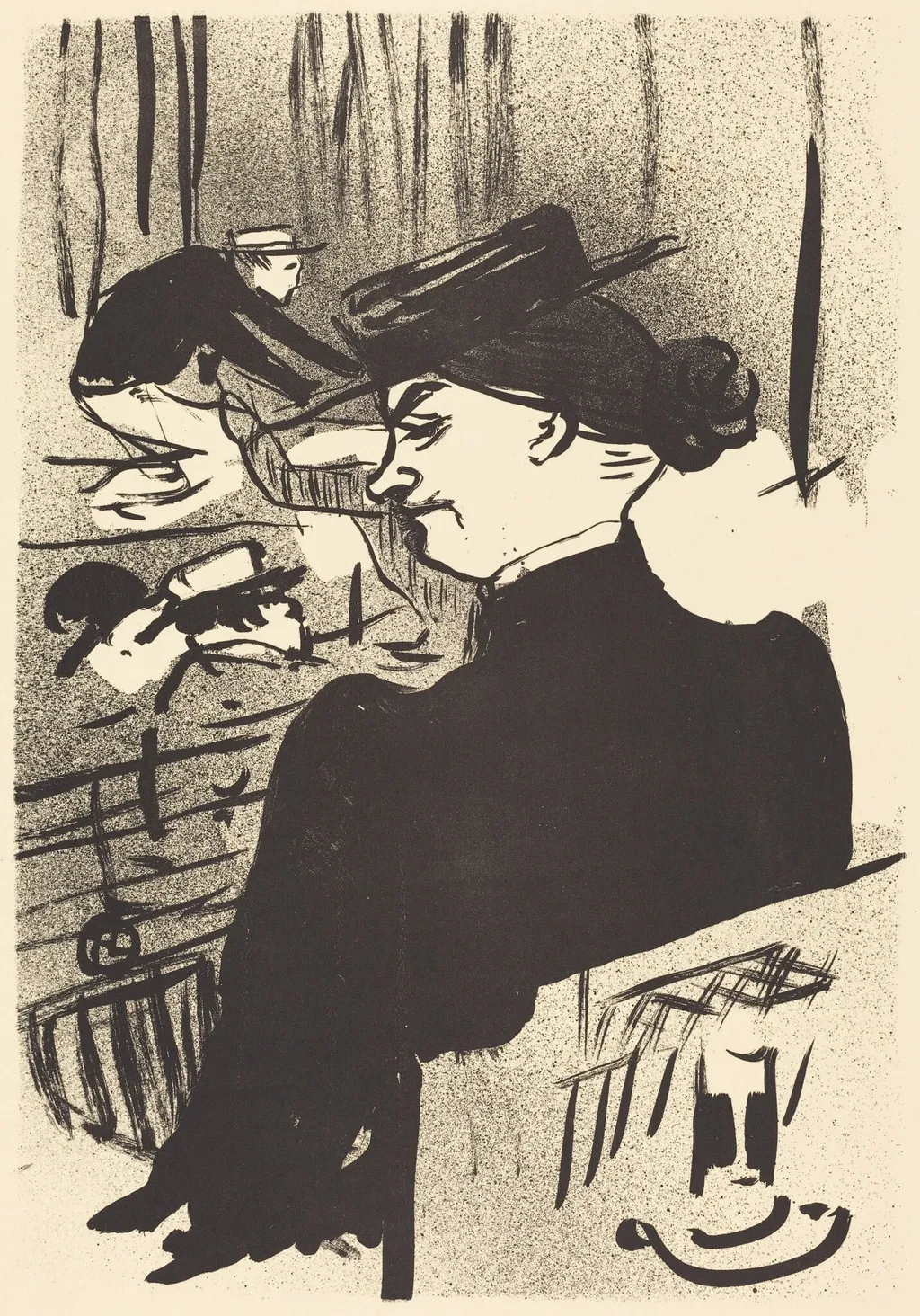
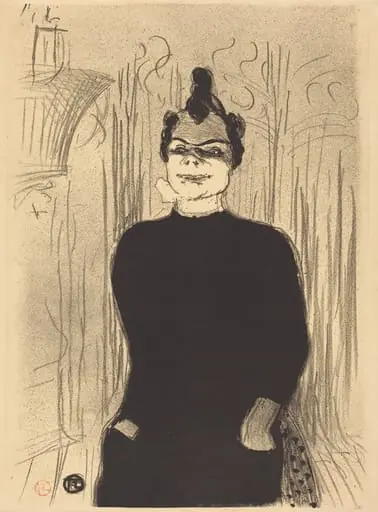
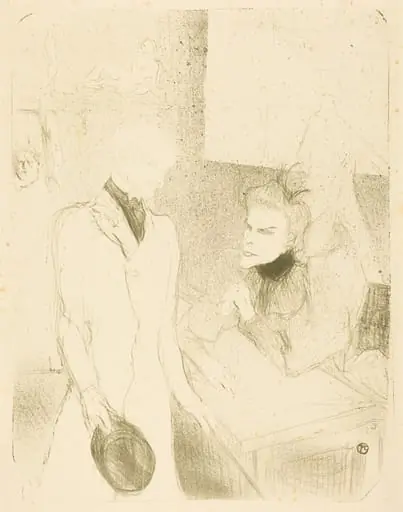
A Spectator (Une spectatrice) is an ink print by the Impressionist artist Henri de Toulouse-Lautrec. It dates from 1893 and is held in the collection of the National Gallery of Art.
About this work
Overview
It belongs to a series of works documenting Parisian leisure and performance spaces, where the artist observed social interactions with quiet intensity.
Created in 1893, *A Spectator* is a lithograph by Henri de Toulouse-Lautrec, executed in black ink on velin paper. It belongs to a series of works documenting Parisian leisure and performance spaces, where the artist observed social interactions with quiet intensity. The print exemplifies his shift from painting to graphic media, allowing wider distribution of his observations of urban life during the fin de siècle.
Subject & Meaning
The scene depicts two figures in a confined interior: a woman seated frontally, dressed in dark attire with a hat, absorbed in an object held in her hands; behind her, a man sits with legs crossed, gazing outward. Their proximity and lack of direct engagement suggest a shared but unspoken space, evoking the anonymity and quiet solitude often found in public venues. The image captures a moment of stillness amid the bustle of nightlife, emphasizing observation over action.
Technique & Style
Toulouse-Lautrec employed lithography to achieve rapid, fluid linework that mimicked sketching. The figures are rendered with loose, confident strokes, avoiding idealized detail in favor of expressive gesture. The background’s textured, uneven patterning suggests a draped curtain or wall, adding depth without definition. The contrast between the solid silhouettes and the rough, atmospheric ground enhances the sense of immediacy and informal observation.
History & Provenance
This print emerged during a period when Toulouse-Lautrec was deeply involved in commercial lithography, producing posters and illustrations for Parisian entertainments. Though not as widely known as his cabaret posters, *A Spectator* reflects his ongoing interest in private moments within public settings. Its survival in private and institutional collections attests to its quiet resonance among collectors of his graphic work.
Context
In the 1890s, Parisian cabarets and theaters became sites of social experimentation and class mingling. Toulouse-Lautrec, an aristocrat with physical disabilities, often moved among performers and patrons as an insider-outsider. His prints like this one avoid glorification, instead recording the subtle rhythms of human behavior—waiting, watching, lingering—in spaces where identity was fluid and performance was constant.
Legacy
Toulouse-Lautrec’s use of lithography helped redefine printmaking as a medium for modern social commentary. *A Spectator* exemplifies his influence on later artists who sought to capture urban life with psychological nuance and formal economy. His focus on unposed, unidealized figures laid groundwork for 20th-century realism in graphic arts, shifting emphasis from spectacle to the quiet presence of the individual.
Artist & collection
Artist
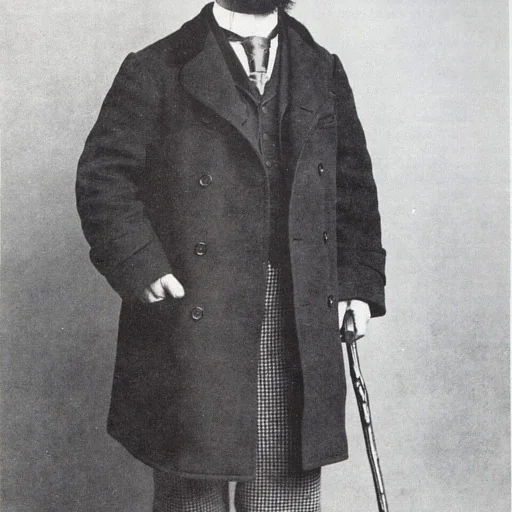
Comte Henri Marie Raymond de Toulouse-Lautrec-Montfa (24 November 1864 – 9 September 1901), known as Toulouse-Lautrec (French: ), was a French painter, printmaker, draughtsman, caricaturist, and illustrator.

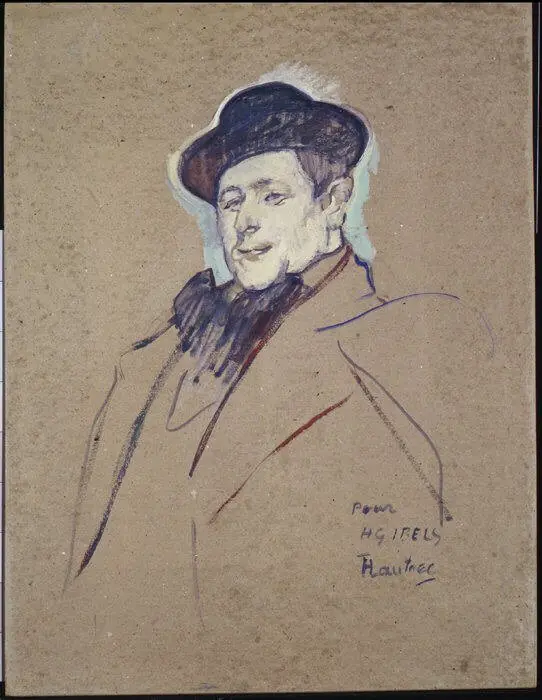
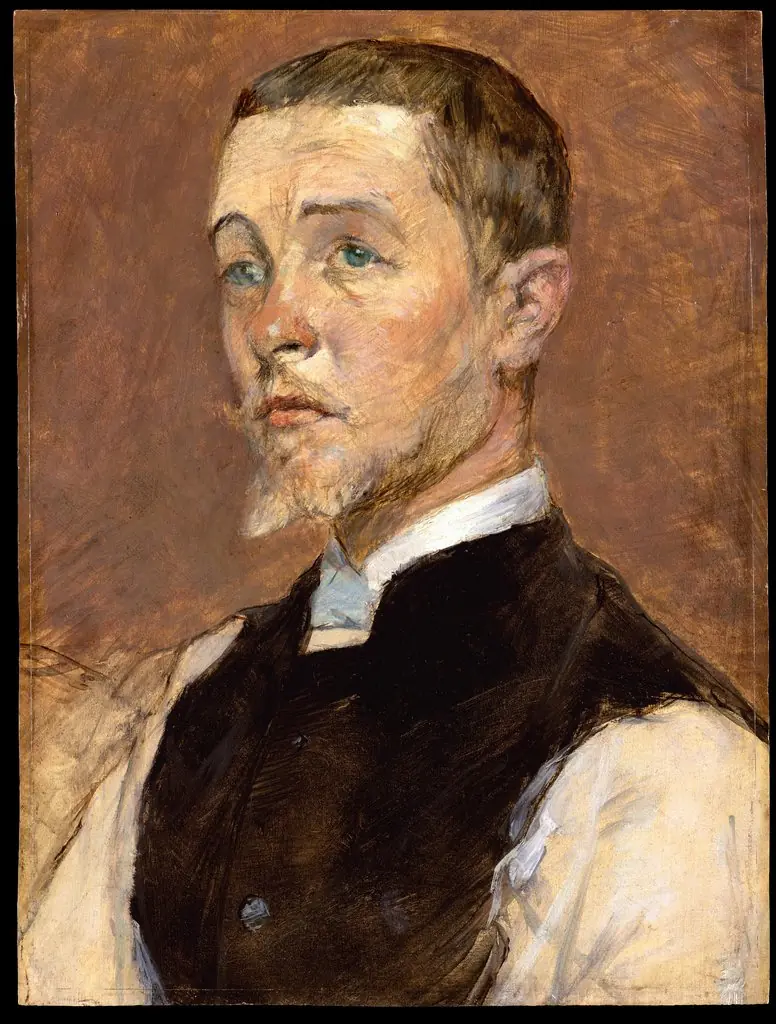
 At La Gaiete Rochechouart: Nicolle (A La Gaieté Rochechouart: Nicolle)
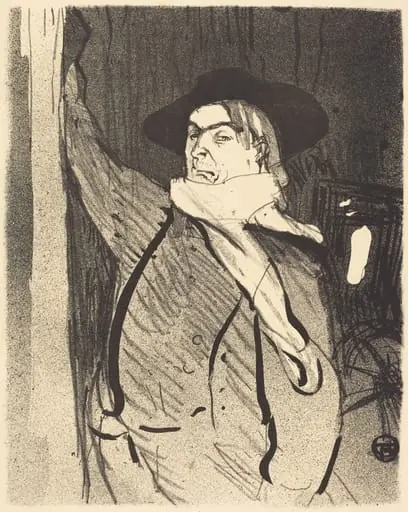 Aristide Bruant
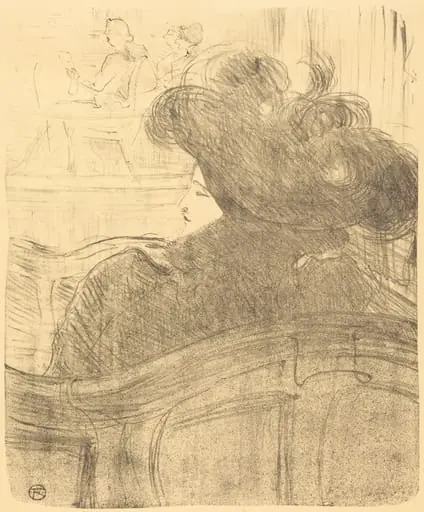 Cléo de Mérode
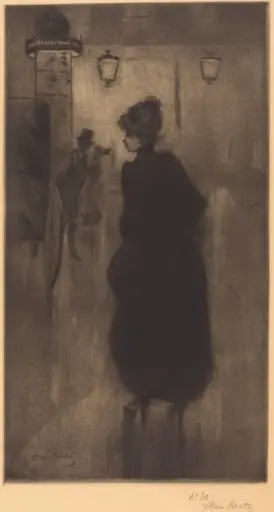 Parisian Woman (The Effect of the Night)
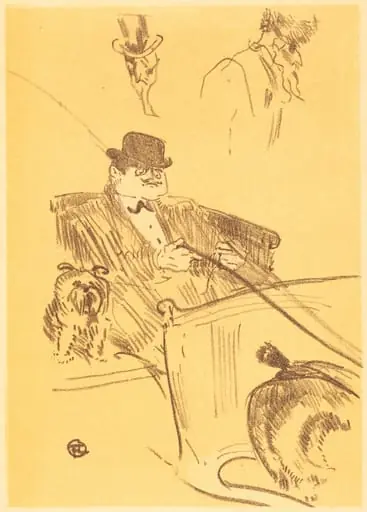 Cover for "La tribu d'Isodore" (Couverture pour "La tribu d'Isodore")
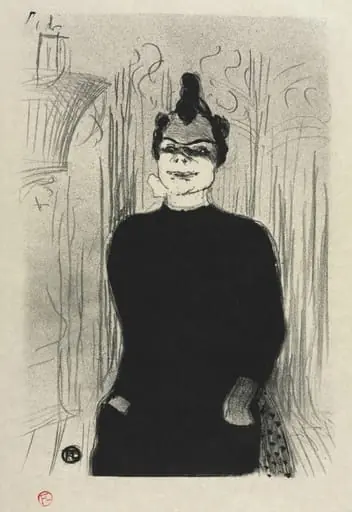 At the Gaieté Rochechouart: Nicolle
 Brandes and Le Bargy in "Cabotins" (Brandès et Les Bargy dans "Cabotins")
 Mary Cassatt at the Louvre: The Paintings Gallery
 Reflection
 La Queue au spectacle