Artwork
American Singer (Chanteur américain)
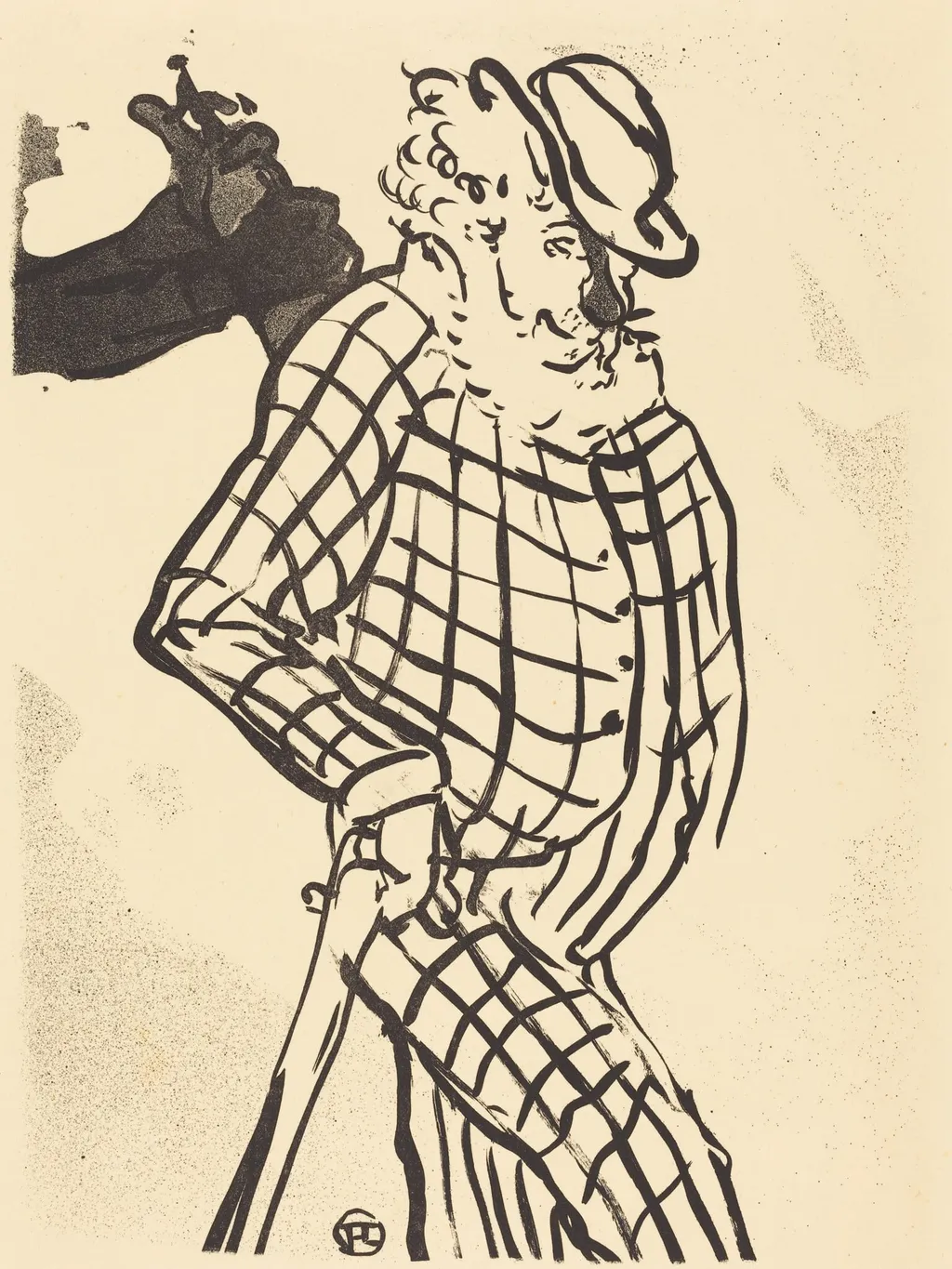
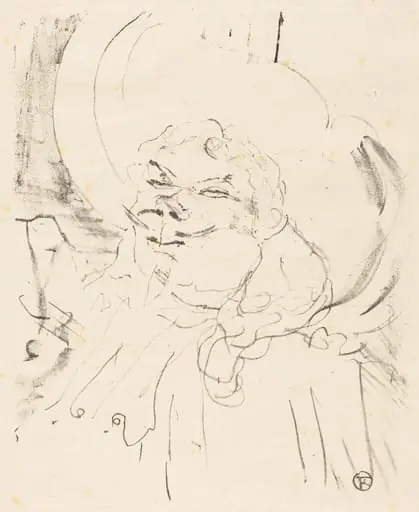
American Singer (Chanteur américain) is an ink print by the Impressionist artist Henri de Toulouse-Lautrec. It dates from 1893 and is held in the collection of the National Gallery of Art.
About this work
Overview
Henri de Toulouse-Lautrec produced the lithograph *American Singer (Chanteur américain)* in 1893. Executed in black on velin paper, the work belongs to his series of prints that capture the energy of Parisian nightlife. It reflects the artist’s fascination with performers and the informal moments that unfold in cabarets and music halls.
Subject & Meaning
The image portrays a loosely seated figure, one arm lifted as if holding a drink or making a casual gesture. The musculature and clothing are rendered with jagged, interlaced lines that give a woven texture, while the face is sketched with rapid, wavy strokes, suggesting a fleeting, observational quality typical of Toulouse-Lautrec’s depictions of entertainers.
Technique & Style
Created through lithography, the picture was drawn directly onto a smooth stone surface and then transferred onto paper. The black ink on velin paper emphasizes stark contrasts, and the loose, sketch‑like execution conveys immediacy. This method allowed the artist to reproduce the spontaneous feel of a live scene while maintaining the graphic intensity of his line work.
Context
Born into French aristocracy in 1864, Toulouse-Lautrec suffered severe leg injuries that stunted his growth, leading him to immerse himself in the bohemian circles of Montmartre. By the early 1890s he was a prolific chronicler of Paris’s cabaret culture, and *American Singer* exemplifies his practice of documenting the city’s performers with a blend of realism and theatrical flair.
Artist & collection
Artist
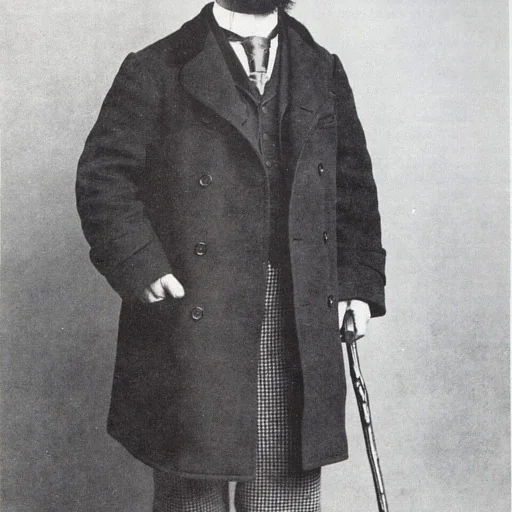
Comte Henri Marie Raymond de Toulouse-Lautrec-Montfa (24 November 1864 – 9 September 1901), known as Toulouse-Lautrec (French: ), was a French painter, printmaker, draughtsman, caricaturist, and illustrator.

 Coquelin the Elder (Coquelin aine)
 Lesender Mönch (Priest Reading)
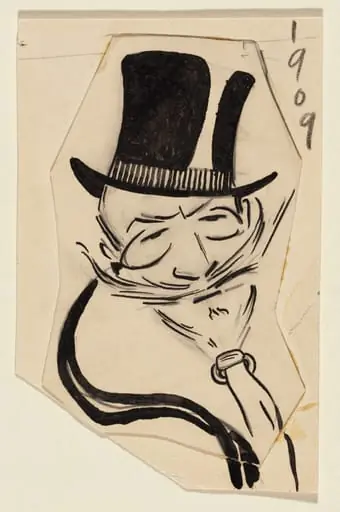 Self-Portrait
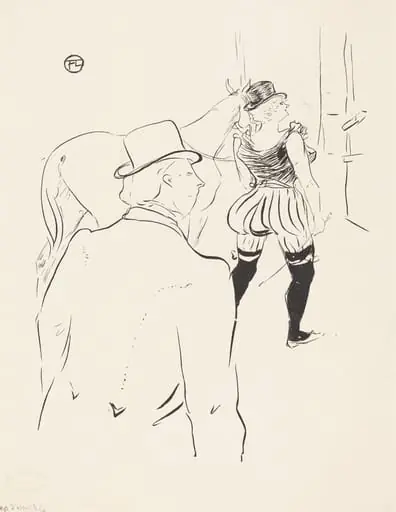 In the Wings of the Folies-Bergere: Mrs. Lona Barrison with Her Manager and Husband
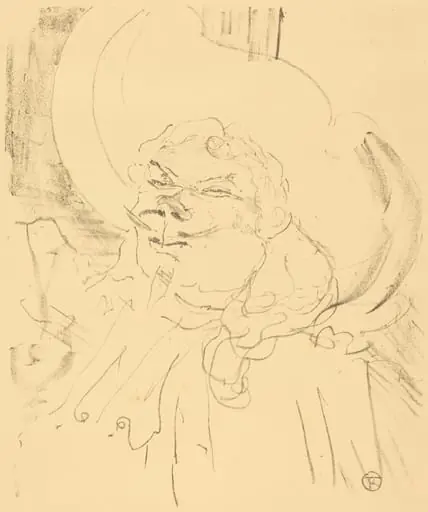 Coquelin the Elder (Coquelin aine)
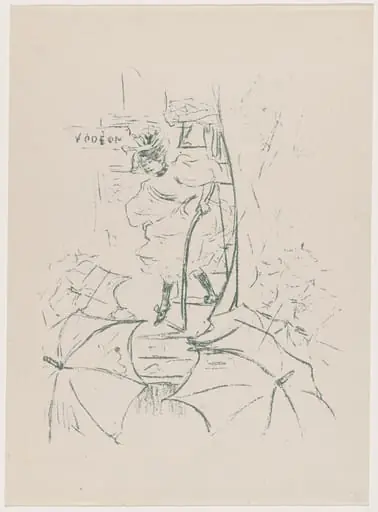 untitled (Woman descending onto a street of umbrellas)
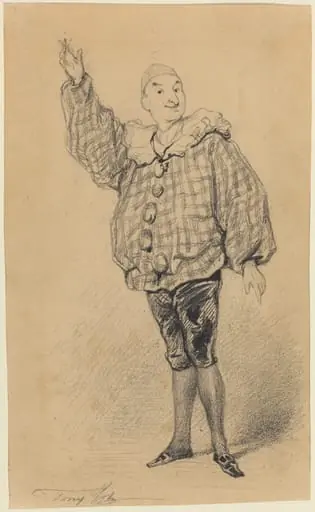 Lepeintre Ainé in the Role of Paillasse
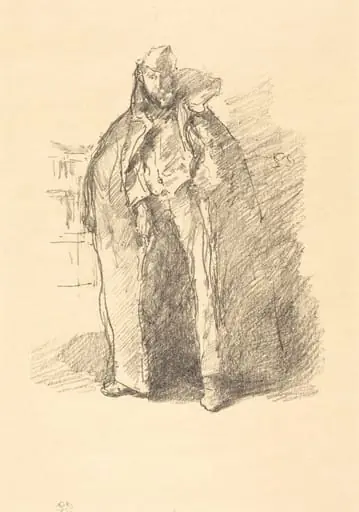 The Russian Schube
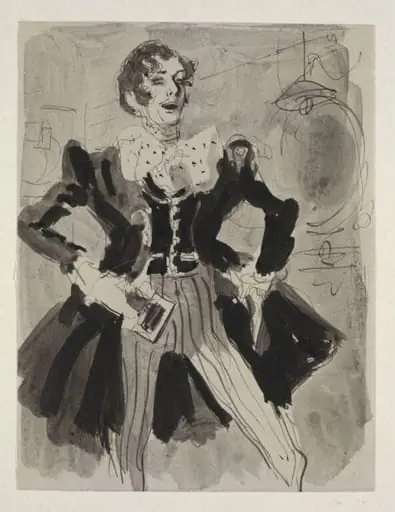 Untitled
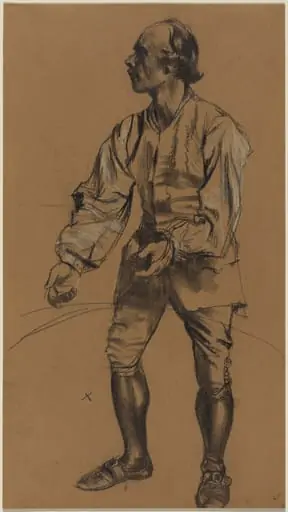 Richard Menzel Posing in Eighteenth-Century Costume
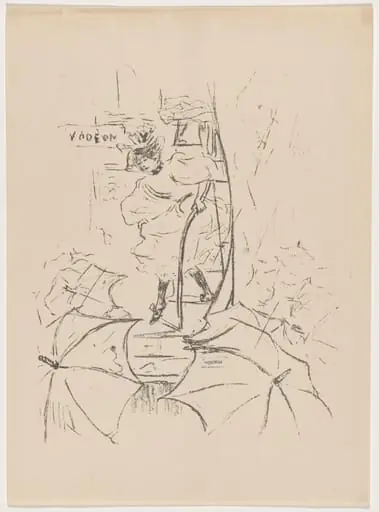 untitled (Woman descending onto a street of umbrellas)
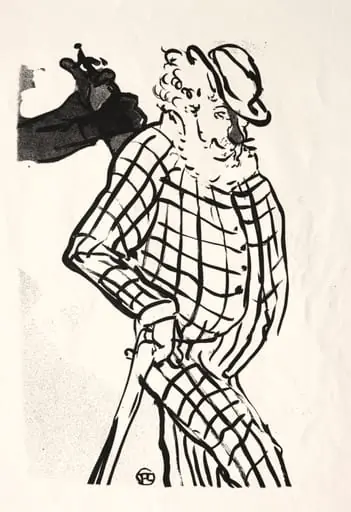 Le Café-concert: Chanteur Americain