Artwork
Le Café-concert: Chanteur Americain
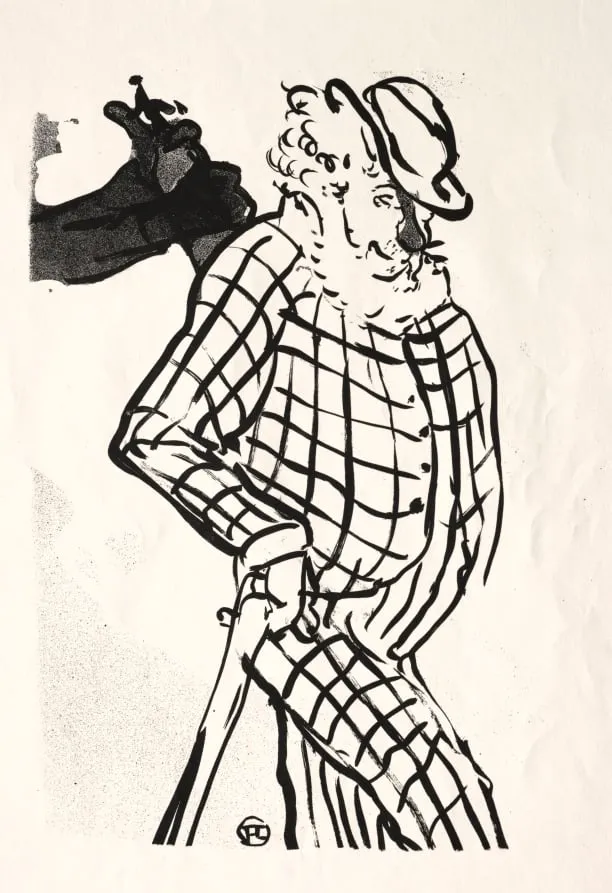
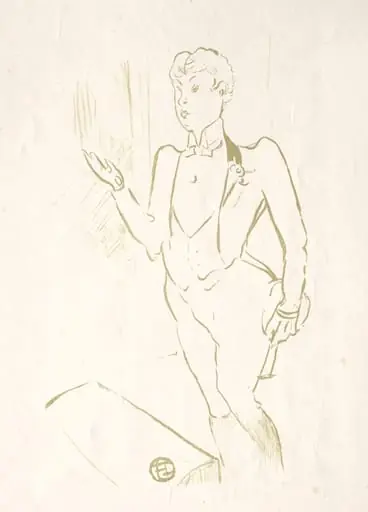
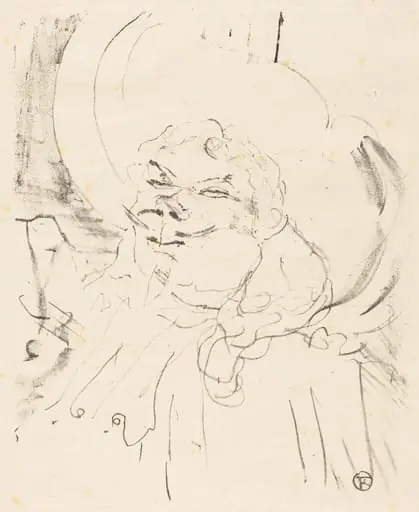
Le Café-concert: Chanteur Americain is a print by the Impressionist artist Henri de Toulouse-Lautrec. It dates from 1893 and is held in the collection of the Cleveland Museum of Art.
About this work
He’s holding a cigarette in one hand and a drink in the other, looking off to the side.
This sketch shows a man in a plaid jacket and hat, leaning on a cane. He’s holding a cigarette in one hand and a drink in the other, looking off to the side. The lines are loose and quick, with some dark shading for his hat and the background.
The artist used simple shapes and bold outlines to capture his pose and attitude. The style feels lively and a little rough around the edges.
Next, check out Henri de Toulouse-Lautrec (French, 1864–1901) for more of his work.
Overview
Created in 1893, this lithograph by Henri de Toulouse-Lautrec captures a moment from a Parisian café-concert, a popular venue for working-class entertainment. The artist, known for his intimate depictions of urban nightlife, focused on performers and patrons rather than idealized figures. This work exemplifies his interest in candid, unvarnished scenes drawn from the city’s marginal social spaces.
Subject & Meaning
The figure is an American-style singer, dressed in a plaid jacket and hat, leaning casually on a cane while holding a cigarette and a drink. His detached gaze suggests a performer lost in thought or weary from performance. Toulouse-Lautrec often portrayed entertainers not as glamorous icons but as individuals caught in the rhythm of their routines, revealing the quiet solitude beneath public spectacle.
Technique & Style
Executed in lithography, the image employs loose, rapid lines and simplified forms to convey movement and mood. Bold outlines define the figure’s posture, while dark, uneven shading suggests the dim lighting of the venue. The rough, sketch-like quality reflects Toulouse-Lautrec’s preference for immediacy over polish, aligning with the spontaneous energy of the café-concert environment.
History & Provenance
Produced during a period when Toulouse-Lautrec was deeply engaged with Parisian nightlife, this print was likely made for commercial or personal circulation rather than public exhibition. It belongs to a series of works documenting performers and patrons of Montmartre’s entertainment venues, many of which were published in journals or sold as standalone prints to a growing middle-class audience.
Context
In the 1890s, café-concerts were hubs of social mixing, where working-class audiences enjoyed music, comedy, and dance. Toulouse-Lautrec, though born into aristocracy, moved freely among these spaces, drawn to their authenticity. His depictions of performers, including foreign entertainers like this American singer, reflect a broader fascination with identity, performance, and the blurred lines between public and private life.
Legacy
This work contributes to Toulouse-Lautrec’s enduring reputation as a chronicler of modern urban life. His ability to capture fleeting gestures and psychological nuance in commercial printmaking influenced later generations of illustrators and expressionist artists. The piece stands as a quiet testament to the dignity he found in ordinary, often overlooked figures of the era.
Artist & collection
Artist
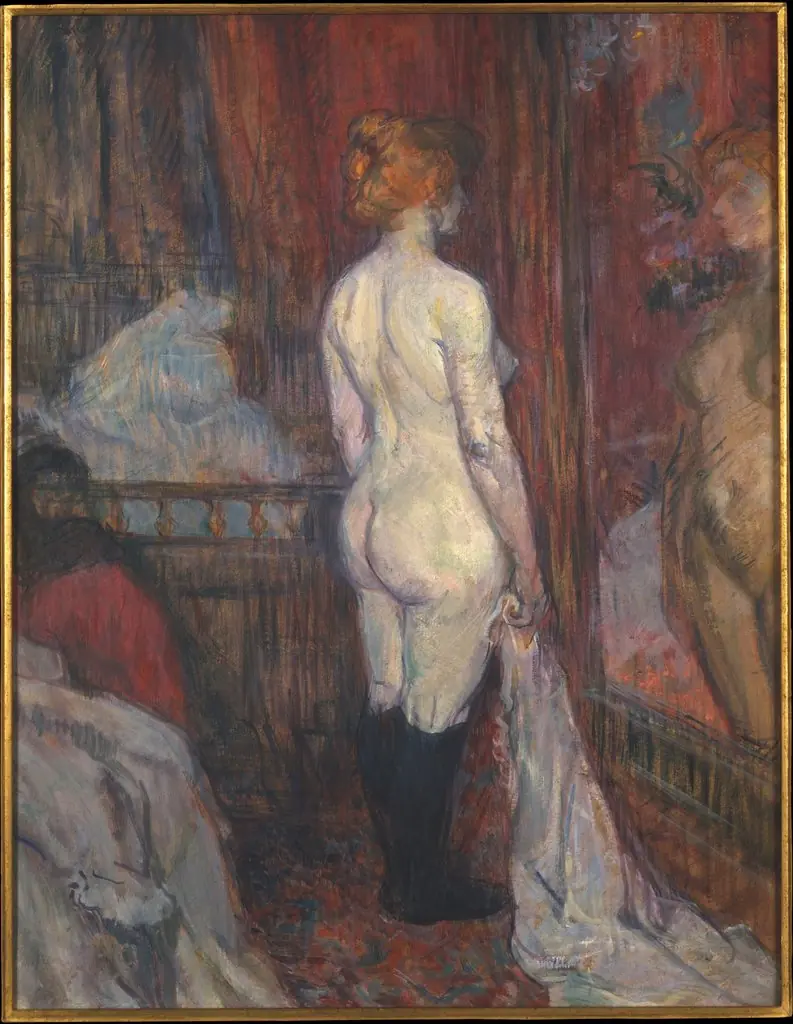
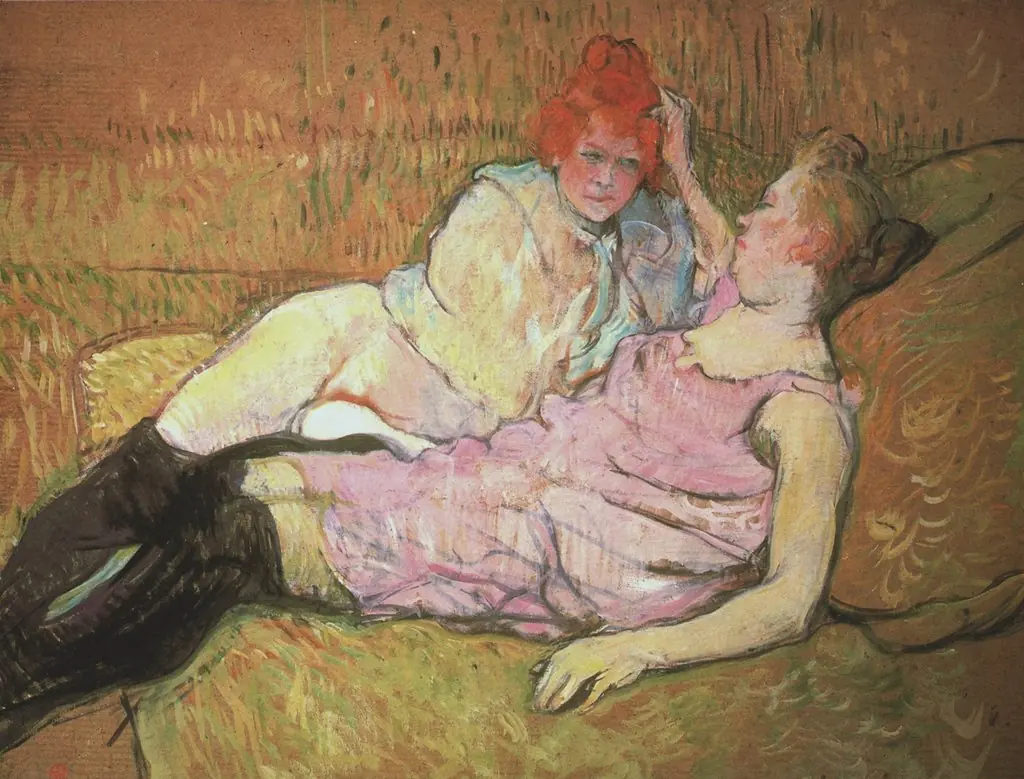
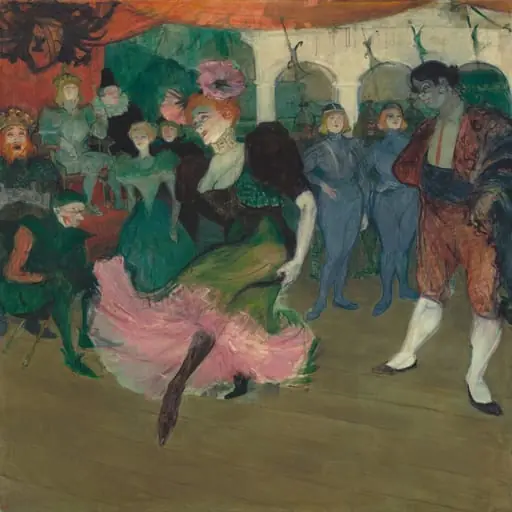
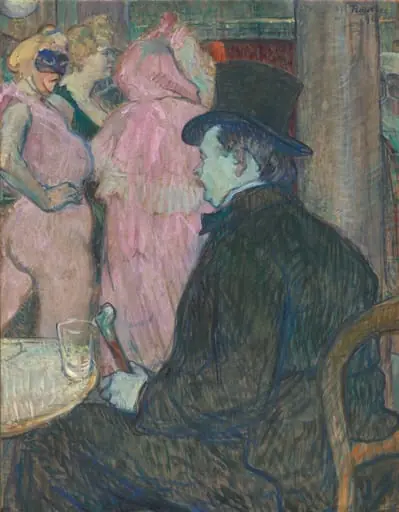
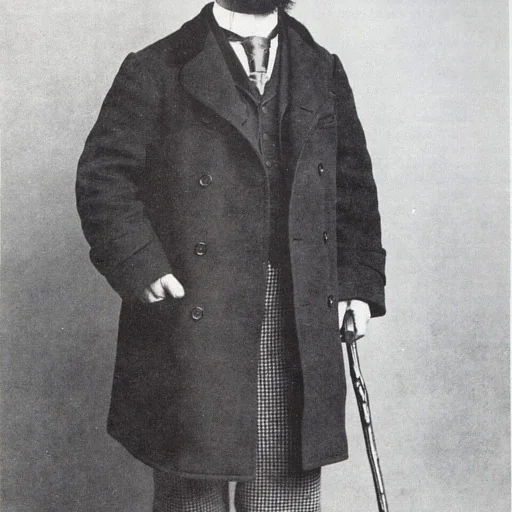
Comte Henri Marie Raymond de Toulouse-Lautrec-Montfa (24 November 1864 – 9 September 1901), known as Toulouse-Lautrec (French: ), was a French painter, printmaker, draughtsman, caricaturist, and illustrator.