Artwork
Anna Held and Baldy (Anna Held et Baldy)
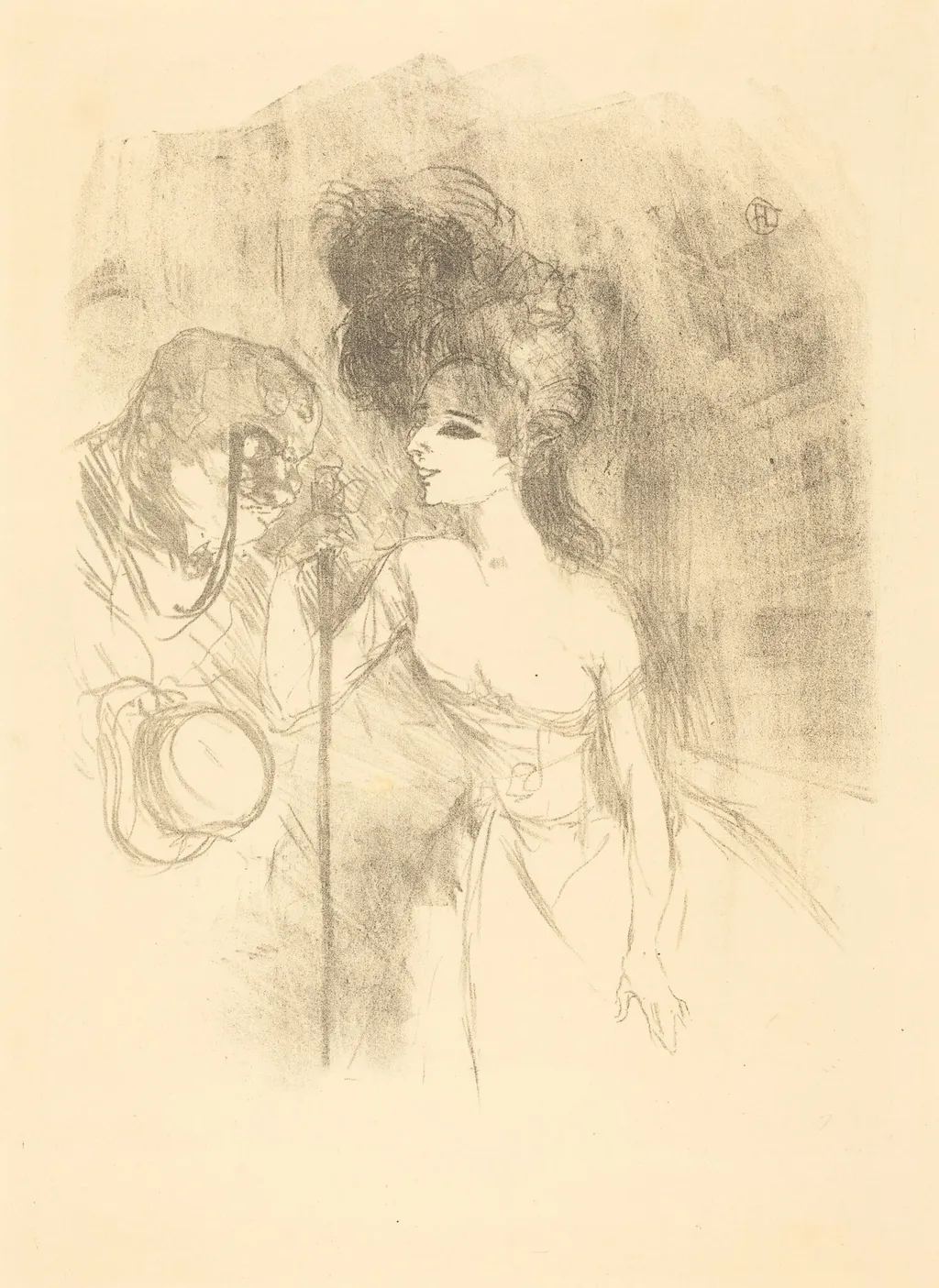
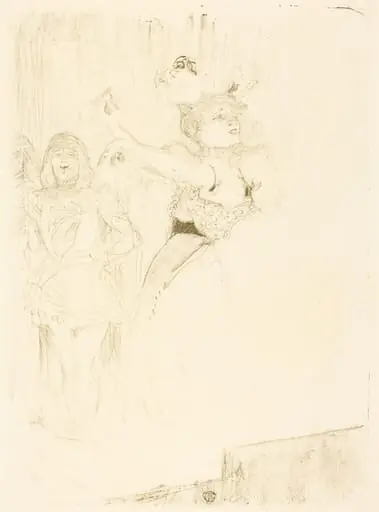
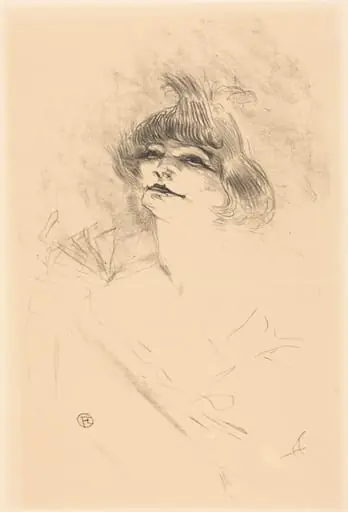
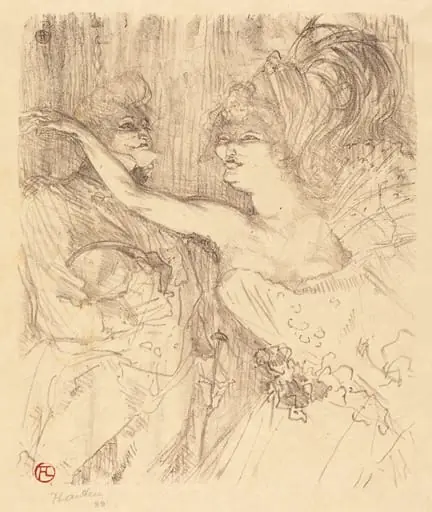
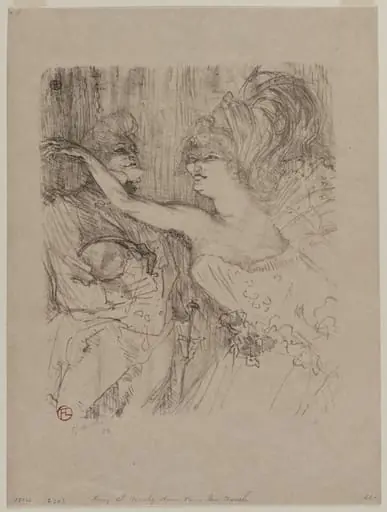
Anna Held and Baldy (Anna Held et Baldy) is an ink print by the Impressionist artist Henri de Toulouse-Lautrec. It dates from 1896 and is held in the collection of the National Gallery of Art.
About this work
Overview
Executed in black ink on velin paper, the work belongs to a series of prints documenting Parisian performers and their surroundings.
Created in 1896, this lithograph by Henri de Toulouse-Lautrec captures two figures in a candid, unpolished composition. Executed in black ink on velin paper, the work belongs to a series of prints documenting Parisian performers and their surroundings. Its spontaneous line quality and unfinished details reflect the artist’s preference for immediacy over refinement, aligning with the aesthetic of late 19th-century graphic art.
Subject & Meaning
The figures are Anna Held, a popular singer and stage performer, and her dog Baldy. Their proximity suggests an intimate, offstage moment rather than a formal portrait. Held’s exaggerated hairstyle and loose attire hint at her theatrical persona, while Baldy’s presence adds a touch of domestic familiarity. The image conveys the blending of public spectacle and private life common in cabaret culture.
Technique & Style
Toulouse-Lautrec employed lithography to achieve rapid, expressive lines that mimic sketching. The rough, gestural strokes and minimal shading convey motion and presence without detail. Faces and clothing are suggested rather than defined, emphasizing atmosphere over realism. This approach was characteristic of his graphic work, where speed and emotional resonance outweighed finish.
History & Provenance
The print was made during Toulouse-Lautrec’s active engagement with Parisian entertainment venues, where he frequently observed performers. It likely originated as a study or promotional image tied to Held’s performances. Though not widely exhibited in his lifetime, it entered private collections and later public institutions, preserving its role as a document of fin-de-siècle theatrical life.
Context
In the 1890s, lithography became a favored medium for capturing the energy of urban entertainment. Toulouse-Lautrec’s work intersected with the rise of poster art and illustrated journals, where immediacy and bold form were prized. His focus on performers like Held reflected a broader cultural fascination with celebrity and the blurred boundaries between stage and street.
Legacy
This lithograph exemplifies Toulouse-Lautrec’s influence on modern graphic design and portraiture. His use of informal composition and expressive line helped redefine how performers were visually represented, moving away from idealized imagery toward psychological realism. The work remains a reference point for artists exploring the intersection of drawing, printmaking, and everyday observation.
Artist & collection
Artist
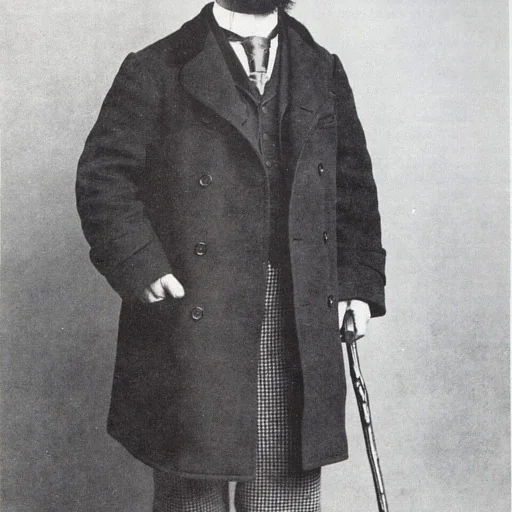
Comte Henri Marie Raymond de Toulouse-Lautrec-Montfa (24 November 1864 – 9 September 1901), known as Toulouse-Lautrec (French: ), was a French painter, printmaker, draughtsman, caricaturist, and illustrator.