Artwork
Cover for "L'example de Ninon de Lenclos amoureuse"
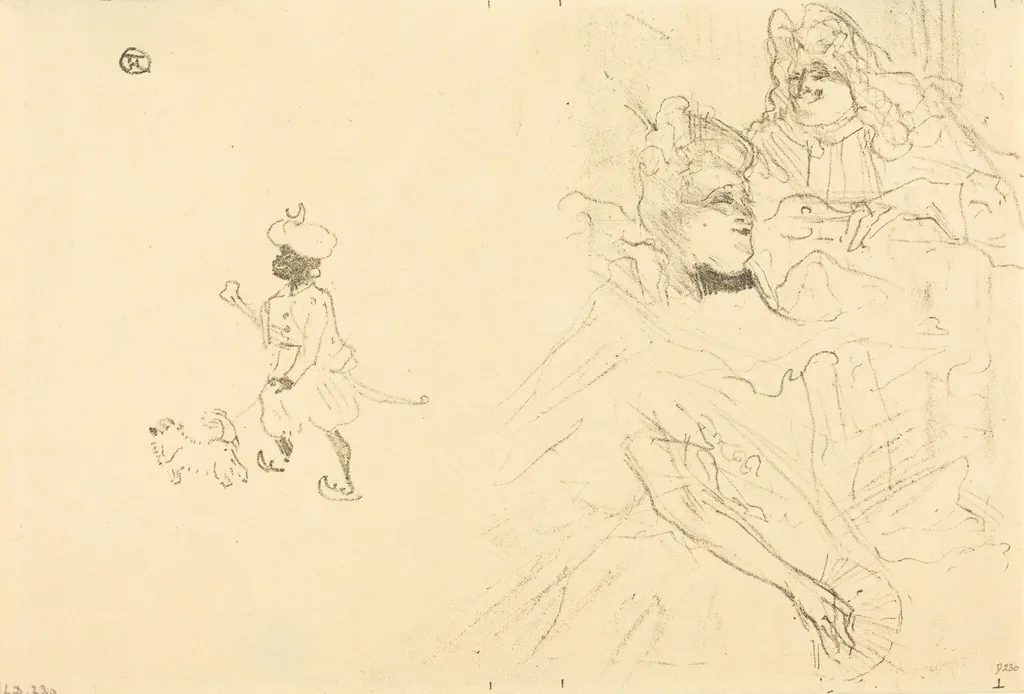
Cover for "L'example de Ninon de Lenclos amoureuse" is an ink print by the Impressionist artist Henri de Toulouse-Lautrec. It dates from 1897 and is held in the collection of the National Gallery of Art.
About this work
Overview
' Executed in black ink on paper, it reflects his mastery of lithographic technique and his interest in capturing fleeting, unguarded moments.
This 1897 lithograph, created by Henri de Toulouse-Lautrec, serves as a cover for the book 'L'example de Ninon de Lenclos amoureuse.' Executed in black ink on paper, it reflects his mastery of lithographic technique and his interest in capturing fleeting, unguarded moments. The work is part of a series of illustrations tied to literary themes, though it retains the intimate, observational quality characteristic of his broader oeuvre.
Subject & Meaning
The image depicts two figures in a subdued interior: one slumped in a chair, head resting on a hand, and another standing near, wearing a hat and holding a small dog. The posture and spatial arrangement suggest a quiet, introspective exchange, possibly hinting at emotional fatigue or tender companionship. The absence of overt drama invites interpretation rooted in psychological nuance rather than narrative spectacle.
Technique & Style
Toulouse-Lautrec employed rapid, gestural lines typical of his sketch-like lithographic approach. The forms are simplified, with minimal shading and no fine detail, emphasizing mood over realism. The roughness of the strokes conveys immediacy, as if the scene was recorded in a single, unedited glance. This method aligns with his broader practice of capturing motion and atmosphere through economical mark-making.
History & Provenance
Created in 1897, the print was commissioned as a cover for a literary publication centered on the 17th-century courtesan Ninon de Lenclos. Though tied to a specific textual project, the image diverges from historical illustration norms, favoring psychological realism. Its provenance traces to Toulouse-Lautrec’s collaborations with publishers and his circle of writers, reflecting his engagement with literary culture beyond the cabaret.
Context
In the late 1890s, Toulouse-Lautrec increasingly turned to book illustration, blending his observational style with literary subjects. While still known for scenes of Montmartre, this work reveals his interest in historical and romantic themes. The quiet intimacy of the image contrasts with his more public cabaret studies, suggesting a broader artistic range shaped by personal reflection and literary curiosity.
Legacy
This lithograph exemplifies Toulouse-Lautrec’s ability to infuse commercial illustration with emotional depth. Though less widely exhibited than his nightclub scenes, it demonstrates his versatility and influence on modern graphic design. Its understated power helped redefine the potential of book covers as carriers of psychological resonance, not just decorative function.
Artist & collection
Artist
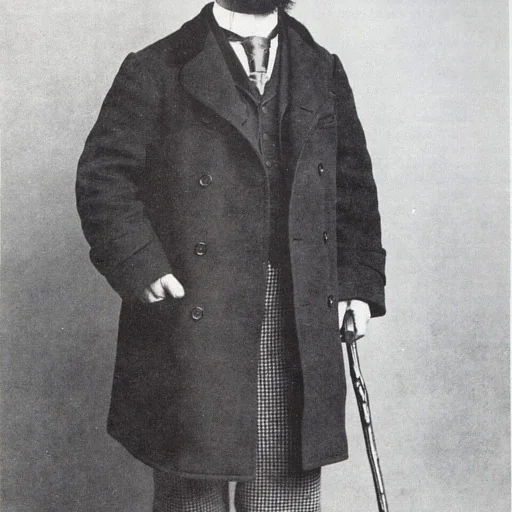
Comte Henri Marie Raymond de Toulouse-Lautrec-Montfa (24 November 1864 – 9 September 1901), known as Toulouse-Lautrec (French: ), was a French painter, printmaker, draughtsman, caricaturist, and illustrator.

![Trees; Sketch of Breton Boy [verso], by Paul Gauguin](https://artifactworldgallery.com/img/paul-gauguin--trees-sketch-of-breton-boy-verso--ffac7faa10ac7e52-w320.webp) Trees; Sketch of Breton Boy [verso]
Trees; Sketch of Breton Boy [verso] Untitled
 Two women dancing
![A Breton Woman and a Standing Man; Head and Hand of a Monkey [recto], by Paul Gauguin](https://artifactworldgallery.com/img/paul-gauguin--a-breton-woman-and-a-standing-man-head-and-hand-of-a-monkey--e35c46eb8cb6c297-w320.webp) A Breton Woman and a Standing Man; Head and Hand of a Monkey [recto]
A Breton Woman and a Standing Man; Head and Hand of a Monkey [recto]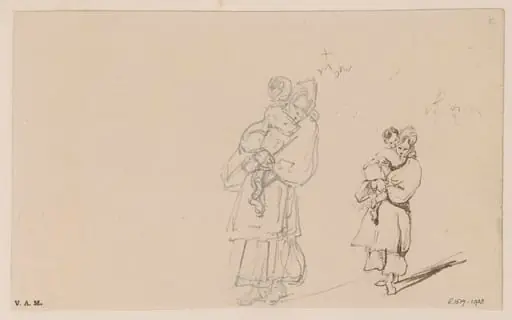 Two drawings of a boatwoman holding a child
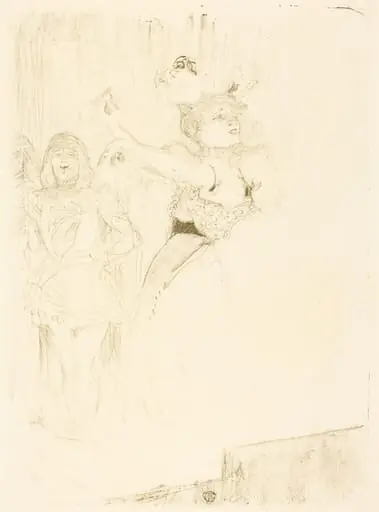 Lender Dancing the Bolero in "Chilperic" (Lender dansant le pas du boléro dans "Chilpéric")
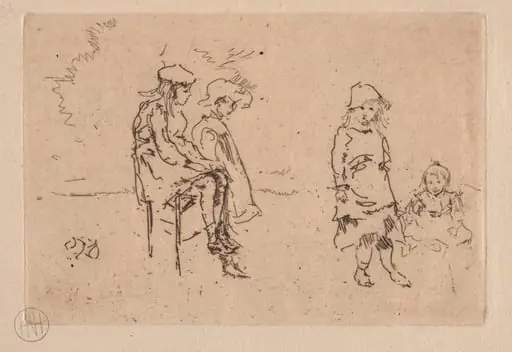 The Menpes Children
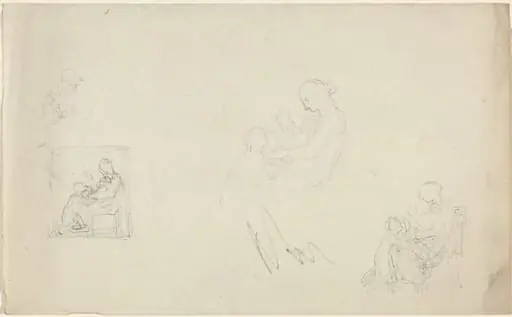 Four Studies of a Seated Woman with Children at Her Feet (Sketches for the Monument to Lady FitzHarris?)
![Two Heads; Studies of Sheep [recto], by Paul Gauguin](https://artifactworldgallery.com/img/paul-gauguin--two-heads-studies-of-sheep-recto--d045b25e15a504f5-w320.webp) Two Heads; Studies of Sheep [recto]
Two Heads; Studies of Sheep [recto] Figures at a stove, and a pig