Artwork
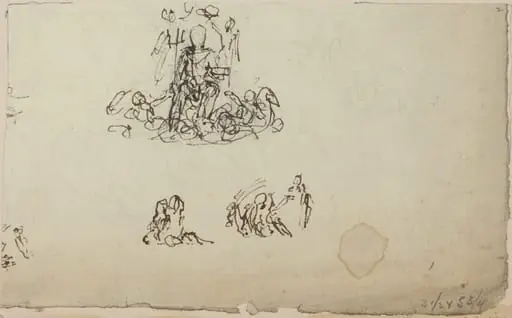
Four Studies of a Seated Woman with Children at Her Feet (Sketches for the Monument to Lady FitzHarris?)
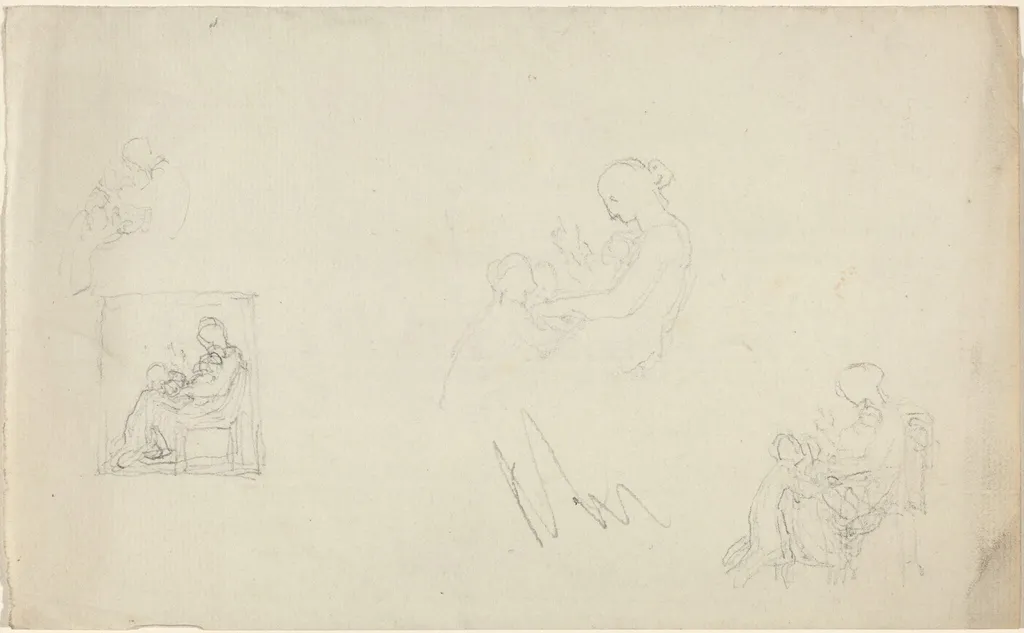
Four Studies of a Seated Woman with Children at Her Feet (Sketches for the Monument to Lady FitzHarris?) is a graphite drawing by the Romanticist artist John Flaxman. It dates from 1816 and is held in the collection of the National Gallery of Art.
About this work
Overview
Around 1816 John Flaxman produced a graphite drawing titled *Four Studies of a Seated Woman with Children at Her Feet*. The sheet contains a series of quick sketches that explore the composition of a seated female figure surrounded by three children, intended as preparatory work for a larger monument, possibly the memorial to Lady FitzHarris.
Subject & Meaning
The studies depict a motherly figure seated calmly while three youngsters cluster around her. One child leans against her thigh, another sits beside her, and a third is isolated in a smaller boxed vignette. The arrangement suggests a narrative of familial affection and continuity, appropriate for a commemorative funerary context.
Technique & Style
Executed in graphite, the drawings are characterized by light, gestural lines that convey movement and form with minimal detail. Flaxman’s hand appears swift and exploratory, using loose strokes to test posture, drapery, and the spatial relationship between the adult and the children, a common practice in his preparatory studies.
History & Provenance
Flaxman, an English sculptor and draughtsman central to the Neoclassical movement, created the work after his Roman training and during his prolific period of designing funerary monuments and book illustrations. The drawing entered the museum’s collection through a 20th‑century acquisition of Flaxman’s papers, though its exact early ownership remains undocumented.
Context
The drawing belongs to a broader body of Flaxman’s monument designs, where classical restraint and clear narrative were prized. In the early 19th century, memorials often featured allegorical mothers or grieving figures, and Flaxman’s studies reflect this aesthetic while also serving his practical need to refine sculptural compositions before carving.
Legacy
Although a modest preparatory sheet, the drawing illustrates Flaxman’s systematic approach to monumental design and his skill in translating narrative ideas into sculptural form. It provides scholars with insight into the developmental stages of his funerary commissions and the broader Neoclassical visual language of early‑19th‑century Britain.
Artist & collection
Artist
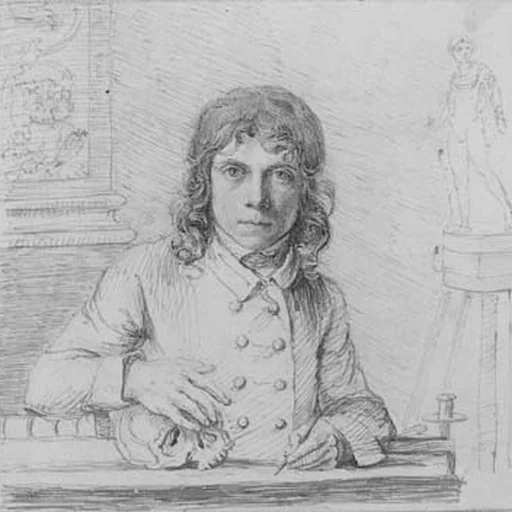
John Flaxman (6 July 1755 – 7 December 1826) was an English sculptor and draughtsman who was a leading figure in British and European Neoclassicism.

 Two Studies of Standing Figure and Child
![Studies for a Monument with Angels Reaching Down to a Praying Figure [recto and verso], by John Flaxman](https://artifactworldgallery.com/img/john-flaxman--studies-for-a-monument-with-angels-reaching-down-to-a-prayin--9d789ab993a76a50-w320.webp) Studies for a Monument with Angels Reaching Down to a Praying Figure [recto and verso]
Studies for a Monument with Angels Reaching Down to a Praying Figure [recto and verso] Three Groups of Dancers
![Sheet of Studies [recto and verso], by John Flaxman](https://artifactworldgallery.com/img/john-flaxman--sheet-of-studies-recto-and-verso--e428fab422bf3286-w320.webp) Sheet of Studies [recto and verso]
Sheet of Studies [recto and verso]![Two Heads; Studies of Sheep [recto], by Paul Gauguin](https://artifactworldgallery.com/img/paul-gauguin--two-heads-studies-of-sheep-recto--d045b25e15a504f5-w320.webp) Two Heads; Studies of Sheep [recto]
Two Heads; Studies of Sheep [recto]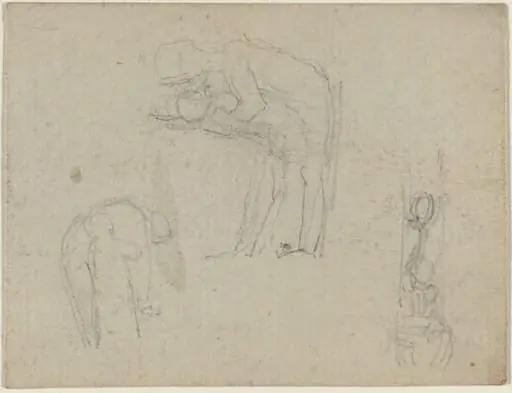 Three Groups of Figures
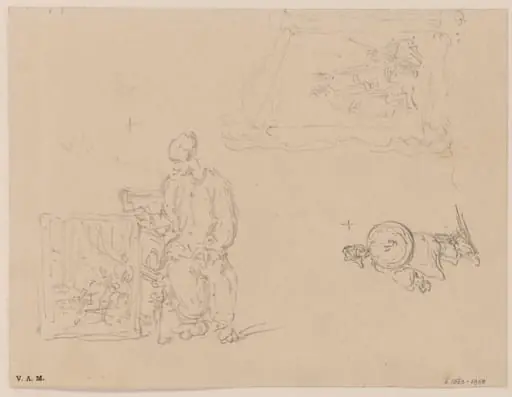 A figure seated beside a portrait, and other sketches
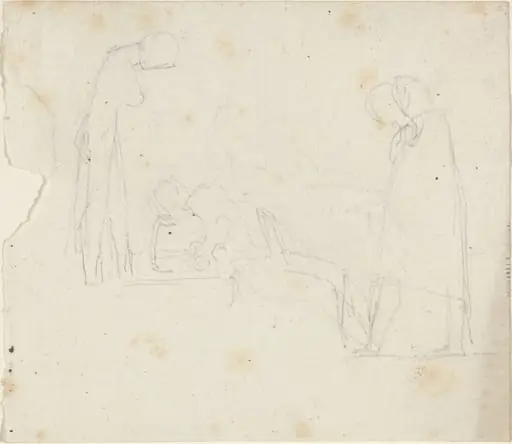 Group of Five Figures
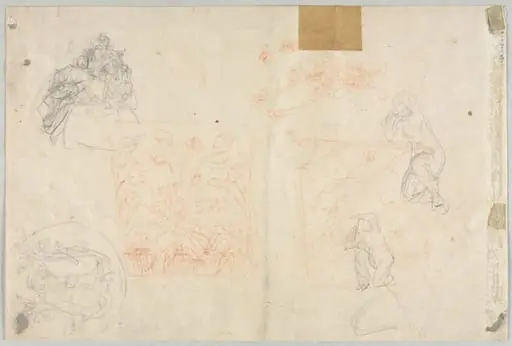 Various Sketches of Figures and Plants (verso)