Artwork
Entrance of Brasseur in "Chilperic" (Entrée de Brasseur dans "Chilpéric")
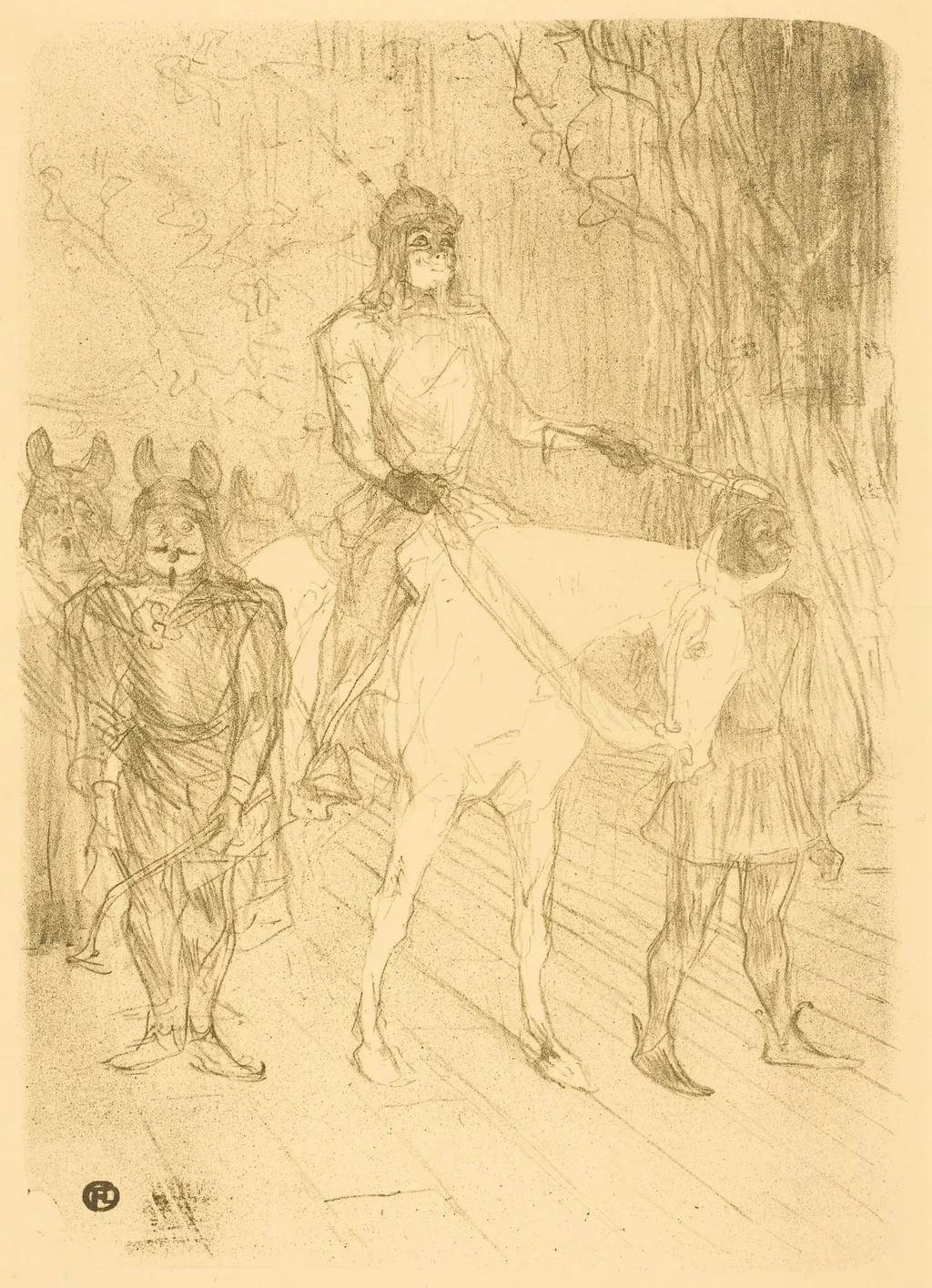
Entrance of Brasseur in "Chilperic" (Entrée de Brasseur dans "Chilpéric") is an ink print by the Impressionist artist Henri de Toulouse-Lautrec. It dates from 1895 and is held in the collection of the National Gallery of Art.
About this work
The artist used a technique called lithography, which lets them sketch directly onto a stone before printing.
This sketch shows three people walking together. The person in the middle is barefoot and dressed simply, holding a cane. The other two wear boots and long coats, with one carrying a dog. The background looks like a rough stone wall, and the whole scene is drawn in loose, quick lines.
The artist used a technique called lithography, which lets them sketch directly onto a stone before printing. This sketch was made in 1895, part of a series about a play called *Chilperic*.
Check out more about lithography to see how it works.
Overview
Henri de Toulouse-Lautrec’s 1895 lithograph titled *Entrance of Brasseur in “Chilperic”* is executed in a muted olive‑green palette. The print captures a brief moment from the opening of the theatrical production *Chilperic*, presenting a small group of figures against a rough stone backdrop.
Subject & Meaning
The composition depicts three individuals walking side by side. The central figure is barefoot, dressed simply, and supports himself with a cane, while the two flanking figures wear boots and long coats; one of them is accompanied by a dog. The scene suggests an informal arrival, perhaps a backstage or street encounter linked to the play’s narrative.
Technique & Style
Created through lithography, the image was drawn directly onto a stone surface, allowing Toulouse‑Lautrec’s characteristic swift, gestural lines to emerge. The loose handling of line and limited tonal range emphasize movement and immediacy, hallmarks of the artist’s printmaking approach during the 1890s.
History & Provenance
Part of a series of prints documenting the production of *Chilperic*, the work was produced in the same year the play premiered in Paris. It reflects Toulouse‑Lautrec’s ongoing interest in theatrical life and his collaborations with contemporary stage companies.
Context
The lithograph belongs to the broader milieu of late‑19th‑century Paris, where cafés, cabarets, and theatres formed a vibrant social network. Toulouse‑Lautrec’s focus on performers and their surroundings aligns with his broader oeuvre that chronicled the city’s nocturnal and theatrical culture.
Own this work as a print
Artist & collection
Artist
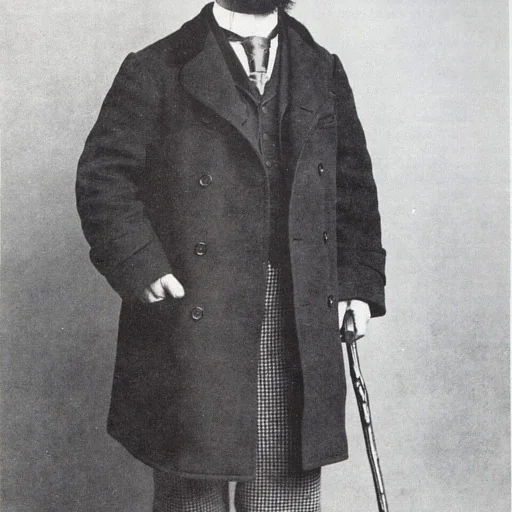
Comte Henri Marie Raymond de Toulouse-Lautrec-Montfa (24 November 1864 – 9 September 1901), known as Toulouse-Lautrec (French: ), was a French painter, printmaker, draughtsman, caricaturist, and illustrator.

 Untitled
 At the Opera: Mme. Caron in "Faust" (A l'opéra: Mme. Caron dans "Faust")
 The Son and the Donkey
 Bird Men
 Au pied du Sinaï: Arrestation de Schlomé Fuss
 Guy and Mealy in "Paris qui marche" (Guy et Mealy dans "Paris qui marche")
![Mascaras crueles (Cruel Masks) [recto], by Francisco Goya](https://artifactworldgallery.com/img/francisco-goya--mascaras-crueles-cruel-masks-recto--c8ed74cbe3eadfd0-w320.webp) Mascaras crueles (Cruel Masks) [recto]
Mascaras crueles (Cruel Masks) [recto]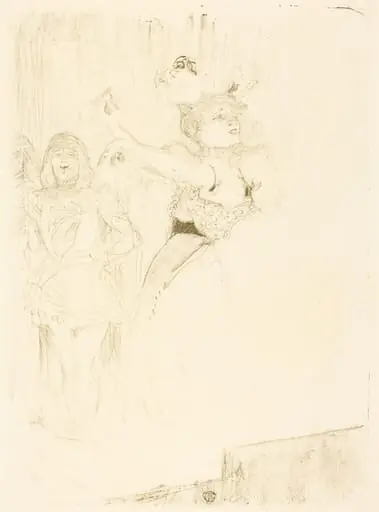 Lender Dancing the Bolero in "Chilperic" (Lender dansant le pas du boléro dans "Chilpéric")